


Can dogs eat sweet potatoes? Yes, dogs can eat sweet potatoes, as long as they’re cooked, plain, and served in moderation. Cooked sweet potato is a nutrient-rich treat that provides fiber, vitamins A, B6, and C, and antioxidants. Never feed raw sweet potato, and avoid butter, salt, sugar, or seasonings [1].
Sweet potatoes are common in commercial dog foods and homemade treats, but how you prepare and portion them matters. This guide explains how to safely prepare sweet potatoes, how much to give, and which forms are best avoided.
Table of Contents
Key Takeaways
- Cooked only: Sweet potatoes should be fully cooked and peeled before serving [1].
- Plain and simple: Don’t add butter, salt, sugar, cinnamon, or other seasonings.
- Treats = 10% rule: Sweet potatoes are a treat, not a meal replacement, and should stay within 10% of your dog’s daily calories [1].
- Raw is off-limits: Raw sweet potato is difficult to digest and can cause digestive problems or intestinal blockage [1].
- Watch for reactions: Some dogs may develop itching, ear problems, or digestive upset after eating sweet potato [1].
- Diabetic dogs need caution: Dogs with diabetes should only have sweet potato with veterinary guidance [2].
- DCM concern: The FDA has investigated reports of canine dilated cardiomyopathy (DCM) involving diets containing potatoes or sweet potatoes as major ingredients [2].
- Puppies can eat them too: Small amounts of soft, well-cooked sweet potato can be offered to puppies.
🥦 Sweet Potato Quick Reference for Dogs
| Safe | Unsafe |
|---|---|
| ✅ Cooked (baked, boiled, steamed) | ❌ Raw sweet potato |
| ✅ Peeled, plain, mashed or cubed | ❌ Sweet potato casserole or pie |
| ✅ Small portions as a treat | ❌ Fried sweet potato fries |
| ✅ Dehydrated slices (no additives) | ❌ With butter, salt, sugar, or spices |
| ❌ Sweet potato skins (hard to digest) |
Are Sweet Potatoes Safe for Dogs to Eat?
Yes, cooked, plain sweet potatoes are safe for most dogs and are commonly used in commercial dog foods and treats [1]. The important part is that they are fully cooked. Raw sweet potato is tough, starchy, and difficult for dogs to digest, which can lead to stomach upset or, in some cases, intestinal blockage [1].
It’s also important to avoid sharing seasoned sweet potato from your dinner plate. Casseroles, sweet potato fries, and other prepared dishes may contain ingredients that aren’t appropriate for dogs. Stick with plain, peeled, fully cooked sweet potato [1].
What Are the Health Benefits of Sweet Potatoes for Dogs?
Sweet potatoes provide dietary fiber along with vitamins A, B6, and C and antioxidants such as beta-carotene [1].
Beta-carotene gives sweet potatoes their orange color and is converted to vitamin A in the body. Fiber can also support normal digestion and healthy stools.
These benefits don’t make sweet potatoes a replacement for a complete and balanced dog food. They’re best used as an occasional treat or topper.
Can Dogs Eat Sweet Potatoes Raw or Only Cooked?
Dogs should only eat cooked sweet potatoes. Raw sweet potato is difficult to chew and digest and may cause gastrointestinal distress or intestinal blockage [1].
Cooking softens the vegetable and makes it much easier for your dog to eat. Baking, boiling, steaming, or microwaving are all suitable methods; cook the sweet potato until it is soft enough to mash easily with a fork [1].
How to Prepare Sweet Potatoes for Dogs Safely
Preparing sweet potato for your dog is simple. Follow these steps:

- Wash thoroughly, even if you plan to peel it.
- Peel the skin, since the skin can be harder to digest and may cause gastrointestinal upset [1].
- Chop into small, even pieces so the sweet potato cooks evenly and is easier to portion.
- Cook fully by baking, boiling, steaming, or microwaving until soft throughout [1].
- Cool completely before serving to avoid burning your dog’s mouth.
- Mash or cube the cooked sweet potato according to your dog’s size and preference.
Once prepared, serve the sweet potato plain and start with a small portion.
How Much Sweet Potato Can I Give My Dog?
Sweet potatoes should make up no more than 10% of your dog’s daily caloric intake [1]. As a practical guide:
| Dog Size | Portion | Frequency |
|---|---|---|
| Small (under 20 lbs) | 1 tablespoon | 2–3x per week |
| Medium (21–50 lbs) | 2–3 tablespoons | 2–3x per week [1] |
| Large (51–90 lbs) | 3–4 tablespoons | 2–3x per week |
| Giant (90+ lbs) | 4–5 tablespoons | 2–3x per week |
Because sweet potatoes are starchier than vegetables such as green beans or carrots, portions should remain modest. If your dog is trying sweet potato for the first time, start with a smaller amount and see how they respond.
Can Puppies Eat Sweet Potatoes?
Yes, puppies can eat small amounts of cooked, plain sweet potato. Because puppies have developing digestive systems, it’s best to introduce new foods gradually and keep portions very small.
For a small-breed puppy, this may mean starting with only a teaspoon. If you’re adding sweet potato to a puppy’s diet, check with your veterinarian first, particularly if your puppy has digestive problems or other dietary needs.
Do Sweet Potatoes Cause Digestive Issues in Dogs?
They can if they’re overfed or introduced too quickly. Too much sweet potato may cause gas, bloating, vomiting, or diarrhea [1].
The fiber that makes sweet potato useful can also cause digestive upset when a dog suddenly receives too much. If your dog has never eaten sweet potato before, begin with a small amount and monitor their response.
Sweet Potatoes for Dogs With Upset Stomach
Sweet potato is sometimes used as a fiber-rich food for dogs with mild digestive upset. Plain, cooked sweet potato may be easier for some dogs to tolerate than richer foods.
However, it shouldn’t be used as a substitute for veterinary care. If your dog is repeatedly vomiting, has severe diarrhea, appears painful, or is becoming lethargic, contact your veterinarian.
For mild cases, some owners use a small amount of plain mashed sweet potato alongside bland foods such as plain boiled chicken and white rice.
Sweet Potato vs Regular Potato for Dogs: Which Is Better?
Both can be served when cooked and plain, but sweet potatoes provide useful nutrients including beta-carotene, vitamin C, and fiber [1][3].
White potatoes are starchier and have a higher glycemic index when cooked. Neither type should be fed raw, and neither should be prepared with butter, salt, or other seasonings.
Can Dogs With Diabetes Eat Sweet Potatoes?
Sweet potatoes should be used cautiously in diabetic dogs because of their carbohydrate content and potential effect on blood glucose [2]. If your dog has diabetes, talk with your veterinarian before adding sweet potato to their diet.
Your veterinarian may suggest a different treat or vegetable depending on your dog’s individual dietary needs.
Can Dogs Eat Sweet Potato Skin or Peel?
It’s best to peel sweet potatoes before serving them to your dog. The skin is tougher and can be more difficult to digest, increasing the chance of gastrointestinal upset [1].
Although the skin contains nutrients, peeling the sweet potato keeps the texture softer and easier for your dog to eat.
Sweet Potato Allergies in Dogs: Symptoms to Watch For
Sweet potato allergies are uncommon but possible. Potential signs include itching, skin redness, ear problems, vomiting, or diarrhea [1].
If your dog develops symptoms after eating sweet potato, stop offering it and contact your veterinarian. Keeping track of new foods and when symptoms appear can also help your veterinarian identify a possible dietary trigger.
Best Way to Serve Sweet Potatoes to Picky Eaters
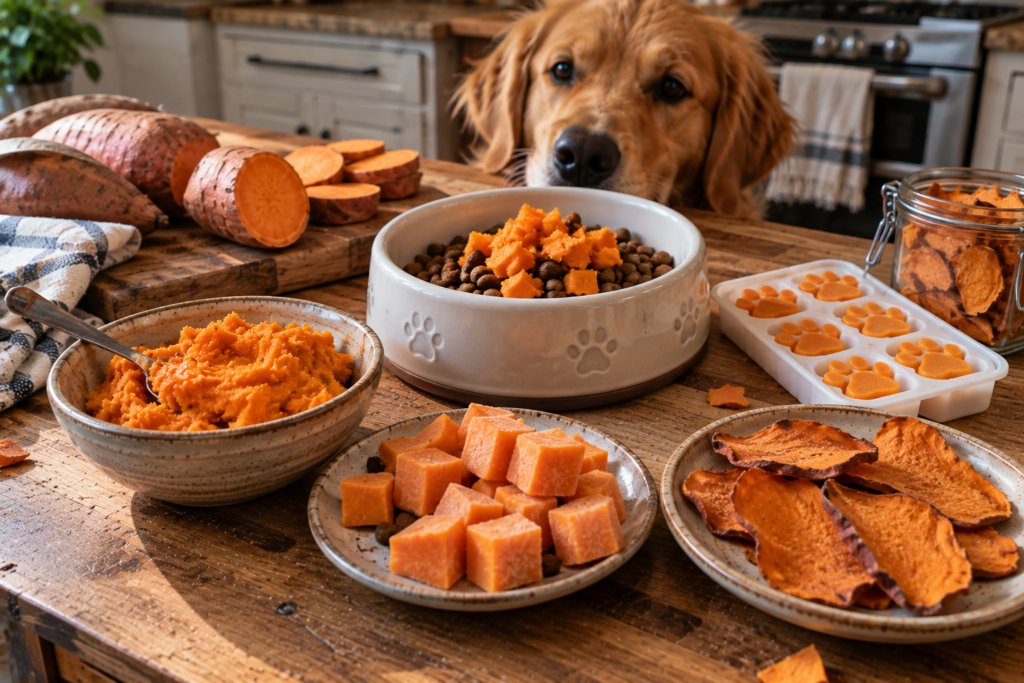
If your dog isn’t interested in plain cooked sweet potato, you can change the texture or temperature without adding unhealthy ingredients:
- Mash it into their regular food as a simple topper.
- Freeze small cubes for a cool treat.
- Dehydrate thin slices without additives for a firmer, jerky-style snack.
- Mix with a little plain pumpkin puree if your dog already tolerates pumpkin.
Different textures can make the same ingredient more appealing while keeping the recipe simple.
Sweet Potato Dog Treats Recipes
Making homemade sweet potato treats lets you control the ingredients and portion sizes.
Frozen Sweet Potato Bites
- Cook and peel one medium sweet potato.
- Mash until smooth.
- Mix with 2 tablespoons of plain, unsweetened yogurt, if your dog tolerates dairy.
- Spoon the mixture into silicone molds or ice cube trays.
- Freeze for at least 4 hours, then serve one small bite as a treat.
For a longer-lasting chew, dehydrate peeled sweet potato slices at 160°F for 6–8 hours, until leathery but not brittle. Store in an airtight container for up to two weeks.
Keep all homemade treats plain and use small portions that fit within your dog’s overall daily treat allowance.
FDA Alert: Sweet Potatoes and Canine Dilated Cardiomyopathy (DCM)
The FDA has issued alerts about reports of canine dilated cardiomyopathy (DCM) in dogs eating diets where potatoes or sweet potatoes are major ingredients [2]. The exact relationship between diet and DCM remains under investigation, and genetics can also play a role in the condition.
This concern is different from occasionally giving a dog a small piece of cooked sweet potato as a treat. The issue has primarily involved diets in which certain ingredients make up a substantial part of the food. If your dog eats a grain-free diet or you have concerns about DCM, discuss the diet with your veterinarian.
When to Call the Vet: Safety and Emergency Guide
🚨 Sweet Potato Safety Triage
Wait and monitor: Mild gas or slightly soft stool after a first small serving. Stop offering more sweet potato and observe your dog.
Call your vet today: Persistent diarrhea, repeated vomiting, lethargy, or loss of appetite, particularly if symptoms continue or worsen.
Go to emergency care now: Repeated vomiting, severe bloating or a distended abdomen, inability to keep water down, signs of significant pain such as whining or restlessness, or suspected intestinal blockage accompanied by symptoms such as vomiting, lack of stool, or abdominal pain.
FAQ
Can dogs eat sweet potato fries?
No. Sweet potato fries are usually fried in oil and seasoned with salt or spices. If you want to share sweet potato with your dog, offer it cooked, plain, and unseasoned instead [1].
Can dogs eat canned sweet potatoes?
Only if the canned sweet potato is plain and contains no added sugar, syrup, spices, or other ingredients that aren’t appropriate for dogs. Check the label carefully. Freshly cooked sweet potato is a simpler option.
Can dogs eat sweet potato pie?
No. Sweet potato pie commonly contains sugar, butter, spices such as nutmeg, and a rich crust. It isn’t an appropriate treat for dogs.
How often can I give my dog sweet potato?
Two to three times per week is a reasonable frequency for most dogs, provided total treat calories remain within about 10% of their daily intake [1].
Can dogs be allergic to sweet potatoes?
Yes, although it is uncommon. Possible signs include itching, skin irritation, ear problems, vomiting, and diarrhea [1]. If symptoms appear after introducing sweet potato, stop feeding it and consult your veterinarian.
Are sweet potatoes better than pumpkin for dogs?
Both can provide fiber. Pumpkin is generally lower in calories and sugar, while sweet potato provides nutrients such as beta-carotene and vitamin C. Either can be used in moderation when prepared appropriately.
Can senior dogs eat sweet potatoes?
Yes, senior dogs can generally eat small amounts of cooked, plain sweet potato. However, dogs with conditions such as diabetes or kidney disease should get veterinary guidance before adding new foods.
Can dogs eat purple sweet potatoes?
Yes, purple sweet potatoes can be served when cooked and plain. They contain anthocyanins and other nutrients and can be offered in moderation.
Conclusion
Sweet potatoes can be a safe and nutritious treat for most dogs when they’re cooked, peeled, served plain, and given in moderation. They provide fiber, vitamins, and antioxidants, but preparation and portion size matter.
Raw sweet potato, seasoned dishes, and excessive portions can cause problems ranging from digestive upset to more serious complications. Start with a small amount and monitor your dog’s response.
Dogs with diabetes, suspected food allergies, or diets heavily based on grain-free formulations should be discussed with a veterinarian before making dietary changes.
References
[1] Can Dogs Eat Sweet Potatoes — PetMD
https://www.petmd.com/dog/nutrition/can-dogs-eat-sweet-potatoes
[2] Can Dogs Eat Sweet Potatoes — American Kennel Club
https://www.akc.org/expert-advice/advice/can-my-dog/can-dogs-eat-sweet-potatoes/
[3] Can Dogs Eat Potatoes — PetMD
https://www.petmd.com/dog/nutrition/can-dogs-eat-potatoes