

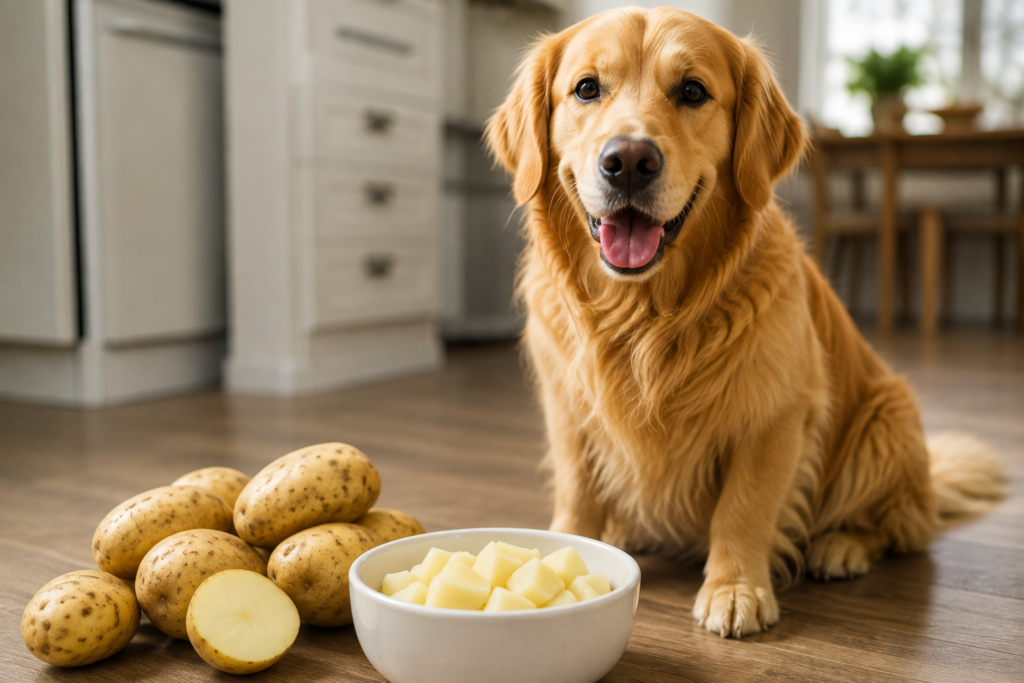
Quick Answer: Yes, dogs can eat plain, fully cooked potatoes in small amounts. Boiled, baked, or steamed potatoes can be an occasional treat for most healthy adult dogs.
The important part is how the potato is prepared. Raw and green potatoes should not be fed to dogs because they can contain higher levels of naturally occurring glycoalkaloids such as solanine. Potatoes covered in butter, salt, cream, onion, garlic, or other seasonings should also be avoided.
If you give your dog potato, remove the skin, cook it thoroughly, let it cool, and serve a small amount plain.
🐾 Quick Answer: Plain, cooked, peeled potatoes can be an occasional treat for most healthy adult dogs. Avoid raw, green, fried, or heavily seasoned potatoes.
Quick Safety Reference
| Potato Type | Safe for Dogs? | What to Know |
|---|---|---|
| Plain boiled potato | ✅ Yes | Cook thoroughly and serve plain |
| Plain baked potato | ✅ Yes | Remove skin and toppings |
| Sweet potato | ✅ Yes | Cook and serve plain |
| Raw potato | ❌ Avoid | Can contain solanine and other glycoalkaloids |
| Green potato | ❌ Avoid | Higher glycoalkaloid levels |
| Potato skin | ⚠️ Best avoided | Can contain higher levels of glycoalkaloids |
| Mashed potatoes with butter/salt | ❌ Avoid | Added fat, salt, and seasonings |
| French fries/chips | ❌ Avoid | High in fat and salt; may contain toxic seasonings |
This table reflects the safety distinctions made throughout your original article.
Key Takeaways
- Dogs can eat plain cooked potatoes in moderation.
- Raw potatoes should be avoided because they can contain solanine and related glycoalkaloids.
- Green or sprouted potatoes are a particular concern and should not be fed to dogs.
- Peel potatoes before serving to reduce exposure to compounds concentrated near the skin.
- Never add onion, garlic, excessive salt, butter, cream, or other seasonings.
- Potatoes should be an occasional treat rather than a major part of your dog’s diet.
- Sweet potatoes are another option and are generally served cooked and plain.
- Dogs with diabetes, kidney disease, obesity, or other health conditions may need individualized dietary advice.
- If your dog eats raw or green potatoes and develops concerning symptoms, contact your veterinarian.
Can Dogs Eat Potatoes?
Yes. Plain, cooked potatoes can be safe for most healthy adult dogs when offered in small amounts.
White potatoes, red potatoes, and Yukon Gold potatoes can all be prepared for dogs as long as they are thoroughly cooked and served without added butter, salt, cream, onion, garlic, or other seasonings.
The concern is mainly with raw, green, or improperly prepared potatoes.
Raw potatoes contain naturally occurring glycoalkaloids, including solanine and chaconine. Higher exposure can cause digestive problems and, in more serious cases, neurological or other systemic signs.
So, if your dog is eyeing the potato you’re preparing for dinner, a small piece of plain cooked potato is very different from giving them a raw potato or a handful of fries.
Which Potatoes Are Safe for Dogs?
Several common potato varieties can be given to dogs when properly prepared.
White potatoes
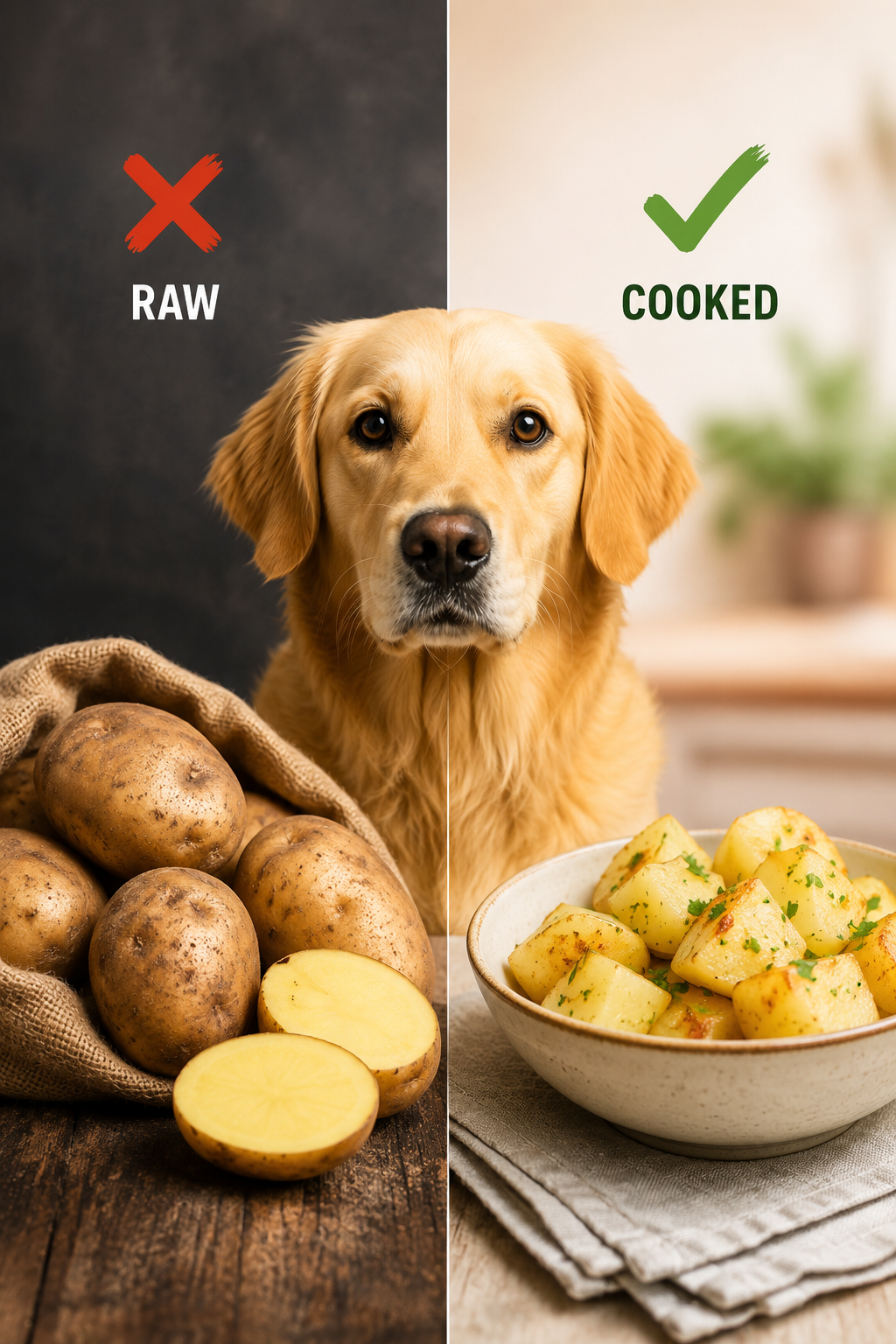
Plain white potatoes can be offered after they have been thoroughly cooked and peeled.
Red potatoes
Red potatoes can also be safe when cooked and served without seasonings.
Yukon Gold potatoes
Yukon Gold potatoes can be treated the same way: cook them thoroughly, remove the skin, and serve them plain.
Sweet potatoes
Sweet potatoes are also suitable for dogs when cooked and served plain. They are nutritionally different from white potatoes and provide beta-carotene and other nutrients.
Regardless of the variety, the same basic rule applies:
Cook it, keep it plain, and serve only a small amount.
Are Raw or Green Potatoes Dangerous for Dogs?
Raw Potatoes
Raw potatoes should not be fed to dogs.
They can contain solanine and other glycoalkaloids, particularly in the skin and areas of the potato that have been exposed to light. Your original sources associate exposure with signs such as vomiting, diarrhea, lethargy, weakness, confusion, and, with more significant exposure, neurological problems.
If your dog has eaten a raw potato, the seriousness depends on factors such as the amount eaten, the dog’s size, and whether the potato was green or sprouted.
If you know your dog ate a significant amount of raw potato, contact your veterinarian for advice rather than waiting for symptoms.
Green Potatoes
Green potatoes should be avoided completely.
Green coloring develops when potatoes are exposed to light and can indicate increased levels of glycoalkaloids. Your original article specifically identifies green potatoes as a higher-risk form and recommends never feeding them to dogs.
Don’t try to make a green potato safe by simply cooking it. Discard it instead.
The same applies to potatoes with extensive sprouting or significant green areas.
When Should I Call the Vet?
If your dog ate a small amount of plain cooked potato and is acting normally, there may be no reason for immediate concern.
The situation is different if your dog ate raw or green potato or develops symptoms.
Contact your veterinarian if your dog develops:
- Vomiting
- Diarrhea
- Unusual lethargy
- Weakness
- Confusion
- Other concerning changes after eating raw or green potato
Seek emergency veterinary care for severe signs such as:
- Seizures
- Collapse
- Difficulty breathing
- Severe weakness
- Loss of consciousness
Your original article recommends veterinary attention for vomiting, diarrhea, or lethargy after raw potato exposure and emergency care for severe neurological or systemic signs.
If you’re unsure how much your dog ate or what type of potato it was, tell your veterinarian what happened and, if possible, keep the packaging or remaining food available for identification.
Are Potatoes Nutritious for Dogs?
Cooked potatoes provide several nutrients, including:
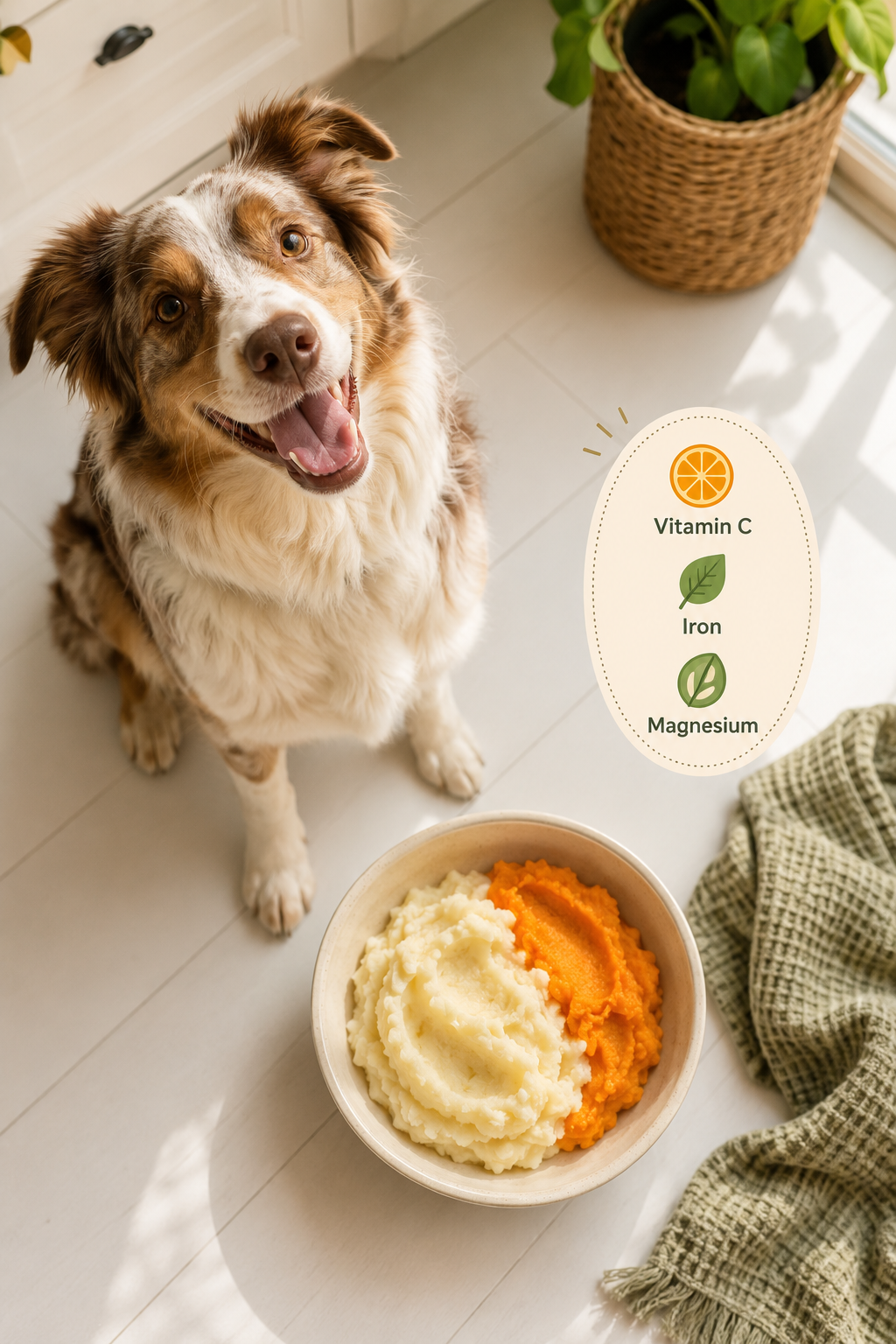
- Vitamin C
- Vitamin B6
- Potassium
- Iron
- Magnesium
- Some dietary fiber
These nutrients can contribute to a dog’s overall diet, but potatoes aren’t nutritionally essential. A complete and balanced dog food should provide the nutrients your dog needs without relying on potatoes.
Potatoes are also relatively starchy and calorie-dense, which is another reason to keep portions modest.
Think of plain cooked potato as an occasional addition or treat, not something your dog needs to eat every day.
How Much Potato Can a Dog Eat?
The safest approach is to start with a small amount.
Your original article suggests that a medium-sized dog can have a few small cubes of plain cooked potato a few times per week, with somewhat larger amounts possible for larger dogs. It also emphasizes that potatoes should never replace balanced dog food.
Because dogs differ in size, calorie needs, activity level, and health, there isn’t one portion that works for every dog.
Start with:
- A few small pieces for a medium or large dog
- An even smaller amount for a small dog
- A tiny portion when introducing potato for the first time
Watch for digestive upset after introducing any new food.
Dogs that need extra caution
Speak with your veterinarian before regularly giving potatoes to a dog with:
- Diabetes
- Obesity
- Kidney disease
- Other conditions requiring dietary management
The original article specifically recommends extra caution for dogs with these conditions.
How to Safely Prepare Potatoes for Your Dog
Preparing potatoes for your dog is straightforward.
1. Choose a fresh potato
Avoid potatoes with obvious green areas or extensive sprouts.
2. Peel it
Your original article recommends removing the skin before feeding. This reduces exposure to compounds that may be concentrated in or near the skin.
3. Cook it thoroughly
Boil, bake, or steam the potato until it is soft.
4. Keep it plain
Don’t add:
- Butter
- Salt
- Cream
- Garlic
- Onion
- Seasoning
- Sauces
5. Let it cool
Don’t give your dog food straight from the oven or pot.
6. Cut it into small pieces
Small pieces are easier for your dog to eat and reduce the risk of choking.
7. Start small
If potato is new to your dog, begin with a small amount and monitor them for digestive upset.
Can Dogs Eat Potato Skins or Fried Potatoes?
Potato Skins
It’s best to remove potato skins before feeding potatoes to your dog.
The original article notes that the skin can contain more solanine and other compounds than the inner flesh.
Removing the skin is an easy precaution, so there’s little reason to leave it on when preparing potato specifically for your dog.
Fried Potatoes
French fries, chips, hash browns, and similar fried foods should not be used as dog treats.
They’re often high in fat and salt, and some preparations contain onion or garlic powder, which are toxic to dogs.
The same applies to loaded mashed potatoes containing butter, cream, cheese, salt, onion, garlic, or gravy.
If you want to share potato with your dog, plain boiled or baked potato is the much better choice.
Can Dogs Eat Potatoes Every Day?
Potatoes are better treated as an occasional food, not an everyday staple.
Even when cooked plainly, potatoes are a starchy food and can add extra calories to your dog’s diet.
Your original article also discusses the FDA investigation into a potential association between certain diets containing substantial amounts of potatoes, legumes, or both and canine dilated cardiomyopathy (DCM). The issue is more relevant to the overall formulation of a dog’s diet than to giving your dog a few pieces of cooked potato as an occasional treat.
So there’s no need to panic about an occasional potato treat. The bigger point is that potatoes shouldn’t become a major part of your dog’s everyday diet.
Can Puppies Eat Potatoes?
Puppies can have small amounts of plain cooked potato, but their main diet should be a complete and balanced puppy food appropriate for growth.
Puppies have different nutritional requirements from adult dogs, so treats should remain a small part of their overall diet.
Start with a tiny amount if your veterinarian says potato is appropriate, and introduce it gradually.
If your puppy has digestive problems, a medical condition, or is on a special diet, ask your veterinarian before adding potatoes.
Frequently Asked Questions
Can dogs eat boiled potatoes?
Yes. Plain boiled potatoes can be given to most healthy adult dogs in small amounts. Peel them first and don’t add salt, butter, garlic, onion, or other seasonings.
Can dogs eat baked potatoes?
Yes, provided the potato is fully cooked, peeled, and plain. Don’t share baked potatoes covered in butter, cheese, sour cream, salt, or other toppings.
Can dogs eat mashed potatoes?
Plain mashed potato made only from cooked potato can be acceptable in a small amount. However, mashed potatoes prepared for people often contain butter, milk, cream, salt, garlic, onion, or other ingredients that aren’t appropriate for dogs.
Can dogs eat sweet potatoes?
Yes. Cooked, plain sweet potatoes can be an occasional treat and provide nutrients such as beta-carotene and vitamin A.
Can dogs eat potato chips?
No. Potato chips are high in fat and salt and may contain seasonings that are unsafe for dogs.
Can dogs eat French fries?
French fries aren’t a good choice for dogs because they’re typically high in fat and salt and may contain onion or garlic seasoning.
What should I do if my dog ate a raw potato?
If your dog ate a raw potato, especially a green or sprouted potato, contact your veterinarian for advice. Watch for vomiting, diarrhea, lethargy, weakness, confusion, or other unusual symptoms.
Conclusion
So, can dogs eat potatoes? Yes — but preparation matters.
Plain, fully cooked potatoes can be an occasional treat for most healthy adult dogs. Boiling, baking, or steaming are simple options. Remove the skin, let the potato cool, cut it into small pieces, and keep it completely plain.
Avoid raw potatoes, green potatoes, fried potatoes, and potatoes covered in butter, salt, onion, garlic, or other seasonings.
Sweet potatoes are another cooked, plain option and can provide useful nutrients.
Most importantly, potatoes should complement your dog’s normal balanced diet rather than replace it. If your dog has diabetes, kidney disease, obesity, or another condition that requires dietary management, check with your veterinarian before making potatoes a regular treat.