

Quick Answer
Most dogs need brushing two to five times a week and a full groom a dog session (bath, nail trim, ear check) every four to six weeks, but the right schedule depends on coat type, breed, and lifestyle. Short-haired dogs can often stretch to monthly grooming, while double-coated, curly, or long-haired breeds may need professional grooming every three to six weeks and daily brushing at home [3][8].
Key Takeaways
- Brushing frequency ranges from weekly (short coats) to daily (curly or long coats) [1][9].
- Professional grooming every 4-6 weeks works for most breeds; some need it every 3 weeks [3].
- Bathing every 4-12 weeks is typical, depending on skin condition and activity level [1].
- Over-grooming can strip natural oils and cause dry, irritated skin [9].
- Puppies should start short, positive grooming sessions around 8-10 weeks old [8].
- Senior dogs need gentler, shorter sessions and more frequent skin checks [6].
- Matted fur should never be forced through with a brush; severe mats often need professional shaving [8].
- Tipping a groomer typically runs 15-20% of the service cost, similar to other personal-care tips.
How Often Should Dogs Be Groomed by Breed Size
Breed size matters less than coat type, but in general, small and toy breeds need more frequent trims because their hair grows faster relative to their body, while large short-coated breeds can go longer between sessions [3]. A good rule: match the schedule to the coat, not the scale.
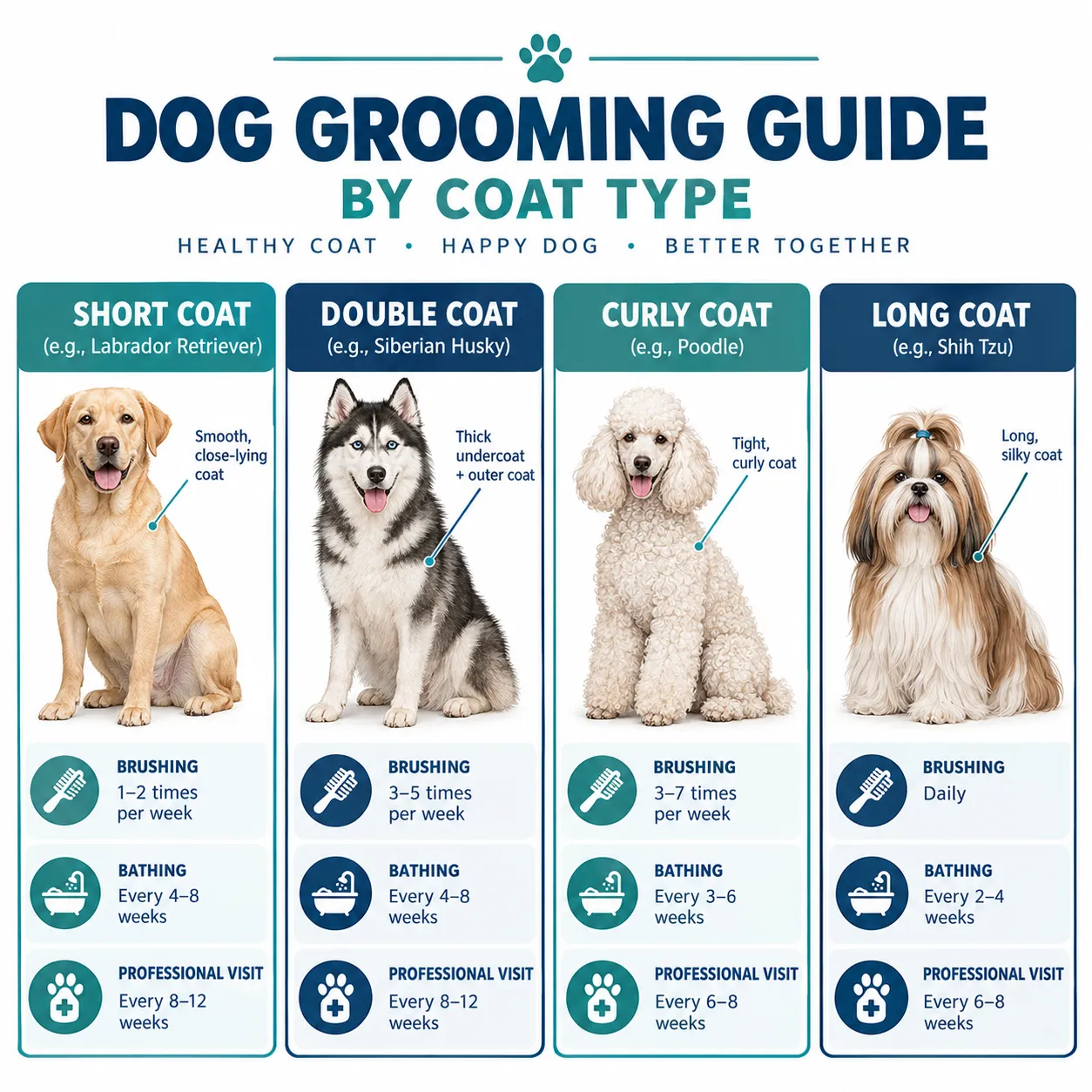
| Coat type (example breeds) | Brushing | Professional groom | Bathing |
|---|---|---|---|
| Short, smooth (Labrador, Beagle) | Weekly | Every 8-12 weeks | Every 6-8 weeks |
| Double coat (Husky, Corgi) | 2-3x weekly, daily during shedding | Every 6-8 weeks | Every 6-8 weeks |
| Curly/wiry (Poodle, Schnauzer) | Every other day | Every 3-4 weeks | Every 4 weeks |
| Long-haired (Shih Tzu, Maltese) | Daily | Every 4-6 weeks | Every 3-4 weeks |
Decision rule: choose the professional-groom-every-3-4-weeks column if your dog’s coat is curly or continuously growing (like most doodles); choose the 8-12-week column if the coat sheds naturally and lies flat.
What Happens If You Don’t Groom Your Dog Regularly
Skipping regular grooming leads to matting, skin infections, overgrown nails, and painful ear or anal gland problems that often require a vet visit instead of a quick salon trip [5]. Neglected coats trap moisture, dirt, and dead hair against the skin, which creates the perfect environment for bacteria and yeast.
Common consequences include:
- Matting that pulls on skin and can trap moisture, leading to hot spots [8].
- Overgrown nails that change how a dog walks and can curl into paw pads [5].
- Ear infections from trapped hair and debris, especially in floppy-eared breeds [1].
- Missed early signs of lumps, parasites, or skin conditions that regular grooming helps you catch early [1][6].
Edge case: a dog that seems fine between grooming sessions can still be hiding a mat under a fluffy top coat. Run your hands down to the skin weekly, not just over the surface.
How Much Does Professional Dog Grooming Cost
Professional grooming typically costs between $40 and $90 per visit for a standard bath, brush, nail trim, and ear cleaning, with full-service grooming for high-maintenance breeds running higher [10]. Price depends on your dog’s size, coat condition, location, and whether de-matting or special shampoos are needed.
Factors that raise the price:
- Severe matting (often an extra fee or a required shave-down)
- Large or giant breeds needing more time and product
- Specialty cuts (breed-standard trims, hand-stripping for wiry coats)
- Add-ons like teeth brushing, de-shedding treatments, or flea baths
How Much to Tip a Dog Groomer
A standard tip for a dog groomer is 15-20% of the total service cost, similar to tipping a hairstylist. For a $60 groom, that works out to roughly $9-$12. If your groomer handled a difficult dog, a severe matting job, or squeezed you in as an emergency, tipping toward the higher end is a nice gesture.
How Much Does a Dog Groomer Earn
Dog groomer pay varies widely by region, experience, and whether they’re salon employees, mobile groomers, or shop owners, with many groomers earning through a mix of hourly wages, commission, and tips. Experienced groomers in busy urban salons or those who run their own mobile grooming business tend to earn more than entry-level groomers in high-volume chain settings.
Can I Groom My Dog at Home or Should I Use a Groomer
You can groom a dog at home for routine brushing, nail trims, and baths, but a professional groomer is worth it for breed-specific cuts, de-matting, and dogs that need extra handling skill. Many owners do a hybrid approach: home maintenance between scheduled professional visits [4][6].
Choose home grooming if:
- Your dog has a simple coat (short or wavy, no breed-standard cut needed)
- You have the right tools and a calm, cooperative dog
- You just need a bath, brush-out, or nail trim
Choose a professional groomer if:
- Your dog’s coat requires scissor or clipper work to a breed standard
- There’s matting you can’t safely remove yourself
- Your dog is anxious, aggressive, or has mobility issues that need experienced handling
How to Groom a Dog at Home (Step by Step)
Grooming a dog at home comes down to four basics done in the right order: brush out tangles, bathe and dry thoroughly, trim nails, and check ears, teeth, and skin [4][8]. Doing these steps consistently prevents most of the problems that send owners to the groomer for emergency de-matting.
Basic checklist:
- Brush first, before any water touches the coat, wet mats tighten and get harder to remove [8].
- Bathe with a dog-specific shampoo, rinsing thoroughly since leftover soap irritates skin [4].
- Dry completely, especially in skin folds and ear areas, to prevent fungal or bacterial growth.
- Trim nails carefully, avoiding the quick (the pink vein visible in light-colored nails).
- Check ears, teeth, and skin for redness, odor, or lumps while you have your dog calm and cooperative.
A common mistake: bathing too often without brushing first, which can mat the coat even tighter and waste the whole bath.
Best Tools for Grooming Dogs at Home
The core home grooming kit includes a slicker brush, a de-shedding tool, nail clippers or a grinder, and a dog-safe shampoo matched to your dog’s skin type [1][4]. Investing in two or three good tools covers almost every routine grooming need.
De-Shedding Dog Grooming Brush
A de-shedding brush is designed to reach through the top coat and pull loose undercoat hair without cutting the topcoat, making it especially useful for double-coated breeds during seasonal shedding [9]. Use it 2-3 times a week during heavy shedding seasons (spring and fall) and once a week otherwise.
Quick example: A Husky owner brushing with a standard slicker brush alone may feel like they’re barely making a dent in shedding. Switching to a de-shedding tool once a week, alongside regular brushing, noticeably reduces loose hair around the house.
What’s the Difference Between Bathing and Grooming a Dog
Bathing is just washing the coat with shampoo and water, while grooming is the full package: brushing, bathing, nail care, ear cleaning, and sometimes trimming or clipping [1][6]. A dog can get bathed weekly but still need a full groom only once a month.
| Task | Bathing | Full Grooming |
|---|---|---|
| Water and shampoo | Yes | Yes |
| Brushing out coat | Sometimes | Always |
| Nail trimming | No | Yes |
| Ear and skin check | No | Yes |
| Haircut or trim | No | Often (breed-dependent) |
Do All Dogs Need the Same Grooming Schedule
No, grooming needs depend heavily on coat type, activity level, skin sensitivity, and age, so a one-size-fits-all schedule doesn’t work [3][9]. A dog that swims often or spends time outdoors may need more frequent baths than an indoor dog with the same coat.
Do Short-Haired Dogs Need Grooming as Much as Long-Haired Dogs
Short-haired dogs need less brushing and fewer trims than long-haired dogs, but they still need regular grooming for shedding control, nail care, and skin checks [3]. A smooth-coated Boxer doesn’t need scissor work, but skipping brushing still leaves loose hair everywhere and misses early signs of skin issues.
Decision rule: if your dog’s coat lies flat and sheds in a predictable pattern, weekly brushing and a bath every 6-8 weeks is usually enough. If the coat is curly, wiry, or continuously growing, plan on near-daily brushing and professional visits every 3-4 weeks.
Signs Your Dog Needs Grooming
Watch for visible mats, a strong odor, overgrown nails that click on the floor, and excessive scratching or licking, which can all signal it’s time to groom a dog sooner rather than later [1][7]. Catching these early saves money and prevents skin problems.
Common signs include:
- Nails clicking on hard floors (a sign they’re too long)
- Noticeable odor even after a recent bath
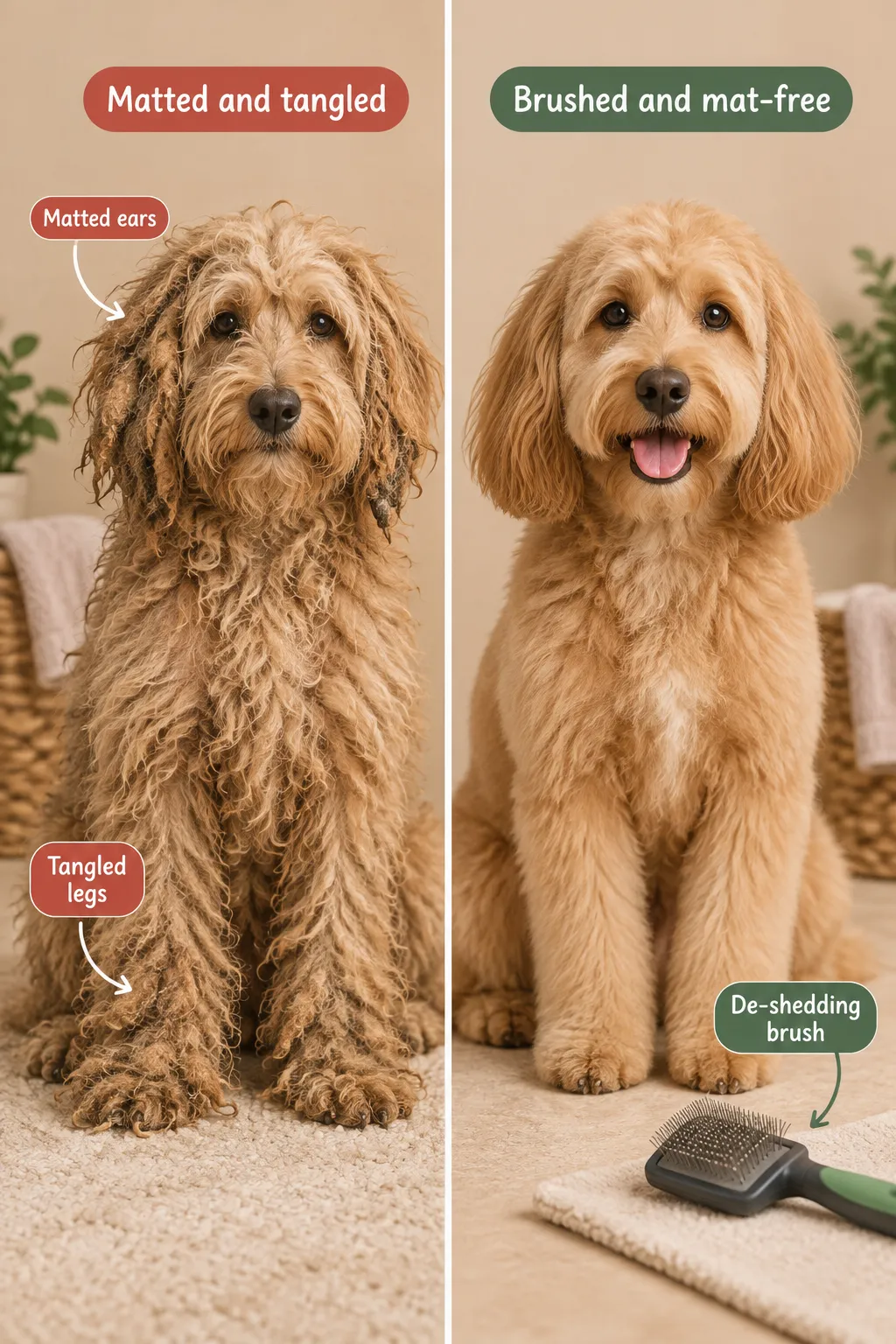
- Visible tangles or mats, especially behind ears, under legs, and around the collar
- Excessive licking or scratching, which can point to skin irritation hidden under the coat
If your dog is constantly licking or chewing at their paws between grooming sessions, it’s worth reading about why dogs lick their paws, since this can signal allergies or skin issues that grooming alone won’t fix.
How to Groom a Dog with Matted Fur
Never force a brush through a mat; instead, work mats loose gently with your fingers and a detangling spray, and if a mat is tight against the skin, let a professional shave it out safely [6][8]. Pulling on mats can tear skin that’s thinner and more fragile than it looks under hair.
Step-by-step approach:
- Apply a detangling spray or a light coat conditioner to soften the mat.
- Use your fingers to gently separate the hair from the outside in.
- Switch to a mat splitter or wide-tooth comb for stubborn sections.
- If the mat sits close to the skin or your dog is in pain, stop and book a professional groomer instead of risking skin injury.
Edge case: severe, body-wide matting usually means a full shave-down is the kindest, safest option, even though it’s not the look most owners want.
How to Groom a Dog That Hates Baths
Start with short, low-pressure sessions, use non-slip mats, lukewarm water, and high-value treats, and build up gradually instead of forcing a full bath on a scared dog [4][6]. Fear around bathing usually comes from past discomfort (cold water, slipping, or noise), so changing the experience changes the reaction.
Practical tips:
- Use a handheld sprayer on low pressure instead of pouring water over the head
- Keep sessions short at first, even just wetting the paws and rewarding calmly
- Reward with a treat your dog loves, like mint and parsley fresh-breath biscuits, right after each calm moment
- Dry with a towel first before using a dryer, since the noise can spook sound-sensitive dogs
What Age Should You Start Grooming Puppies
Start short, gentle grooming exercises around 8-10 weeks old, well before full coat growth, so your puppy learns grooming is normal and non-threatening [8]. Early positive handling sessions build the trust that makes adult grooming far easier.
A simple early routine:
- Touch paws, ears, and mouth daily in short sessions, pairing it with praise or a treat
- Introduce a soft brush at home before any professional visit
- Book a first “puppy groom” (a light trim, no major cutting) around 12-16 weeks to get them used to the salon environment
This early bonding time is similar to other trust-building moments, like the comfort-seeking behavior described in why dogs sleep at your feet, consistent, calm contact builds confidence either way.
Grooming Tips for Senior Dogs
Senior dogs need shorter, gentler grooming sessions, extra support for joints, and closer skin and lump checks, since aging skin is thinner and mobility is often reduced [6]. What used to be a quick nail trim might now need more patience and a slower pace.
Senior-specific adjustments:
- Use a non-slip surface and support joints during standing baths
- Break grooming into shorter sessions rather than one long session
- Check more closely for lumps, bumps, or skin changes, since these become more common with age
- If your senior dog has mobility or joint concerns that make grooming difficult, conditions like those discussed in TPLO surgery in dogs may be affecting how comfortably they can stand or be handled.
Is It Bad to Groom Your Dog Too Often
Yes, over-bathing or over-brushing can strip natural oils, dry out skin, and cause irritation, so more isn’t always better [9]. The right frequency balances cleanliness with protecting the skin’s natural barrier.
Signs you’re overdoing it:
- Dry, flaky skin after bathing
- Dull coat that used to look shiny
- Increased scratching after grooming sessions, not before
Decision rule: if your dog’s skin looks dry or irritated after a bath, stretch the interval by a week or two and switch to a moisturizing, dog-specific shampoo.
How to Become a Dog Groomer
Becoming a dog groomer usually involves hands-on training through a grooming school, apprenticeship under an experienced groomer, or a combination of both, followed by building a client base and skill set over time. Formal certification isn’t required everywhere, but it can help with job placement and client trust.
A typical path looks like:
- Complete a grooming course or apprenticeship covering handling, safety, and breed-specific cuts
- Practice on a variety of coat types and temperaments under supervision
- Build speed and confidence with routine services (baths, trims, nail care)
- Specialize in breed-standard cuts, show grooming, or mobile grooming as experience grows
Frequently Asked Questions
How often should I groom a dog with a double coat? Brush a double-coated dog 2-3 times weekly, and daily during heavy spring and fall shedding, with a full professional groom every 6-8 weeks [9].
Can I use human shampoo to groom my dog? No. Human shampoo has a different pH than dog skin and can cause dryness or irritation; use a dog-specific shampoo instead [4].
How long does a full grooming session take? A typical professional groom takes 1-3 hours depending on coat condition, size, and whether de-matting is needed [10].
Should I groom my dog before or after a vet visit? Either works, but grooming before a vet visit can make it easier for your vet to spot skin issues since the coat is clean and brushed [1].
Is nail trimming part of grooming or separate? Nail trimming is part of a full grooming session, but many owners also do it separately at home every 2-4 weeks [5][8].
Do hairless or very short-haired breeds still need grooming? Yes. They still need skin care, nail trims, and occasional baths, even without coat brushing needs [3].
What’s the biggest grooming mistake new owners make? Skipping regular brushing between baths, which lets mats form that then require much harder (and sometimes painful) removal later [8].
Conclusion
Grooming a dog isn’t a one-size-fits-all task. Your real schedule depends on your dog’s coat type, age, and how active their lifestyle is, not just a generic calendar reminder. Start by identifying your dog’s coat category from the table above, then build a simple weekly brushing habit and book professional visits every 4-6 weeks as a baseline. Watch for early warning signs like mats, odor, or clicking nails, and adjust the frequency up or down based on how your dog’s skin and coat actually respond. If you’re ever unsure whether a mat, skin issue, or behavior change needs a vet instead of a groomer, it’s always worth checking with your veterinarian first.
References
[1] Grooming And Coat Care For Your Dog – https://vcahospitals.com/know-your-pet/grooming-and-coat-care-for-your-dog [3] How Often Should You Groom Your Dog – https://www.goodrx.com/pet-health/dog/how-often-should-you-groom-your-dog [4] Dog Grooming Tips – https://www.aspca.org/pet-care/dog-care/dog-grooming-tips [5] Routine Health Care Of Dogs – https://www.merckvetmanual.com/dog-owners/routine-care-of-dogs/routine-health-care-of-dogs [6] How To Groom A Dog – https://www.bluecross.org.uk/advice/dog/how-to-groom-a-dog [7] Grooming Pets – https://www.pdsa.org.uk/pet-help-and-advice/looking-after-your-pet/all-pets/grooming-pets [8] How To Groom A Dog – https://www.akc.org/expert-advice/health/how-to-groom-a-dog/ [9] How Often To Groom Dog – https://www.kinship.com/uk/dog-health/how-often-to-groom-dog [10] Choosing The Right Groomer For Your Dog – https://www.preventivevet.com/dogs/choosing-the-right-groomer-for-your-dog