

Quick Answer
Grain free dog food isn’t automatically better or worse for every dog. It works well for dogs with diagnosed grain allergies, but for most healthy dogs, grains like rice and oats are perfectly good nutrition. The bigger concern isn’t the absence of grain itself, it’s diets that lean heavily on peas, lentils, and potatoes, which the FDA has flagged in connection with heart disease reports in some dogs[5][8].
Key Takeaways
- Grain-free doesn’t mean healthier. Most dogs digest grains like rice, oats, and barley just fine[8].
- The FDA has investigated a potential link between certain grain-free diets and dilated cardiomyopathy (DCM) since 2018, but has not confirmed causation[5][9].
- In FDA data from 2014-2019, about 90% of dogs with reported DCM were eating grain-free food, and 93% were on diets with peas or lentils[8][5].
- The FDA has not recalled any pet food over this issue and stopped giving routine case-count updates without new scientific findings[5][10].
- Legume-heavy “BEG” diets (boutique, exotic-ingredient, grain-free) are the bigger focus of concern than grain-free labeling alone[8][5].
- Dogs with true grain allergies (rare, but real) may genuinely benefit from grain-free food.
- Large and giant breeds on legume-heavy grain-free diets should be monitored closely and discussed with a vet[5][9].
- Grain-free food is often more expensive than grain-inclusive food without proven extra benefit for most dogs.
- Some dogs diagnosed with diet-associated DCM improved after switching diets and taking taurine supplements[8][2].
What is grain-free dog food and how is it different?
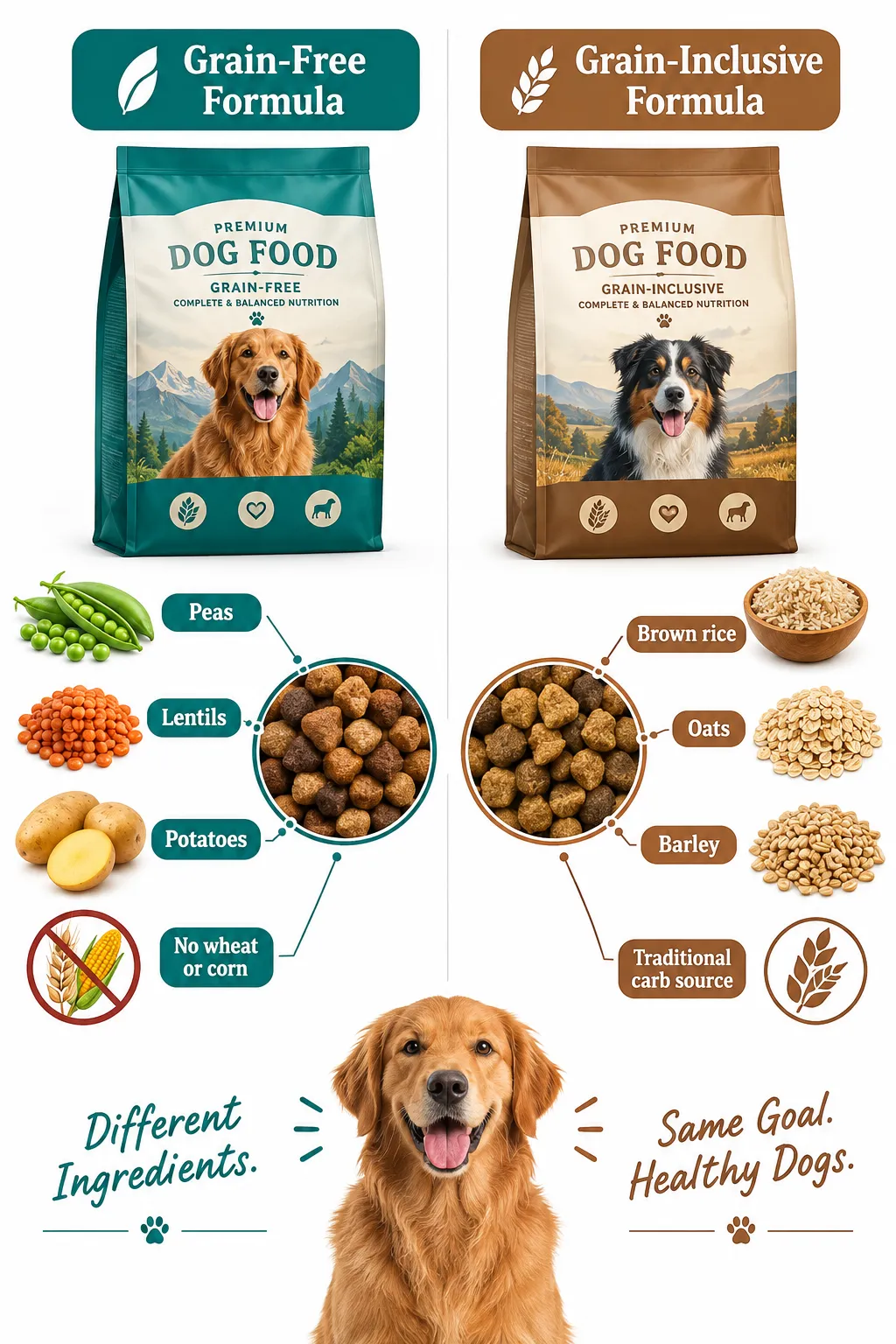
Grain-free dog food replaces wheat, corn, rice, oats, and barley with other carbohydrate sources, most commonly peas, lentils, chickpeas, and potatoes. The protein and fat content can look similar to grain-inclusive food, but the carb source is the key difference.
Brands market grain-free formulas as closer to a dog’s “ancestral” diet, but dogs have evolved alongside humans for thousands of years and have genes that help them digest starches, including grains. Here’s how the two formulas typically break down:
| Feature | Grain-free dog food | Grain-inclusive dog food |
|---|---|---|
| Carb source | Peas, lentils, potatoes | Rice, oats, barley, corn |
| Fiber content | Often lower, varies by brand | Generally consistent |
| Average cost | Higher | Lower to moderate |
| FDA/DCM scrutiny | Under ongoing review | Not flagged |
| Best for | Dogs with confirmed grain allergy | Most healthy dogs |
Decision rule: Choose grain-free food only if your vet has diagnosed a specific grain allergy or sensitivity, not because of marketing claims about “ancestral diets.”
Is grain-free dog food actually better for dogs?
For the average healthy dog, no, grain-free dog food isn’t proven to be better than grain-inclusive food. Grains provide fiber, B vitamins, and energy that most dogs use efficiently, and true grain allergies in dogs are uncommon.
The ASPCA notes that grains like rice, oats, and barley are a useful source of carbohydrates and nutrients for most dogs, and that grain-free diets are mainly appropriate for dogs with documented allergies or specific medical needs, not as a default choice[8]. If your dog is doing fine on a grain-inclusive diet with no digestive issues, skin problems, or allergy symptoms, there’s no strong reason to switch.
Common mistake: Many owners switch to grain-free food assuming it’s automatically “more natural” or healthier, based on pet store marketing rather than a vet’s recommendation.
Is grain-free dog food linked to heart disease in dogs?
The FDA has been investigating a potential association between certain grain-free diets and dilated cardiomyopathy (DCM) since 2018, but as of its March 2025 update, no causal link has been confirmed[5][9]. The relationship remains “potential” and under active review.
Here’s what the data actually shows:
- In an FDA analysis of 196 dogs eating a single primary diet, about 90% were on grain-free food, and many of those diets listed peas, lentils, other pulses, or potatoes as main ingredients[4][5].
- Earlier FDA data covering 2014-2019 found 515 canine DCM case reports, with roughly 90% of affected dogs on grain-free food and 93% on diets containing peas and/or lentils[8][5][10].
- A 2022 FDA Vet-LIRN report found many diet-associated DCM cases occurred in breeds not typically prone to the condition, often eating diets where legumes or potatoes were top ingredients, suggesting a nutrition-related factor beyond genetics alone[2][4].
- Despite these patterns, the FDA has stated it has “insufficient data to establish causality” and has not recalled any grain-free products[10][5].
“DCM has been reported in dogs eating both grain-free and grain-containing diets… the issue may involve multiple factors, ingredients, nutrient formulation, genetics, and underlying disease, rather than grains alone.”, summarized from FDA investigation findings[5][10]
The FDA has said it will not provide further routine numeric updates unless there’s meaningful new scientific information, which tells you the evidence, while concerning, still isn’t conclusive enough for regulatory action[5][9].
Edge case: Some dogs diagnosed with diet-associated DCM have improved or fully recovered after switching off grain-free, legume-heavy diets and receiving taurine supplements, a sign that for at least some dogs, the diet connection is real and reversible[8][2].

Grain-free vs regular dog food: which is better?
Regular (grain-inclusive) food is the safer default for most healthy dogs, while grain-free food makes sense only for dogs with a confirmed grain allergy. Neither option is universally “better”, it depends on your individual dog’s health history.
Quick comparison for decision-making:
- Choose grain-inclusive food if: your dog has no diagnosed allergies, you want a well-tested formula with a long safety track record, and you want to avoid the DCM-related uncertainty tied to some grain-free, legume-heavy diets[5][8].
- Choose grain-free food if: your vet has confirmed a grain allergy through diet trials or testing, or your dog has a rare medical condition requiring a different carb source.
- Avoid both extremes blindly: switching diets based on trends rather than your dog’s actual symptoms is one of the most common feeding mistakes owners make.
Can grain-free dog food cause allergies?
Grain-free dog food doesn’t cause allergies, in fact, true grain allergies in dogs are rare. Most food sensitivities in dogs are actually linked to protein sources like chicken, beef, or dairy, not grains.
If your dog has itchy skin, ear infections, or digestive upset, grains are rarely the culprit. A proper elimination diet supervised by your vet is the only reliable way to identify a true food allergy. Switching to grain-free food without this testing often just swaps one set of ingredients for another without solving the underlying issue.
Quick example: A dog scratching constantly might get blamed for a “grain allergy,” but the real trigger could be a chicken-based protein, switching to grain-free chicken formula wouldn’t fix anything.
Grain-free dog food for sensitive stomachs
Grain-free food isn’t automatically gentler on a sensitive stomach, some dogs actually do worse on legume-heavy grain-free formulas because peas and lentils can be harder to digest in large amounts. A simpler, well-balanced grain-inclusive diet with easily digestible rice is often the first thing vets recommend for dogs with stomach sensitivity.
If your dog has chronic digestive issues:
- Rule out parasites, infections, or other medical causes first.
- Try a limited-ingredient diet (grain-inclusive or grain-free) under vet guidance.
- Introduce new food gradually over 7-10 days to avoid further upset.
- Keep a food diary to track symptoms against ingredient changes.
If you’re curious about safe human foods that can supplement a sensitive stomach diet, our guide on what human foods are safe or toxic for dogs covers common options worth knowing about.
Grain-free dog food for weight loss
Grain-free dog food isn’t a reliable weight-loss tool, calorie content and portion control matter far more than whether a food contains grain. Some grain-free formulas are actually higher in fat and calories than grain-inclusive options, which can work against weight loss goals.
For dogs that need to lose weight, focus on:
- Total daily calories, not the carb source
- Protein-to-fat ratio appropriate for weight management
- Portion measuring instead of free-feeding
- Regular exercise paired with diet changes
If you’re exploring other dietary approaches, our guide to homemade dog food walks through vet-approved recipes that can support weight management when portioned correctly.
Is grain-free dog food good for puppies?
Grain-free dog food isn’t recommended as a default for puppies, especially large and giant breeds, given the ongoing FDA review into diet-related heart issues[5][9]. Puppies need carefully balanced nutrition for growth, and most veterinary nutritionists recommend a well-tested, grain-inclusive puppy formula unless there’s a specific medical reason to avoid grains.
Decision rule: Choose a grain-inclusive puppy food unless your vet has specifically diagnosed a grain sensitivity. Large-breed puppies in particular benefit from diets with a strong safety track record, since their rapid growth already puts stress on developing joints and organs.
Grain-free dog food side effects
The most serious potential side effect tied to some grain-free diets is an association with dilated cardiomyopathy (DCM), a heart condition, though a direct cause hasn’t been confirmed[5][8]. Other reported issues include digestive upset from unfamiliar legume-heavy ingredients and, in some cases, nutrient imbalances if the formula isn’t well-balanced.
Watch for these signs if your dog eats a grain-free, legume-heavy diet:
- Unexplained fatigue or exercise intolerance
- Coughing or labored breathing
- Pale gums
- Fainting or collapse
- Digestive upset after switching foods
If you notice any of these signs, contact your vet promptly and mention your dog’s current diet. Cardiac screening may be recommended, especially for large or giant breeds on legume-heavy grain-free food[5][9].
Does my dog actually need grain-free food?
Most dogs do not need grain-free food. Unless your vet has diagnosed a grain allergy or a specific medical condition, a well-balanced grain-inclusive diet is just as nutritious, usually cheaper, and backed by a longer safety record.
Ask yourself:
- Has my dog been diagnosed with a grain allergy by a vet? (Not just suspected.)
- Is my dog showing digestive or skin symptoms that a vet has linked to grain specifically?
- Am I switching because of marketing, or because of an actual medical recommendation?
If you answered “no” to the first two questions, your dog likely doesn’t need grain-free food.
Best grain-free dog food brands and how to choose one
If you and your vet decide grain-free is the right choice for your dog, look for brands that have passed AAFCO feeding trials and avoid relying heavily on peas, lentils, or potatoes as the top ingredients. Reputable manufacturers will publish nutrient testing and have a transparent sourcing history.
When evaluating any grain-free brand, check for:
- Clear ingredient lists where meat, not legumes, is the primary ingredient
- AAFCO statement confirming the food is “complete and balanced” for your dog’s life stage
- Company transparency about sourcing, manufacturing, and quality testing
- No history of recalls related to nutrient deficiencies or contamination
Your vet can also recommend specific formulas based on your dog’s breed, size, and health history, this is far more reliable than general “best of” lists online.
How much does grain-free dog food cost?
Grain-free dog food typically costs more per pound than grain-inclusive food because of pricier ingredients like deboned meats, peas, and lentils. Exact pricing varies widely by brand, bag size, and retailer, so it’s worth comparing unit price (cost per pound) rather than just the bag price when shopping.
Factors that affect cost:
- Protein source (novel proteins like duck or venison cost more than chicken)
- Bag size (larger bags usually have a lower per-pound cost)
- Brand reputation and manufacturing standards
- Where you buy (specialty pet stores vs. big-box retailers vs. online subscriptions)
Budget tip: If cost is a concern and your dog doesn’t have a diagnosed grain allergy, a quality grain-inclusive food often delivers similar nutrition for less money.
Grain-free dog food common mistakes to avoid
The biggest mistake is switching to grain-free food without a vet-confirmed reason, based on trends or marketing rather than your dog’s actual health needs. Other common mistakes compound this problem.
- Switching foods too quickly. Sudden diet changes can cause digestive upset, transition over 7-10 days by mixing old and new food gradually.
- Ignoring ingredient lists. Look past the “grain-free” label and check whether peas, lentils, or potatoes dominate the first five ingredients.
- Skipping vet consultations. Especially for large and giant breeds, discuss any grain-free, legume-heavy diet with your vet given the ongoing DCM investigation[5][9].
- Assuming all grain-free food is the same. Formulas vary widely in protein quality, fat content, and carb sources.
- Not monitoring for symptoms. Watch for fatigue, coughing, or appetite changes after any diet switch.
If you’re also curious about other everyday dog behaviors and care questions, check out our guides on why dogs lick their paws and why dogs eat grass, both of which touch on diet-related causes worth ruling out.
FAQ
Is grain-free dog food bad for all dogs? No. Grain-free dog food isn’t bad for every dog, but diets heavy in peas, lentils, or potatoes have raised concern in FDA investigations into heart disease, particularly in large and giant breeds[5][8].
What foods are linked to DCM in dogs? FDA data shows most reported DCM cases involved grain-free diets, with 93% of dogs on diets containing peas and/or lentils as major ingredients[8][5].
Should I switch my dog off grain-free food? Talk to your vet first. If your dog is healthy with no allergy diagnosis, your vet may recommend switching to a grain-inclusive diet with a longer safety track record[5][9].
Are grains bad for dogs in general? No. Grains like rice, oats, and barley are a normal, healthy carbohydrate source for most dogs and are not inherently harmful[8].
Can grain-free food cause allergies in dogs? Grain-free food doesn’t cause allergies. True grain allergies are rare in dogs, and most food sensitivities are linked to protein sources instead.
Is grain-free food good for puppies? It’s generally not recommended as a default, especially for large-breed puppies, given ongoing heart disease investigations tied to some grain-free diets[5][9].
Has the FDA recalled any grain-free dog food? No. The FDA has not recalled any pet food products over the DCM investigation as of its latest updates[5][10].
What should I do if my dog shows signs of heart problems? Contact your vet immediately, mention your dog’s current diet, and ask about cardiac screening, especially if your dog eats a legume-heavy grain-free diet[5][9].
Conclusion
Grain-free dog food isn’t a magic upgrade, and it isn’t a hidden danger for every dog either. The real story is more specific: most healthy dogs do fine on grain-inclusive food, grain allergies are rare, and the FDA’s ongoing investigation points to legume-heavy grain-free diets, not grains themselves, as the bigger area of concern for heart health[5][8][9].
Here’s what to do next:
- Check your dog’s current food label for peas, lentils, or potatoes as top ingredients.
- Talk to your vet before switching diets, especially if your dog is a large or giant breed.
- Watch for warning signs like fatigue, coughing, or pale gums, and report them promptly.
- Choose grain-free only with a documented medical reason, not based on marketing alone.
Your dog’s nutrition needs are individual. When in doubt, a conversation with your vet beats any pet food label every time.
Related reading
- Can Dogs Eat Human Food? Safe & Toxic Foods Every Owner Should Know
- Homemade Dog Food: Vet-Approved Guide & Recipe for 2026
- Why Do Dogs Eat Grass? Should You Be Concerned?
- Why Do Dogs Lick Their Paws? Causes, Signs & Fixes
References
[1] Fda Provides Update Investigation Potential Connection Between Certain Diets And Cases Canine Heart – https://www.fda.gov/animal-veterinary/cvm-updates/fda-provides-update-investigation-potential-connection-between-certain-diets-and-cases-canine-heart [2] Vet Lirn Update Investigation Dilated Cardiomyopathy – https://www.fda.gov/animal-veterinary/science-research/vet-lirn-update-investigation-dilated-cardiomyopathy [4] Fda Investigation Potential Link Between Certain Diets And Canine Dilated Cardiomyopathy February – https://www.fda.gov/animal-veterinary/news-events/fda-investigation-potential-link-between-certain-diets-and-canine-dilated-cardiomyopathy-february [5] Fda Investigation Potential Link Between Certain Diets And Canine Dilated Cardiomyopathy – https://www.fda.gov/animal-veterinary/outbreaks-and-advisories/fda-investigation-potential-link-between-certain-diets-and-canine-dilated-cardiomyopathy [8] Grain Free Pet Food Helpful Or Harmful Diet – https://www.aspca.org/news/grain-free-pet-food-helpful-or-harmful-diet [9] Fda Pet Food Dogs Diet Heart Disease Rcna101224 – https://www.nbcnews.com/health/health-news/fda-pet-food-dogs-diet-heart-disease-rcna101224 [10] Fda Ends Dcm Updates No Causality Data With Dog Foods – https://www.petfoodindustry.com/news-newsletters/pet-food-news/article/15469411/fda-ends-dcm-updates-no-causality-data-with-dog-foods