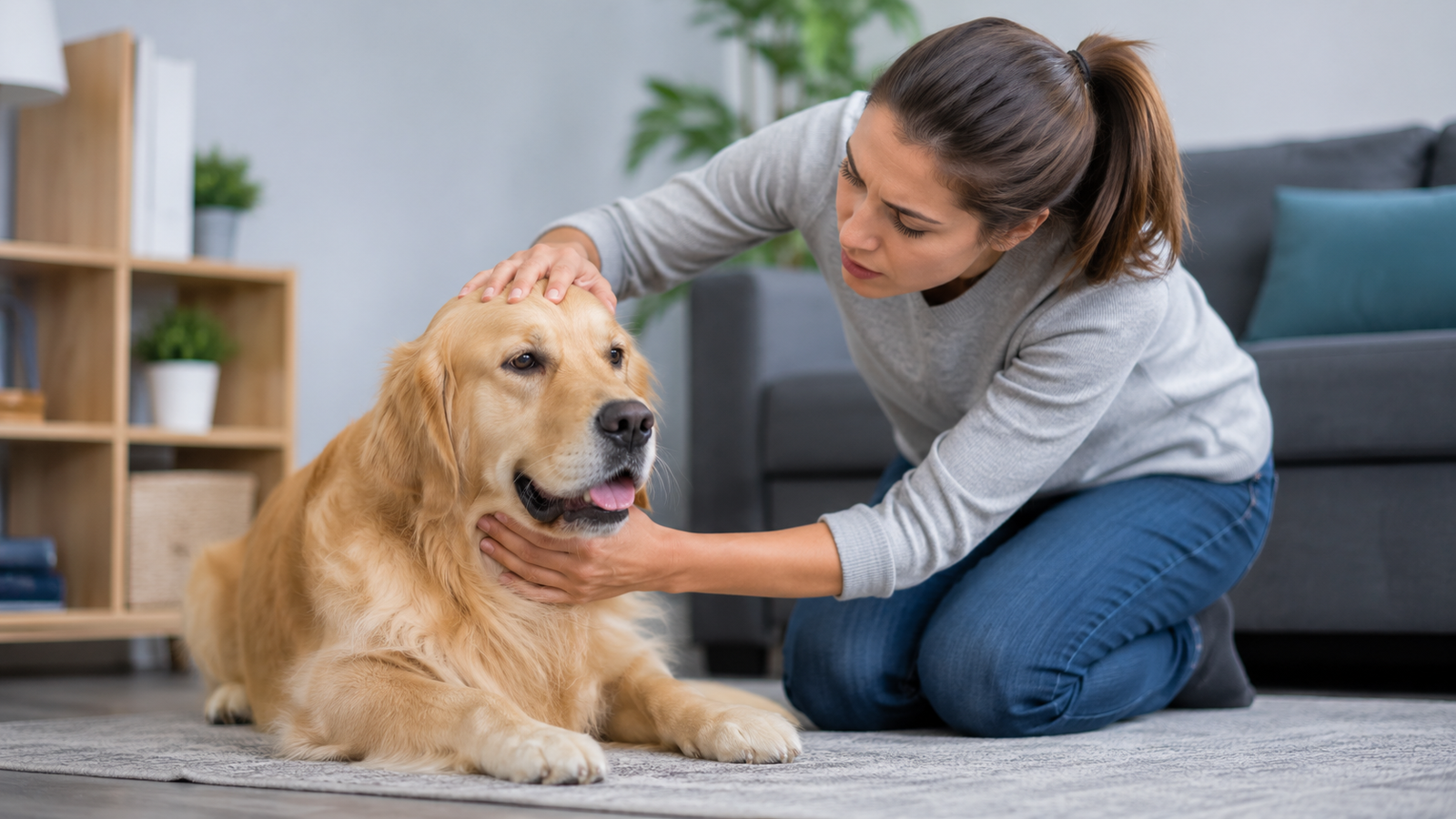
Quick Answer: Panting is your dog’s natural way of cooling down after exercise, excitement, or warm weather. However, if your dog is panting heavily while resting, during the night, or in a cool room, it may be a sign of pain, anxiety, overheating, heart disease, respiratory illness, or another underlying medical condition. Normal panting usually settles within 10–20 minutes after activity. If the panting is sudden, severe, or occurs alongside symptoms such as pale gums, collapse, vomiting, or difficulty breathing, seek veterinary care immediately. Key Takeaways Quick Urgency Guide Quick Urgency Guide: Is Your Dog’s Panting Normal? Situation Likely Cause What You Should Do 🟢 Panting after exercise or excitement Normal cooling Let your dog rest in a cool area and offer fresh water. Panting should improve within 10–20 minutes. 🟡 Panting while resting or in a cool room Pain, stress, illness, or another underlying issue Monitor your dog closely and contact your veterinarian if the panting continues or worsens. 🔴 Heavy panting with pale gums, collapse, vomiting, bloating, or difficulty breathing Medical emergency Seek emergency veterinary care immediately. Owner Tip: If your dog’s panting seems unusual for them—even if you can’t identify the cause—it’s safest to contact your veterinarian for guidance. Why Is My Dog Panting? Panting is a normal way for dogs to regulate their body temperature because they have very few sweat glands. Instead of sweating like humans, dogs cool themselves by rapidly moving air over the moist surfaces of their tongue, mouth, and upper respiratory tract. While panting after exercise, excitement, or warm weather is expected, excessive or unexplained panting can be a sign that something isn’t right. Looking at when your dog is panting and whether other symptoms are present can help determine if the behavior is normal or needs veterinary attention. Normal Causes of Panting Your dog may pant for several harmless reasons, including: In these situations, panting usually improves once your dog has rested, cooled down, or relaxed. Abnormal Causes of Panting Panting that occurs while your dog is resting or continues without an obvious reason may be caused by: If your dog also appears weak, restless, or has trouble breathing, veterinary evaluation is recommended. 🩺 Vet Insight: Panting by itself doesn’t always indicate an emergency. Veterinarians evaluate additional signs—such as breathing effort, gum color, heart rate, temperature, and recent activity—to determine whether the panting is normal or a symptom of illness. When Is Panting an Emergency? Although many cases of panting are harmless, some require immediate veterinary care. The key is to look for other symptoms that occur alongside panting. Seek emergency veterinary care immediately if your dog has: Common Emergency Conditions Condition Warning Signs Heatstroke Heavy panting, drooling, weakness, collapse Bloat (GDV) Swollen abdomen, pacing, unsuccessful attempts to vomit Poisoning Panting, shaking, vomiting, excessive drooling Heart Disease Panting at rest, coughing, exercise intolerance Respiratory Disease Labored breathing, noisy breathing, blue gums What To Do If Your Dog Is Panting Heavily If your dog begins panting excessively, stay calm and assess the situation before taking action. Step 1: Move Your Dog to a Cool Area Take your dog out of direct sunlight and into a shaded or air-conditioned space. Avoid strenuous activity and encourage them to rest. Step 2: Offer Fresh Water Provide small amounts of cool, fresh water. Do not force your dog to drink, especially if they appear weak or nauseated. Step 3: Check for Other Symptoms Look for warning signs such as: These symptoms may indicate a medical emergency. Step 4: Contact Your Veterinarian If the panting continues without an obvious cause or is accompanied by concerning symptoms, call your veterinarian immediately for advice. Step 5: Transport Your Dog Safely If emergency care is needed, keep your dog calm during transport. Avoid overheating the vehicle, and bring any medications or relevant medical history if available. 🐾 Owner Tip: Never cool an overheated dog with ice-cold water. Use cool (not icy) water or cool, damp towels while seeking veterinary care, as rapid cooling can sometimes worsen the situation. Preventing Future Panting Episodes While not every cause of panting can be prevented, many episodes are avoidable with proper care and attention to your dog’s health and environment. Here are some simple ways to reduce the risk of excessive panting: Keeping your dog cool, comfortable, and healthy can significantly reduce the risk of heat-related illnesses and other conditions that cause excessive panting. 🐾 Owner Tip: Brachycephalic breeds such as Bulldogs, Pugs, and Boston Terriers are more prone to overheating because of their shortened airways. These dogs should be exercised carefully, especially during warm weather. Common Mistakes to Avoid When a dog starts panting heavily, well-meaning owners sometimes make decisions that delay treatment or make the situation worse. Avoid these common mistakes: Recognizing the warning signs early and acting quickly can make a significant difference in your dog’s recovery. Frequently Asked Questions Why is my dog panting at night? Occasional panting during sleep may occur after dreaming or changing positions. However, frequent nighttime panting can be associated with pain, anxiety, heart disease, respiratory problems, or cognitive decline in older dogs. If the behavior becomes persistent, consult your veterinarian. Why is my dog panting while resting? Panting while resting is not always normal. It may be caused by pain, stress, overheating, medications, heart disease, or another medical condition. If the panting is persistent or accompanied by other symptoms, veterinary evaluation is recommended. Can stress or anxiety cause excessive panting? Yes. Dogs experiencing stress or anxiety may pant even when they are not hot. Other signs often include pacing, trembling, yawning, lip licking, or hiding. Removing the source of stress may help, but persistent anxiety should be discussed with your veterinarian. How long should a dog pant after exercise? Most healthy dogs stop panting within 10 to 20 minutes after resting in a cool environment with access to fresh water. Panting that continues beyond 30 minutes or becomes more intense should be evaluated by a veterinarian. Why is my senior dog panting so much?