
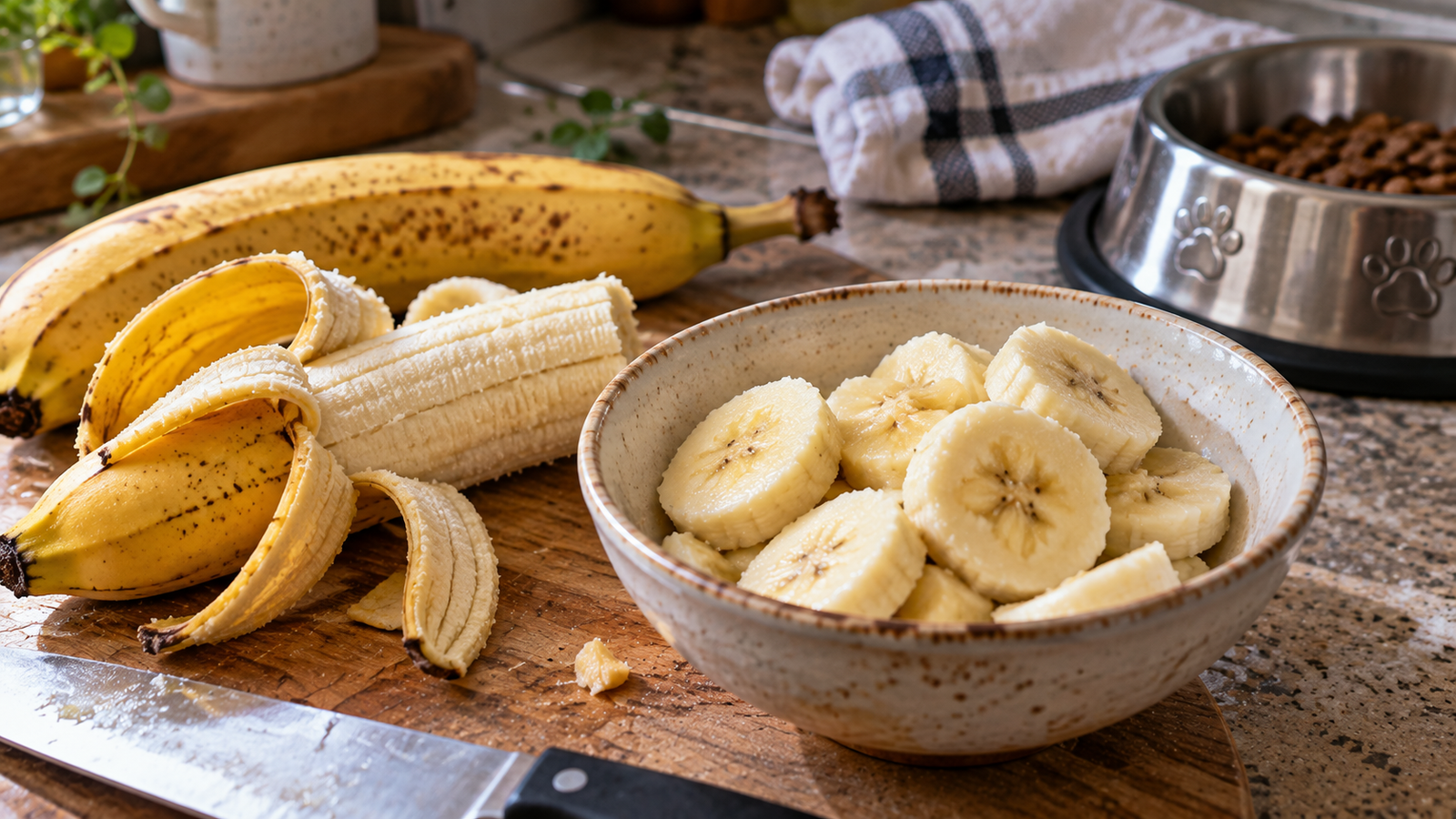
I’ve always liked keeping a few simple fruits around that I can share with my dog, and bananas are one of the easiest. They’re soft, easy to portion, and there’s no cooking involved. I can simply peel one, cut off a few small pieces, and have a quick treat ready. The part I pay attention to is how much I give. Can dogs eat bananas, but they’re naturally sweet and more calorie-dense than some other fruits. A few pieces can be a nice treat; an entire banana is a very different story, especially for a small dog. So if you’re wondering whether your dog can have banana, how much is appropriate, or whether the peel is safe, here’s what you need to know. Quick Answer Yes, most dogs can eat plain, ripe banana in moderation. Bananas provide nutrients including potassium, vitamin B6, vitamin C, fiber, and magnesium. However, they also contain natural sugar and calories, so they should remain an occasional treat rather than a regular part of your dog’s diet. Always: How Much Banana Can Dogs Eat? There isn’t one portion that works for every dog. The appropriate amount depends on your dog’s size, weight, age, activity level, overall diet, and health. A practical starting point is: Dog Size Starting Portion Extra-small 1–2 thin slices Small 2–3 thin slices Medium 3–6 thin slices Large A small handful of slices Extra-large Up to about ½ banana These are general starting portions, not strict daily requirements. A dog that is overweight, diabetic, or following a calorie-controlled diet may need considerably less. If you’re introducing banana, start with just one or two small pieces and see how your dog responds. The bigger rule is that treats—including fruit—should make up only a small part of your dog’s overall calorie intake. Your dog’s complete and balanced food should remain the foundation of their diet. Are Bananas Good for Dogs? Bananas contain several nutrients that can make them a useful occasional treat. Potassium Potassium helps support normal muscle and nerve function. Vitamin B6 Vitamin B6 plays a role in normal metabolism and other important functions in the body. Vitamin C Bananas provide vitamin C, although healthy dogs generally do not need fruit as a source of vitamin C because their nutritional needs should already be covered by a complete diet. Fiber Bananas contain dietary fiber, which is one reason some dogs tolerate small amounts well. Magnesium Bananas also provide magnesium, a mineral involved in numerous normal body processes. These nutrients are a nice bonus, but they don’t make bananas necessary for dogs. Think of banana as a tasty food that can add variety—not something your dog needs to meet their nutritional requirements. What Happens If a Dog Eats Too Much Banana? Too much banana can cause digestive upset. Depending on the dog and how much they ate, you may notice: The combination of fiber, carbohydrates, and natural sugar can simply be too much for some dogs. If your dog accidentally eats more banana than intended but otherwise seems normal, remove access to the fruit and keep an eye on them. If vomiting, severe diarrhea, weakness, abdominal pain, or other concerning symptoms develop, contact your veterinarian. For a dog with an existing medical condition, ask your veterinarian about appropriate treats rather than assuming a food is suitable based on its general safety. Can Dogs Eat Banana Peels? No. Don’t intentionally feed banana peels to dogs. The peel isn’t considered toxic, but it is tough, fibrous, and difficult to digest. A large piece can also create a choking or intestinal blockage risk. Always peel the banana before giving it to your dog. If your dog manages to swallow part of a peel, don’t automatically assume something serious will happen. Monitor them closely and contact your veterinarian if they develop vomiting, loss of appetite, abdominal pain, lethargy, constipation, or other unusual symptoms. If you believe your dog swallowed a large amount of peel or is showing signs of a possible obstruction, seek veterinary care promptly. Can Puppies Eat Bananas? Yes, puppies can eat small amounts of banana once they’re eating solid food, but I would introduce it slowly. Puppies have different nutritional needs from adult dogs, and their complete puppy food should provide the nutrition they need for growth. Banana should remain a very small treat rather than becoming a regular part of their meals. Start with a tiny piece and avoid introducing several new foods at the same time. That makes it much easier to tell what caused a problem if your puppy develops diarrhea or vomiting. If your puppy has a sensitive stomach or is on a specific feeding plan, ask your veterinarian before introducing new treats. Dogs Who May Need to Avoid Bananas Banana isn’t the right treat for every dog. Extra caution is appropriate for dogs that: The natural sugar and calorie content can matter more for these dogs than it does for a healthy dog. If your dog has a medical condition or is eating a prescription diet, check with your veterinarian before adding banana. Safe Ways to Give Banana to Your Dog Once peeled and portioned appropriately, banana is easy to serve. Fresh Banana Slices This is the simplest option. Cut the banana into thin slices and make the pieces smaller for small dogs. Mashed Banana Mash a small amount and mix it into your dog’s regular food or use it in a food-stuffing toy. Frozen Banana Small frozen pieces can make a refreshing treat on a warm day. Avoid giving your dog a whole frozen banana because the portion is too large and the shape can create a choking or digestive risk. Homemade Banana Treats Banana can also be used in homemade dog treats. If you’re baking with it, keep the rest of the ingredients dog-safe and avoid added sugar or sweeteners. Banana Bread, Banana Chips & Other Banana Products A banana itself may be suitable for dogs, but that doesn’t mean every banana-flavored food is. Banana Bread Skip banana
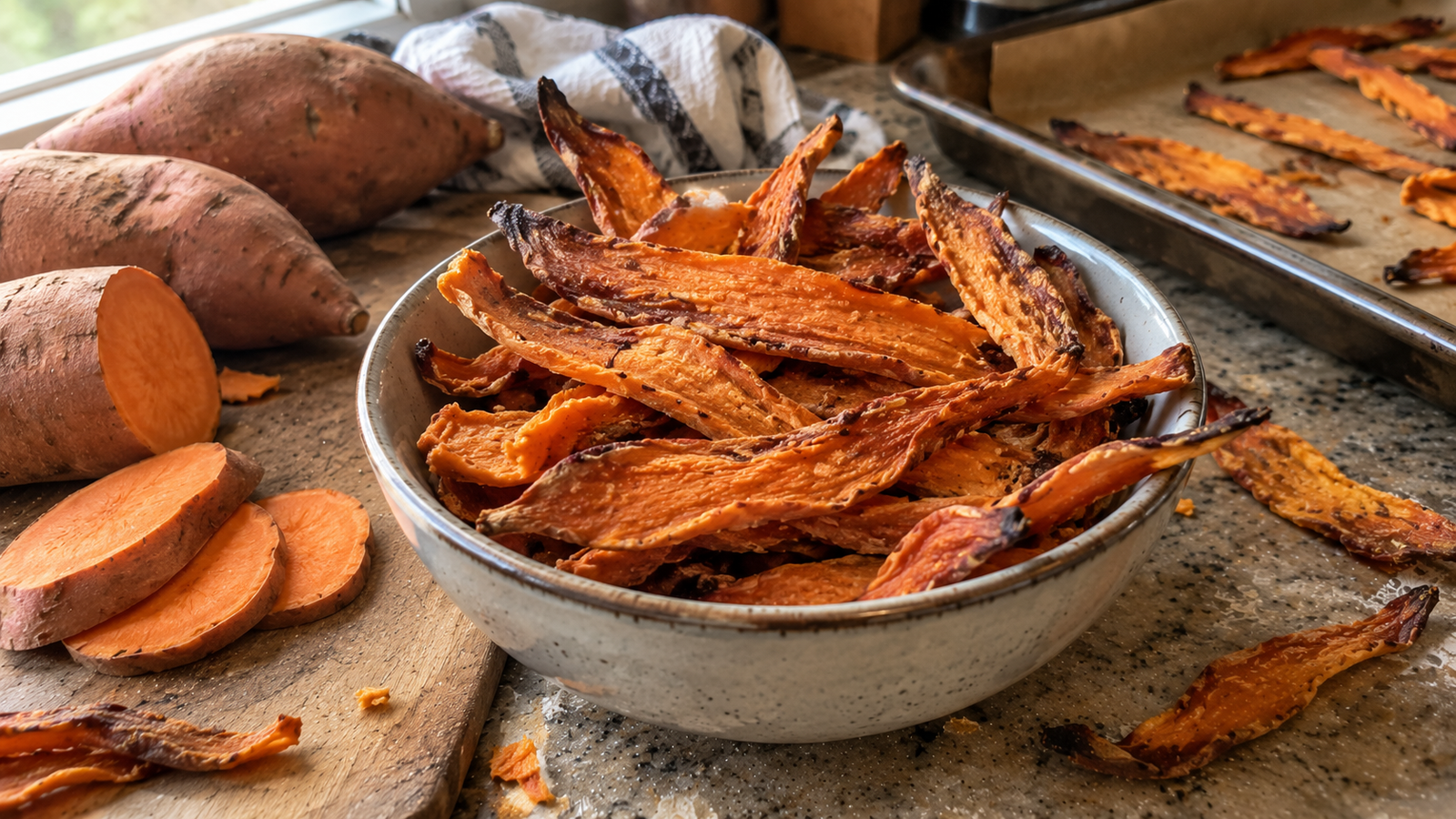
Homemade Sweet Potato Dog Chews
I started making these sweet potato dog chews when I wanted something simple I could give my dog without pulling out a long list of ingredients. Sweet potatoes are already naturally flavorful, so I found that I really didn’t need to add much at all. What I like most about this recipe is how easy it is. I slice the sweet potatoes into long strips, put them in the oven, and let them slowly dry until they’re chewy and firm. The pieces don’t all come out perfectly — some are thicker, some curl a little, and the edges get darker than others — and honestly, that’s part of what makes them feel homemade. I usually make a batch at once and keep the cooled chews in the refrigerator so I have a simple treat ready when I need one. They’re especially handy when I want to give my dog something different without making another complicated recipe. Quick Answer Yes, dogs can eat plain, fully cooked sweet potato in moderation. For homemade chews, use fresh sweet potatoes and avoid adding sugar, salt, butter, oil, spices, or sweeteners. These chews are made by slicing sweet potatoes lengthwise and slowly baking them at a low temperature until they are dried and chewy. Important: These are treats, not a replacement for your dog’s regular balanced diet, and they should always be given according to your dog’s size, chewing habits, and individual needs. Recipe Snapshot Detail Homemade Sweet Potato Dog Chews Prep Time 10 minutes Cook Time About 3 hours Total Time About 3 hours 10 minutes Ingredients 1 Yield About 15–20 chews Texture Chewy and slightly firm Storage Refrigerate after cooling Key Takeaways Are Sweet Potatoes Safe for Dogs? Plain, fully cooked sweet potato can be a suitable occasional treat for many dogs. Sweet potatoes provide fiber and nutrients, but they are still a carbohydrate-rich food, so portion size matters. Raw sweet potato is harder to chew and digest and can create a choking or digestive risk, particularly when served in large pieces. Cooking softens the vegetable and makes it easier to eat. For these chews, avoid turning the recipe into a human-style snack. There is no need for butter, brown sugar, maple syrup, salt, cinnamon, nutmeg, or other seasonings. If your dog has diabetes, a prescribed diet, digestive problems, or another health condition affected by diet, check with your veterinarian before adding homemade treats. How to Make Sweet Potato Dog Chews Ingredients That’s it. Choose firm sweet potatoes without soft spots, mold, sprouts, or green areas. 1. Wash the Sweet Potatoes Scrub the sweet potatoes thoroughly under running water. If you prefer, peel them completely. Removing the skin gives you a smoother chew and eliminates the need to worry about pieces of tough skin. Pat the potatoes dry before slicing. 2. Slice Into Long Strips Cut the sweet potatoes lengthwise into strips approximately ¼ inch thick. Try to keep the thickness as consistent as possible. Very thin slices will dry much faster and may become crisp, while thicker pieces will take longer and retain more chew. For larger dogs, longer strips can work well. For smaller dogs, make the pieces shorter after drying or start with smaller portions. 3. Arrange on a Baking Sheet Line a baking sheet with parchment paper. Place the sweet potato slices in a single layer with a little space between them. Avoid overlapping the pieces because trapped moisture will slow the drying process. You do not need to add oil or cooking spray. 4. Bake Low and Slow Preheat your oven to 250°F / 120°C. Bake the sweet potato slices for approximately 3 hours, turning them about halfway through. The exact time will depend on the thickness of the slices and how much moisture your sweet potatoes contain. You’re looking for pieces that are dried and firm on the outside while still having some flexibility when bent. 5. Cool Completely Remove the chews from the oven and allow them to cool completely on the baking sheet or a wire rack. They will continue to firm up as they cool. Do not seal warm chews in a container because trapped heat and moisture can encourage spoilage. Getting the Right Chewy Texture The thickness of your slices makes a noticeable difference. For softer, chewier pieces:Cut them closer to ¼–⅓ inch thick and stop baking once they are dry on the outside but still flexible. For firmer chews:Use slightly thinner slices or extend the baking time. For smaller treats:Cut the finished strips into bite-sized pieces after they have cooled. Don’t aim for a rock-hard texture. A homemade sweet potato chew should be appropriately sized for the individual dog and easy for them to manage. Serving, Storage & Variations How Much Can I Give My Dog? Start with a small piece the first time you offer sweet potato. A small dog may only need a small bite, while a larger dog can generally handle a larger treat. The correct amount depends on the dog’s size, normal diet, activity level, and overall health. Keep these treats within the dog’s daily treat allowance rather than adding them on top of unlimited snacks. How Should I Store Them? Once completely cool, place the chews in an airtight container and refrigerate them. Because these are homemade treats without preservatives, refrigeration is a safer storage choice than leaving a batch at room temperature for an extended period. Discard any pieces that develop mold, an unusual smell, or excessive moisture. Can I Freeze Them? Yes. After cooling completely, arrange the chews in a freezer-safe container or bag and freeze them. Separate layers with parchment paper if the pieces stick together. Thaw only the amount you intend to use. Can I Make Them in a Dehydrator? Yes. A food dehydrator can work particularly well for this type of treat because it is designed to remove moisture gradually. Drying time will vary considerably depending on the dehydrator, slice thickness, and desired texture, so use flexibility and dryness rather than
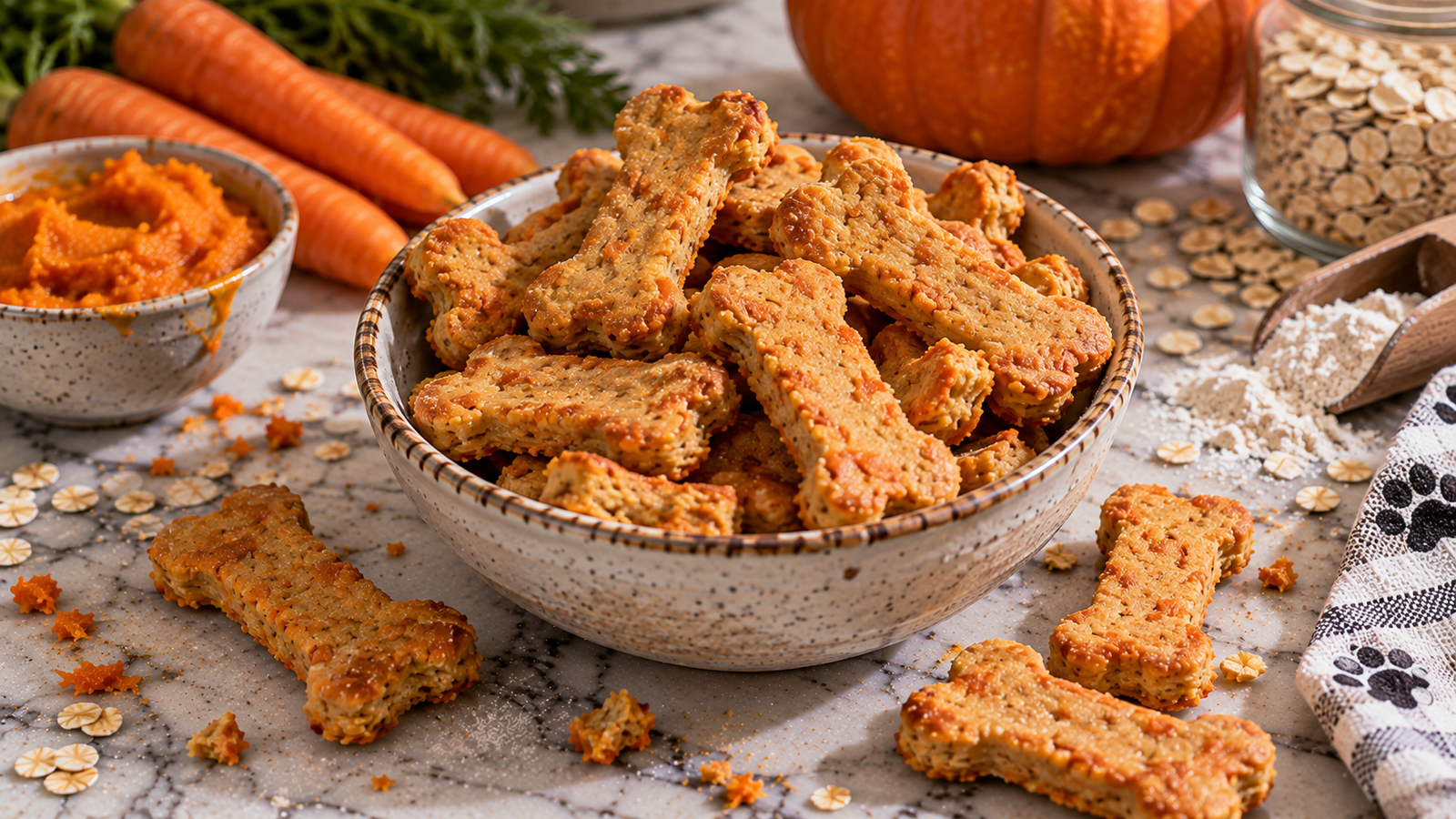
Homemade Pumpkin Carrot Dog Chews
Making homemade treats when I can keep the ingredients simple and recognizable is fun, and these pumpkin carrot dog chews are exactly that kind of recipe. They have a soft, chewy texture, a little natural sweetness from pumpkin and carrot, and they’re easy to make with ingredients you may already have in the kitchen. I especially like making these when I want something different from a crunchy biscuit. Instead of baking them until they become hard and dry, I keep the pieces a little thicker and take them out while they’re still tender in the center. Once they cool, they firm up slightly while keeping that soft, chewy texture. They’re also easy to portion into small bites, which makes them useful as an occasional treat or training reward. Quick Answer Yes, dogs can enjoy homemade pumpkin carrot chews when they are made with plain pumpkin, finely grated carrot, and other dog-safe ingredients. Plain pumpkin and carrots are generally safe for dogs when served appropriately, while treats should remain a small part of the overall diet. For this recipe, use 100% plain pumpkin puree, not pumpkin pie filling, and grate the carrot finely. The finished chews should be tender and easy to break apart rather than extremely hard. Recipe Snapshot Detail Information Prep time 10 minutes Bake time 25–30 minutes Total time About 40 minutes Texture Soft and chewy Yield About 30–40 small chews Storage Refrigerate up to 1 week Freezer Up to 3 months Key Takeaways Why Pumpkin and Carrot Work Well in Dog Treats Pumpkin and carrots are both commonly used as dog-safe ingredients when prepared plainly and served in moderation. Pumpkin provides fiber and can be a useful addition to a dog’s diet, while carrots provide fiber and nutrients such as beta-carotene. Neither ingredient needs sugar, salt, butter, or heavy seasoning to make a treat appealing. The combination also works particularly well in a baked treat because pumpkin supplies moisture while finely grated carrot adds texture and natural color. One important distinction: these are chewy treats, not dental chews. They should not be baked or dehydrated until they become extremely hard. How to Make Homemade Pumpkin Carrot Dog Chews Ingredients 1. Prepare the Oven Preheat your oven to 325°F (165°C). Line a baking sheet with parchment paper or a silicone baking mat. 2. Prepare the Carrot Wash the carrot well and grate it finely. Fine shreds are important because larger pieces can remain firm inside the chew and make the dough harder to shape. If the grated carrot is particularly wet, gently squeeze out a little excess moisture with a clean kitchen towel. 3. Mix the Wet Ingredients Add the pumpkin puree, grated carrot, and egg to a large mixing bowl. Stir until everything is evenly combined. 4. Add the Oat Flour Add about 1 cup of oat flour and mix. Gradually add the remaining flour until you have a soft dough that can be shaped without being extremely sticky. Because pumpkin puree and carrots vary in moisture, you may not need the entire amount of flour. If the dough feels too dry, add water one teaspoon at a time. 5. Shape the Chews Transfer the dough to a lightly floured surface. Roll or press it to about ¼ inch thick for a moderately chewy texture. For larger dogs, you can make slightly thicker pieces. For small dogs, make smaller pieces that are easy to break apart. Use a small bone-shaped cutter, or simply cut the dough into small squares or strips with a knife. 6. Bake Arrange the pieces on the prepared baking sheet with a little space between them. Bake for 25–30 minutes, checking toward the end of the baking time. The outside should be set, and the center should still have a little give. Avoid baking them for a long time just to make them harder. The goal of this recipe is a tender chew, not a rock-hard biscuit. 7. Cool Completely Remove the baking sheet from the oven and let the chews cool completely. They will firm up slightly as they cool. Once completely cool, check one before storing. It should be firm enough to hold its shape but still easy to break apart. Serving, Storage & Variations Serving Size Start with a small piece the first time your dog tries the recipe. The appropriate amount depends on your dog’s size, calorie needs, activity level, existing diet, and other treats given that day. Treats should generally make up only a small portion of daily calories, with the majority coming from a complete and balanced diet. For training, you can make very small pieces so your dog receives several rewards without eating a large amount. For Small Dogs Make small flattened pieces rather than long strips. This makes them easier to portion and reduces the chance of giving more food than intended. For Larger Dogs You can make the chews slightly larger or thicker, but they should still be easy to break apart. I prefer making medium-sized pieces and breaking them into smaller portions when needed. Make Them Softer For a softer chew, make the pieces slightly thicker and avoid extending the baking time. Store them in the refrigerator once cooled. Make Them Firmer If your dog prefers a firmer texture, bake them toward the longer end of the recommended time. Keep in mind that additional drying changes the texture significantly. These should not become extremely hard, particularly for dogs with dental problems. Storage Because these chews contain moisture and don’t contain commercial preservatives, store them in an airtight container in the refrigerator for up to 1 week. For longer storage, freeze them in a freezer-safe container for up to 3 months. Cool the treats completely before sealing them. Warm treats trapped in a container can create condensation and shorten their shelf life. Discard any treat that develops mold, an unusual smell, sliminess, or another obvious change in texture. Common Mistakes Using Pumpkin Pie Filling This is one of the easiest mistakes to make.
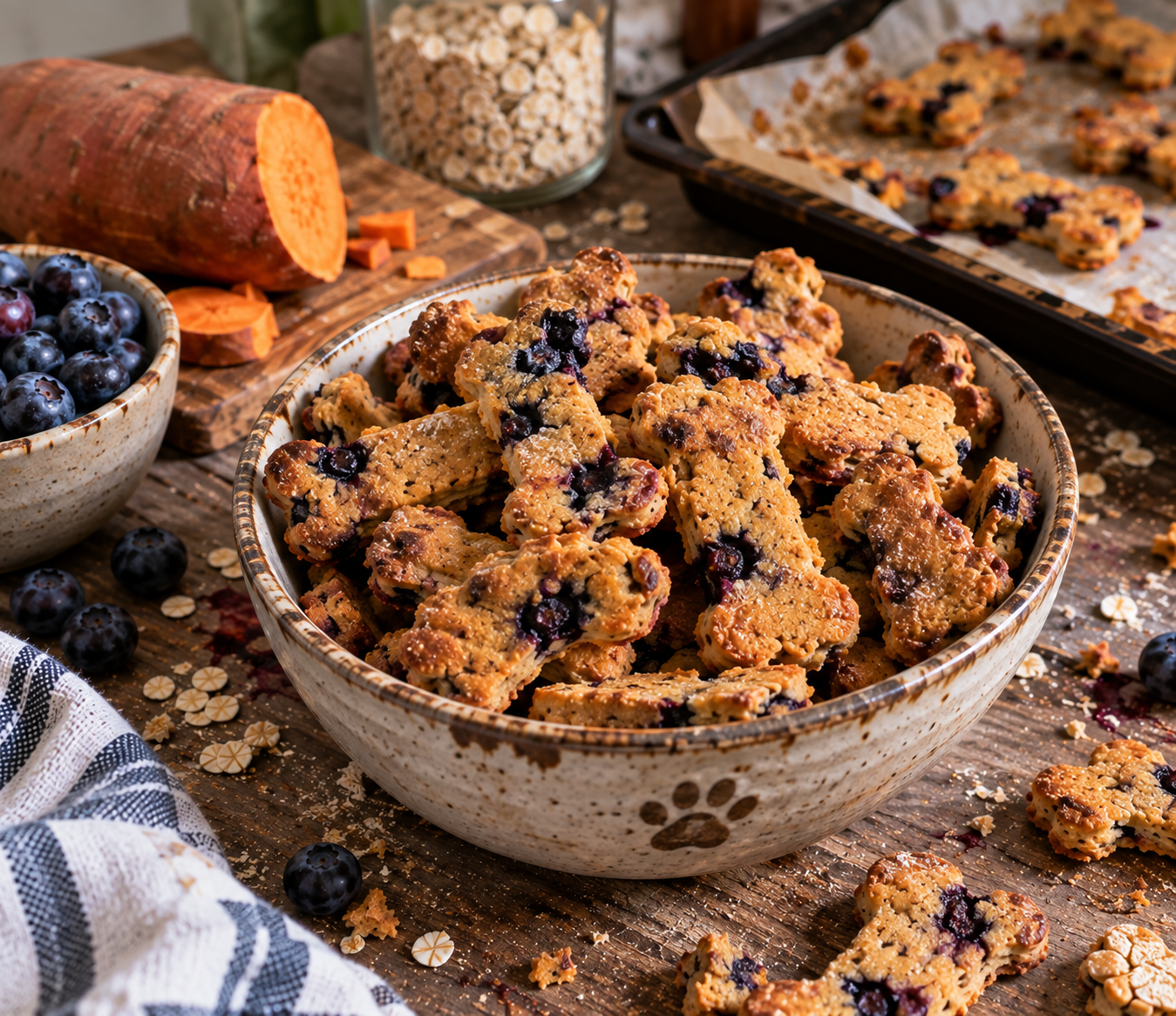
Sweet Potato and Blueberry Chews for Dogs
I love making homemade treats when I can keep the ingredients simple and still make something my dog gets excited about. These sweet potato and blueberry chews are one of those recipes I keep coming back to because they use everyday ingredients and have a naturally sweet, fruity flavor without needing added sugar. The sweet potato makes the dough soft and easy to work with, while blueberries add little bursts of flavor and color throughout the treats. I bake them until they’re firm around the edges but still have a slightly chewy texture in the middle. They’re especially nice when you want a homemade treat that feels a little different from the usual crunchy dog biscuit. Quick Answer Yes, plain cooked sweet potato and blueberries can be suitable ingredients for many dogs when served in moderation. Sweet potato should be cooked and plain, while blueberries should be fresh or frozen and free from added sugar or syrup. These homemade chews combine both ingredients with oat flour and egg to create a soft, chewy dog treat. Recipe Snapshot Prep time 15 minutes Cook time 25–30 minutes Total time About 45 minutes Yield About 18–24 small chews Texture Soft and chewy Oven temperature 350°F / 175°C Storage Refrigerate for up to 1 week Key Takeaways Why Sweet Potato and Blueberries Work Well in Homemade Dog Treats Sweet potato gives these chews their soft texture and naturally sweet flavor. Once cooked and mashed, it also helps bind the dough without requiring much added fat. It provides fiber and several nutrients, including beta-carotene, while blueberries contribute fiber and naturally occurring antioxidants. The important part is keeping both ingredients plain. Sweet potato should be cooked before adding it to the recipe, and blueberries should not come packed in syrup or mixed with added sweeteners. Because these treats contain concentrated ingredients in a smaller package, portion size still matters. Treats should remain a small part of your dog’s overall daily calorie intake. How to Make Sweet Potato and Blueberry Chews for Dogs Ingredients 1. Cook the Sweet Potato Peel the sweet potato and cut it into chunks. Bake, steam, or boil until completely tender. Let it cool enough to handle, then mash it until mostly smooth. Avoid adding butter, salt, sugar, milk, or seasoning. 2. Prepare the Blueberries Wash fresh blueberries thoroughly. If using frozen blueberries, thaw them first and drain away excess liquid. Gently mash the berries with a fork. You don’t need to turn them completely into a smooth puree—leaving a few small pieces gives the finished chews little pockets of blueberry. 3. Make the Dough Add the mashed sweet potato, blueberries, egg, and optional melted coconut oil to a mixing bowl. Stir until combined. Gradually add the oat flour, mixing as you go. The finished dough should be soft and workable rather than runny. If it feels very sticky, add a little more oat flour. If it seems unusually dry or crumbly, add a teaspoon of water at a time until it comes together. 4. Roll and Cut the Chews Preheat the oven to 350°F (175°C) and line a baking sheet with parchment paper. Place the dough between two sheets of parchment and roll it to about ¼ inch thick. Cut the dough into small strips, rectangles, or bone shapes. Keep the pieces small enough to be an appropriate treat for your dog. 5. Bake Arrange the chews on the prepared baking sheet with a little space between them. Bake for 25–30 minutes, or until the treats are set and lightly browned around the edges. For a softer chew, stay toward the shorter end of the baking time. For a firmer texture, leave them in a little longer, watching carefully so they don’t become excessively hard. 6. Cool Completely Transfer the treats to a wire rack and allow them to cool completely before serving. They will firm up slightly as they cool. Serving, Storage & Variations How Much Should You Give Your Dog? Start with a small piece when introducing the recipe for the first time. A small dog may only need part of a chew, while a larger dog may be able to have a whole small chew. The right amount depends on the size of the treat, your dog’s normal diet, activity level, and total daily treat intake. Remember that treats should generally account for no more than about 10% of a dog’s daily calories. How to Store Them Because these are homemade treats without commercial preservatives, I prefer keeping them refrigerated. Store cooled chews in an airtight container in the refrigerator for up to 1 week. For longer storage, place them in a freezer-safe container or bag and freeze for up to 3 months. Thaw individual treats in the refrigerator or allow them to sit briefly at room temperature before serving. For a Firmer Chew If your dog prefers a firmer texture, roll the dough slightly thinner and extend the baking time carefully. You can also allow the baked treats to cool completely and then return them to a low oven for additional drying. The goal is a firm dog treat—not a rock-hard object that could be difficult for a dog to chew safely. Can I Use Frozen Blueberries? Yes. Frozen blueberries work well in this recipe. Thaw them first and drain excess liquid so they don’t make the dough unnecessarily wet. Can I Use Other Flour? Plain oat flour is my preferred option here, but the recipe can be adjusted with another dog-appropriate flour if needed. If changing the flour, add it gradually because different flours absorb moisture differently. Common Mistakes Using Sweet Potato With Added Ingredients Plain cooked sweet potato is what you want. Avoid sweet potato prepared with butter, sugar, salt, sauces, or seasoning blends. Using Sweetened Blueberries Don’t use blueberries packed in syrup or sweetened blueberry products. Fresh or frozen plain blueberries are the simplest choice. Making the Chews Too Large Large treats can contribute more calories than expected and may be harder for smaller
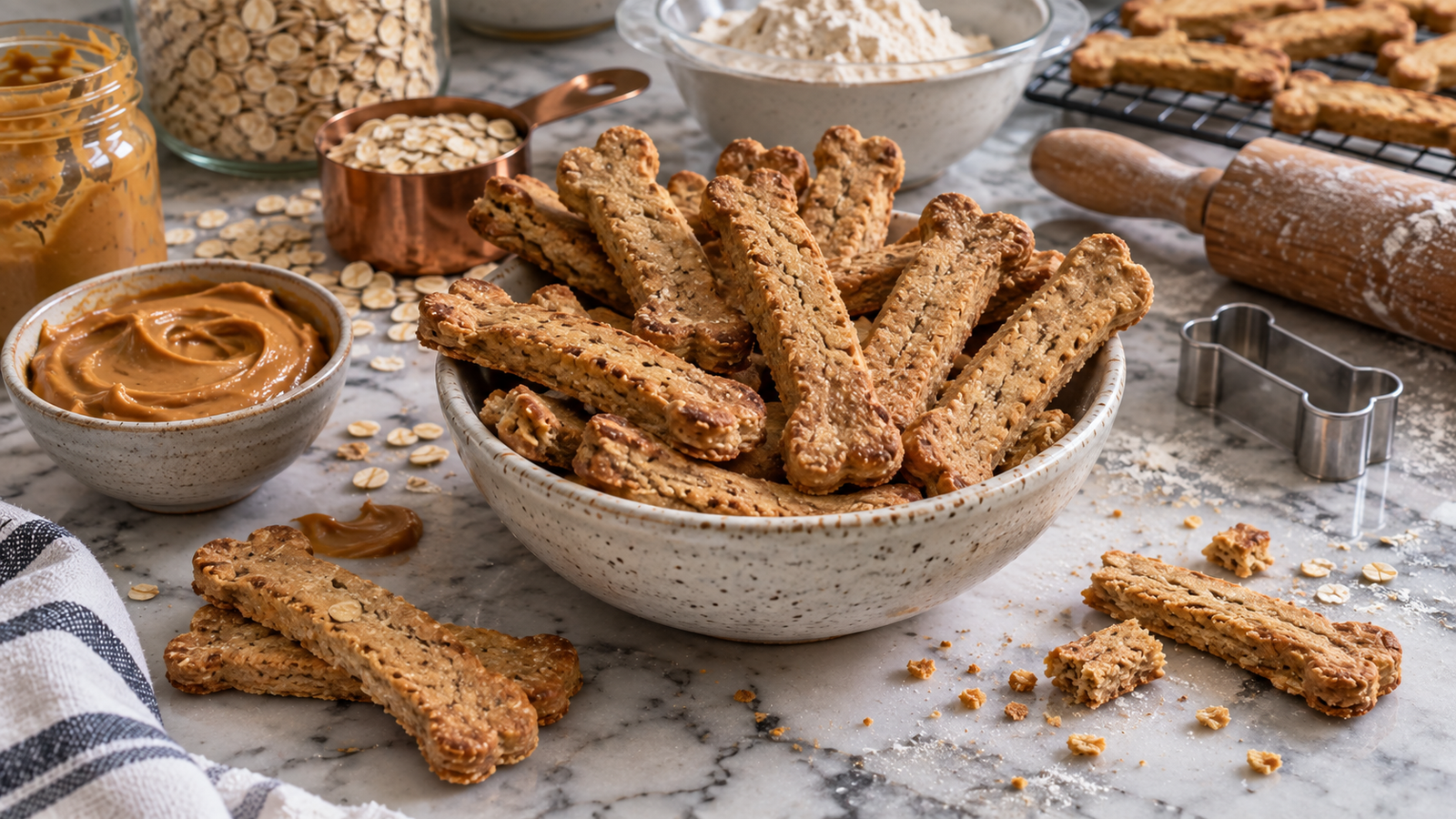
Homemade Peanut Butter Dog Sticks
I love making homemade treats for my dog, especially when I can turn a few simple ingredients into something that feels a little more special than an everyday biscuit. These homemade peanut butter dog sticks are one of my favorites because they are easy to mix, easy to shape, and bake up with a satisfying crunch. The dough comes together with peanut butter, egg, and simple pantry ingredients, then gets cut into little sticks that are easy to portion and store. They make a great occasional reward without needing a long ingredient list or complicated preparation. The most important part is choosing the right peanut butter. It needs to be plain and completely free from xylitol (also called birch sugar), because xylitol is highly toxic to dogs. Quick Answer Yes, you can make homemade peanut butter dog sticks with dog-safe peanut butter. For this recipe, use: The finished sticks are baked until firm and lightly browned. Because peanut butter is relatively high in fat and calories, these should be given as an occasional treat and counted as part of your dog’s daily treat allowance. Recipe Snapshot Details Prep time 15 minutes Bake time 20–25 minutes Total time About 40 minutes Yield About 24–30 sticks Oven 350°F / 175°C Texture Firm and crunchy Storage Up to 1 week refrigerated Key Takeaways Choosing Peanut Butter for Dog Treats Not all peanut butter is equally suitable for homemade dog treats. Look for a peanut butter with a short ingredient list and avoid products containing xylitol, birch sugar, added chocolate, or heavily sweetened ingredients. Unsalted peanut butter without added sugar is a straightforward choice. Xylitol deserves particular attention because it can cause a rapid drop in blood sugar in dogs and can lead to serious poisoning. If you ever suspect your dog has eaten peanut butter containing xylitol, contact a veterinarian or emergency veterinary clinic immediately rather than waiting for symptoms. Peanut butter is also high in fat and calories, so more is not necessarily better. These treats are designed to provide a small amount of peanut butter in each serving rather than becoming a major part of your dog’s diet. How to Make Homemade Peanut Butter Dog Sticks Ingredients Instructions 1. Prepare the oven Preheat your oven to 350°F (175°C). Line a baking sheet with parchment paper. 2. Combine the dry ingredients Add the whole-wheat flour and rolled oats to a large mixing bowl. Stir until evenly combined. 3. Add the peanut butter and egg Add the peanut butter and egg. Mix with a sturdy spoon or your hands until the mixture begins to form a thick dough. 4. Add water gradually Add the water a little at a time, mixing after each addition. Stop when the dough is firm but workable. You want a dough that holds together when pressed without being overly sticky. 5. Roll out the dough Lightly flour your work surface and roll the dough to about ¼-inch thickness. For crunchy sticks, try to keep the thickness fairly even so they bake at the same rate. 6. Cut into sticks Use a knife or pizza cutter to cut the dough into narrow sticks about 3–4 inches long. For small dogs, make shorter and thinner sticks. 7. Arrange on the baking sheet Place the sticks on the prepared baking sheet with a little space between them. Prick each stick once or twice with a fork if you want to reduce puffing during baking. 8. Bake Bake for approximately 20–25 minutes, or until the sticks are firm and lightly browned around the edges. For a harder, crunchier biscuit, turn off the oven and leave the treats inside for another 10–15 minutes with the door slightly open. 9. Cool completely Transfer the sticks to a wire rack and let them cool completely before giving one to your dog or storing the batch. Serving, Storage & Variations Serving These are best treated as occasional rewards rather than something to offer freely throughout the day. A small dog may only need a short stick or half of one, while a larger dog may tolerate a larger portion. Start small, especially if peanut butter is new to your dog. Treats should generally remain a small part of your dog’s overall daily calorie intake. Storage Once completely cool, keep the sticks in an airtight container in the refrigerator for up to 1 week. For longer storage, freeze them in a freezer-safe container with parchment between layers. Thaw one at a time when needed. Make Them Smaller For puppies or small breeds, cut the dough into short, narrow sticks rather than making the full-size version. Make Them Crunchier Roll the dough slightly thinner and give the sticks additional drying time in the turned-off oven after baking. Add Pumpkin For a seasonal variation, replace a small portion of the water with plain pumpkin puree. Avoid pumpkin pie filling, which can contain added sugar and spices. Use Oat Flour You can grind the rolled oats into a fine flour before mixing if you prefer a smoother dough. Common Mistakes Using the wrong peanut butter This is the biggest mistake to avoid. Always inspect the ingredient label for xylitol or birch sugar before using peanut butter in dog treats. Making the sticks too thick Thick pieces can stay soft in the middle while the outside becomes overly brown. Rolling the dough evenly helps the sticks bake consistently. Adding extra sweeteners There is no need to add honey, sugar, syrup, or other sweeteners. The peanut butter provides plenty of flavor on its own. Giving too many Peanut butter is calorie-dense, so several sticks can add up quickly. Keep portions appropriate for your dog’s size and overall diet. Storing them before they cool Warm biscuits can trap moisture inside an airtight container and become soft. Let them cool completely first. FAQ Can dogs eat peanut butter? Many dogs can eat plain peanut butter in moderation, provided it does not contain xylitol or other inappropriate ingredients. Peanut butter is relatively high in
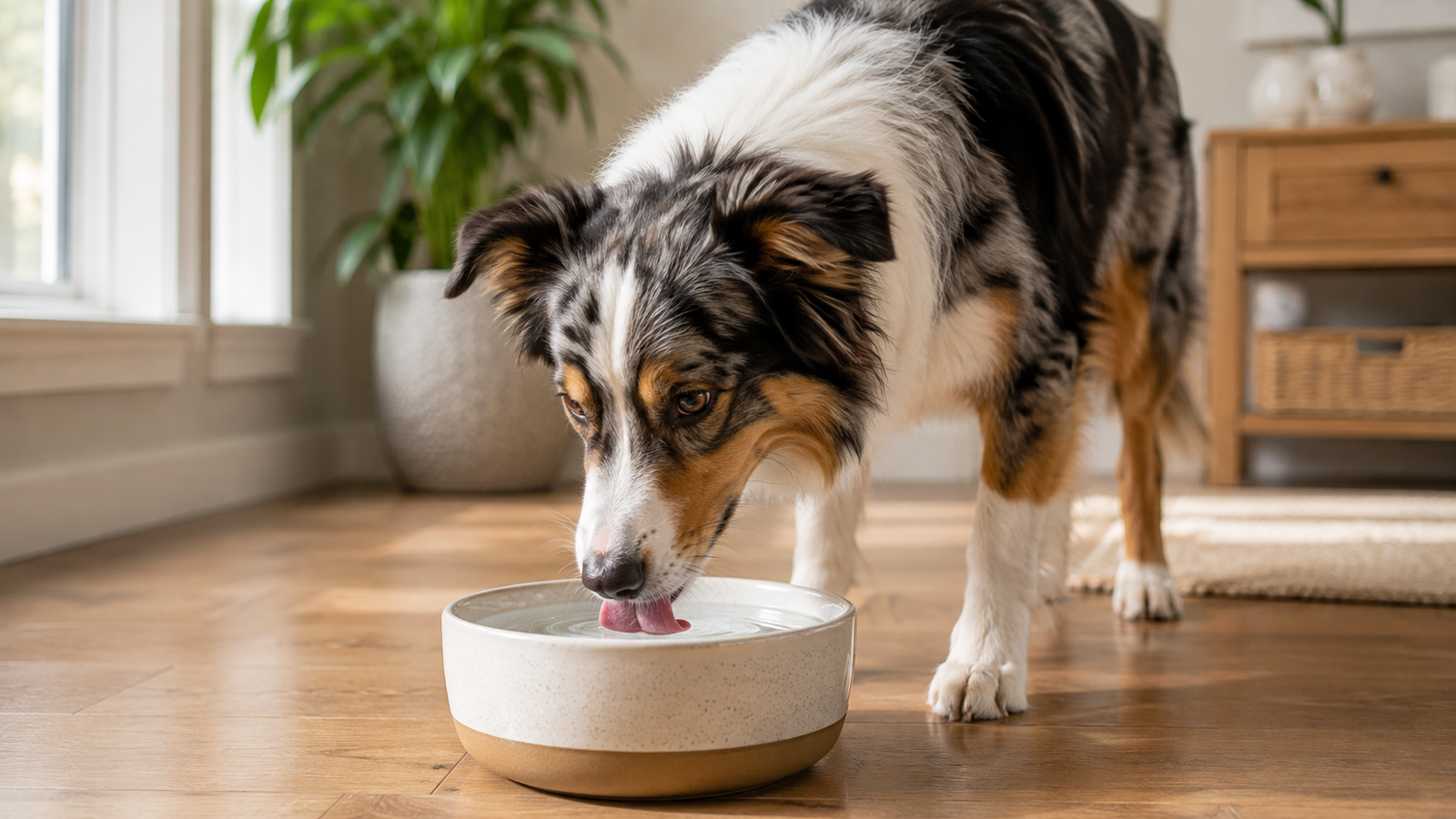
Why Is My Dog Drinking So Much Water? Causes, Normal Amounts & When to Worry
Quick Answer: If your dog is suddenly drinking much more water than usual, it may be caused by something as simple as hot weather, increased exercise, or a change in diet. But persistent excessive thirst, called polydipsia, can also be associated with medical conditions such as kidney disease, diabetes mellitus, Cushing’s disease, liver disease, or pyometra. A general veterinary guideline is around 50–60 mL of water per kilogram of body weight per day. Consistently drinking around 90–100 mL/kg/day or more is considered excessive and deserves veterinary investigation. If your dog is drinking more and urinating more, losing weight, vomiting, becoming lethargic, or showing changes in appetite, contact your veterinarian. Never restrict your dog’s water unless your veterinarian specifically tells you to. Key Takeaways How Much Water Should a Dog Drink Per Day? A general guideline is approximately 50–60 mL of water per kilogram of body weight per day, although individual requirements can vary. For example: Dog Weight Approximate Daily Water 5 kg / 11 lb 250–300 mL 10 kg / 22 lb 500–600 mL 20 kg / 44 lb 1–1.2 L 30 kg / 66 lb 1.5–1.8 L 40 kg / 88 lb 2–2.4 L These are general estimates, not strict requirements. A dog’s water needs can change depending on: Dogs eating canned food may drink less directly from their water bowl because wet food contains substantially more moisture than dry kibble. Likewise, a dog exercising heavily in hot weather may temporarily drink considerably more than usual. How to Measure How Much Water Your Dog Drinks If you’re concerned that your dog is drinking too much, measuring their intake is much more useful than guessing. Step 1: Measure the Water Fill the bowl with a measured amount of water each morning. Step 2: Record Refills Write down how much water you add each time you refill the bowl. Step 3: Measure for 24–48 Hours Continue for at least one full day. Two days can help determine whether the increase is consistent rather than a one-time change. Step 4: Calculate mL/kg/day Divide the total amount consumed in milliliters by your dog’s weight in kilograms. For example: 1,200 mL ÷ 20 kg = 60 mL/kg/day That’s within the general range described above. If your dog’s intake consistently approaches or exceeds 90–100 mL/kg/day, contact your veterinarian. Don’t Forget Other Water Sources Your measurement can be affected by: So try to account for these when possible. 🧮 Dog Water Intake Calculator Use this calculator for a rough estimate of the general daily water range based on body weight. It is not a diagnostic tool and cannot determine whether your dog’s water intake is medically appropriate. <divstyle=”font-family:Arial,sans-serif;max-width:420px;margin:25pxauto;padding:20px;border:1pxsolid #ddd;border-radius:10px;background:#fafafa”><h3style=”text-align:center;margin:008px;color:#333;”> Dog Water Intake Calculator</h3><pstyle=”font-size:13px;color:#666;line-height:1.5;”> Enter your dog’s weight to estimate the general daily water range.</p><labelfor=”dogWaterWeight”style=”display:block;margin-bottom:6px;font-size:14px;”> Dog’s weight:</label><inputid=”dogWaterWeight”type=”number”min=”0.5″step=”0.1″placeholder=”Example: 20″style=”width:100%;box-sizing:border-box;padding:10px;border:1pxsolid #ccc;border-radius:5px;margin-bottom:8px;”><selectid=”dogWaterUnit”style=”width:100%;padding:10px;border:1pxsolid #ccc;border-radius:5px;margin-bottom:10px;”><optionvalue=”kg”>Kilograms (kg)</option><optionvalue=”lb”>Pounds (lb)</option></select><buttontype=”button”onclick=”calculateDogWater()”style=”width:100%;padding:11px;background:#486B32;color:white;border:0;border-radius:5px;cursor:pointer;font-size:14px;”> Calculate</button><divid=”dogWaterResult”style=”display:none;margin-top:15px;padding:12px;background:white;border:1pxsolid #eee;border-radius:5px;font-size:14px;line-height:1.6;”></div></div><script>functioncalculateDogWater() {varweight=parseFloat(document.getElementById(“dogWaterWeight”).value);varunit=document.getElementById(“dogWaterUnit”).value;if (!weight||weight<=0) {alert(“Please enter a valid weight.”);return; }varkg=unit===”lb”?weight/2.20462:weight;varnormalLow=Math.round(kg*50);varnormalHigh=Math.round(kg*60);varconcernLow=Math.round(kg*90);varconcernHigh=Math.round(kg*100);document.getElementById(“dogWaterResult”).style.display =”block”;document.getElementById(“dogWaterResult”).innerHTML =”<strong>Estimated general daily range:</strong> “+normalLow+”–”+normalHigh+” mL<br>”+”<strong>Amount that may warrant investigation if persistent:</strong> “+concernLow+”–”+concernHigh+”+ mL/day<br><br>”+”<small>These are general guidelines, not a diagnosis. Water needs vary between dogs.</small>”;}</script> Why Is My Dog Drinking So Much Water? Once you’ve ruled out a temporary increase caused by heat or exercise, persistent excessive thirst deserves attention. There are two broad categories: Common Non-Medical Reasons Your Dog May Drink More Hot Weather Dogs naturally need more water in hot weather because they lose fluid while cooling themselves. A dog that drinks more after spending time outdoors on a hot day may simply be replacing lost fluids. The concern is when the increased thirst continues even after your dog has cooled down and returned to their normal routine. Exercise A long walk, running session, or energetic play can temporarily increase water consumption. Again, the important thing is whether your dog’s drinking returns to normal afterward. Dry Food Dogs eating dry kibble generally need to drink more directly from their water bowl than dogs eating wet food because canned food contains much more moisture. Diet Changes A change in food, particularly toward a drier or saltier diet, can alter water intake. Some Medications Certain medications, including corticosteroids and diuretics, can increase thirst. Some preventive medications may also list increased drinking as a possible side effect. If your dog’s drinking changed after starting a medication, talk with your veterinarian before stopping the medication yourself. Boredom Some dogs may repeatedly drink water because they are bored or seeking stimulation. However, persistent excessive drinking shouldn’t automatically be blamed on boredom without first considering medical causes. Medical Causes of Excessive Thirst in Dogs When increased drinking is persistent, particularly when it occurs with increased urination or other changes, several medical conditions may be involved. Kidney Disease Kidney disease can interfere with the kidneys’ ability to concentrate urine. As the dog produces more dilute urine, they may drink more water to compensate. Other possible signs include: Diabetes Mellitus With diabetes mellitus, excess glucose can enter the urine and draw water with it. This can lead to increased urination followed by increased thirst. Other possible signs include weight loss and changes in appetite. Cushing’s Disease Cushing’s disease, also called hyperadrenocorticism, involves excessive cortisol production. Common signs can include: Diabetes Insipidus Diabetes insipidus is much less common than diabetes mellitus. It involves problems with the hormone or kidney response responsible for concentrating urine, which can result in very large amounts of dilute urine and increased drinking. Electrolyte Imbalances Certain electrolyte abnormalities, including elevated calcium levels, can contribute to excessive thirst. The underlying cause needs to be investigated by a veterinarian. Dehydration Vomiting, diarrhea, heat exposure, or inadequate water intake can cause dehydration. A dehydrated dog may become thirsty as the body attempts to restore its fluid balance. Liver Disease Liver disease and certain infections can interfere with normal fluid regulation and may be associated with increased drinking. Pyometra Pyometra is a potentially life-threatening infection of the uterus that occurs in intact female dogs. Increased thirst and urination can occur, along with other signs of illness. A female dog showing signs of serious illness after a recent heat cycle needs