
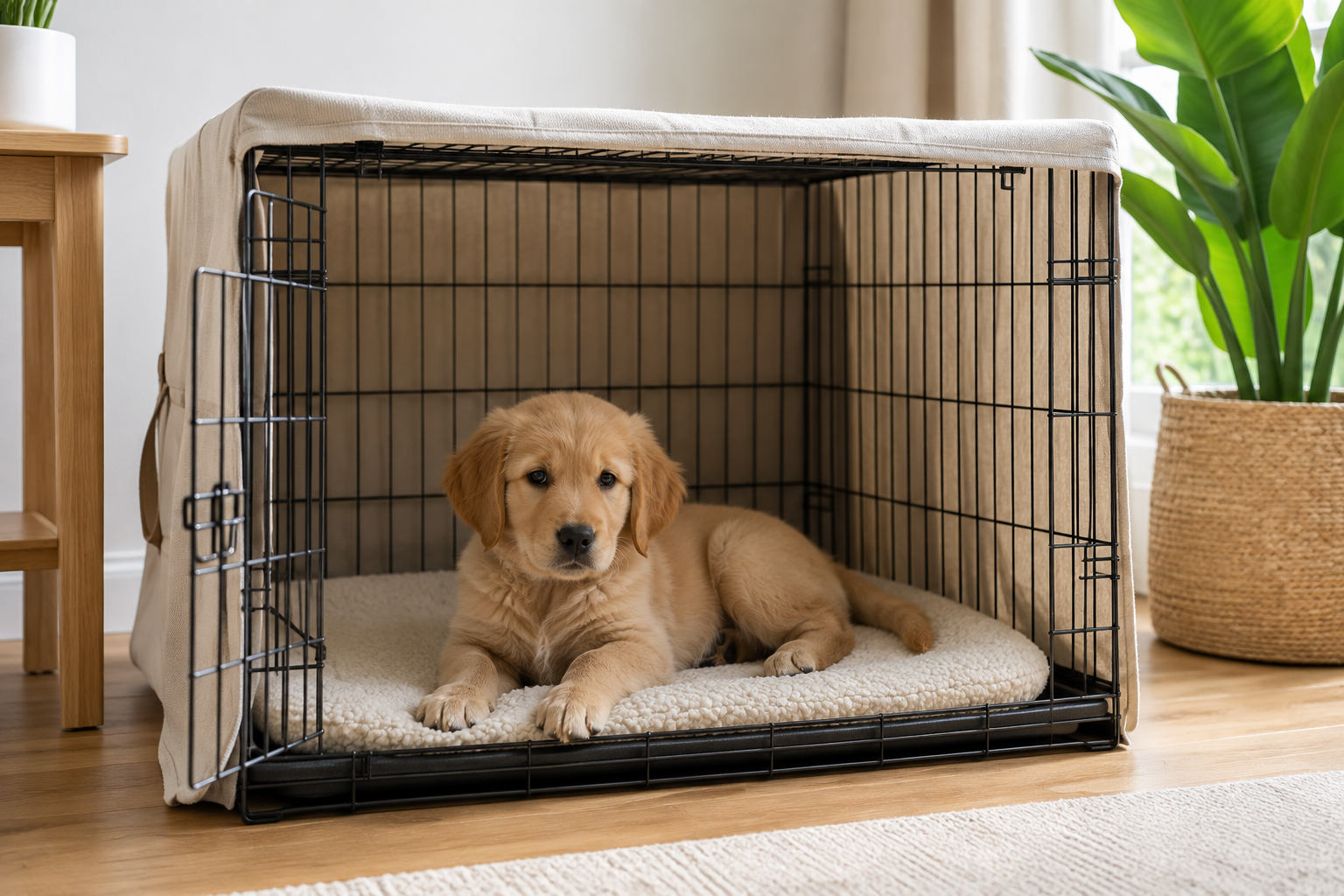
Quick Answer: Yes, you can cover a puppy crate. A lightweight, breathable cover over part of the crate can help reduce visual distractions and create a quieter, more enclosed resting space for some puppies. The safest approach is to maintain good airflow, avoid trapping heat, and watch how your puppy responds. A crate cover should make the crate feel comfortable—not restrict your puppy or hide signs of distress. Quick Setup Checklist Why Cover a Puppy Crate? A crate cover can make the space feel more private and den-like. For some puppies, reducing visual stimulation can make it easier to settle, particularly when the crate is in a busy part of the home. A cover may reduce distractions from: Some puppies may relax more easily when they have a quieter, partially enclosed space. Can a Crate Cover Help With Anxiety? It may help puppies whose restlessness is caused by visual stimulation or a busy environment. However, a cover isn’t a treatment for separation anxiety or significant behavioral problems. If your puppy panics, repeatedly tries to escape, or shows severe distress when alone, address the underlying issue rather than simply covering the crate. What’s the Safest Way to Cover a Puppy Crate? For most puppies, partial coverage is the best starting point. You can cover the back and one or both sides while leaving the front open. This provides some privacy without completely enclosing the puppy. Crate Setup Potential Benefit Main Concern Back covered Reduces distractions Less privacy Two sides covered More privacy while maintaining airflow Monitor temperature Three sides covered Creates a stronger den-like feeling Good ventilation is essential Completely covered Creates a darker environment Greater risk of restricted airflow and trapped heat Choosing a Crate Cover Choose a lightweight, breathable material, such as: A lightweight blanket may also work if it doesn’t restrict airflow and your puppy can’t pull it through the bars. Avoid thick materials that can trap heat, particularly in warm rooms. Also avoid loose fabric if your puppy likes to chew. Swallowing pieces of fabric can create a serious problem. Can Covering a Crate Make a Puppy Too Hot? Yes. A thick cover or excessive coverage can reduce airflow and trap heat inside the crate. This is particularly important in: Watch your puppy for signs of discomfort, including: If your puppy seems too warm, remove the cover and move the crate to a cooler, well-ventilated location. If your puppy appears seriously unwell or has difficulty breathing, seek veterinary care promptly. How to Introduce a Puppy to a Covered Crate Introduce the cover gradually rather than suddenly covering the entire crate. Step 1: Start With an Uncovered Crate Allow your puppy to become comfortable entering, resting, and sleeping in the crate. Reward calm behavior. Step 2: Cover One Side Place a lightweight cover over one side while keeping most of the crate open. Watch your puppy’s reaction. Step 3: Increase Coverage Slowly If your puppy remains relaxed, you can gradually cover another side. There is no need to cover more if your puppy is already comfortable. Step 4: Follow Your Puppy’s Behavior Some puppies enjoy more privacy. Others prefer being able to see what is happening around them. If your puppy: Reduce the coverage or remove it. How Long Should You Cover a Puppy Crate? There isn’t one fixed time limit that applies to every puppy. The important factors are temperature, airflow, purpose, and your puppy’s behavior. A partial cover can be used during: Provided your puppy remains comfortable and the crate stays properly ventilated. You don’t need to stop using a cover at a particular age. Some dogs continue enjoying a partially covered crate as adults. Consider reducing or removing the cover if your puppy: Frequently Asked Questions Should I cover my puppy’s crate at night? Yes, you can use a partial breathable cover at night if your puppy is comfortable with it and the crate remains cool and well ventilated. Should the front of the crate be covered? It’s generally best to leave the front open. This allows airflow and makes it easier to monitor your puppy. Can I use a heavy blanket over a puppy crate? A heavy blanket isn’t ideal because it can restrict airflow and trap heat. A lightweight breathable cover is preferable. Conclusion Yes, you can cover a puppy crate—but you don’t need to cover the entire crate. A lightweight, breathable cover over one or two sides is a good place to start. If your puppy remains calm and comfortable, you can adjust the coverage according to their needs. Always prioritize: If your puppy becomes anxious, overheated, or starts chewing the cover, remove it. A crate cover should help create a calm, comfortable resting space, not make the crate feel restrictive. Safety Disclaimer This article provides general pet-care information and does not replace individualized veterinary or professional dog-training advice. If your puppy shows signs of overheating, breathing difficulty, severe distress, or another concerning health problem, contact a veterinarian promptly.
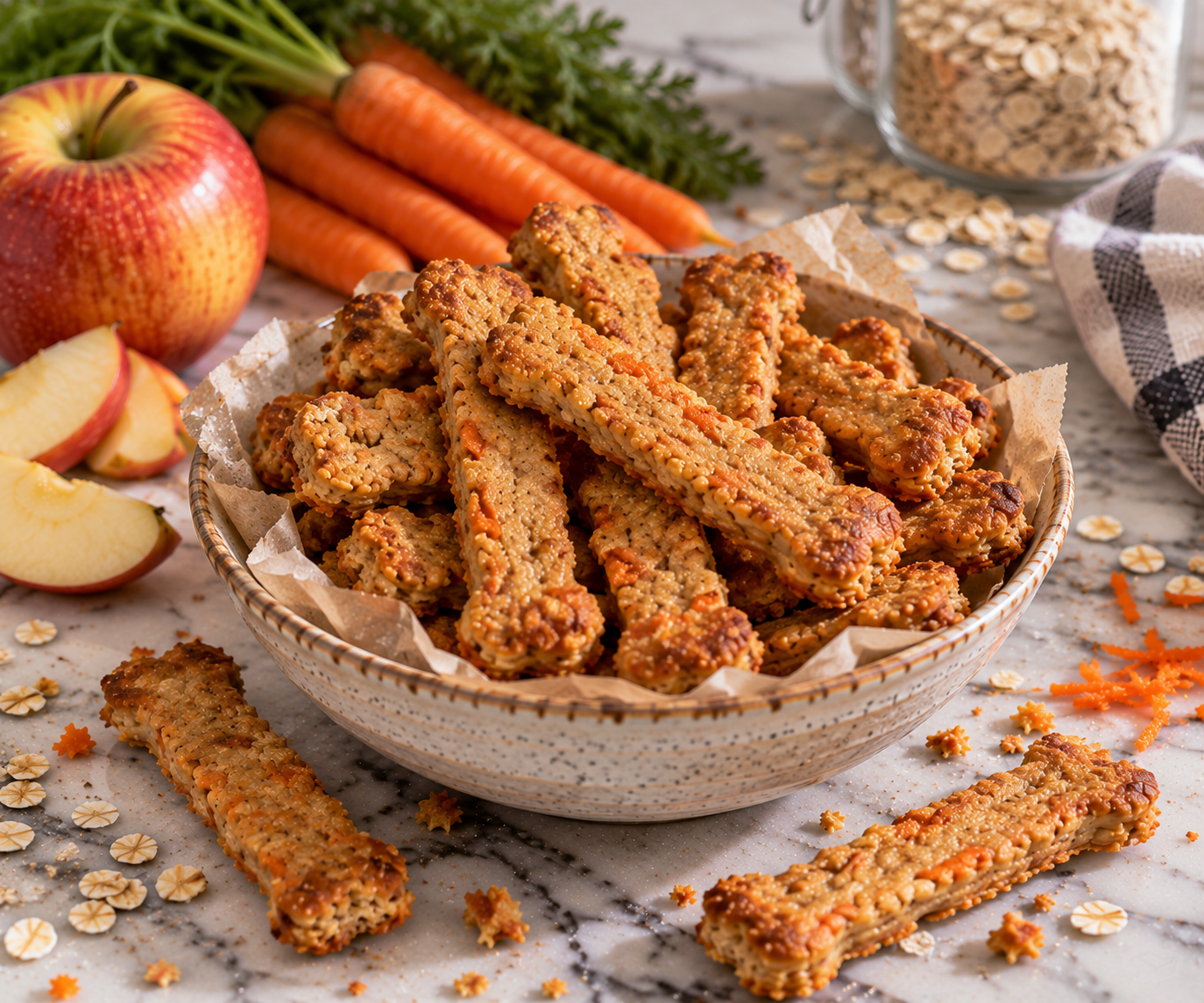
Apple and Carrot Chew Sticks for Dogs
I love making homemade treats that feel a little more substantial than an ordinary biscuit, and these apple and carrot chew sticks are one of my favorites. They use simple ingredients, are easy to shape by hand, and bake into firm little sticks with a naturally sweet apple-and-carrot flavor. I especially like making these when I want something my dog can nibble on for a little longer. The grated apple keeps the sticks flavorful while the carrot adds a little texture, and the oats give them a rustic homemade feel. They’re also easy to make in a larger batch, so I can keep some ready for the week and freeze the rest for later. Quick Answer Yes, dogs can enjoy homemade apple and carrot chew sticks when they’re made with dog-safe ingredients and served appropriately. Apples should be prepared without the stem, core, or seeds, while carrots should be washed and grated or otherwise prepared into a manageable texture. Both can be suitable treats for dogs in moderation. These homemade sticks are intended as treats, not a replacement for a complete diet or professional dental chew. Because every dog chews differently, supervise your dog the first few times you offer one. Recipe Snapshot Details Prep time 15 minutes Bake time 40–45 minutes Cooling time About 1 hour Total time About 2 hours Yield About 16 chew sticks Oven temperature 350°F / 175°C Storage Refrigerator or freezer Key Takeaways Are Apple and Carrot Chew Sticks Safe for Dogs? Apples and carrots can both be offered to dogs as occasional treats when prepared properly. Apples contain fiber and several vitamins, while carrots provide fiber and nutrients including beta-carotene. The important part is how they’re prepared. For the apple, remove the stem, core, and seeds before grating. Don’t simply grate around the core and leave pieces mixed into the dough. The seeds and core aren’t ingredients you want in homemade dog treats. Carrots should be washed well and grated finely for this recipe. Grating makes them easier to distribute throughout the dough and gives the finished sticks a more consistent texture. I also keep this recipe intentionally simple. There is no added sugar, salt, chocolate, raisins, onion, garlic, or heavily seasoned ingredients. A Note About the Word “Chew” These are baked homemade chew sticks, not veterinary dental chews or indestructible chew toys. The finished texture can range from firm and crunchy to slightly chewy depending on how thick you make them and how thoroughly they dry. Never assume a homemade treat is safe to leave with a dog unattended simply because it is called a “chew.” How to Make Apple and Carrot Chew Sticks Ingredients Step 1: Prepare the Apple and Carrot Wash the apple and carrot thoroughly. Peel and remove the apple’s stem, core, and seeds. Grate the apple finely. Peel the carrot if needed and grate it using the smaller holes of a box grater. If the grated apple is particularly juicy, gently press out some of the excess liquid. You want enough moisture to help form the dough without making it wet and sticky. Step 2: Make the Dough Add the grated apple, grated carrot, whole-wheat flour, and rolled oats to a large mixing bowl. Stir everything together so the fruit and vegetables are evenly distributed. Add the egg and applesauce and mix until the ingredients begin forming a dough. If the mixture still looks dry or crumbly, add water one tablespoon at a time until the dough holds together when pressed. Don’t add all the water automatically. Apples and carrots vary in moisture, so your dough may need less. Step 3: Shape the Chew Sticks Lightly flour your work surface and turn out the dough. Roll it into an even sheet about ½ inch thick. Cut the dough into strips approximately 4 inches long and ½ inch wide. You can make them shorter for small dogs. Keeping the pieces relatively uniform helps them bake at the same rate. Place the sticks on a parchment-lined baking sheet with a little space between each one. Step 4: Bake Preheat your oven to 350°F (175°C). Bake the chew sticks for approximately 40–45 minutes, or until they’re golden and feel firm. For a firmer, drier texture, turn the oven off after baking and leave the sticks inside while they cool gradually. Once completely cool, transfer them to a wire rack if needed and allow any remaining warmth or moisture to escape. Serving, Storage & Variations How Much Should You Give Your Dog? Start with a small piece, especially if your dog hasn’t had homemade apple or carrot treats before. The appropriate amount depends on your dog’s size, activity level, regular diet, and overall calorie needs. Treats should remain a limited part of the daily diet rather than replacing balanced food. For smaller dogs, make shorter and thinner sticks from the beginning rather than simply breaking a large, very hard stick into pieces. Storage Once completely cool, store the chew sticks in an airtight container in the refrigerator. For longer storage, freeze them in a freezer-safe container or bag with parchment between layers. Thaw frozen treats in the refrigerator before serving. If you notice mold, an unusual smell, or significant moisture buildup, discard the affected treats. Make Them Smaller For puppies, small breeds, or dogs that prefer smaller treats, roll the dough thinner and cut shorter sticks. The goal is to create a size and texture that suits your individual dog rather than treating one stick size as appropriate for every dog. Use Oat Flour If you prefer, replace some or all of the wheat flour with plain oat flour. The dough may behave slightly differently, so add the liquid gradually and stop as soon as the mixture becomes workable. Add Pumpkin For a seasonal variation, you can replace some of the applesauce with plain pumpkin puree. Use 100% plain pumpkin, not pumpkin pie filling or a seasoned pumpkin mixture. Common Mistakes Leaving the Apple Core in the Mixture Don’t grate the whole
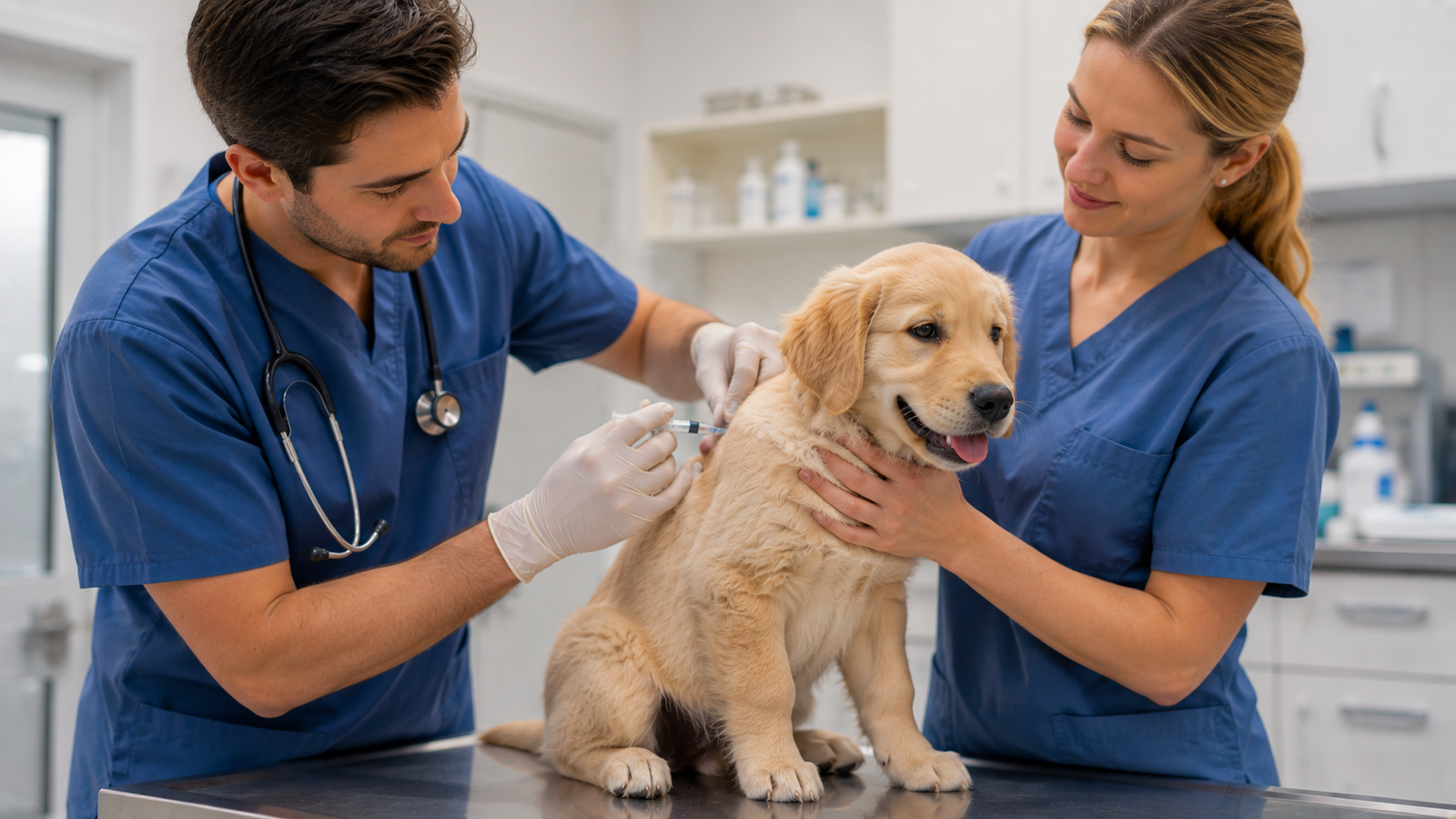
Puppy Vaccination Schedule: Every Shot Your Puppy Needs & When
Quick Answer: Most puppies begin their core vaccination series at around 6–8 weeks of age, with additional doses given every 3–4 weeks until at least 16 weeks. Rabies vaccination is generally given according to local law and your veterinarian’s recommendations. The exact schedule can vary depending on your puppy’s age when vaccination begins, vaccine products used, health history, lifestyle, and local disease risks. Because maternal antibodies can interfere with early vaccine responses, puppies receive a series of vaccinations rather than relying on a single puppy shot. Key Takeaways What Vaccines Do Puppies Need? Puppy vaccination is built around core vaccines and non-core vaccines. Core vaccines are broadly recommended because they protect against serious infectious diseases. Non-core vaccines are selected according to your puppy’s lifestyle, geographic location, and exposure risk. Core Vaccines The source identifies the main core protection as: DAPP/DHPP combination vaccines may protect against several of these diseases in one vaccination. Non-Core Vaccines Depending on your puppy’s lifestyle, your veterinarian may recommend: A non-core vaccine isn’t necessarily unimportant. It simply means the need depends more heavily on the individual dog’s exposure risk. For example, a puppy attending daycare or boarding facilities may have different vaccine needs from one that rarely encounters other dogs. What About Indoor Puppies? Indoor puppies still need their core vaccines. Diseases such as parvovirus can persist in the environment and potentially be brought indoors on shoes, clothing, or other animals. Rabies vaccination may also be required by law regardless of whether a dog spends most of its time indoors. Non-core vaccines are more lifestyle-dependent. Your veterinarian can help decide which ones make sense based on your puppy’s environment. What About Breed Differences? The source states that the core vaccination schedule is generally the same across breeds. However, some breeds or small puppies may have a greater tendency toward vaccine reactions, so your veterinarian may make individual adjustments when appropriate. The important point is that breed does not automatically mean a different basic vaccination schedule. Puppy Vaccination Schedule: 6 Weeks to 16 Months Most puppies begin their first core vaccines around 6–8 weeks, followed by additional doses every 3–4 weeks until at least 16 weeks. Maternal antibodies passed from the mother can interfere with vaccine responses during early puppyhood. Giving several doses helps provide protection as those maternal antibodies decline. Puppy Vaccine Schedule Age Core Vaccines Non-Core / Lifestyle Other Care 6–8 weeks DAPP/DHPP — 1st dose Based on risk Exam, deworming 10–12 weeks DAPP/DHPP — 2nd dose Bordetella, leptospirosis when appropriate Veterinary assessment 14–16 weeks DAPP/DHPP — 3rd dose Lyme, canine influenza when appropriate Rabies according to local law 12–16 months DAPP/DHPP booster Non-core boosters as needed Rabies booster according to requirements The source notes that some clinics use a 3-dose series, while others may use a 4-dose schedule depending on when vaccination starts and the protocol used. So don’t worry if your veterinarian’s schedule doesn’t look exactly like an internet chart. Your puppy’s age, vaccine history, and the products being used all matter. Keep a Puppy Vaccine Record Keep a record of: This can be useful for future veterinary visits, boarding, travel, grooming, and other situations where vaccination records may be requested. How Much Do Puppy Vaccinations Cost? Vaccination costs vary by clinic, location, vaccine type, examination fees, and whether your veterinarian offers a puppy package. The source gives the following approximate costs: Vaccine / Service Estimated Cost DAPP/DHPP per dose $20–$45 Rabies $15–$35 Bordetella $20–$45 Leptospirosis $20–$35 Lyme $20–$40 Canine influenza $25–$45 Exam fee per visit $40–$75 These are estimates, not guaranteed current prices. Some clinics bundle vaccinations with examinations and deworming, while shelters and low-cost vaccination programs may offer lower-cost options. If you’re comparing clinics, ask what is included in the total price rather than comparing the vaccine price alone. Can You Skip or Delay Puppy Vaccinations? Skipping the initial puppy series is not recommended. Core vaccines protect against serious diseases, including parvovirus and distemper, that can be particularly dangerous for puppies. If you’re worried about vaccine reactions, discuss those concerns with your veterinarian rather than simply declining vaccination. Your veterinarian may consider your puppy’s: What If You Miss an Appointment? Don’t restart the vaccination schedule yourself. Contact your veterinarian and provide the date of your puppy’s last vaccination. The veterinarian can determine whether the series can continue from where it stopped or whether additional vaccination is needed. The source notes that longer gaps may sometimes require an additional dose to help ensure adequate immunity. If Cost Is the Problem Ask your veterinarian about: The source notes that some low-cost programs offer core vaccinations for less than standard private-clinic pricing. Can Puppies Go Outside Before They’re Fully Vaccinated? Yes, but the type of exposure matters. Keeping a puppy completely isolated until every vaccination is finished can make socialization more difficult. At the same time, young puppies should avoid environments with a high risk of exposure to infectious disease. Safer Socialization Depending on your veterinarian’s advice, you can introduce your puppy to: The source specifically notes that puppies can interact with healthy, fully vaccinated dogs in controlled environments. Higher-Risk Places to Avoid Until your puppy has adequate protection, be cautious with: The source recommends waiting approximately 1–2 weeks after the final round of puppy shots before exposing a puppy to high-traffic dog environments, while lower-risk walks may be possible sooner depending on veterinary advice. Puppy Boosters After the Initial Series Finishing the puppy series doesn’t mean vaccinations are finished forever. The source’s schedule includes a 12–16 month booster for core vaccines, with future boosters determined according to the vaccine, your veterinarian’s protocol, and local requirements. Rabies boosters are particularly dependent on local laws and the vaccine used. Your veterinarian can create a long-term preventive-care schedule so you don’t have to remember every date yourself. Puppy Vaccine Schedule Checker Enter your puppy’s age to see where they generally fall within the initial vaccination timeline. <divstyle=”font-family:Arial,sans-serif;max-width:520px;margin:25pxauto;padding:20px;border:1pxsolid #ddd;border-radius:10px;background:#fafafa”><h3style=”text-align:center;color:#486B32;margin-top:0;”> 🐶 Puppy Vaccine Schedule Checker</h3><pstyle=”font-size:13px;color:#666;line-height:1.5;”> Enter your puppy’s age in weeks.</p><inputtype=”number”id=”cg-puppy-age”min=”6″max=”16″placeholder=”Example: 10″style=”width:100%;padding:10px;border:1pxsolid #ccc;border-radius:6px;box-sizing:border-box;”><buttontype=”button”onclick=”cgCheckVax()”style=”width:100%;padding:12px;margin-top:12px;background:#486B32;color:#fff;border:0;border-radius:6px;cursor:pointer;font-weight:bold;”> Check Schedule</button><divid=”cg-vax-result”style=”display:none;margin-top:15px;padding:15px;background:#fff;border:1pxsolid #ddd;border-radius:6px;font-size:14px;line-height:1.6;”></div></div><script>functioncgCheckVax() {vara=parseInt(document.getElementById(“cg-puppy-age”).value);varr=document.getElementById(“cg-vax-result”);if
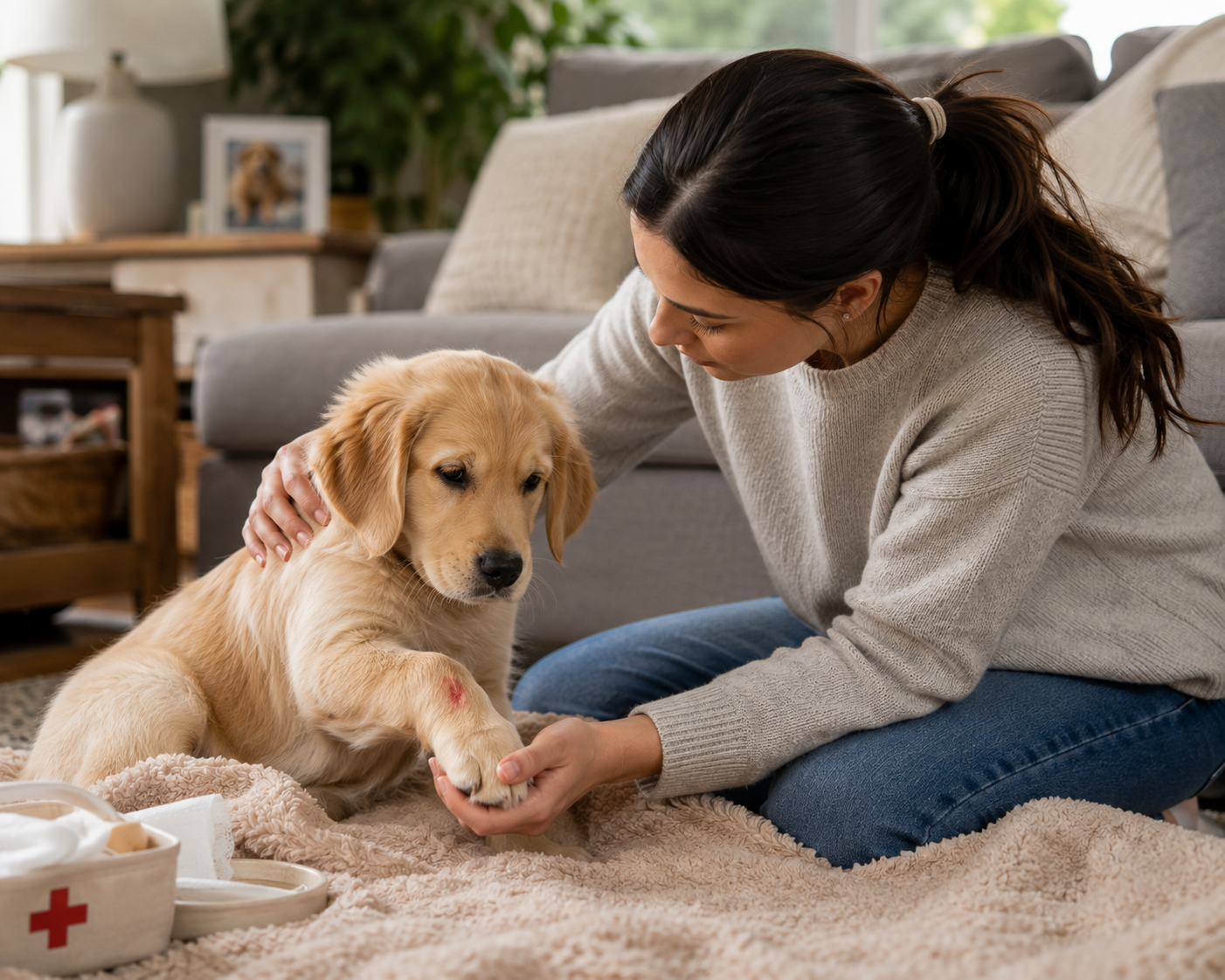
Can Puppies Get Concussions? Signs and Emergency Steps
Quick Answer: Yes, puppies can get concussions. A puppy’s skull is thinner and softer than an adult dog’s, making brain injuries more likely after falls, collisions, or other blows to the head. Even what seems like a minor accident can cause a concussion in a young puppy. If your puppy hits their head and becomes disoriented, vomits, loses balance, has unequal pupils, or loses consciousness, seek veterinary care immediately. Puppies are more vulnerable to head injuries than adult dogs because their brains and skulls are still developing. 🚨 Puppy Head Injury Triage ✅ Monitor at Home ⚠️ Call Your Veterinarian Today 🚨 Go to an Emergency Veterinarian Immediately Key Takeaways Puppies are naturally curious, energetic, and sometimes a little clumsy. They run into furniture, tumble off couches, miss steps, and play without realizing how easily they can get hurt. Most of these little bumps are harmless, but some can cause a concussion or other serious head injury. Because a puppy’s skull and brain are still developing, even a fall that might not seriously injure an adult dog can be much more dangerous for a young puppy. Recognizing the warning signs early and knowing when to seek veterinary care can make a big difference in your puppy’s recovery. In this guide, you’ll learn how puppies get concussions, the symptoms to watch for, what to do immediately after a head injury, how long recovery usually takes, and when a head injury becomes a veterinary emergency. Why You’ll Find This Guide Helpful A head injury can happen in seconds, and it’s often difficult to know whether your puppy has simply bumped their head or suffered a concussion. Understanding the warning signs can help you make quick, informed decisions when every minute matters. In this guide, you’ll discover: Whether your puppy fell off the couch, bumped into furniture, or had a more serious accident, this guide will help you understand what to watch for and when it’s time to seek professional care. Can Puppies Get Concussions? Yes. Puppies can get concussions at any age, including newborn puppies. A concussion is a mild traumatic brain injury that happens when a blow to the head or a sudden impact causes the brain to move inside the skull. Puppies are more likely to suffer head injuries than adult dogs because their skulls are still developing. Young puppies have thinner skull bones, and some breeds have open fontanelles (soft spots) that provide less protection for the brain. Common causes of puppy concussions include: Toy breeds, such as Chihuahuas and Yorkshire Terriers, are especially vulnerable because of their small size. A fall that might not seriously affect a large-breed puppy can cause a significant head injury in a much smaller puppy. While puppies are naturally playful and clumsy, most bumps are harmless. The injuries that need immediate attention are those followed by changes in behavior, balance, or awareness. Takeaway: Puppies of any age can suffer a concussion, especially after falls or hard impacts to the head. How Do You Know If a Puppy Has a Concussion? The most common signs of a concussion include: One of the most important things to remember is that symptoms don’t always appear immediately. Some puppies seem completely normal after a fall but begin showing signs of a concussion several hours later. Because of this, veterinarians recommend monitoring your puppy closely for at least 24 hours after any significant head injury. Minor Head Bump vs. Concussion A minor bump usually causes a brief yelp or moment of surprise before your puppy quickly returns to normal. A concussion is different. Your puppy may continue acting unusually, have trouble walking, seem confused, or develop symptoms that worsen over time. Minor Head Bump Possible Concussion Brief yelp or surprise Confusion or disorientation Returns to normal within minutes Wobbling or loss of balance Eats and plays normally Vomiting or unusual sleepiness Normal behavior Unequal pupils or seizures No new symptoms Symptoms appear hours later Because brain injuries happen inside the skull, your puppy may have no visible wound at all. A puppy can have a concussion even if the outside of the head looks completely normal. Takeaway: Watch your puppy’s behavior—not just the injury itself. Changes in balance, alertness, or coordination are much more important than whether there’s a visible bump. What Should You Do If Your Puppy Hits Their Head? If your puppy hits their head, stay calm and assess them right away. Acting quickly helps you recognize serious problems early and gives your veterinarian valuable information if treatment is needed. Step 1: Check Responsiveness Call your puppy’s name and see if they respond normally. A puppy that seems dazed, confused, or doesn’t recognize you should be examined by a veterinarian. Step 2: Look for Warning Signs Check for: Step 3: Keep Your Puppy Calm Move your puppy to a quiet, padded area and limit activity. Avoid running, jumping, or rough play while you monitor them. Step 4: Do Not Give Human Medication Never give ibuprofen, acetaminophen, aspirin, or other human pain relievers. These medications can be toxic to dogs and may worsen certain injuries. Step 5: Monitor Closely Watch your puppy carefully over the next 24 hours. Keep track of: When Should You Go to the Veterinarian? Seek emergency veterinary care immediately if your puppy has: Contact your veterinarian the same day if your puppy seems unusually sleepy, refuses food, develops a swelling on the head, or simply isn’t acting like themselves. When speaking with your veterinarian, note: Takeaway: After any significant head injury, keep your puppy calm, watch for changes over the next 24 hours, and seek veterinary care immediately if emergency signs develop. Can Puppies Recover From a Concussion? Yes. Most puppies with mild concussions recover completely when they’re examined promptly and allowed to rest. Recovery depends on how severe the injury is. Injury Severity Typical Recovery Time Mild concussion 24–72 hours Moderate concussion 1–2 weeks Severe head injury Several weeks or longer During recovery: Although most mild concussions heal well, severe injuries
Black Puppy Poop: What It Means and When to See a Vet
Quick Answer: Black puppy poop usually means your puppy is passing digested blood in their stool, a condition called melena. This often indicates bleeding somewhere in the stomach or upper small intestine and should always be treated as a veterinary emergency until proven otherwise. Puppies have much less blood volume than adult dogs, so even a small amount of internal bleeding can become serious quickly. If your puppy’s stool is black, sticky, shiny, or tar-like, contact your veterinarian immediately. 🚨 Puppy Black Stool Urgency Guide ✅ Monitor (Less Likely to Be an Emergency) ⚠️ Call Your Veterinarian Today 🚨 Seek Emergency Veterinary Care Immediately Key Takeaways Finding black poop in your puppy can be frightening, especially if you’ve never seen it before. Many owners immediately wonder whether it’s something their puppy ate or a sign of a serious illness. Unfortunately, black stool is one symptom you should never ignore. While certain foods and supplements can make stool appear darker than usual, true black, sticky, tar-like stool often means there’s bleeding somewhere in your puppy’s digestive tract. In this guide, you’ll learn what black puppy poop means, how to tell the difference between black and dark brown stool, the most common causes, when it’s an emergency, and what you should do before reaching your veterinarian. Why You’ll Find This Guide Helpful When you search online for black puppy poop, you’ll often find conflicting advice. Some sources say it’s caused by food, while others recommend rushing to the emergency clinic immediately. This guide helps you understand the difference. You’ll learn: Whether your puppy seems perfectly normal or is showing signs of illness, this guide will help you understand the urgency of the situation and make the safest decision for your puppy. What Does Black Puppy Poop Mean? Black puppy poop usually means your puppy is passing digested blood in their stool, a condition veterinarians call melena. Unlike bright red blood, which comes from the lower digestive tract, melena indicates bleeding higher up in the stomach or upper small intestine. As blood moves through the digestive system, stomach acid and digestive enzymes break it down, turning it black. This is why melena looks very different from normal stool. True melena often has these characteristics: Many owners mistake very dark brown stool for black stool. Looking at the stool against a white paper towel or tissue can make the color easier to judge. Because puppies have much less blood than adult dogs, even a relatively small internal bleed can become dangerous quickly. Takeaway: Black, sticky, tar-like stool usually means digested blood and should never be ignored. Is Black Puppy Poop Normal or Should You Worry? No. Black, tarry stool is never considered normal in puppies and should always be taken seriously. Veterinarians often describe melena in puppies as “an emergency until proven otherwise.” Young puppies lose blood much faster than adult dogs, making them more vulnerable to anemia, dehydration, and shock. The risk is even higher if your puppy: One of the most serious concerns in young, unvaccinated puppies is parvovirus. This highly contagious virus damages the intestinal lining, causing severe diarrhea, bleeding, dehydration, and rapid illness. Not every dark-colored stool means there’s internal bleeding. Certain foods and medications can darken stool without causing harm. The biggest clue is the texture—diet-related stool is usually dark brown and firm, while melena is black, sticky, and tar-like. Takeaway: If you’re unsure whether your puppy’s stool is black or simply dark brown, it’s safest to contact your veterinarian the same day. What Causes Black Poop in Puppies? Several different conditions can cause black stool in puppies. Some are medical emergencies, while others are much less serious. Common Medical Causes Can Food Cause Black Puppy Poop? Yes, but the stool usually looks very dark brown, not true black melena. Foods and products that may darken stool include: If your puppy recently started one of these foods or supplements and otherwise seems healthy, diet may be responsible. However, if the stool is sticky, shiny, foul-smelling, or your puppy appears unwell, don’t assume food is the cause. Takeaway: Medical causes are far more concerning than dietary causes. When in doubt, let your veterinarian make the diagnosis. Puppy Poop Color Chart: What’s Healthy? Healthy puppy poop should be chocolate brown, firm enough to hold its shape, and easy to pick up. Here’s a quick guide: Color Likely Meaning What You Should Do Chocolate brown Healthy digestion No action needed Dark brown Usually diet-related or normal Monitor Black, tarry Digested blood (melena) Call your veterinarian today Bright red Fresh blood from the lower digestive tract Contact your veterinarian Yellow Digestive or absorption problem Veterinary advice recommended Gray or white Liver or pancreatic concern Veterinary evaluation Green Grass eating or bile-related issue Monitor; call if it continues If you’re struggling to tell whether the stool is black or dark brown, place a small amount on a white paper towel. True melena appears almost jet black, while normal dark stool still has a noticeable brown tint. Takeaway: Chocolate brown is normal. Black, sticky stool should always be treated as a veterinary concern. Blood in Puppy Poop vs Black Poop: What’s the Difference? Although both involve bleeding, red blood and black stool usually come from different parts of the digestive tract. Red Blood Black Tarry Stool Fresh blood Digested blood Lower digestive tract Upper digestive tract Bright red streaks or drops Black, shiny, sticky stool Often linked to the colon or rectum Usually linked to the stomach or upper small intestine Many owners assume bright red blood is always more serious because it’s easier to see. In reality, black stool often indicates bleeding that’s been occurring for longer and may involve the upper digestive tract, making it especially concerning in puppies. Both types of blood deserve veterinary attention, but black, tarry stool should be treated with greater urgency. Takeaway: Red blood and black stool have different causes, but both require a veterinary examination. Black, tarry stool is generally the more urgent finding in puppies.