

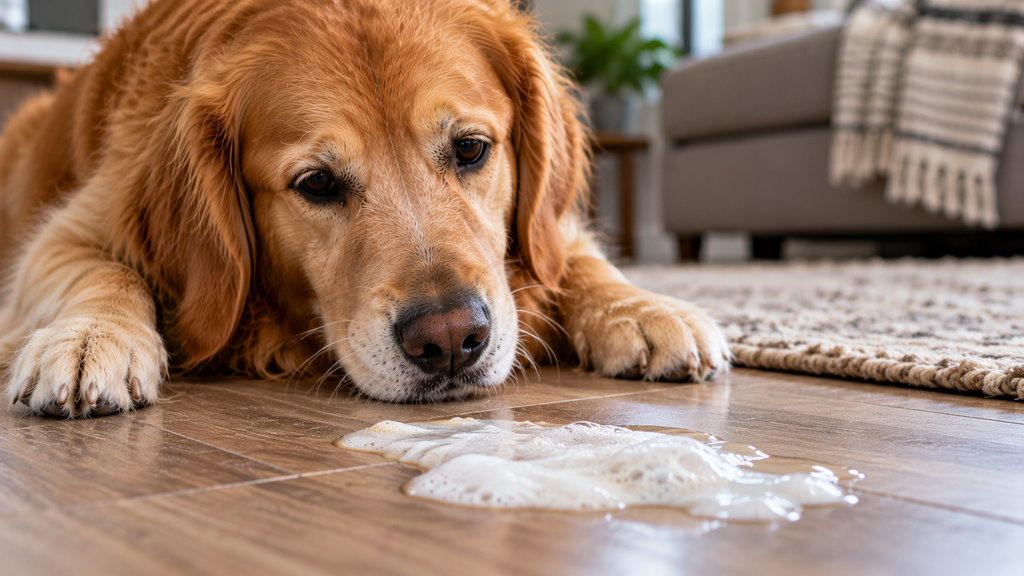
Seeing your dog throw up white foam can be worrying, especially when it happens unexpectedly. White, frothy vomit may occur when air mixes with saliva, mucus, or stomach fluid. Sometimes, it follows mild stomach irritation or an empty stomach. In other cases, it can signal a serious problem that needs veterinary attention.
The key is to look beyond the appearance of the vomit. How often your dog vomits, whether they are coughing or retching, and whether they have other symptoms can help determine what to do next.
In this guide, you’ll learn why dogs throw up white foam, what you can safely do at home, and which warning signs mean you should contact a veterinarian immediately.
Quick Answer: Why Is My Dog Throwing Up White Foam?
Dogs may throw up white foam because of stomach irritation, nausea, an empty stomach, or repeated retching. Sometimes, a dog that appears to vomit foam is actually coughing up frothy mucus.
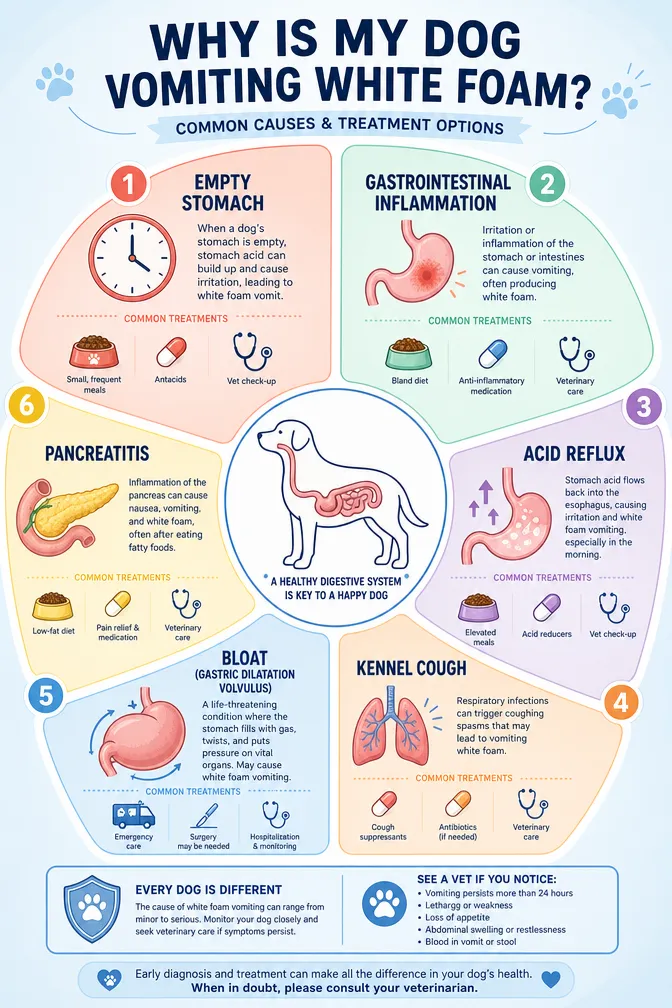
Possible causes include:
- An empty stomach or bile reflux
- Mild digestive upset
- Eating too quickly or consuming something unusual
- Gastrointestinal inflammation
- Coughing or respiratory irritation
- Pancreatitis or another underlying illness
- An intestinal blockage or toxin exposure
- Bloat, also called gastric dilatation-volvulus (GDV)
A single episode in an otherwise healthy adult dog may be less concerning than repeated vomiting. However, white foam alone cannot tell you whether the cause is harmless.
Key Takeaways
- White foam can consist of saliva, mucus, air, and stomach fluid.
- An empty stomach may contribute to vomiting in some dogs, but it is not the only possible cause.
- Coughing and gagging can sometimes be mistaken for vomiting.
- Repeated vomiting, loss of appetite, weakness, or diarrhea warrants prompt veterinary advice.
- A swollen abdomen or repeated unproductive retching may indicate bloat and requires emergency care.
- Do not give human medications or induce vomiting without veterinary guidance.
- Puppies and dogs with underlying medical conditions may need assessment sooner.
What Does It Mean When a Dog Throws Up White Foam?

White foam often forms when air mixes with saliva, mucus, or stomach fluid. It may appear as a bubbly liquid or a thick, frothy substance.
When a dog’s stomach is relatively empty, there may be little food in the vomit. However, white foam does not automatically mean your dog is hungry or has an empty stomach.
It is also important to distinguish vomiting from coughing or regurgitation.
- Vomiting: Usually involves nausea, abdominal contractions, and forceful expulsion of stomach contents.
- Regurgitation: Food or fluid comes back up passively, often without strong abdominal contractions.
- Coughing or gagging: A dog may cough repeatedly and bring up frothy mucus or saliva.
These differences can help your veterinarian narrow down the cause. If possible, note what happened immediately before the episode and take a short video if it is safe to do so.
Common Reasons a Dog Throws Up White Foam
Several conditions can cause white foam to appear around a dog’s mouth or in vomit. Some are relatively mild, while others require prompt medical attention.
1. Empty Stomach or Bilious Vomiting Syndrome
Some dogs vomit when their stomachs have been empty for an extended period. Bile reflux and stomach irritation may contribute to episodes that occur early in the morning or after long gaps between meals.
Bilious vomiting syndrome is one possible explanation when a dog repeatedly vomits bile, often on an empty stomach, but otherwise appears well.
The vomit may be white and foamy, yellow, or a mixture of both. Its appearance varies, so color alone cannot confirm the condition.
If your dog regularly vomits before breakfast, speak with your veterinarian. If an empty-stomach pattern is suspected, they may recommend dividing the usual daily food allowance into smaller meals or offering a small portion before bedtime.
Do not assume recurring vomiting is simply hunger without first considering other causes.
2. Indigestion or Dietary Upset
Dogs sometimes eat things that irritate their digestive systems, including rubbish, spoiled food, unfamiliar treats, grass, or fatty table scraps.
A sudden change in food may also upset a dog’s stomach. In some cases, the dog vomits once and then returns to normal. Other dogs may develop diarrhea, reduced appetite, or repeated vomiting.
If your dog may have eaten something unusual, consider what it was and how much they might have swallowed.
Contact your veterinarian if the vomiting continues, your dog seems unwell, or the item could be toxic or cause an obstruction. Do not wait for symptoms if you suspect poisoning.
3. Gastrointestinal Inflammation or Infection
Inflammation of the stomach or intestines can cause nausea, vomiting, and sometimes white foam. Possible causes include gastroenteritis, dietary irritation, and certain infections.
Additional symptoms may include:
- Diarrhea
- Reduced appetite
- Abdominal discomfort
- Low energy
- Repeated vomiting
Vomiting combined with diarrhea can lead to dehydration, particularly in puppies and small dogs.
If your dog has repeated vomiting or develops other symptoms, contact your veterinarian promptly. A puppy with vomiting and diarrhea, especially one that is not fully vaccinated, needs urgent assessment because serious infections such as parvovirus may be involved.
4. Kennel Cough or Respiratory Irritation
Not every episode involving white foam originates in the stomach.
Dogs with respiratory irritation may cough, gag, and bring up frothy mucus or saliva. Kennel cough is one possible cause of a persistent, sometimes honking cough followed by gagging.
You may notice that your dog coughs several times before bringing up the foam. This pattern differs from typical vomiting, which generally involves abdominal contractions.
If your dog has a persistent cough, arrange veterinary advice. Keep them away from other dogs until you have guidance if a contagious respiratory infection is suspected.
Difficulty breathing, blue or pale gums, collapse, or severe weakness requires emergency veterinary care.
5. Pancreatitis
Pancreatitis is inflammation of the pancreas. It can cause vomiting, nausea, abdominal pain, loss of appetite, and lethargy.
Some cases are associated with fatty foods, although there can be other causes. Affected dogs may appear uncomfortable, refuse meals, or repeatedly vomit.
White foam is not specific to pancreatitis, and you cannot diagnose the condition from vomit alone.
If your dog has persistent vomiting, abdominal pain, or marked lethargy, seek prompt veterinary care. Severe symptoms require emergency assessment.
6. Toxin Ingestion
Certain household chemicals, medications, plants, and foods can be toxic to dogs. Exposure may cause vomiting, drooling, foaming, weakness, tremors, or other symptoms.
Foam around the mouth does not necessarily mean poisoning, but suspected toxin exposure should always be taken seriously.
If your dog may have swallowed something toxic:
- Contact your veterinarian or an emergency animal hospital immediately.
- Keep the product packaging or take a photograph of the label, if available.
- Tell the veterinary team what your dog may have eaten, approximately how much, and when.
- Do not induce vomiting or give home remedies unless a veterinarian specifically instructs you to do so.
Do not wait for symptoms to appear before seeking advice.
7. Bloat (Gastric Dilatation-Volvulus)
Bloat, particularly gastric dilatation-volvulus (GDV), is a life-threatening emergency in which the stomach becomes distended and may twist.
A dog with GDV may repeatedly attempt to vomit but produce little or nothing, sometimes bringing up white foam. Other warning signs include:
- A swollen or tight abdomen
- Restlessness or pacing
- Excessive drooling
- Repeated unproductive retching
- Weakness or collapse
If you suspect bloat, go to an emergency veterinary hospital immediately. Do not wait to see whether the symptoms improve or try to treat the problem at home.
8. Intestinal Blockage or Another Underlying Illness
Swallowing a toy, cloth, bone fragment, or other foreign object can cause an intestinal blockage. Repeated vomiting may include white foam, especially when little food remains in the stomach.
Other medical conditions, including gastrointestinal disease and certain organ or hormonal disorders, can also cause vomiting.
Seek urgent veterinary advice if your dog may have swallowed a foreign object, vomits repeatedly, has abdominal pain, or becomes unusually weak.
Is White Foam Vomit in Dogs an Emergency?
Whether white foam vomiting is an emergency depends on the accompanying symptoms, the frequency of vomiting, and your dog’s overall condition.
Monitor closely
An otherwise healthy adult dog that vomits once and then behaves normally may not need emergency treatment. Monitor closely and contact your veterinarian if you are uncertain or the vomiting returns.
Contact your veterinarian promptly
Arrange veterinary advice if your dog:
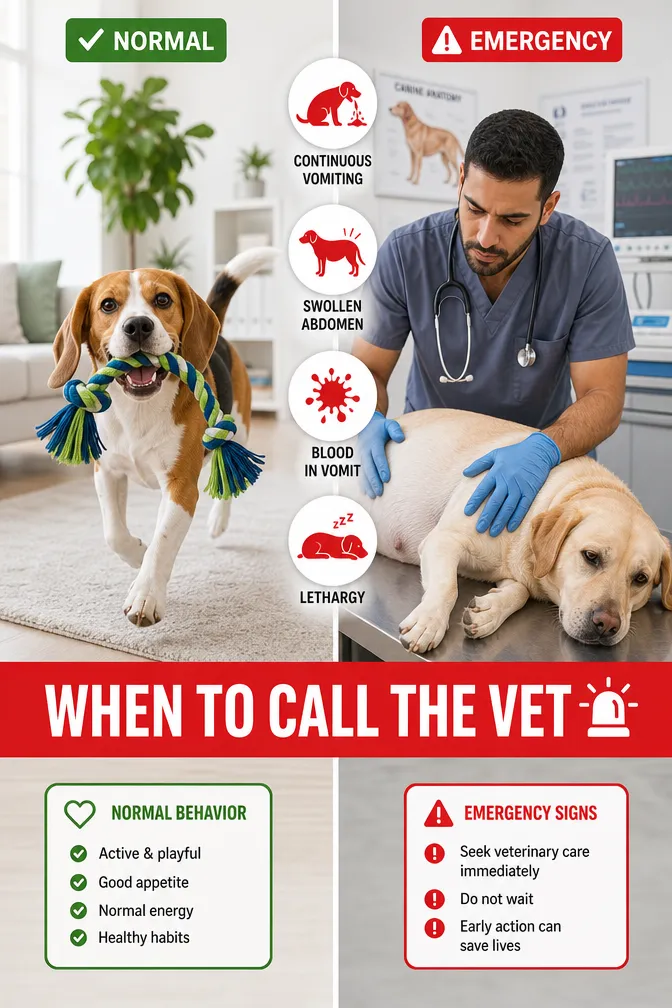
- Vomits repeatedly or the episodes are increasing.
- Refuses food or has a noticeably reduced appetite.
- Develops diarrhea alongside vomiting.
- Seems tired, uncomfortable, or less responsive than usual.
- Has a persistent cough or repeated gagging.
- Cannot keep water down.
- Has recurring episodes over several days.
Puppies, elderly dogs, and dogs with chronic medical conditions may need more urgent assessment.
Seek emergency care immediately
Do not delay if your dog has:
- A swollen abdomen with retching or restlessness
- Blood in the vomit
- Collapse, severe weakness, or seizures
- Difficulty breathing
- Severe or persistent abdominal pain
- Suspected poisoning or a swallowed foreign object
If you are unsure, call a veterinary clinic and describe the symptoms. A veterinary professional can help determine how quickly your dog needs to be seen.
Difference Between White Foam Vomit and Regular Vomit in Dogs
The appearance of vomit can provide clues, but it cannot reliably establish the cause.
| Appearance | Possible explanation |
|---|---|
| White foam | Air mixed with saliva, mucus, or stomach fluid |
| Yellow or yellow-green liquid | Bile may be present |
| Partially digested food | Vomiting after a meal or another digestive problem |
| Clear fluid | Water, saliva, or stomach secretions |
| Blood or dark coffee-ground material | Possible bleeding that needs urgent veterinary assessment |
These appearances overlap. A dog can have a serious condition even if the vomit looks relatively mild.
If your dog repeatedly vomits, appears unwell, or has any emergency warning signs, do not rely on color to decide whether veterinary care is needed.
Can White Foam Vomit in Dogs Be Caused by Anxiety or Stress?
Stress can affect a dog’s digestive function, and some dogs develop gastrointestinal symptoms around stressful events. However, white foam vomiting should not automatically be attributed to anxiety.
Potential stressors include travel, changes in routine, separation, loud noises, or unfamiliar environments.
If vomiting repeatedly occurs around stressful situations, keep a record of the timing and discuss the pattern with your veterinarian. They can help determine whether stress may be contributing and rule out other medical causes.
If vomiting persists or is accompanied by other symptoms, seek veterinary assessment rather than assuming anxiety is responsible.
My Dog Threw Up White Foam Once: Should I Be Worried?
A single episode in an otherwise healthy adult dog that remains alert and comfortable may be less concerning than repeated vomiting. Nevertheless, it is worth monitoring your dog closely.
For now:
- Observe your dog’s energy, appetite, and behavior.
- Offer water in small, frequent amounts if your dog is alert and able to swallow normally.
- Avoid giving treats, rich foods, or unfamiliar foods while you assess the situation.
- Contact your veterinarian if vomiting returns or you notice other symptoms.
Do not force your dog to drink or eat. If they cannot keep water down, seek prompt veterinary advice.
Do not automatically withhold food for a prolonged period. Puppies, diabetic dogs, and dogs with certain medical conditions may be harmed by fasting. Ask your veterinarian how to manage feeding if vomiting occurs.
White Foam Vomiting in Dogs With Diarrhea: What Does It Mean?
Vomiting white foam together with diarrhea may indicate gastrointestinal irritation, infection, dietary upset, or another medical condition.
The combination is more concerning than an isolated episode because fluid loss can lead to dehydration. This risk is especially important in puppies, small dogs, elderly dogs, and pets with underlying illnesses.
Contact your veterinarian promptly if vomiting and diarrhea occur together. Seek urgent care if your dog is weak, has blood in the vomit or stool, experiences repeated vomiting, or cannot keep water down.
If a puppy is vomiting and has diarrhea, particularly if vaccination is incomplete, seek urgent veterinary assessment because parvovirus is one possible cause.
How to Help a Dog That Is Throwing Up White Foam
Home care is appropriate only in limited situations, such as a single mild episode in an otherwise healthy adult dog that quickly returns to normal. The correct approach depends on the cause.
What you can do
- Keep your dog calm. Allow them to rest somewhere comfortable while you observe their condition.
- Offer water carefully. If your dog is alert and swallowing normally, offer small amounts rather than encouraging them to drink a large volume at once.
- Avoid unfamiliar foods. Do not offer rich scraps, new treats, or fatty foods.
- Monitor for further symptoms. Note whether vomiting returns and whether appetite, energy, stools, or behavior change.
- Contact your veterinarian when needed. Seek advice if symptoms recur, your dog seems unwell, or you are unsure of the cause.
What you should not do
- Do not give human medications without veterinary approval.
- Do not induce vomiting unless a veterinarian specifically instructs you to.
- Do not force-feed your dog.
- Do not impose a prolonged fast without veterinary advice.
- Do not use home remedies to treat suspected poisoning, bloat, or an intestinal blockage.
- Do not delay care when emergency symptoms are present.
If your dog continues vomiting, your veterinarian may recommend an appropriate feeding plan, diagnostic tests, or treatment based on the suspected cause.
Dog Throwing Up White Foam After Eating Too Fast
A dog that brings up food or foam shortly after eating may be vomiting or regurgitating. These are different processes, and the distinction can help your veterinarian identify the cause.
Eating rapidly can contribute to regurgitation in some dogs, particularly when they swallow large mouthfuls or a lot of air. However, white foam after eating does not prove that eating too quickly is the problem.
If your dog frequently eats too fast, a slow-feeder bowl or smaller, appropriately measured meals may help slow the pace of eating.
If the problem continues, arrange a veterinary assessment. Repeated vomiting or regurgitation can have causes that require treatment.
White Foam Vomiting in Older Dogs Versus Puppies
Age can influence how urgently vomiting needs to be assessed.
Puppies
Puppies can become dehydrated or develop low blood sugar more quickly than healthy adult dogs. Vomiting may also occur with infections, including parvovirus.
Contact a veterinarian promptly if a puppy vomits white foam. Seek urgent care if the puppy also has diarrhea, poor appetite, weakness, or lethargy, especially if vaccination is incomplete.
Older dogs
Older dogs may have underlying health conditions or take medications that affect their digestive systems. A new or recurring vomiting pattern deserves veterinary attention.
Regardless of age, a dog with a swollen abdomen, repeated unproductive retching, collapse, or breathing difficulties needs emergency care.
Frequently Asked Questions About Dogs Throwing Up White Foam
Is white foamy vomit bad?
Not always. A single episode in an otherwise healthy adult dog may result from mild digestive irritation. However, white foam can also occur with serious conditions.
Repeated vomiting, weakness, abdominal swelling, blood, or other concerning symptoms warrant veterinary care.
What is the white foamy stuff that dogs throw up?
It is often a mixture of air, saliva, mucus, and stomach fluid. In some cases, a dog may actually be coughing up frothy respiratory mucus rather than vomiting.
The circumstances surrounding the episode help determine what might be happening.
What color is parvo vomit?
Vomit associated with canine parvovirus can vary in appearance. It may be clear, yellow, or contain other material, so color alone cannot diagnose parvovirus.
If a puppy has vomiting and diarrhea, especially if vaccination is incomplete, seek urgent veterinary assessment.
Why is my dog throwing up white foam and not eating?
Vomiting combined with a loss of appetite may indicate nausea, abdominal discomfort, infection, obstruction, or another medical problem.
Contact your veterinarian promptly, particularly if the vomiting repeats or your dog seems tired or uncomfortable.
Can I give my dog water after vomiting white foam?
If your dog is alert and swallowing normally, you can offer small amounts of water. Do not force water into their mouth or allow them to gulp large quantities if that triggers more vomiting.
If your dog vomits after drinking or cannot keep water down, contact a veterinarian promptly.
Should I withhold food after my dog vomits white foam?
Do not automatically fast your dog for a fixed number of hours. The safest feeding plan depends on your dog’s age, medical history, and symptoms.
Puppies, diabetic dogs, and medically fragile pets may be particularly vulnerable to fasting. Ask your veterinarian for guidance, especially if vomiting continues.
Can stress cause a dog to vomit white foam?
Stress may contribute to digestive upset in some dogs, but it should not be assumed to be the cause. Recurring or persistent vomiting needs veterinary assessment to rule out other conditions.
Can eating too fast cause white foam vomiting?
Eating quickly may contribute to regurgitation or digestive discomfort in some dogs. A slow-feeder bowl may help slow eating, but repeated episodes should be assessed by a veterinarian.
Conclusion
When a dog throws up white foam, the cause may be relatively mild, such as digestive irritation, but it can also indicate a serious medical problem. An empty stomach is one possibility, while coughing, gastrointestinal disease, pancreatitis, toxin exposure, and intestinal obstruction are other considerations.
A single episode in an otherwise healthy adult dog may be monitored closely, but repeated vomiting or additional symptoms warrant veterinary advice. A swollen abdomen, repeated unproductive retching, collapse, breathing difficulties, or suspected poisoning requires immediate care.
The most important rule is not to rely on the color of the vomit alone. Pay attention to your dog’s behavior, look for warning signs, and contact your veterinarian when you are concerned.
References
[1] Garden State Veterinary Services. Dog Throwing Up White Foam: Emergency Guidance.
https://www.gsvs.org/woodbridge-nj/blog/dog-throwing-up-white-foam-emergency/
[2] American Kennel Club (AKC). Dog Throwing Up White Foam.
https://www.akc.org/expert-advice/health/dog-throwing-up-white-foam/
[3] Pet Vet Emergency and Specialty Center. Why Is My Dog Throwing Up White Foam?
https://pvesc.com/why-is-my-dog-throwing-up-white-foam/
[4] Manchester Veterinary Clinic. Dog Is Throwing Up White Foam.
https://manchestervet.com/blog/dog-is-throwing-up-white-foam/
[5] Best Friends Veterinary Center. Dog Is Throwing Up White Foam.
https://bestfriendsvet.org/blog/dog-is-throwing-up-white-foam/
[6] Whitney Veterinary Hospital. Dog Vomiting White Foam.
https://whitneyvet.com/dog-vomiting-white-foam/
[7] Kryder Veterinary Clinic. Dog Vomiting Up White Foam.
https://krydervet.com/blog/dog-vomiting-up-white-foam/
[8] Canine Scape. Dog Vomiting White Foam.
https://caninescape.com/dog-vomiting-white-foam/
[9] PetPlace. Dog Vomiting White Foam.
https://www.petplace.com/article/dogs/pet-health/dog-vomiting-white-foam
[10] WebVet. Dog Throwing Up White Foam.
https://www.webvet.com/dog-throwing-up-white-foam/