

Tylenol contains acetaminophen, a medication used to relieve pain and reduce fever in people. However, Tylenol should never be given to a dog unless a veterinarian specifically prescribes it and provides instructions. Incorrect use can cause serious liver damage, damage to red blood cells, and potentially life-threatening poisoning.
If your dog has swallowed Tylenol, contact your veterinarian or an emergency veterinary clinic immediately. Do not wait for symptoms to appear, and do not attempt home treatment without veterinary guidance.
This guide explains why Tylenol can harm dogs, the warning signs of acetaminophen poisoning, what to do after accidental ingestion, and which veterinary pain-relief options may be available.
Quick Answer
Can dogs have Tylenol? Generally, no. Tylenol contains acetaminophen, which can be toxic to dogs when given incorrectly. Although veterinarians may occasionally prescribe acetaminophen for selected dogs under carefully controlled conditions, owners should never give it independently.
Acetaminophen poisoning can damage the liver and interfere with the ability of red blood cells to carry oxygen. Some dogs may initially appear normal even while harmful effects are developing.
Remember these essential safety points:
- Never give your dog human Tylenol without explicit veterinary instructions.
- Do not assume a small amount is harmless.
- Do not calculate a supposedly safe dose using your dog’s weight.
- If your dog may have swallowed Tylenol, contact a veterinarian or animal poison service immediately.
- Do not induce vomiting or administer home remedies unless a veterinary professional directs you to do so.
Why Is Acetaminophen Toxic to Dogs?
Acetaminophen is processed by the liver. During this process, the body normally neutralizes potentially harmful byproducts. When too much acetaminophen is absorbed, these protective pathways can become overwhelmed, allowing toxic substances to damage liver cells.
Acetaminophen can also affect red blood cells, producing methemoglobin, which cannot carry oxygen normally. This can reduce oxygen delivery to tissues and cause serious illness. [1][4]
How poisoning affects the body
| System affected | Possible effects |
|---|---|
| Liver | Liver cell damage and impaired liver function |
| Red blood cells | Reduced oxygen-carrying ability and damage to blood cells |
| Respiratory system | Difficulty breathing when oxygen delivery is impaired |
| Kidneys and other organs | Additional complications may develop in severe cases |
The severity of poisoning depends on several factors, including the amount ingested, the formulation, the time since ingestion, and the dog’s individual health.
Why dogs are vulnerable
Dogs do not process acetaminophen in exactly the same way humans do. Their ability to neutralize its toxic byproducts can be overwhelmed, especially after excessive or repeated exposure. [4]
This is why a medication that is commonly used by people can be dangerous for a dog. Never assume that a human medicine is safe to share with your pet.
How Much Tylenol Is Toxic to Dogs?
There is no owner-friendly dose calculation that can reliably determine whether an accidental ingestion is safe. The risk depends on the amount and strength of the product, the dog’s size and health, whether exposure was repeated, and whether the product contains other active ingredients.
Do not use a toxic-dose threshold to decide whether to seek veterinary care. An amount that appears small may still warrant professional assessment, and early symptoms may be absent.
If you know or suspect that your dog swallowed Tylenol, contact a veterinarian promptly. Be prepared to provide:
- Your dog’s approximate weight.
- The product name and tablet strength or liquid concentration.
- The number of tablets or estimated amount of liquid missing.
- The time the ingestion may have occurred.
- Any symptoms you have noticed.
- Information about other medications your dog may have swallowed.
Keep the original packaging so the veterinary team can identify the exact formulation.
Why repeated exposure matters
Repeated exposure can also be dangerous. Giving smaller amounts on multiple occasions does not guarantee safety, and damage may develop before obvious symptoms appear.
Never repeat a dose or use leftover medication prescribed for another animal without speaking to your veterinarian.
What Happens If My Dog Eats Tylenol?
After ingestion, acetaminophen can be absorbed into the bloodstream and begin affecting the body. The timing and severity of symptoms vary. Some effects may develop within hours, while liver injury can become apparent later.
Possible complications include:
- Vomiting and loss of appetite.
- Weakness or unusual tiredness.
- Damage to red blood cells.
- Brown, bluish, or otherwise abnormal gum color.
- Facial or paw swelling.
- Liver injury and jaundice.
- Difficulty breathing or collapse in severe cases.
Not every dog will show all these signs. A dog that appears normal after swallowing Tylenol may still be at risk.
Do not wait for symptoms before seeking advice. Early veterinary assessment may allow treatment to begin before serious complications develop. [1][7][9]
Symptoms of Tylenol Overdose in Dogs
Recognizing the warning signs of acetaminophen poisoning can help you explain the situation to your veterinarian and understand when emergency care is needed.
Early warning signs
Possible early signs include:
- Vomiting.
- Drooling or excessive salivation.
- Loss of appetite.
- Weakness or lethargy.
These symptoms are not specific to acetaminophen poisoning, but they should be taken seriously when exposure is possible.
Signs of red blood cell damage
Acetaminophen can interfere with oxygen transport in the blood. Warning signs may include:
- Brown, blue-gray, or unusually pale gums.
- Rapid or difficult breathing.
- Weakness or marked lethargy.
- Dark-colored urine.
- Swelling of the face or paws.
Signs of possible liver injury or severe poisoning
More serious signs may include:
- Yellowing of the eyes or gums, known as jaundice.
- Persistent vomiting.
- Severe weakness.
- Collapse or reduced responsiveness.
- Other signs of significant illness.
The timing and combination of symptoms vary, so do not use a symptom checklist to rule poisoning in or out.
Emergency warning: Difficulty breathing, blue or brown gums, collapse, marked weakness, or severe swelling requires immediate veterinary attention. If your dog may have swallowed Tylenol, contact a veterinarian even if these signs are absent. [1][9]
Is Children’s Tylenol Safe for Dogs?
No. Children’s Tylenol contains acetaminophen and should not be considered a safe alternative to adult formulations.
Liquid products may have different concentrations, and some medicines contain additional ingredients that can create further risks. Products marketed for children are designed for human use, not for unsupervised treatment of dogs.
Never estimate a dose from a child’s dosing instructions or use a measuring syringe to administer human medicine to your dog without veterinary direction.
If your dog has swallowed children’s Tylenol, keep the bottle or packaging and contact your veterinarian immediately. Tell them whether the product was liquid, chewable, or another formulation.
Can Dogs Take Ibuprofen or Aspirin Instead?
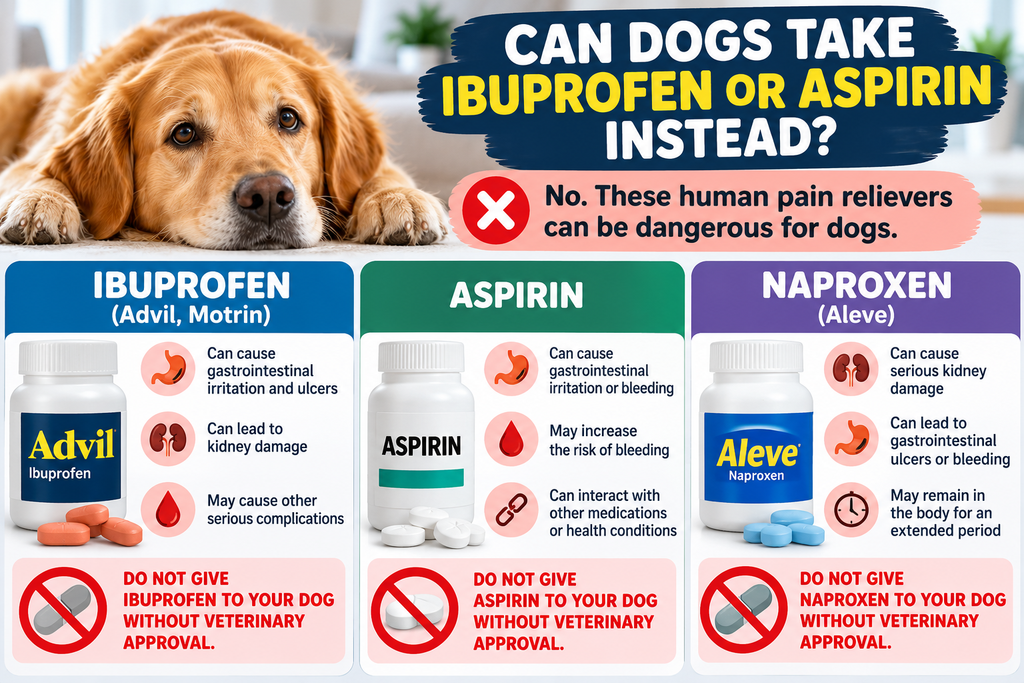
No human pain reliever should be given to a dog without veterinary approval. Switching from Tylenol to another human medication does not automatically make pain treatment safe.
- Ibuprofen (Advil, Motrin): Can cause gastrointestinal irritation, ulcers, kidney damage, and other serious complications in dogs.
- Naproxen (Aleve): Can cause serious toxicity in dogs and may remain in the body for an extended period.
- Aspirin: Can cause gastrointestinal irritation or bleeding and may interact with other medicines or health conditions.
These medications are not interchangeable, and their risks differ. A drug that may be appropriate in a particular veterinary situation can still be dangerous when used incorrectly.
If your dog is in pain, contact your veterinarian to identify the cause and choose an appropriate treatment. [9]
What Pain Medication Is Safe for Dogs?
Veterinarians can prescribe pain-relief medications based on a dog’s condition, age, medical history, other medicines, and individual risks. These options may be safer and more effective than human painkillers when selected and monitored appropriately.
Dog-specific anti-inflammatory medications
Depending on the diagnosis and the dog’s health, a veterinarian may consider medications such as:
- Carprofen (Rimadyl).
- Meloxicam (Metacam).
- Deracoxib (Deramaxx).
- Firocoxib (Previcox).
These medicines are used in veterinary practice for selected conditions, but they are not suitable for every dog. They can have adverse effects and may require monitoring. Do not combine them with aspirin, ibuprofen, naproxen, or another anti-inflammatory medicine unless your veterinarian specifically directs you to do so.
Other veterinary pain-relief options
Depending on the source and type of pain, a veterinarian may also consider:
- Gabapentin: Used in selected pain-management plans.
- Tramadol: May be considered in particular circumstances, depending on the case and local veterinary guidance.
- Grapiprant (Galliprant): Used for osteoarthritis pain in dogs when appropriate.
- Bedinvetmab (Librela): An injectable treatment for osteoarthritis pain in dogs in markets where it is authorized and available.
These medicines have different uses and limitations. They should not be treated as interchangeable options or administered without veterinary instructions.
For some dogs, pain management may also involve weight management, rehabilitation, changes to exercise, or other supportive care. The best approach depends on the underlying problem.
What Should I Do If My Dog Swallowed Tylenol?
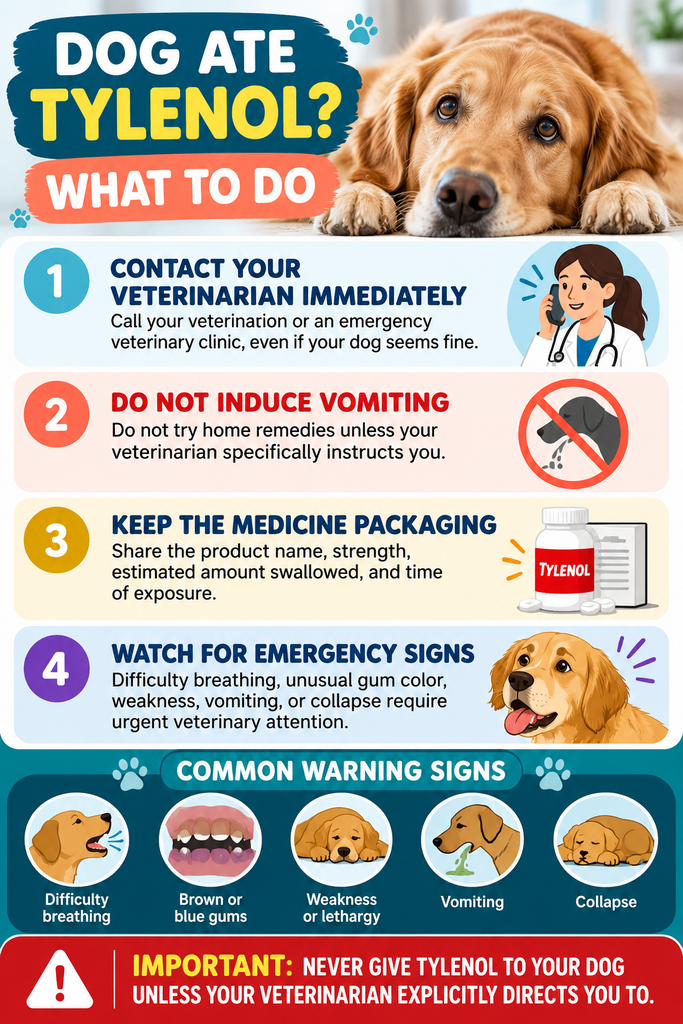
If your dog may have swallowed Tylenol, act promptly. Do not wait to see whether symptoms appear.
Step 1: Contact a veterinarian immediately
Call your veterinarian, an emergency veterinary clinic, or an appropriate animal poison service. Explain that acetaminophen ingestion is suspected and follow their instructions.
Have the following information ready:
- Your dog’s weight and age.
- The exact product name.
- The tablet strength or liquid concentration.
- The amount that may have been swallowed.
- The approximate time of ingestion.
- Any symptoms or other substances involved.
Step 2: Do not try home treatment
Do not induce vomiting, give milk, administer activated charcoal, or use other home remedies unless a veterinary professional specifically instructs you to do so.
The correct response depends on the timing, product, and condition of your dog. Some interventions are only appropriate in selected circumstances and can be harmful if attempted incorrectly.
Step 3: Keep the packaging and prepare for transport
Keep your dog calm and avoid unnecessary activity. Bring the medication container or a clear photograph of its label if you need to travel to a clinic.
If your dog has difficulty breathing, abnormal gum color, collapse, or severe weakness, seek emergency veterinary care immediately.
Step 4: Follow veterinary instructions even if your dog seems normal
Do not cancel a veterinary assessment because your dog appears well. Early poisoning may not produce obvious signs, and a veterinarian may recommend examination, testing, or treatment based on the exposure.
How Do Veterinarians Treat Acetaminophen Poisoning?
Treatment depends on how much medication was swallowed, how long ago the ingestion occurred, the dog’s condition, and the findings of the veterinary examination.
Depending on the circumstances, a veterinary team may consider:
- Decontamination when appropriate and safe.
- N-acetylcysteine (NAC), a medication used to help counter acetaminophen toxicity.
- Blood tests to assess liver function and other effects.
- Monitoring for red blood cell damage and impaired oxygen transport.
- Intravenous fluids or other supportive treatment when indicated.
- Oxygen therapy or additional emergency care for severe complications.
- Hospital monitoring when necessary.
Not every dog needs every intervention. The veterinarian determines the appropriate plan and monitors the response to treatment. [1][4][9]
Do not attempt to reproduce veterinary treatment at home. Early professional assessment is important because the appropriate treatment may change as the poisoning develops.
How to Prevent Future Tylenol Incidents
Accidental medication ingestion can happen quickly, particularly when tablets are dropped or medicine is left within a dog’s reach. A few simple precautions can reduce the risk.
- Store human medicines in closed, secure cabinets.
- Keep pill bottles, blister packs, and liquid medicines away from counters and bedside tables.
- Pick up dropped tablets immediately and check the surrounding area.
- Remind guests to keep their medications securely stored.
- Never leave a dose prepared for another person or pet where a dog can reach it.
- Keep your veterinarian’s contact details readily available.
- Check the active ingredients of combination cold, flu, and pain medicines before storing them around pets.
If a medication bottle has been chewed or tablets are missing, treat the situation as a possible ingestion and contact a veterinary professional.
Emergency Care: When to Act
If your dog may have swallowed Tylenol
Contact a veterinarian or animal poison service immediately, even if your dog has no symptoms. Do not attempt to decide at home whether the amount was too small to matter.
If symptoms have developed
Seek urgent veterinary care for vomiting after a suspected ingestion, unusual weakness, facial or paw swelling, or abnormal gum color. Explain the possible medication exposure when you call.
If your dog has severe symptoms
Go to an emergency veterinary clinic immediately if your dog has:
- Difficulty breathing.
- Brown, blue-gray, or very pale gums.
- Collapse or reduced responsiveness.
- Severe weakness.
- Significant facial swelling.
- Yellowing of the eyes or gums.
Do not delay emergency care while trying to calculate a dose or waiting for more symptoms to appear.
Frequently Asked Questions
What pain reliever can you give a dog?
A veterinarian may prescribe a dog-appropriate medication based on the cause of the pain and the dog’s medical history. Never give Tylenol, ibuprofen, naproxen, or aspirin without veterinary direction.
How much Tylenol is safe to give a dog?
Do not determine a dose yourself. Acetaminophen may be used in selected veterinary situations under specific instructions, but owners should never calculate or administer a dose independently. If your dog has already swallowed Tylenol, contact a veterinarian promptly.
Is there a human painkiller I can give my dog?
Do not give human painkillers without veterinary approval. Different medicines have different risks, and some can cause serious poisoning. A veterinarian can recommend appropriate treatment for your dog’s condition.
What can I do at home if my dog is in pain?
Keep your dog comfortable and restrict strenuous activity while you arrange veterinary advice. Do not give human medication or attempt to treat unexplained pain with home remedies. Sudden, severe, or worsening pain warrants prompt assessment.
Can a dog look normal after eating Tylenol?
Yes. The absence of immediate symptoms does not rule out poisoning. Contact a veterinarian or animal poison service immediately after suspected ingestion.
What should I bring to the veterinarian?
Bring the medication packaging if possible and provide your dog’s weight, the amount that may have been swallowed, the time of exposure, and any symptoms you have noticed. This information helps the veterinary team assess the situation.
Related Reading
Imodium for Dogs: When It Becomes an Emergency
Diabetic Ketoacidosis in Dogs: An Urgent Care Guide
My Dog Ate Marshmallows: Is It a Pet Emergency?
Conclusion
Tylenol is not a medication to give your dog without explicit veterinary direction. Acetaminophen poisoning can damage the liver and red blood cells, and serious effects may develop before obvious symptoms appear.
If your dog has swallowed Tylenol, contact a veterinarian or animal poison service immediately. Do not induce vomiting, give home remedies, or rely on dose calculations to decide whether your dog is safe. Prompt professional advice offers the best opportunity to identify the risk and provide appropriate care.
Medical Disclaimer
This article is for general educational purposes only and does not replace professional veterinary advice, diagnosis, or treatment. If your dog may have swallowed Tylenol or another human medication, contact a veterinarian or animal poison service immediately. In an emergency, seek veterinary care without delay.
References
[1] VCA Animal Hospitals — Acetaminophen Toxicity in Dogs
[2] American College of Veterinary Pharmacists — Acetaminophen
[3] Indian Council of Agricultural Research — Veterinary research publication
[4] PubMed Central — Research article on acetaminophen toxicity
[5] American Society for the Prevention of Cruelty to Animals — Veterinary emergency medicine reference
[6] PubMed — Veterinary toxicology research
[7] Land & Lane Animal Urgent Care — Dog Ate Acetaminophen
[8] University of Guelph Animal Health Laboratory — Acetaminophen Intoxication in Dogs
[9] Merck Veterinary Manual — Toxicoses From Human Analgesics in Animals
[10] Towne Center Animal Hospital — Acetaminophen Toxicity in Cats and Dogs