
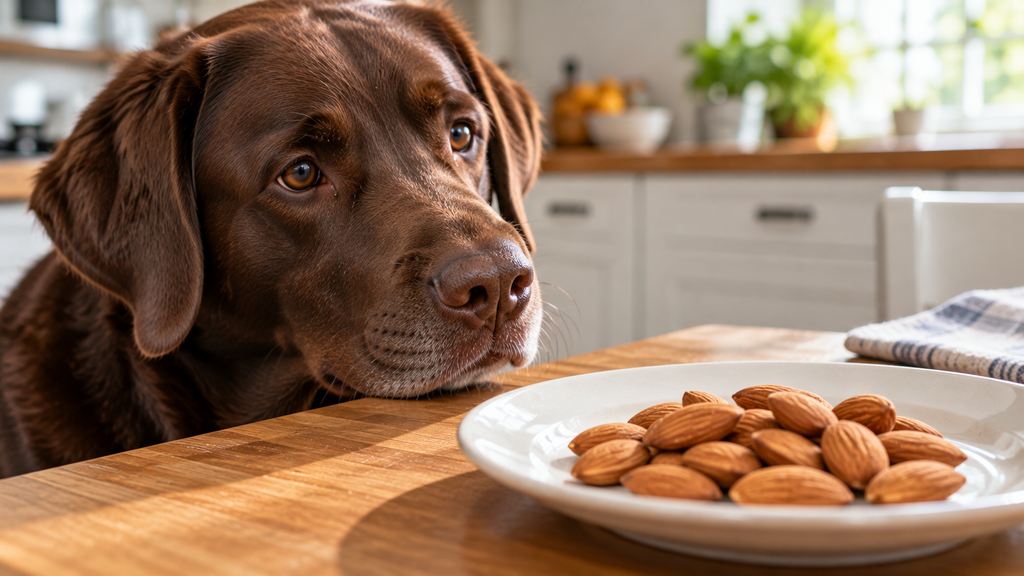
Quick Answer: Can Dogs Eat Almonds? No, almonds are not a recommended snack for dogs. Sweet almonds sold in grocery stores are not generally considered toxic to dogs, but they can cause digestive upset and pose choking or intestinal blockage risks. Their high fat content may also contribute to pancreatitis in susceptible dogs.
The risk depends on the type of almond, the amount eaten, your dog’s size, and any additional ingredients. Salted, seasoned, or chocolate-covered almonds introduce additional concerns, while products containing xylitol can be particularly dangerous.
If your dog has eaten almonds, don’t panic. Find out what type they ate and approximately how much, then contact your veterinarian for advice when the amount, ingredients, or potential risks are uncertain.
Key Takeaways
- Almonds are best avoided: They offer no essential nutritional benefit that dogs cannot get from a balanced diet.
- Sweet almonds are not generally toxic: However, they can cause digestive upset, choking, or intestinal obstruction.
- Bitter almonds are different: They may contain cyanogenic compounds that can release cyanide and should be treated as a potential poisoning emergency.
- Seasonings matter: Salted, flavored, and chocolate-covered almonds may introduce additional hazards.
- Almond products need label checks: Avoid products containing xylitol, also called birch sugar.
- Watch for warning signs: Repeated vomiting, abdominal pain, weakness, choking, or breathing difficulties require prompt veterinary attention.
- Don’t induce vomiting yourself: Follow your veterinarian’s instructions instead.
Quick Safety Guide: Almond Products
| Almond product | Recommended for dogs? | Main concern |
|---|---|---|
| Plain sweet almonds | No | Choking, digestive upset, obstruction |
| Salted almonds | No | Excessive sodium and digestive upset |
| Seasoned or flavored almonds | No | Salt, spices, and potentially harmful ingredients |
| Chocolate-covered almonds | No | Chocolate toxicity, plus almond-related risks |
| Almond butter | Not recommended as a regular treat | High fat, added ingredients, possible xylitol |
| Almond milk | Not necessary for dogs | Added sweeteners, fats, and other ingredients |
| Bitter almonds | Never feed | Potential cyanide poisoning |
| Almond flour | Use caution | High fat content and other recipe ingredients |
If your dog eats an almond product, check the complete ingredient list. If it contains chocolate, xylitol, or another potentially toxic ingredient, contact a veterinarian or animal poison service immediately.
Are Almonds Toxic to Dogs?
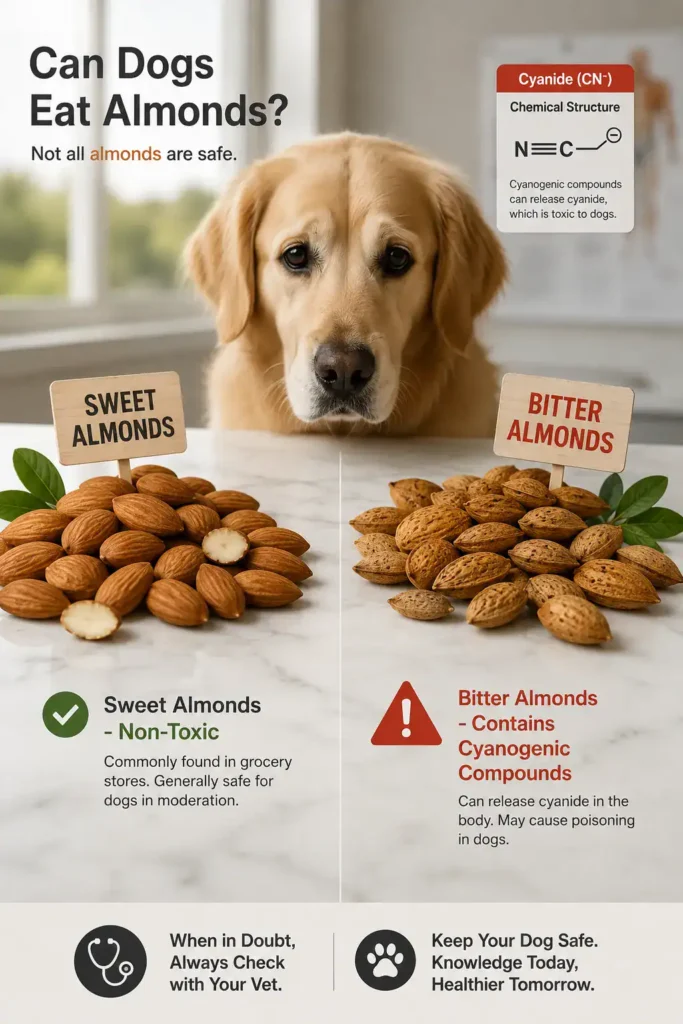
Sweet almonds, the common variety sold in many grocery stores, are not generally considered directly toxic to dogs. However, that does not make them a safe treat.
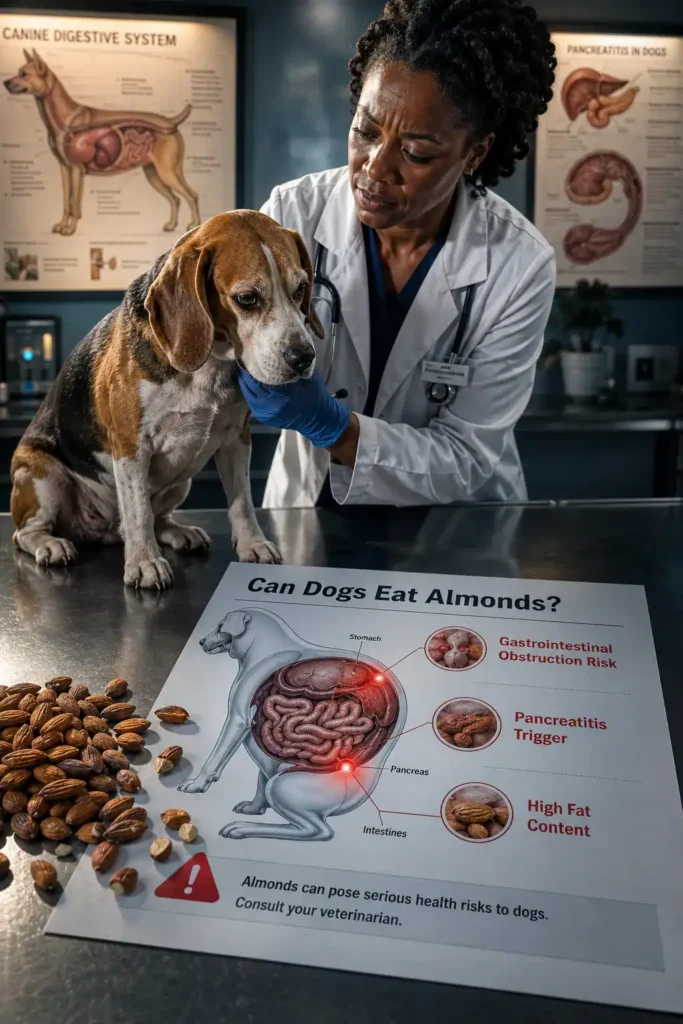
Almonds are hard, relatively high in fat, and can be difficult for some dogs to digest. Depending on the dog’s size and the amount consumed, they may cause stomach upset or contribute to choking and intestinal blockage.
Bitter almonds are different. They can contain cyanogenic compounds capable of releasing cyanide. If you suspect your dog has eaten bitter almonds, seek emergency veterinary advice immediately.
The distinction is important: ordinary sweet almonds are generally a physical and digestive risk, while bitter almonds may pose an additional poisoning risk.
For these reasons, it’s best to keep almonds out of your dog’s diet and choose treats specifically formulated for dogs.
What Happens If a Dog Eats Almonds?
What happens after a dog eats almonds depends on the type of almond, the quantity consumed, and the dog’s individual health.
Some dogs may experience no obvious symptoms after swallowing a small amount of plain sweet almond. Others may develop digestive upset or complications.
Possible problems include:
1. Vomiting and Diarrhea
Almonds contain a substantial amount of fat, and some dogs may struggle to tolerate them. Eating almonds can lead to vomiting, diarrhea, gas, or abdominal discomfort.
If vomiting continues, your dog develops diarrhea alongside other symptoms, or they seem unusually tired, contact your veterinarian.
2. Choking
Almonds are firm and can be difficult for dogs to chew thoroughly. A dog that swallows an almond whole may choke, particularly if it is small or tends to gulp food.
Signs of choking include difficulty breathing, frantic pawing at the mouth, and an inability to swallow normally.
Difficulty breathing is an emergency. Seek immediate veterinary assistance.
3. Intestinal Blockage
A swallowed almond or a quantity of nuts may contribute to an intestinal blockage, although the risk depends on the dog’s size, the amount eaten, and other circumstances.
Possible warning signs include repeated vomiting, loss of appetite, abdominal pain, and difficulty passing stool.
An intestinal obstruction can become life-threatening. If you suspect one, contact your veterinarian promptly rather than waiting for symptoms to worsen.
4. Pancreatitis
Pancreatitis is inflammation of the pancreas. Fatty foods can trigger an episode in some susceptible dogs, although not every dog that eats almonds will develop pancreatitis.
Signs can include repeated vomiting, abdominal pain, reduced appetite, weakness, and lethargy.
If your dog becomes unwell after eating almonds, especially if vomiting and abdominal discomfort occur together, seek veterinary advice.
5. Problems From Added Ingredients
Salted, seasoned, or chocolate-covered almonds may pose additional risks.
Chocolate can be toxic to dogs, while excessive sodium can cause serious problems depending on the amount consumed. Seasonings may also contain ingredients that are harmful to dogs.
Products containing xylitol require immediate veterinary guidance because this sweetener can cause dangerous low blood sugar and potentially liver injury in dogs.
How Many Almonds Can a Dog Safely Eat?
There is no recommended serving of almonds for dogs. The safest choice is not to feed them intentionally.
A dog’s risk depends on its size, the type of almond, the number eaten, and whether the nuts contain additional ingredients.
One plain sweet almond may not cause a serious problem in every dog, but it cannot be guaranteed safe for all dogs. A small dog may face a greater choking risk, while a dog with a history of pancreatitis or digestive disease may need extra caution.
If your dog has eaten almonds accidentally:
- Identify whether they were plain, salted, seasoned, chocolate-covered, or bitter.
- Estimate how many were eaten and when.
- Check the package for chocolate, xylitol, and other ingredients.
- Contact your veterinarian for guidance if you are unsure about the risk.
Do not wait for symptoms if the almonds contained a potentially toxic ingredient or your dog swallowed a large quantity.
Why Are Almonds Bad for Dogs?
Almonds are not an ideal dog treat for several reasons.
High fat content
Almonds contain considerable fat and calories. Eating too many can upset a dog’s digestive system and may contribute to pancreatitis in susceptible animals.
Hard texture
Their firm texture can make almonds difficult to chew safely. Swallowed whole or in large pieces, they may create choking or obstruction risks.
Added salt and seasonings
Salted and flavored almonds may contain excessive sodium or ingredients that are unsuitable for dogs. Some flavored products also contain additional fats, sugars, or seasonings.
Potential contamination or spoilage
Moldy nuts may contain harmful substances. Never let your dog eat moldy or spoiled food.
No nutritional need
Dogs eating complete and balanced food do not need almonds to obtain the nutrients required for good health. Dog-specific treats are a more suitable option.
Signs to Watch for After a Dog Eats Almonds
Symptoms depend on what your dog ate and whether a complication develops.
Watch for:
- Vomiting or diarrhea
- Reduced appetite
- Abdominal discomfort
- Unusual tiredness or weakness
- Excessive thirst after consuming salty foods
- Difficulty swallowing or signs of choking
- Repeated retching or an enlarged abdomen
Tremors, collapse, seizures, breathing difficulties, or severe weakness require emergency veterinary attention.
Symptoms may not appear immediately, so don’t assume your dog is safe simply because they initially seem normal. If you know your dog ate a large amount or a potentially toxic almond product, seek advice without waiting for signs of illness.
What Should I Do If My Dog Ate Almonds?
If your dog ate almonds, the most useful first step is to determine exactly what they consumed.
Step 1: Identify the almond product
Check whether your dog ate plain sweet almonds, bitter almonds, salted nuts, flavored almonds, chocolate-covered almonds, or a product containing almond butter.
Look at the ingredient list for chocolate, xylitol, and other potentially harmful ingredients.
Step 2: Estimate the amount
Try to work out how many almonds your dog ate and when the incident occurred. Your dog’s weight and medical history will also help your veterinarian assess the risk.
Step 3: Contact your veterinarian when needed
Contact a veterinarian promptly if your dog ate a large quantity, swallowed a foreign object along with the almonds, has an underlying medical condition, or consumed a product with potentially toxic ingredients.
Seek emergency assistance if your dog has difficulty breathing, collapses, develops severe weakness, or shows other serious symptoms.
Step 4: Avoid home treatments without advice
Do not induce vomiting, give human medication, or try home remedies unless a veterinary professional specifically instructs you to do so.
If your veterinarian determines that home monitoring is appropriate, follow their instructions and watch your dog for changes in appetite, behavior, vomiting, or bowel movements.
Can Dogs Eat Almond Butter or Almond Milk?
Almond butter
Almond butter is not a necessary or recommended regular treat for dogs. It is high in fat and calories, and some products contain added salt, sugar, or other ingredients.
Most importantly, check for xylitol before a dog can access any nut butter. If a product contains xylitol and your dog has eaten it, contact a veterinarian or animal poison service immediately.
Even plain almond butter should only be considered after checking its ingredients and discussing suitability with your veterinarian, particularly if your dog has digestive problems, obesity, or a history of pancreatitis.
Almond milk
Almond milk is not needed in a dog’s diet. Commercial varieties may contain added sugars, flavorings, oils, or other ingredients that are unsuitable for pets.
If your dog accidentally drinks a small amount of plain, unsweetened almond milk, check the label and monitor for digestive upset. Contact your veterinarian if it contains a potentially toxic ingredient or your dog develops symptoms.
Fresh water remains the best everyday drink for dogs.
Macadamia Nuts vs. Almonds for Dogs: What’s the Difference?
Both nuts should be kept out of your dog’s diet, but they present different risks.
| Nut | Main concern |
|---|---|
| Sweet almonds | Choking, digestive upset, possible intestinal obstruction |
| Bitter almonds | Potential cyanide poisoning |
| Macadamia nuts | Recognized toxicity in dogs |
| Walnuts | Possible digestive problems and risks from certain varieties or mold contamination |
| Pecans | High fat content and possible mold-related hazards |
Macadamia nuts are toxic to dogs and can cause weakness, vomiting, tremors, and difficulty walking. Sweet almonds are not generally directly toxic, but their physical and digestive risks make them an unsuitable snack.
If your dog eats macadamia nuts or bitter almonds, seek veterinary advice immediately.
Which Nuts Are Safe for Dogs?
Some nuts, such as plain peanuts or cashews, may be tolerated by many dogs in very small amounts. However, they are still high in calories and fat and are not necessary for canine nutrition.
Peanuts are technically legumes rather than true nuts. If offered, they should be plain, unsalted, and free of potentially harmful additives.
Avoid macadamia nuts and do not feed dogs moldy nuts. Other nuts may also present choking, digestive, or contamination risks.
For everyday rewards, dog-specific treats or small portions of appropriate dog-safe fruits and vegetables are generally better choices.
How to Prevent Dogs From Eating Almonds
Prevention is easier than dealing with an accidental ingestion.
- Store nuts in sealed containers in cupboards your dog cannot access.
- Keep snack bowls, trail mix, and baked goods away from the edge of tables and counters.
- Ask guests not to feed your dog human snacks.
- Check ingredient labels before offering any food to your pet.
- Teach your dog the “leave it” cue and reward them for responding.
- Dispose of nut shells, wrappers, and food scraps where pets cannot reach them.
Remember that trail mix and baked goods may contain other hazardous ingredients, including chocolate and raisins. Treat these products with extra caution.
Almond Ingestion: When to Monitor and When to Seek Help
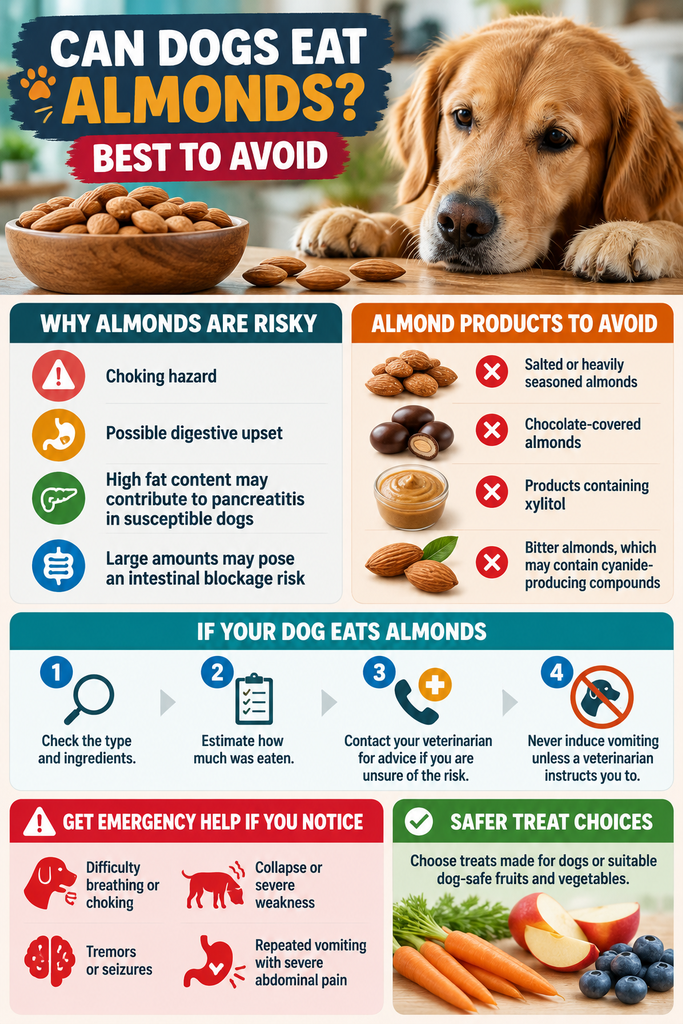
Contact a veterinarian promptly if your dog eats an uncertain quantity of almonds, consumes several nuts, or has a history of pancreatitis or digestive disease.
Seek emergency care immediately if your dog:
- Has difficulty breathing or appears to be choking.
- Collapses or develops severe weakness.
- Has tremors or seizures.
- Has repeated vomiting with severe abdominal pain.
- Has eaten bitter almonds or an almond product containing xylitol or a potentially dangerous amount of chocolate.
Do not rely on a fixed number of almonds or a set waiting period to decide whether your dog is safe. The risk depends on the product, the amount consumed, and the individual dog.
Frequently Asked Questions
Can dogs eat raw almonds?
No. Raw sweet almonds are not recommended for dogs because they can cause choking, digestive upset, or intestinal obstruction. Their fat content may also contribute to pancreatitis in susceptible dogs.
Are roasted almonds safer than raw almonds?
Roasting does not remove the choking or high-fat concerns. Salted and seasoned roasted almonds may introduce additional risks, so they should not be offered to dogs.
Will one almond hurt my dog?
One plain sweet almond may not cause serious problems in every dog, but the risk varies with the dog’s size and health. Monitor your pet and contact your veterinarian if you are concerned, especially if your dog is small or has a history of digestive disease.
Can dogs eat almond flour?
Almond flour is not automatically safe just because the almonds have been ground. It is high in fat, and baked goods made with it may contain chocolate, xylitol, or other unsuitable ingredients. Check the complete recipe and ask your veterinarian if you’re unsure.
How long after eating almonds will a dog get sick?
There is no single timeline. Digestive symptoms may appear relatively soon, while complications can develop later. Do not wait for symptoms if your dog ate a potentially toxic product or a large quantity of almonds. Contact your veterinarian for advice.
Are bitter almonds dangerous to dogs?
Yes. Bitter almonds may contain cyanogenic compounds that release cyanide. If your dog may have eaten bitter almonds, seek emergency veterinary advice immediately.
Can dogs eat trail mix?
Trail mix is not recommended for dogs. It may contain raisins, chocolate, macadamia nuts, and salted or flavored nuts. If your dog eats trail mix, check the ingredients and contact a veterinarian promptly if any toxic ingredients may be present.
What can I give my dog instead of almonds?
Choose treats formulated for dogs or appropriate small portions of dog-safe fruits and vegetables. Suitable options may include plain blueberries, carrot pieces, or apple flesh without seeds or core, provided your dog tolerates them.
Introduce unfamiliar foods gradually, and check with your veterinarian if your dog has special dietary needs.
Conclusion
So, can dogs eat almonds? It’s best not to feed them to your dog. Although ordinary sweet almonds are not generally considered directly toxic, they can cause digestive upset, choking, or intestinal blockage. Their high fat content may also contribute to pancreatitis in susceptible dogs.
Bitter almonds, chocolate-covered almonds, and products containing xylitol introduce additional dangers that may require urgent veterinary advice.
If your dog accidentally eats an almond, identify the product and estimate the amount consumed. Contact your veterinarian if you are unsure about the risk, and seek emergency care if your dog develops serious symptoms or may have consumed a toxic ingredient.
For regular treats, stick to options designed for dogs and keep almonds securely out of reach.
References
[1] PetMD. Can Dogs Eat Almonds?
https://www.petmd.com/dog/nutrition/can-dogs-eat-almonds
[2] SpectrumCare. Can Dogs Eat Almonds?
https://spectrumcare.pet/dogs/nutrition/can-dogs-eat-almonds
[3] Garden State Veterinary Services. Dog Ate Almonds: Emergency Options.
https://www.gsvs.org/eatontown-nj/blog/dog-ate-almonds-emergency-options/
[4] Walkerville Vet. Are Almonds Toxic to Dogs?
https://www.walkervillevet.com.au/blog/almonds-toxic-to-dogs/
[5] Fetch Pet Insurance. Can Dogs Eat Almonds?
https://www.fetchpet.com/the-dig/can-dogs-eat-almonds
[6] American Kennel Club (AKC). Can Dogs Eat Almonds?
https://www.akc.org/expert-advice/nutrition/can-dogs-eat-almonds/
[7] Safe for Dogs Australia. Almonds and Dogs.
https://www.safefordogs.com.au/can-dogs-eat/almonds
[8] MetLife Pet Insurance. Can Dogs Eat Almonds?
https://www.metlifepetinsurance.com/blog/pet-health/can-dogs-eat-almonds/