

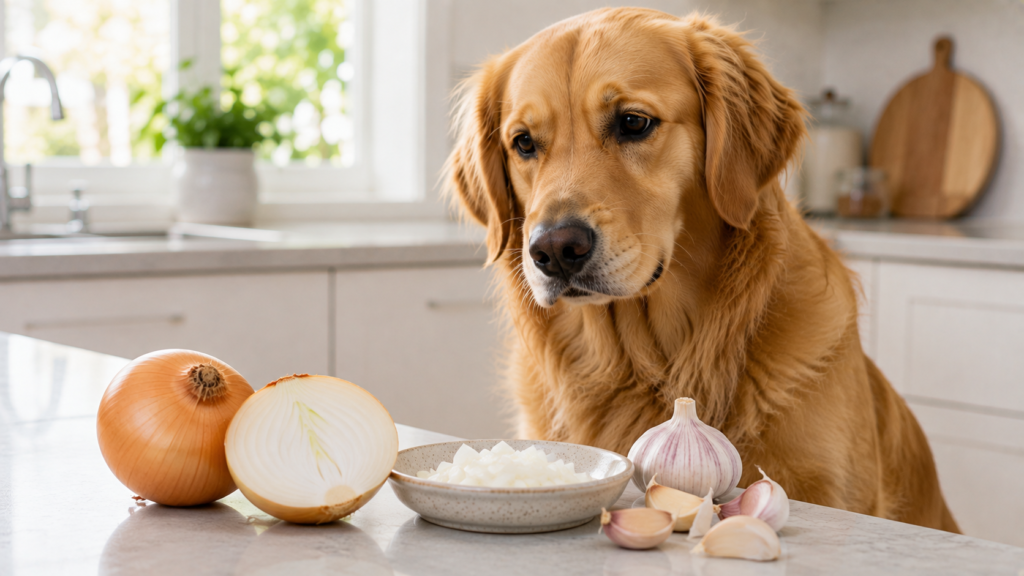
Quick Answer: No. Dogs should not eat onions in any form. Raw, cooked, powdered, dehydrated, and other concentrated onion products can damage a dog’s red blood cells and cause hemolytic anemia.
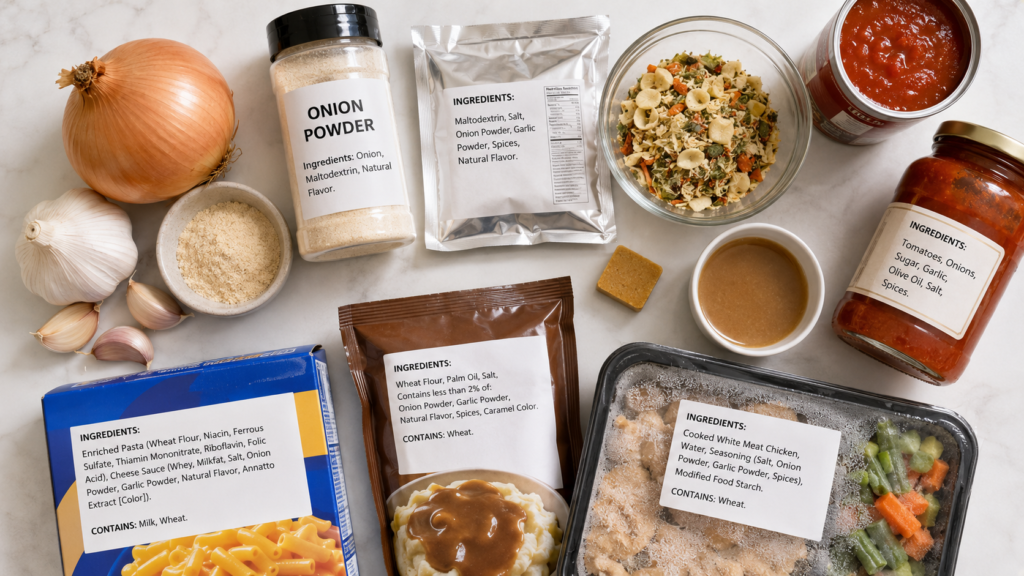
Onion powder can be particularly concerning because it is concentrated and is often hidden in foods such as soup mixes, seasoning blends, sauces, and prepared foods.
The risk depends on factors such as the amount eaten, the dog’s size, the form of onion, and whether exposure happens repeatedly. Because symptoms may take time to appear, don’t wait for your dog to become sick before contacting your veterinarian if you know they ate onions.
Table of Contents
Quick Reference: Onion Safety for Dogs
| Form of Onion | Safe for Dogs? | Main Concern |
|---|---|---|
| Raw onion | ❌ No | Red blood cell damage |
| Cooked onion | ❌ No | Toxic compounds remain |
| Onion powder | ❌ No | Highly concentrated |
| Dehydrated onion | ❌ No | Concentrated compounds |
| Onion soup mix | ❌ No | Often contains onion powder |
| Garlic | ❌ No | Allium toxicity |
| Leeks | ❌ No | Allium toxicity |
| Chives | ❌ No | Allium toxicity |
| Shallots | ❌ No | Allium toxicity |
| Green onions/scallions | ❌ No | Allium toxicity |
Key Takeaways
- Onions are toxic to dogs in raw, cooked, powdered, and dehydrated forms.
- Garlic, leeks, chives, shallots, and green onions are also members of the allium family and can be harmful.
- Onion can damage red blood cells and cause hemolytic anemia.
- Symptoms may be delayed, so a dog can initially appear completely normal.
- Onion powder can be especially dangerous because it is concentrated and commonly hidden in prepared foods.
- Small dogs can be at greater risk from the same amount of onion because toxicity is related to body weight.
- Repeated smaller exposures can also be dangerous.
- If your dog ate onions, contact your veterinarian rather than waiting for symptoms.
- Never induce vomiting unless a veterinary professional specifically tells you to.
Why Are Onions Bad for Dogs?
Onions contain compounds that can damage canine red blood cells. This damage can cause the cells to break down, reducing the blood’s ability to carry oxygen and potentially resulting in hemolytic anemia.
The problem isn’t limited to biting into a raw onion.
Dogs can also be exposed through:
- Cooked onions
- Onion powder
- Dehydrated onion
- Soup mixes
- Seasoning blends
- Sauces and gravies
- Leftovers containing onion
One of the tricky things about onion toxicity is that the dog may look fine immediately after eating it. Red blood cell damage can take time to become obvious.
Can Repeated Small Amounts Be a Problem?
Yes. Repeated exposure can increase the risk because red blood cell damage can accumulate over time.
For example, regularly giving a dog table scraps containing onion powder may be more concerning than the owner realizes.
That’s why it’s better not to intentionally give dogs foods containing onion, even in small amounts.
What Are Alliums and Why Are They Dangerous for Dogs?
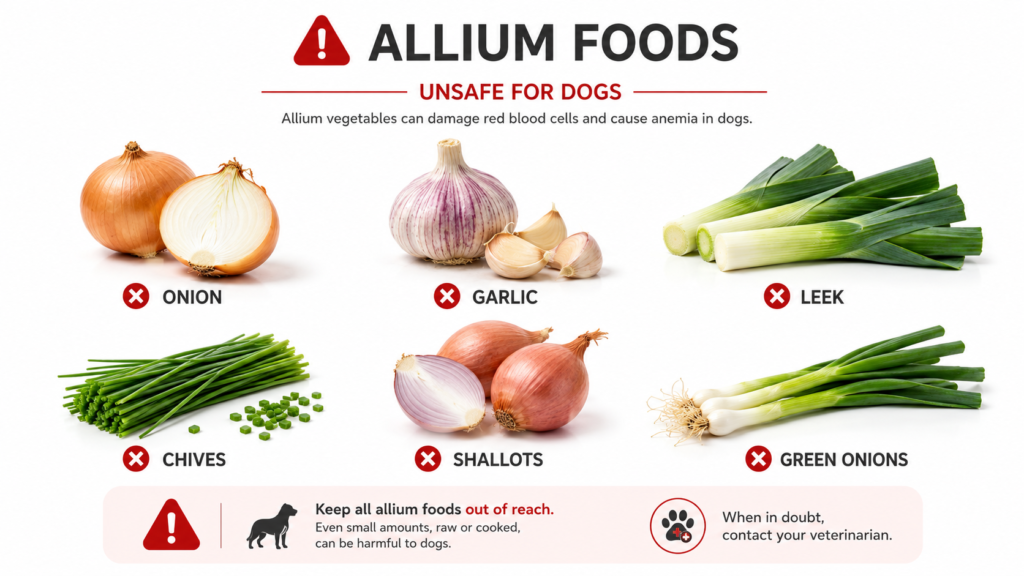
Alliums are a group of plants that includes onions, garlic, leeks, chives, shallots, and green onions.
These foods contain sulfur-containing compounds that can damage a dog’s red blood cells.
Common Alliums to Keep Away From Dogs
- Onion
- Garlic
- Leeks
- Chives
- Shallots
- Scallions
- Green onions
- Wild onions
Garlic can be particularly potent by weight, but the safest approach is to avoid giving dogs any member of the allium family.
What About Wild Onions or Onion Grass?
Wild onions and similar plants can also contain toxic compounds.
If your dog likes grazing outdoors, check your yard for plants that could belong to the allium family and prevent access where possible.
How Much Onion Is Toxic to Dogs?
There isn’t a single amount that can safely be applied to every dog.
Risk depends on:
- Dog’s body weight
- Amount eaten
- Type of onion
- Concentration of the product
- Whether exposure was repeated
- Individual sensitivity
The original source cites an approximate toxic range of 15–30 grams of onion per kilogram of body weight, but this should not be treated as a guaranteed safe threshold. Concentrated products such as onion powder can pose a risk at much smaller quantities.
Why Dog Size Matters
The same amount of onion represents a very different exposure for a 10-pound dog compared with a 70-pound dog.
Small dogs can therefore be at greater risk from relatively small quantities.
Japanese breeds, including Akitas and Shiba Inus, may also have increased sensitivity to allium toxicity. However, any dog can be affected.
The safest practical rule is not to calculate a “safe amount” at home. If your dog ate onion, tell your veterinarian exactly what was eaten and approximately how much.
Are Cooked, Powdered, and Dried Onions Safe?
No. Cooking does not make onions safe for dogs.
Dogs can be exposed to harmful compounds through:
- Raw onion
- Fried onion
- Baked onion
- Boiled onion
- Caramelized onion
- Dehydrated onion
- Onion flakes
- Onion powder
- Onion extract
Why Is Onion Powder Especially Concerning?
Onion powder is concentrated and can be easy to overlook.
It may appear in:
- Soup mixes
- Bouillon
- Seasoning packets
- Gravy mixes
- Sauces
- Snack foods
- Prepared meals
- Some baby foods
This is one reason dogs can accidentally consume onion without ever eating a visible piece of onion.
Check ingredient labels before sharing human food with your dog.
What Happens If a Dog Eats Onions?
After onion exposure, the compounds can damage red blood cells. The damaged cells may develop abnormal hemoglobin structures and eventually break down. This process can lead to anemia and, in severe cases, secondary organ complications.
The important thing to understand is that the dog may not become visibly sick right away.
A dog can initially seem normal and then develop symptoms later as enough red blood cells are affected.
How Long Does Onion Toxicity Take to Show?
Symptoms may develop over the following days rather than immediately.
The supplied material gives a typical window of approximately 1–5 days, although timing can vary.
This delayed onset is why you shouldn’t use the absence of immediate symptoms as proof that your dog is safe.
If you know your dog ate onions, contact your veterinarian promptly even if they currently seem fine.
Symptoms of Onion Poisoning in Dogs
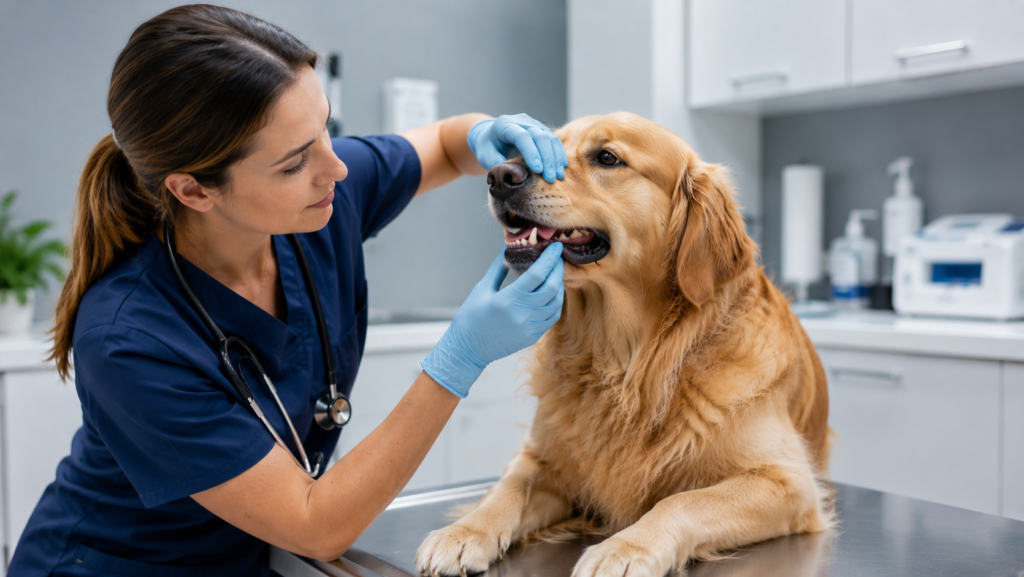
Symptoms can vary depending on the amount eaten and the severity of the exposure.
Watch for:
- Lethargy
- Weakness
- Pale or white gums
- Rapid breathing
- Labored breathing
- Increased heart rate
- Dark or red-brown urine
- Vomiting
- Diarrhea
- Loss of appetite
- Yellowing of the eyes or gums
These signs can occur as red blood cell destruction progresses.
Red-Flag Symptoms
Pale gums, dark urine, severe weakness, rapid breathing, or collapse are particularly concerning.
If your dog develops these symptoms, seek emergency veterinary care.
What Should I Do If My Dog Ate Onions?
If you know your dog has eaten onion, call your veterinarian as soon as possible.
Your veterinarian will want to know:
- What type of onion was eaten?
- Was it raw, cooked, powdered, or dried?
- Approximately how much was eaten?
- When did the exposure happen?
- How much does your dog weigh?
- Is your dog showing any symptoms?
Keep the food packaging or ingredient list if the onion was part of a prepared food.
What Not to Do
Do not induce vomiting at home unless a veterinarian specifically instructs you to.
Do not try to treat the poisoning with milk, bread, oil, or other home remedies.
The appropriate treatment depends on the amount, timing, and condition of the dog.
What Might a Veterinarian Do?
If the exposure was recent, a veterinarian may consider decontamination measures such as inducing vomiting under controlled conditions.
Depending on the severity of the poisoning, treatment may include:
- Monitoring
- Blood tests
- IV fluids
- Oxygen support
- Treatment for anemia
- Blood transfusion in severe cases
- Hospitalization
Treatment depends on the individual dog and the severity of the exposure.
Can a Small Amount of Onion Hurt My Dog?
A small amount is less likely to cause serious poisoning in a large healthy dog than a large amount, but there is no reason to intentionally give a dog onion.
Risk varies with body weight and concentration, and repeated exposure can also matter.
For example, a small amount of onion powder may represent a more concentrated exposure than the same weight of fresh onion.
So instead of trying to decide whether a particular bite is “safe,” contact your veterinarian if your dog has eaten onion and provide the details.
Emergency Triage: When to Seek Veterinary Care
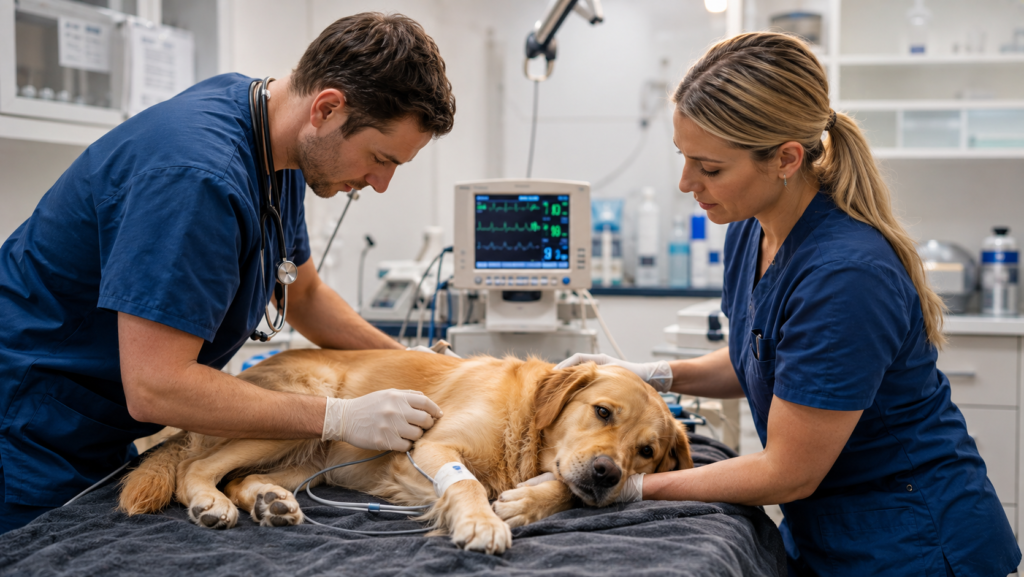
| Symptom Level | Signs | Action |
|---|---|---|
| No symptoms after a small exposure | Dog appears completely normal | Contact your vet for advice and monitor as directed |
| Concerning | Vomiting, diarrhea, lethargy, reduced appetite | Contact your veterinarian promptly |
| Emergency | Pale gums, dark urine, rapid/labored breathing, severe weakness, collapse | Seek emergency veterinary care immediately |
If you’re unsure how serious the exposure was, calling your veterinarian is the safest choice.
Because symptoms can be delayed, don’t assume your dog is safe simply because they seem normal immediately after eating onion.
Safer Alternatives to Onions for Dogs
If you’re looking for ways to add flavor or variety to your dog’s food, there are safer options.
Some possibilities include:
- Carrots
- Plain cooked sweet potato
- Small amounts of dog-safe herbs such as parsley
- Basil
- Oregano
- Plain onion-free bone broth
Always check commercial products carefully because prepared broths and seasoning products can contain onion or garlic powder.
For any new food, keep portions appropriate and introduce it gradually.
Frequently Asked Questions
Can dogs eat garlic, or is it different from onions?
Garlic is also an allium and can cause red blood cell damage in dogs. It should not be given to dogs in raw, cooked, powdered, or supplement form.
Can dogs eat onion rings?
No. Onion rings contain onion and are also typically high in fat and salt. The combination makes them an inappropriate food for dogs.
Will a tiny piece of onion hurt my dog?
A tiny piece may not cause obvious poisoning in every dog, but the risk depends on the dog’s size, the amount eaten, and whether exposure is repeated.
If your dog ate onion, contact your veterinarian rather than trying to calculate the risk yourself.
Can onion powder really be that dangerous?
Yes. Onion powder is concentrated and can be hidden in foods where owners may not realize onion is present.
Always check ingredient labels on seasonings, soup mixes, sauces, and prepared foods.
How do vets treat onion toxicity?
Treatment depends on when the exposure occurred and how seriously the dog is affected. A veterinarian may use decontamination, monitoring, blood testing, supportive care, oxygen, or blood transfusion in severe cases.
Can dogs recover from onion poisoning?
Yes. Dogs can recover, particularly when the exposure is recognized and treated promptly.
Severe poisoning can become life-threatening, so early veterinary assessment is important.
Are onion-flavored chips safe for dogs?
No. Onion-flavored chips may contain onion powder or onion extract, while the chips themselves can also be high in salt and fat.
Is onion grass safe for dogs?
No. Wild onions and similar allium plants can contain compounds that are toxic to dogs. Prevent your dog from eating them outdoors.
Conclusion
Dogs should not eat onions in any form.
Raw, cooked, powdered, dehydrated, and other concentrated onion products can damage red blood cells and potentially cause hemolytic anemia.
The most important thing to remember is that symptoms may be delayed. A dog that looks perfectly normal immediately after eating onion may still develop signs over the following days.
If your dog has eaten onions, contact your veterinarian and provide details about the type of onion, amount, timing, and your dog’s weight.
For everyday prevention, keep onions and other alliums—including garlic, leeks, chives, shallots, and green onions—away from your dog, and check ingredient labels on human foods before sharing them.
Medical Disclaimer
This article is for general educational purposes and does not replace veterinary diagnosis or treatment.
If your dog has eaten onion, onion powder, garlic, or another allium, contact your veterinarian for individualized advice. If your dog develops pale gums, dark urine, severe weakness, breathing difficulty, or collapse, seek emergency veterinary care immediately.
References
- Garden State Veterinary Specialists — Onion Toxicity in Dogs
- Animal Health Foundation — Are Onions Toxic to Dogs?
- American Kennel Club — Can Dogs Eat Onions?
- PDSA — Onion and Garlic Poisoning in Dogs
- Campfire Treats — Can Dogs Eat Onions?
- Journal of Venomous Animals and Toxins including Tropical Diseases — Allium Toxicity Research
- The Royal Kennel Club — Why Is Onion Toxic to Dogs?
- VCA Animal Hospitals — Onion, Garlic, Chive and Leek Toxicity in Dogs
- Vetlexicon — Allium Species Poisoning