

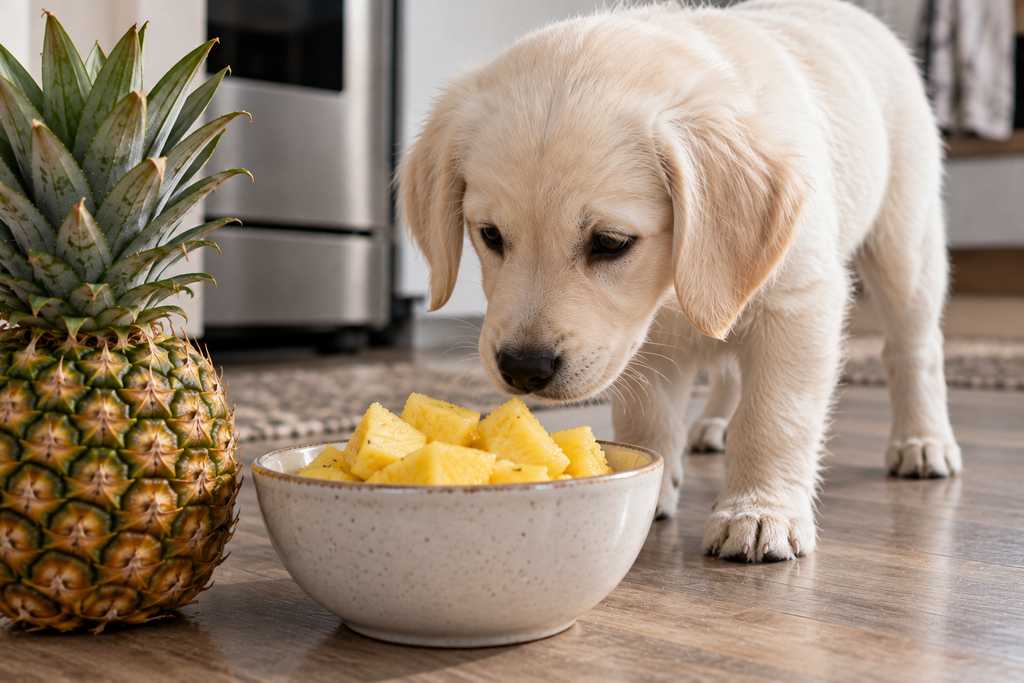
Quick Answer: Can Dogs Eat Pineapple? Yes, dogs can eat pineapple. Fresh, raw pineapple flesh is safe for most healthy dogs when fed in small, peeled, and diced amounts.[1][2][4] Skip the skin, core, leaves, canned syrup versions, and juice; those parts and products cause the most problems.[1][4]
Table of Contents
Key Takeaways
- Fresh pineapple flesh is safe for healthy dogs in small amounts, according to major veterinary and pet nutrition sources.[1][2][4][6]
- Skin, core, stem, and leaves are off-limits; they’re hard to digest and can cause choking or blockages.[1][4][8]
- Two or three small bites a day is the general portion guideline from Hill’s Pet Nutrition.[9]
- Treats, including fruit, should stay under 10% of daily calories.[9]
- Canned pineapple, juice, and dried pineapple should be avoided because of added sugar and syrup.[2][4]
- Dogs with diabetes, obesity, or pancreatitis need extra caution or should skip pineapple entirely.[4][7]
- Introduce pineapple slowly, one piece first, then wait an hour to watch for reactions.[1][3]
- Pineapple offers fiber, vitamin C, and manganese, but it’s not a nutritional necessity for dogs eating complete dog food.[1][5][7]
Is Pineapple Safe for Dogs to Eat?
Yes, fresh pineapple flesh is non-toxic and generally safe for healthy adult dogs when served in moderation.[1][4][6] Veterinary nutrition groups including PetMD, AKC, and Hill’s Pet Nutrition agree this tropical fruit is fine as an occasional snack, not a daily staple.[1][2]
That said, “safe” doesn’t mean “unlimited.” Pineapple is high in natural sugar and fiber, so even a safe food can cause an upset stomach if you overdo it.[4] Here’s the simple rule I follow:
- Choose pineapple if your dog is healthy, not diabetic, and you’ve checked with your vet about any existing conditions.
- Skip pineapple if your dog has a sensitive stomach, pancreatitis, or is overweight.
If you’re exploring other fruit options for variety, you might also compare notes with our guide on whether dogs can eat mango, which covers similar portion and prep concerns.
How Much Pineapple Can I Give My Dog?
The short answer: two to three small bites per day is plenty, and that applies to most adult dogs regardless of breed.[9] For smaller dogs, even one small piece is enough.
Here’s a simple breakdown to use as a starting point:
| Dog Size | Suggested Serving | Frequency |
|---|---|---|
| Small (under 20 lbs) | 1 small diced piece | A few times a week |
| Medium (20-50 lbs) | 2-3 small diced pieces | A few times a week |
| Large (50+ lbs) | 3-4 small diced pieces | A few times a week |
Common mistake: Treating pineapple like a free snack because it’s “healthy.” Fruit treats, including pineapple, should never make up more than about 10% of your dog’s total daily calories.[9] Going beyond that can crowd out balanced nutrition from their regular food.
What Are the Benefits of Pineapple for Dogs?
Pineapple provides fiber, vitamin C, and manganese, which can be a nice bonus in small amounts, but it isn’t something your dog actually needs nutritionally.[1][6] A complete, balanced dog food already supplies everything a healthy dog requires.[5][7]
Think of pineapple benefits this way:
- Fiber may support regular digestion in small doses.[1]
- Vitamin C, a mild antioxidant boost, though dogs already make their own.[6]
- Manganese supports bone and enzyme function in tiny amounts.
- Low-calorie alternative to fatty commercial treats.[6]
Webvet makes an important point here: don’t market treat-sized pineapple as a health fix for digestion, hydration, or immunity.[5][7] It’s a nice extra, not a supplement. If you’re looking for other fruit swaps with genuine treat appeal, check out our breakdown of whether dogs can eat blueberries for a lower-sugar option.
Can Dogs Eat Pineapple Skin and Core?
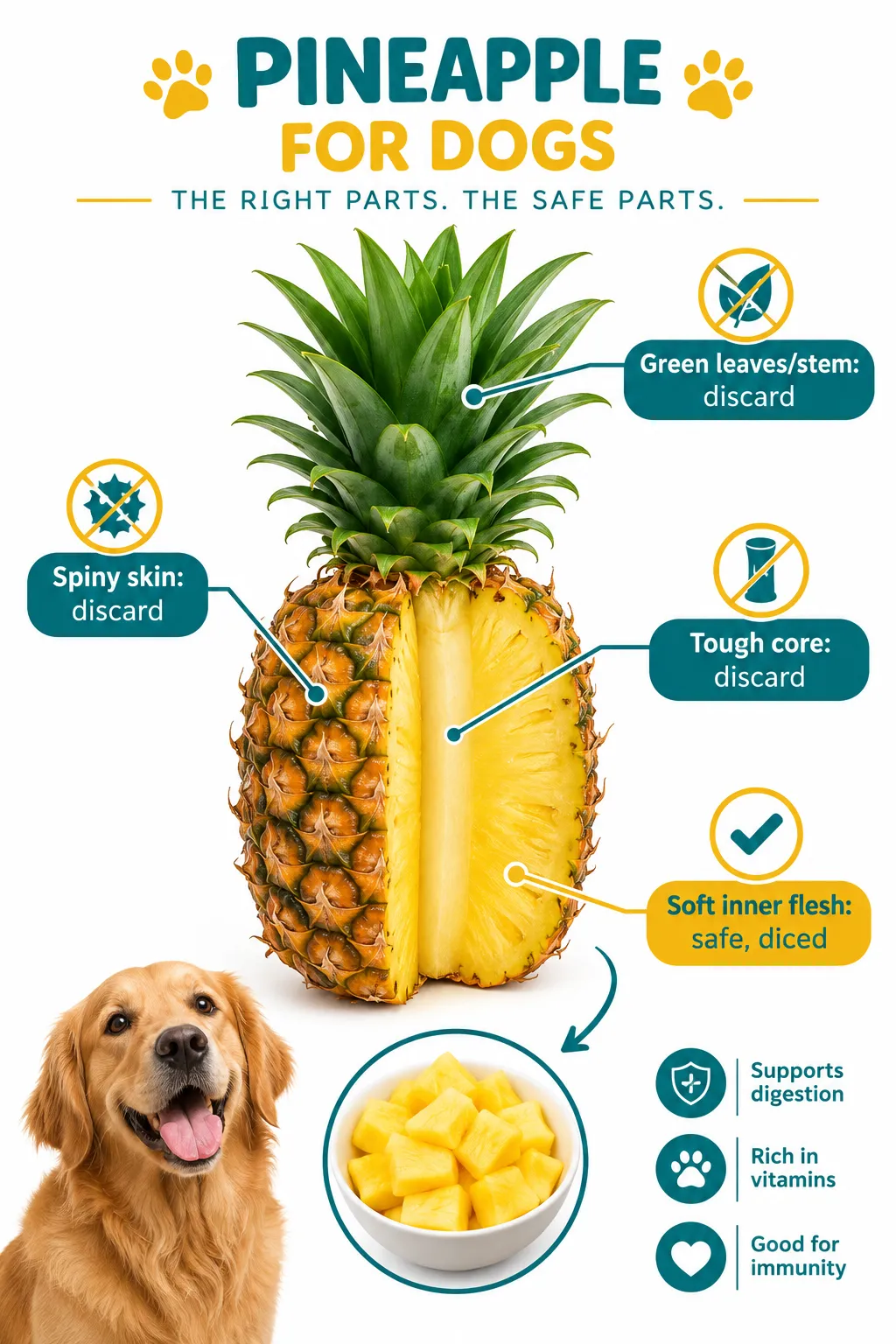
No. The spiny outer skin, the tough central core, the stem, and the leaves should never go to your dog.[1][4][8] These parts are difficult to chew and digest, and they pose a real choking and blockage risk.
Only the soft, juicy inner flesh is appropriate for dogs.[1][4] When you’re prepping pineapple for yourself, cut the fruit over the sink or counter and immediately toss the rind, core, and leafy crown into a secured trash can, not an open bin your dog can raid.[9]
Edge case: If your dog swallows a chunk of core or skin before you notice, watch closely for vomiting, straining, lethargy, or refusal to eat over the next 24 hours. These can signal an intestinal blockage, which needs urgent veterinary attention.[9]
Pineapple for Dogs With Digestive Issues
If your dog already has a sensitive stomach, pineapple is more likely to cause trouble than help it.[4][7] The fruit’s natural sugar, acidity, and fiber content can tip a sensitive gut into diarrhea, gas, or loose stool.[1][8]
Decision rule: Choose a tiny test portion (a single small cube) if your dog has a history of mild stomach sensitivity but no diagnosed GI disease. Skip pineapple entirely if your dog has chronic digestive conditions, inflammatory bowel disease, or is currently on a bland recovery diet.
If your dog shows any of these signs after eating pineapple, stop feeding it and call your vet:
- Loose stool or diarrhea
- Excess gas or bloating
- Vomiting
- Reduced appetite
For dogs prone to digestive sensitivity, milder fruits like cucumber might be a gentler choice; see our guide on whether dogs can eat cucumbers for a lower-fiber alternative.
Frozen Pineapple for Dogs: Safe?
Yes, frozen pineapple chunks are safe and can make a refreshing warm-weather treat, as long as the pieces are plain and appropriately sized.[6][8] Freezing doesn’t add risk; it just changes the texture.
A few practical tips:
- Dice fresh pineapple into bite-sized pieces before freezing.
- Freeze in a single layer so pieces don’t clump into a large, hard chunk.
- Offer frozen pieces as a slow-melt treat on hot days, especially for larger dogs who won’t choke on a small cube.
- For small dogs or puppies, let frozen pieces thaw slightly first to avoid a hard-edge choking hazard.
Quick example: A Labrador on a summer afternoon can handle a few frozen pineapple cubes as an ice-cube alternative. A toy breed, though, does better with the same pieces slightly softened.
Canned Pineapple for Dogs: Okay?
No, canned pineapple is generally not recommended for dogs, mainly because of the sugary syrup most cans are packed in.[2][3][4] Even “in juice” varieties tend to carry more concentrated sugar than fresh fruit.
Here’s why fresh wins over canned, side by side:
| Factor | Fresh Pineapple | Canned Pineapple |
|---|---|---|
| Sugar content | Natural, moderate | Often much higher (syrup-packed) |
| Added ingredients | None | Syrup, sometimes preservatives |
| Vet recommendation | Generally fine in moderation | Generally discouraged[2][4] |
| Best for | Occasional healthy treat | Not recommended |
Common mistake: Assuming “canned in its own juice” is a safe substitute. It’s still more concentrated in sugar than a fresh slice and offers no advantage over the real thing.[4]
Pineapple Juice for Dogs
No, pineapple juice isn’t a good choice for dogs, even if it seems like a hydrating treat idea.[1][2][7] Juice concentrates the sugar from multiple pineapples into a small volume without the fiber that normally slows sugar absorption.
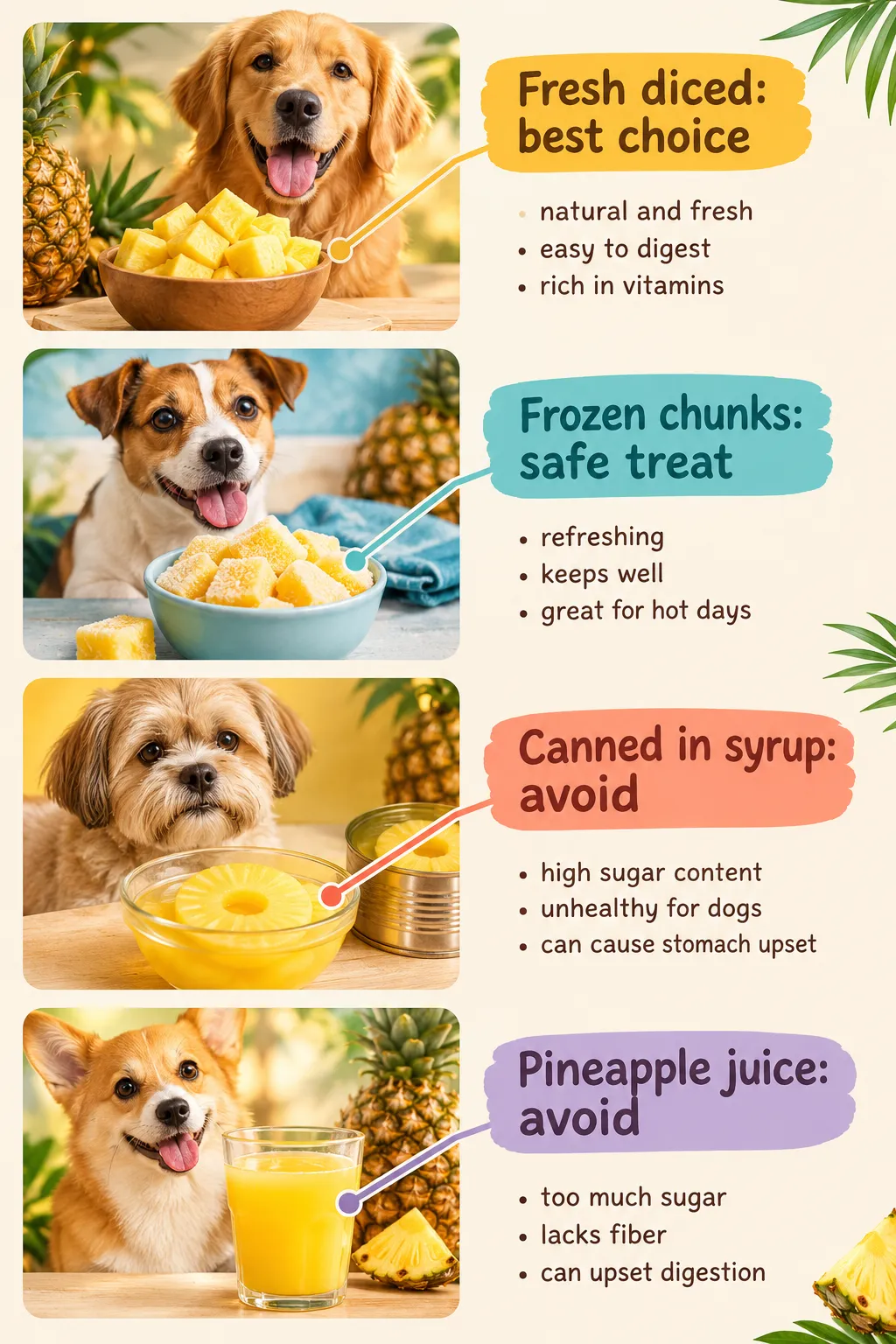
If you want to give your dog a pineapple-flavored treat, stick to small pieces of the actual fruit instead of juice. A few reasons to skip the juice entirely:
- High sugar concentration compared to whole fruit.[4]
- No fiber to balance the sugar spike.[1]
- Store-bought juices often contain added sugar or preservatives not meant for dogs.[9]
Dogs Allergic to Pineapple: Symptoms
True pineapple allergies in dogs are uncommon, but they can happen, and the safest approach is always a slow introduction.[1][3] Watch your dog closely the first time they try it.
Signs of an allergic reaction or intolerance to watch for include:
- Itching or hives
- Swelling around the face or mouth
- Vomiting shortly after eating
- Diarrhea
- Unusual lethargy
Decision rule: Give one small piece first, then wait at least an hour before offering more.[1][8] If you see any of the symptoms above, stop pineapple immediately and contact your veterinarian, especially if your dog is on medication or has an existing health condition.[3][8]
Pineapple vs Other Fruits for Dogs
Pineapple sits in the middle of the pack compared to other dog-safe fruits, not the lowest in sugar, but far from the riskiest. Here’s a quick side-by-side to help you decide what to reach for:
| Fruit | Sugar Level | Best For | Watch Out For |
|---|---|---|---|
| Pineapple | Moderate-high | Occasional tropical treat | Skin, core, canned versions |
| Watermelon | Low-moderate | Hot-weather hydration | Seeds and rind |
| Blueberries | Low | Daily small treats | Overfeeding still possible |
| Mango | High | Occasional treat | Pit is a choking hazard |
| Banana | Moderate-high | Training treat | High calorie if overused |
For more fruit comparisons, our articles on whether dogs can eat watermelon and whether dogs can eat bananas cover similar portion-control questions.
When Should Dogs Not Eat Pineapple?
Dogs with diabetes, obesity, pancreatitis, or known fruit sensitivities should avoid pineapple, or only have it with direct veterinary approval.[4][7] The sugar and acidity that make pineapple a fun treat for healthy dogs are the exact traits that make it risky for these groups.
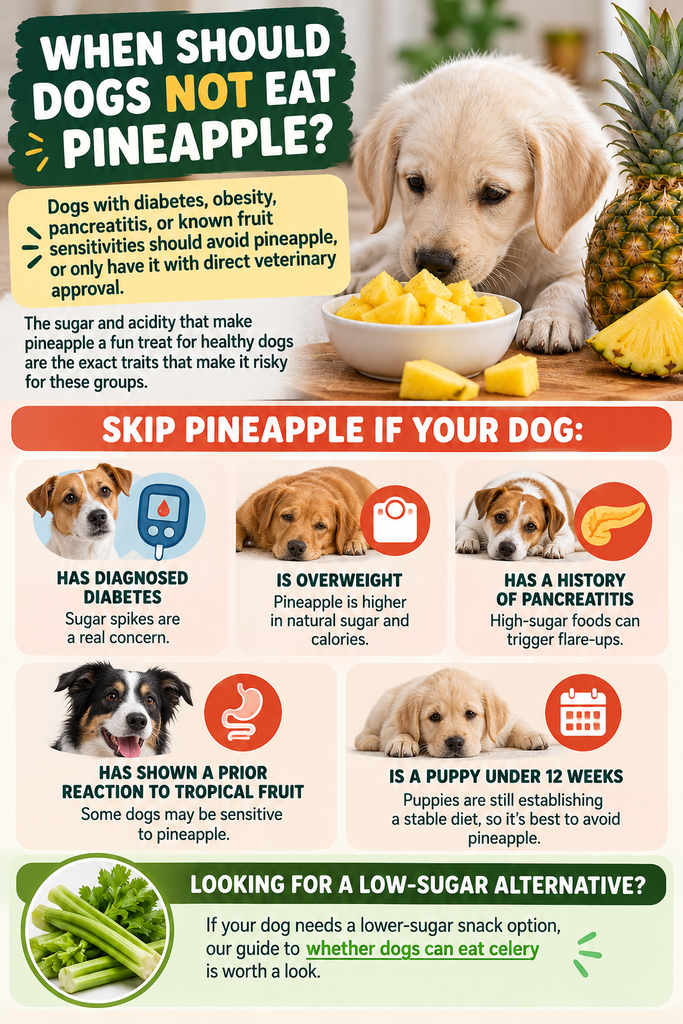
Skip pineapple if your dog:
- Has diagnosed diabetes (sugar spikes are a real concern)
- Is currently overweight or on a calorie-restricted diet
- Has a history of pancreatitis
- Has shown any prior reaction to tropical fruit
- Is a puppy under 12 weeks still establishing a stable diet
If your dog needs a low-sugar snack alternative instead, our guide to whether dogs can eat celery is worth a look.
Best Way to Prepare Pineapple for Dogs
The safest approach is simple: peel it, remove the core, and dice the flesh into bite-sized pieces matched to your dog’s size.[1][8] No seasoning, no sugar, no syrup, just plain fruit.
Step-by-step:
- Wash the whole pineapple under running water.
- Cut off the crown, skin, and any “eyes” left on the surface.
- Remove the core completely; it’s too tough and fibrous for dogs.
- Dice the remaining flesh into small cubes sized for your dog’s mouth.
- Serve plain, either fresh or lightly frozen.
- Store leftovers in a sealed container in the fridge for up to a few days.
Edge case: Never add pineapple to a recipe containing xylitol, chocolate, or other sweeteners meant for human desserts. If you enjoy baking treats at home, our apple and carrot chew sticks for dogs recipe shows how to combine fruit safely into homemade snacks.
How Often Can Dogs Have Pineapple?
A few times a week is a reasonable frequency for most healthy dogs, rather than daily feeding.[9] This keeps total sugar and fiber intake in a safe range while still letting your dog enjoy the variety.
Quick example: A healthy 40-pound dog might get 2-3 diced pineapple pieces on, say, Monday, Wednesday, and Saturday, not every single day. This spacing helps you spot any delayed digestive reaction and keeps treat calories in check.
If your dog tolerates pineapple well after a few tries, you can keep it in a light weekly rotation alongside other fruits like those discussed in our mango and blueberries guides.
Pineapple for Dogs With Pancreatitis
No, dogs with a history of pancreatitis should generally avoid pineapple, or only have it with a vet’s direct okay.[4][7] Pancreatitis management usually centers on low-fat, easily digestible meals, and the sugar and fiber load in pineapple can aggravate a sensitive pancreas.
If your dog has had pancreatitis before:
- Don’t introduce new fruit treats without veterinary guidance.
- Do stick closely to the prescribed diet your vet has set up.
- Watch for any signs of abdominal pain, vomiting, or lethargy if a treat slips through.
This is one of the clearest “when in doubt, skip it” scenarios in this whole guide.
FAQ
Can dogs eat pineapple every day? No, daily feeding isn’t recommended. A few small pieces a few times a week is a safer frequency for most healthy dogs.[9]
Is pineapple core dangerous for dogs? Yes, the core is tough and fibrous, and it can cause choking or intestinal blockage if swallowed.[1][4]
Can puppies eat pineapple? Puppies can try small amounts once they’re on solid food and past the earliest stages, but check with your vet first since puppies are more sensitive to dietary changes.[1][8]
Does pineapple help with dog digestion? Small amounts may offer mild fiber benefits, but experts caution against marketing pineapple as a digestive remedy since a complete dog food already covers this need.[5][7]
Can dogs eat pineapple skin? No. The spiny skin is hard to digest and should always be removed before feeding.[1][8]
Is pineapple juice okay for dogs to drink? No, pineapple juice is too concentrated in sugar and lacks the fiber of whole fruit, so it’s best avoided.[1][2][7]
What if my dog eats pineapple core by accident? Watch for vomiting, straining, or lethargy over the next 24 hours, and call your vet if symptoms appear, since this can signal a blockage.[9]
Can diabetic dogs eat pineapple? Generally no, or only with veterinary approval, because of the fruit’s natural sugar content.[4][7]
Conclusion
So, can dogs eat pineapple? Yes, in small, plain, properly prepared amounts, fresh pineapple is a safe occasional treat for most healthy dogs.[1][2][4] The flesh offers a little fiber and vitamin C, but it’s the skin, core, canned syrup versions, and juice that cause most of the real problems owners run into.[1][4]
Next steps:
- Start with one small diced piece and wait an hour to check for any reaction.
- Stick to two or three small pieces a few times a week, not daily.
- Always discard the skin, core, and leaves before serving.
- Skip pineapple altogether if your dog has diabetes, pancreatitis, or is overweight.
- When in doubt about a new symptom or condition, call your vet before offering more.
Pineapple is a fun way to add a little variety to your dog’s treat rotation, but it works best as a small bonus, not a daily habit.
References
[1] Can Dogs Eat Pineapple – https://www.petmd.com/dog/nutrition/can-dogs-eat-pineapple
[2] Can Dogs Eat Pineapple – https://www.akc.org/expert-advice/nutrition/can-dogs-eat-pineapple/
[3] Can Dogs Eat Pineapple – https://www.chewy.com/education/dog/food-and-nutrition/can-dogs-eat-pineapple
[4] Pineapple – https://www.purina.com/articles/dog/feeding/can-dogs-eat/pineapple
[5] Can Dogs Eat Pineapple – https://www.webvet.com/nutrition/can-dogs-eat-pineapple/
[6] Can Dogs Eat Pineapple – https://www.petcircle.com.au/discover/can-dogs-eat-pineapple
[7] Can Dogs Eat Pineapple – https://www.purina.co.nz/care-and-advice/dog/feeding-and-nutrition/can-dogs-eat-pineapple
[8] Can Dogs Eat Pineapple – https://www.petplace.com/article/dogs/pet-health/can-dogs-eat-pineapple
[9] USA Today – https://www.usatoday.com/story/news/2024/02/05/can-dogs-eat-pineapple/72175452007/
[10] Can Dogs Eat Pineapple – https://www.dogster.com/dog-nutrition/can-dogs-eat-pineapple/