
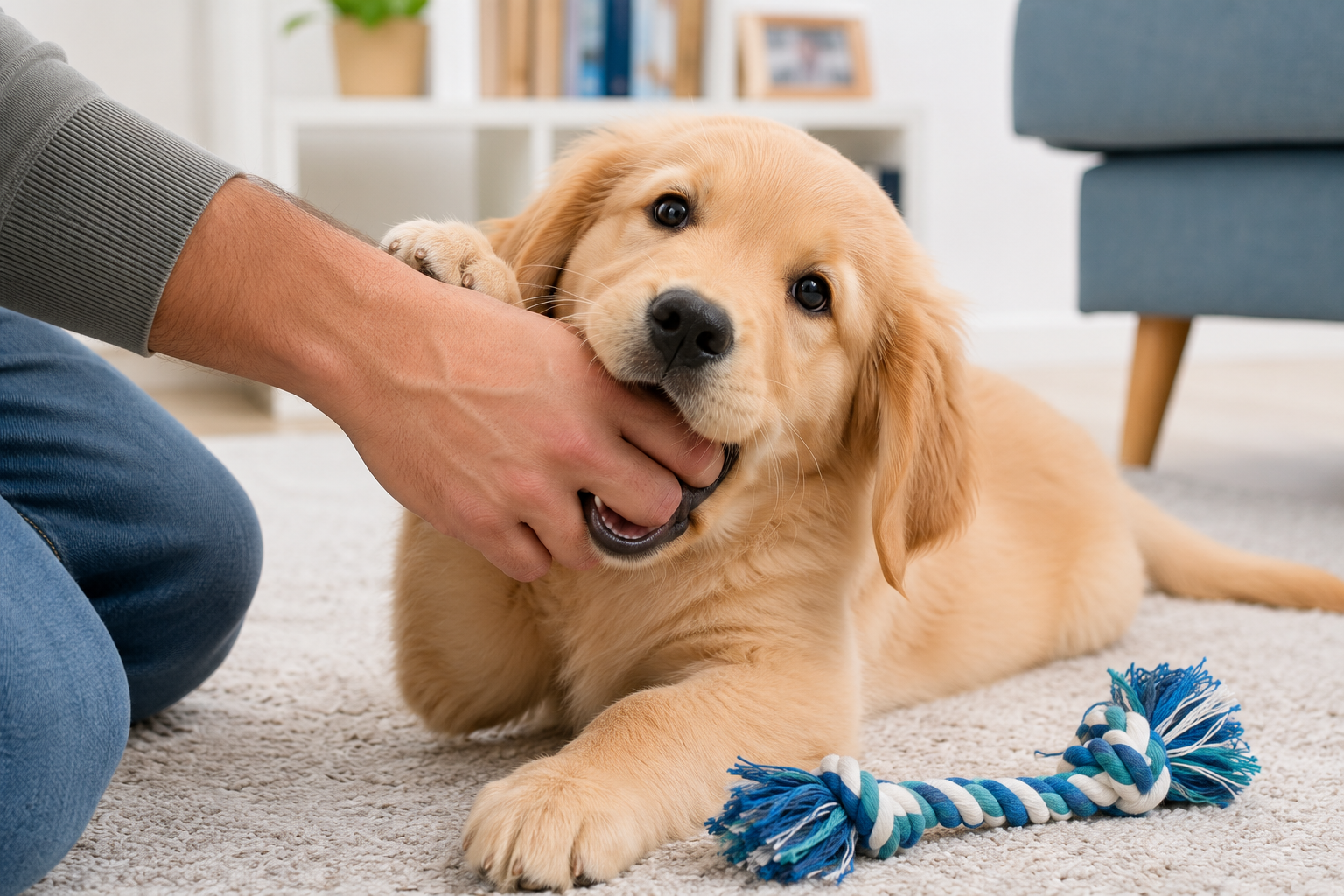
Quick Answer: To stop a puppy from biting, immediately end play whenever their teeth touch your skin, redirect them to an appropriate chew toy, and reward calm behavior. Puppy biting is a normal part of development, especially during teething and play, but consistent training teaches bite inhibition and helps puppies learn that human skin is never an acceptable chew toy. Most puppies improve significantly with patient, daily practice. However, if your puppy’s biting becomes unusually intense, causes repeated injuries, or is accompanied by stiff body language, growling, or resource guarding, consult your veterinarian or a qualified positive-reinforcement trainer to rule out underlying behavioral or medical concerns. Key Takeaways Why Do Puppies Bite? Puppy biting is a normal part of growing up. Puppies use their mouths to explore the world, interact with people and other animals, and learn how much pressure they can safely use during play. Unlike humans, who rely primarily on their hands, puppies use their mouths to investigate new objects, textures, and experiences. One of the most important skills puppies develop is bite inhibition—the ability to control the force of their bite. While living with their littermates, puppies naturally learn this skill through play. If one puppy bites too hard, the other usually yelps and stops playing. This teaches the biting puppy that rough play has consequences. When puppies join a new home, they continue practicing these behaviors with their human family. Since human skin is much more sensitive than fur, they need consistent guidance to learn that biting people immediately ends the fun. Is Puppy Biting Normal? Yes. Gentle mouthing and nipping are completely normal during the first few months of life. Puppies commonly bite because they are: Normal puppy biting is usually accompanied by loose, wiggly body language, a wagging tail, and playful behavior. While those sharp puppy teeth can hurt, this type of biting is rarely a sign of aggression. At What Age Do Puppies Stop Biting? Most puppies begin biting less between 3 and 5 months of age as they gain better impulse control and progress through teething. By 6 to 8 months, biting should decrease significantly if owners consistently reinforce appropriate behavior. Some energetic breeds, including Border Collies, Australian Shepherds, and Jack Russell Terriers, may continue mouthing longer because they naturally enjoy interactive play and movement. How Teething Affects Biting Teething is one of the biggest reasons puppies chew and bite more frequently. As adult teeth replace baby teeth—typically between 3 and 6 months of age—the gums become sore and itchy, encouraging puppies to chew on almost anything they can find. Common signs of teething include: You can help soothe sore gums by offering: Avoid cooked bones or objects that can splinter, as they may damage developing teeth or create a choking hazard. 🐾 Owner Tip: Puppies often become especially mouthy when they’re teething, tired, or overstimulated. Before assuming your puppy is being “naughty,” try offering a safe chew toy or giving them time for a nap. Puppy Biting vs. Aggression Most puppy biting is playful and harmless, but it’s important to recognize the difference between normal mouthing and behavior that may require professional attention. Playful puppies usually have loose, relaxed bodies, wagging tails, and frequently invite interaction with a play bow. Their bites are quick, playful, and not intended to injure. Aggressive behavior is very different. Puppies showing aggression may become stiff, freeze before biting, stare intensely, curl their lips, growl deeply, or guard food, toys, or other valued items. Puppy Bite Triage: Play vs. Aggression Behavior Normal Play Possible Aggression Body posture Loose and bouncy Stiff and rigid Tail Relaxed, wagging Stiff or tucked Eyes Soft, blinking Hard stare Growling Playful or excited Deep, threatening Bite Gentle mouthing Hard bite intended to injure If your puppy repeatedly displays stiff body language, hard bites, resource guarding, or bites without obvious play signals, contact your veterinarian or a qualified behavior professional for guidance. 🩺 Vet Insight: Most puppies grow out of playful biting with consistent training, but aggressive behavior should never be dismissed as “just a phase.” Early intervention greatly improves long-term outcomes. How to Stop a Puppy From Biting Teaching bite inhibition takes patience and consistency. Every member of the household should respond the same way whenever the puppy bites. Redirect to a Chew Toy Keep an appropriate chew toy within reach during play. If your puppy starts biting your hands or clothing, calmly replace your hand with the toy and encourage them to chew on that instead. End Play Immediately If your puppy’s teeth touch your skin, stop interacting right away. Stand up, fold your arms, and ignore the puppy for 10 to 20 seconds. This teaches that biting makes the fun end. Reward Calm Behavior As soon as your puppy settles down or begins chewing an appropriate toy, reward them with praise, gentle attention, or a treat. Positive reinforcement encourages good choices. Prevent Hand and Foot Biting Avoid rough games that encourage your puppy to chase hands or feet. Children should be taught to stand still like a “tree” if the puppy begins nipping, since running often encourages chasing. Choose the Right Chew Toys Offer durable chew toys designed for puppies and rotate them regularly to maintain interest. Frozen toys can also provide relief for teething puppies. Should You Yelp or Stay Quiet? Some puppies respond well to a brief “Ouch!” because it resembles feedback from littermates. Others become more excited and bite harder. If yelping increases your puppy’s excitement, quietly end play instead and redirect them to a chew toy. When Puppy Biting Becomes a Problem Although most puppy biting is harmless, some situations require closer attention. Puppy Bites That Draw Blood Sharp puppy teeth can accidentally scratch or puncture skin during play. Wash any bite that breaks the skin with soap and water and monitor for redness, swelling, or other signs of infection. Seek medical advice if the wound becomes infected or is severe. Biting That Gets Worse Instead of Better If your puppy’s biting becomes more
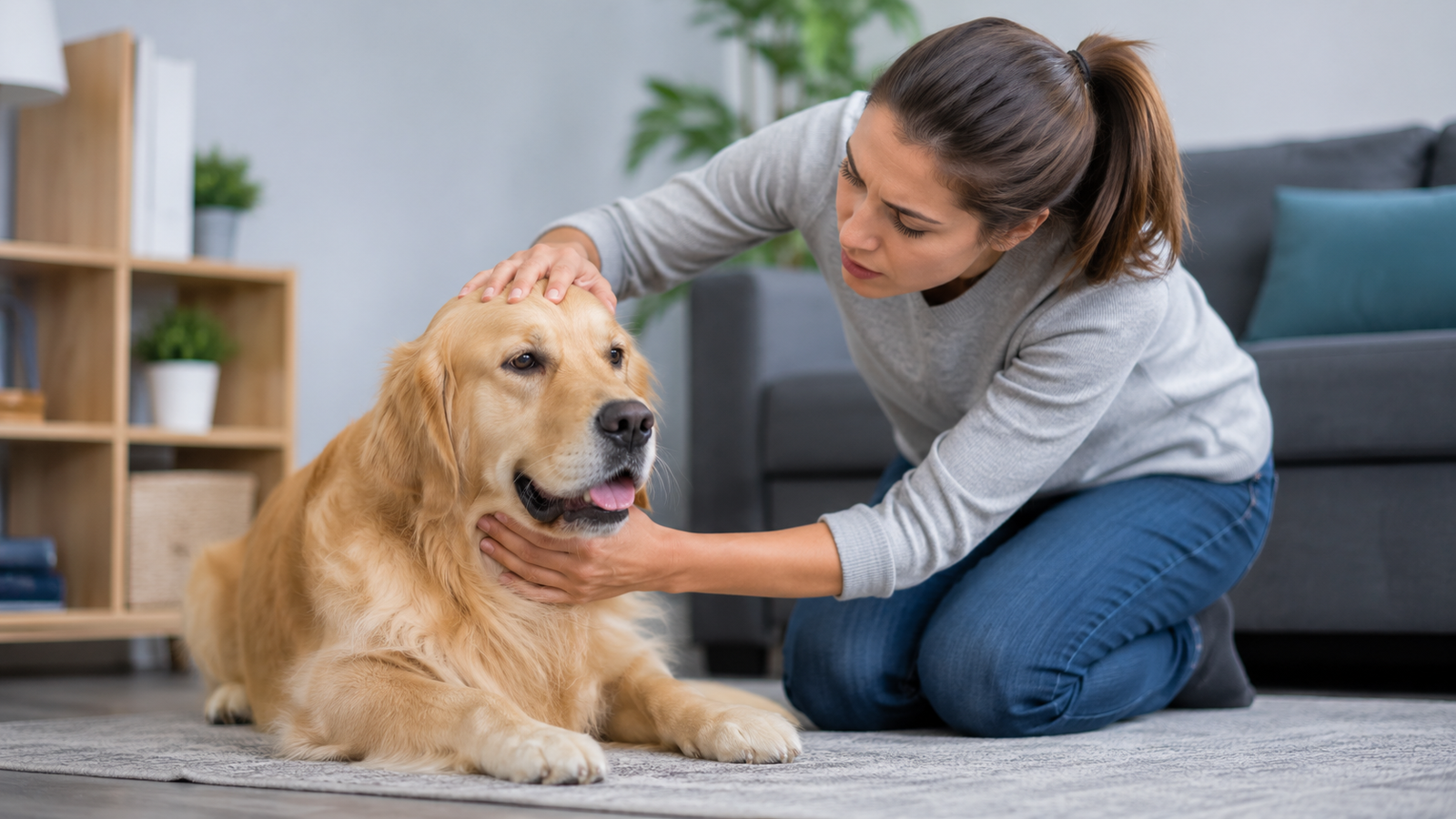
Why Is My Dog Panting? Normal, Stress, or Medical Emergency?
Quick Answer: Panting is your dog’s natural way of cooling down after exercise, excitement, or warm weather. However, if your dog is panting heavily while resting, during the night, or in a cool room, it may be a sign of pain, anxiety, overheating, heart disease, respiratory illness, or another underlying medical condition. Normal panting usually settles within 10–20 minutes after activity. If the panting is sudden, severe, or occurs alongside symptoms such as pale gums, collapse, vomiting, or difficulty breathing, seek veterinary care immediately. Key Takeaways Quick Urgency Guide Quick Urgency Guide: Is Your Dog’s Panting Normal? Situation Likely Cause What You Should Do 🟢 Panting after exercise or excitement Normal cooling Let your dog rest in a cool area and offer fresh water. Panting should improve within 10–20 minutes. 🟡 Panting while resting or in a cool room Pain, stress, illness, or another underlying issue Monitor your dog closely and contact your veterinarian if the panting continues or worsens. 🔴 Heavy panting with pale gums, collapse, vomiting, bloating, or difficulty breathing Medical emergency Seek emergency veterinary care immediately. Owner Tip: If your dog’s panting seems unusual for them—even if you can’t identify the cause—it’s safest to contact your veterinarian for guidance. Why Is My Dog Panting? Panting is a normal way for dogs to regulate their body temperature because they have very few sweat glands. Instead of sweating like humans, dogs cool themselves by rapidly moving air over the moist surfaces of their tongue, mouth, and upper respiratory tract. While panting after exercise, excitement, or warm weather is expected, excessive or unexplained panting can be a sign that something isn’t right. Looking at when your dog is panting and whether other symptoms are present can help determine if the behavior is normal or needs veterinary attention. Normal Causes of Panting Your dog may pant for several harmless reasons, including: In these situations, panting usually improves once your dog has rested, cooled down, or relaxed. Abnormal Causes of Panting Panting that occurs while your dog is resting or continues without an obvious reason may be caused by: If your dog also appears weak, restless, or has trouble breathing, veterinary evaluation is recommended. 🩺 Vet Insight: Panting by itself doesn’t always indicate an emergency. Veterinarians evaluate additional signs—such as breathing effort, gum color, heart rate, temperature, and recent activity—to determine whether the panting is normal or a symptom of illness. When Is Panting an Emergency? Although many cases of panting are harmless, some require immediate veterinary care. The key is to look for other symptoms that occur alongside panting. Seek emergency veterinary care immediately if your dog has: Common Emergency Conditions Condition Warning Signs Heatstroke Heavy panting, drooling, weakness, collapse Bloat (GDV) Swollen abdomen, pacing, unsuccessful attempts to vomit Poisoning Panting, shaking, vomiting, excessive drooling Heart Disease Panting at rest, coughing, exercise intolerance Respiratory Disease Labored breathing, noisy breathing, blue gums What To Do If Your Dog Is Panting Heavily If your dog begins panting excessively, stay calm and assess the situation before taking action. Step 1: Move Your Dog to a Cool Area Take your dog out of direct sunlight and into a shaded or air-conditioned space. Avoid strenuous activity and encourage them to rest. Step 2: Offer Fresh Water Provide small amounts of cool, fresh water. Do not force your dog to drink, especially if they appear weak or nauseated. Step 3: Check for Other Symptoms Look for warning signs such as: These symptoms may indicate a medical emergency. Step 4: Contact Your Veterinarian If the panting continues without an obvious cause or is accompanied by concerning symptoms, call your veterinarian immediately for advice. Step 5: Transport Your Dog Safely If emergency care is needed, keep your dog calm during transport. Avoid overheating the vehicle, and bring any medications or relevant medical history if available. 🐾 Owner Tip: Never cool an overheated dog with ice-cold water. Use cool (not icy) water or cool, damp towels while seeking veterinary care, as rapid cooling can sometimes worsen the situation. Preventing Future Panting Episodes While not every cause of panting can be prevented, many episodes are avoidable with proper care and attention to your dog’s health and environment. Here are some simple ways to reduce the risk of excessive panting: Keeping your dog cool, comfortable, and healthy can significantly reduce the risk of heat-related illnesses and other conditions that cause excessive panting. 🐾 Owner Tip: Brachycephalic breeds such as Bulldogs, Pugs, and Boston Terriers are more prone to overheating because of their shortened airways. These dogs should be exercised carefully, especially during warm weather. Common Mistakes to Avoid When a dog starts panting heavily, well-meaning owners sometimes make decisions that delay treatment or make the situation worse. Avoid these common mistakes: Recognizing the warning signs early and acting quickly can make a significant difference in your dog’s recovery. Frequently Asked Questions Why is my dog panting at night? Occasional panting during sleep may occur after dreaming or changing positions. However, frequent nighttime panting can be associated with pain, anxiety, heart disease, respiratory problems, or cognitive decline in older dogs. If the behavior becomes persistent, consult your veterinarian. Why is my dog panting while resting? Panting while resting is not always normal. It may be caused by pain, stress, overheating, medications, heart disease, or another medical condition. If the panting is persistent or accompanied by other symptoms, veterinary evaluation is recommended. Can stress or anxiety cause excessive panting? Yes. Dogs experiencing stress or anxiety may pant even when they are not hot. Other signs often include pacing, trembling, yawning, lip licking, or hiding. Removing the source of stress may help, but persistent anxiety should be discussed with your veterinarian. How long should a dog pant after exercise? Most healthy dogs stop panting within 10 to 20 minutes after resting in a cool environment with access to fresh water. Panting that continues beyond 30 minutes or becomes more intense should be evaluated by a veterinarian. Why is my senior dog panting so much?
Can Dogs Have Autism? Understanding Canine Behavioral Differences
Last updated: July 15, 2026 Quick Answer: Dogs cannot be formally diagnosed with autism, but they can exhibit autism-like behaviors. Veterinary behaviorists refer to these patterns as canine dysfunctional behavior (CDB). Dogs with CDB may show social withdrawal, repetitive actions, and heightened sensitivity to sensory stimuli, which mirror symptoms seen in human autism spectrum disorder. Key Takeaways: 🚨 Urgency Triage Box: When to Seek Veterinary Care Exploring the Enigma of Canine ‘Autism’ What is autism in dogs, and is it common? While dogs cannot be diagnosed with autism spectrum disorder (ASD) as humans can, they can display repetitive and antisocial behaviors that closely resemble the condition. Veterinary professionals instead use the term canine dysfunctional behavior (CDB) to describe these patterns, which are not common but are recognized in behavioral medicine. The concept of “canine autism” has gained attention as veterinary behaviorists observe dogs exhibiting behaviors similar to autism in humans. Instead of a formal diagnosis, CDB serves as a framework for understanding canine behaviors that deviate from the norm. Many owners search for information about autism dogs, wondering if their pet’s quirks are signs of a deeper disorder. Research suggests that while dogs exhibiting autism-like behaviors exist, the prevalence is relatively low compared to other behavioral conditions like anxiety or canine compulsive disorder (OCD) 1. Understanding canine behaviors requires looking at the intersection of genetics, environment, and neurology. Dogs display behaviors that might seem odd, but true CDB involves persistent, inflexible patterns that interfere with a dog’s quality of life. Such behaviors often include a lack of social competence and difficulty adapting to change 3. Signs of Autism-like Behaviors in Dogs What are the signs of autism in dogs? Dogs exhibiting autism-like behaviors often show signs of social withdrawal, repetitive actions, and unusual responses to sensory stimuli. These symptoms are collectively referred to as canine dysfunctional behavior, and they can vary widely in severity from one dog to another. Recognizing the signs of CDB early can help owners provide better support. Common signs include: Many owners don’t realize that these signs can overlap significantly with other conditions. For example, a dog spinning in circles might just be bored, or it could be a sign of canine compulsive disorder. A common mistake is assuming a dog is just “quirky” when they are actually experiencing anxiety or a neurological issue. If your dog displays behaviors resembling autism, it is crucial to document the frequency and triggers of these actions. Can Dogs Be Diagnosed with Autism? Can dogs be diagnosed with autism, and how much does dog autism testing cost? Dogs cannot be formally diagnosed with autism because the diagnostic criteria for autism spectrum disorder (ASD) are specific to humans. However, veterinary behaviorists can diagnose canine dysfunctional behavior (CDB) through detailed behavioral histories and observations, with consultations typically costing between $200 and $500 depending on the specialist and region. Diagnosing CDB is challenging because there is no definitive blood test or brain scan for the condition. Instead, the process relies heavily on the owner’s observations and the vet’s clinical assessment. A veterinary behaviorist will look for persistent patterns of social deficits, repetitive behaviors, and sensory issues that cannot be better explained by another medical or behavioral condition 1. The field is still developing its diagnostic framework for dysfunctional behavior CDB. Vets often use non-invasive electroencephalography (EEG) to study canine cognitive processes, which aids in understanding the neural underpinnings of behaviors similar to autism in dogs 4. If you are concerned about the cost, start with a standard veterinary visit to rule out underlying medical issues before seeking a specialized behaviorist. How Is Canine Autism Different from Human Autism? How is canine autism different from human autism? The primary difference is that human autism is a formally recognized neurodevelopmental disorder with established diagnostic criteria, whereas canine autism is an informal term for behaviors resembling autism, officially termed canine dysfunctional behavior (CDB). While both share traits like social challenges and repetitive behaviors, the cognitive and emotional complexities of human autism are far more intricate. Comparisons to human autism traits help researchers understand both species. In humans, autism spectrum disorder (ASD) involves complex differences in communication, social interaction, and restricted interests. Dogs exhibiting autism-like behaviors show parallel traits, such as reduced attention to human eyes and difficulty with social interactions 3. However, we cannot know if a dog experiences the world the same way a human with autism does. Research into autism-like behaviors dogs provides valuable insights into human autism. Studying the shared genetic factors and behavioral similarities helps scientists develop better therapies for both humans and affected dogs 2. While the label “canine autism” is used colloquially, it’s important to remember that dogs do not have the same self-reflective cognitive abilities as humans. What Causes Autism-like Behaviors in Dogs? What causes autism-like behaviors in dogs, and which dog breeds are prone to autism? The exact causes of canine dysfunctional behavior (CDB) are not fully understood, but research points to a combination of genetic mutations and environmental factors. Certain breeds, particularly Beagles and Bull Terriers, have been studied for genetic links to autism-like traits and repetitive behaviors. Exploring the causes behind CDB reveals fascinating genetic insights. A significant study at Peking University introduced mutations in the SHANK3 gene in Beagle dogs, a gene strongly associated with autism in humans. The mutant dogs exhibited social deficits, reduced human interaction, and increased anxiety, suggesting a direct genetic link to autism-like behaviors in canines 2. Beyond genetics, environmental factors like early trauma, lack of socialization, or chronic stress can contribute to behaviors similar to autism. Conditions like canine cognitive dysfunction (CCD) in older dogs can also mimic some of these symptoms. Understanding the root cause is essential for managing the disorder effectively. Autism vs. Anxiety in Dogs What is the difference between autism and anxiety in dogs? Autism-like behaviors (CDB) in dogs are characterized by persistent social deficits and repetitive actions, whereas anxiety is typically triggered by specific situations or stimuli, causing fear, restlessness, and avoidance. While they

Why Is My Dog Throwing Up? Causes, Vomit Colors & When to Worry
Last updated: July 12, 2026 Dogs throw up for dozens of reasons, most of them minor, some of them serious. The most common cause is dietary indiscretion, which is the polite veterinary term for a dog eating something it absolutely shouldn’t have [8]. A single vomiting episode in an otherwise alert, happy dog is rarely cause for panic, but repeated vomiting, blood, or a dog that seems genuinely unwell needs prompt veterinary attention. Understanding why your dog is throwing up, and what the vomit actually looks like, is the fastest way to decide what to do next. 🐾 Key Takeaways Is Dog Vomiting Serious or Normal? A dog vomiting once after eating grass or gulping food too fast is generally normal and not a cause for alarm. However, vomiting that is frequent, bloody, accompanied by diarrhoea, or paired with a dog that seems lethargic or in pain is a different matter entirely, and those cases need veterinary care. According to VCA Animal Hospitals, vomiting is one of the most common reasons dog owners contact their vet [3]. The challenge is knowing which episodes to monitor at home and which to treat as urgent. The triage box below gives you a quick framework. 🚨 Dog Vomiting Urgency Guide Situation What To Do Single vomit, dog alert & eating normally Monitor at home Vomiting 2-3 times, mild lethargy Call your vet today Blood in vomit, severe pain, bloated abdomen Emergency care now Suspected toxin or foreign object ingestion Emergency care now Puppy or senior dog vomiting repeatedly Call your vet today What Causes Dogs to Throw Up? The causes of vomiting in dogs range from the completely harmless to the genuinely life-threatening. Most everyday cases trace back to something a dog ate, the wrong food, too much food, or food consumed too fast [1]. WebMD Pets groups the common causes into several categories [1]: Dietary causes (most common): Medical causes: Structural causes: One thing that surprises many pet owners: motion sickness is also a real and common cause of vomiting in dogs, particularly in puppies whose inner ear systems are still developing [3]. Is My Dog Vomiting or Regurgitating? Vomiting and regurgitation look similar but are completely different processes, and the distinction matters for diagnosis. Vomiting is an active process involving abdominal contractions, nausea, and the forceful expulsion of stomach contents. Regurgitation is passive: food or fluid simply flows back up from the oesophagus without any heaving or retching. If your dog brings up undigested food immediately after eating, with no warning signs and no effort, that’s likely regurgitation rather than true vomiting [8]. Regurgitation points to oesophageal problems, not stomach issues. A vet needs to distinguish between the two before any treatment plan makes sense. Quick distinction: Feature Vomiting Regurgitation Abdominal effort Yes No Nausea signs first Usually Rarely Contents Digested/partially digested Undigested food Origin Stomach Oesophagus What Do Different Colors of Dog Vomit Mean? Vomit color is one of the most useful diagnostic clues you can give your vet. Different colors point to different causes, and some signal genuine urgency [4]. Vomit Color Likely Meaning Action Yellow / bile Empty stomach, bilious vomiting syndrome Monitor; feed smaller meals more often White foam Empty stomach, kennel cough, or bloat Monitor; vet if repeated Brown Digested food, or intestinal blockage Vet if dark/foul-smelling Red / bright blood Active bleeding in upper GI tract Vet urgently Dark coffee grounds Digested blood, serious GI bleed Emergency care Green Grass ingestion or bile Usually minor; monitor Clear / watery Excess stomach fluid, early nausea Monitor According to Purina’s veterinary team, yellow vomit specifically indicates bile, a digestive fluid produced in the liver, and typically means the dog’s stomach is empty [4]. This is sometimes called bilious vomiting syndrome, and it often happens early in the morning before the first meal of the day. Why Does My Dog Throw Up on an Empty Stomach? Throwing yellow bile on an empty stomach is one of the most common dog vomiting complaints vets hear about. When a dog goes too long without food, bile can back up into the stomach and cause irritation, triggering vomiting [2]. The fix is often straightforward: give the dog a small snack before bed or split daily food portions into three smaller meals rather than two large ones. This keeps the stomach from sitting empty for too long. If the yellow vomiting persists despite dietary adjustments, a vet should check for underlying conditions like inflammatory bowel disease or gastric motility problems [9]. What’s the Difference Between Acute and Chronic Vomiting in Dogs? Acute vomiting comes on suddenly and typically resolves within 24-48 hours, it’s the most common type and usually has a simple dietary cause. Chronic vomiting means a dog is throwing up repeatedly over weeks or months, which always points to an underlying medical condition that needs a veterinary diagnosis [9]. PetMD’s veterinary database notes that chronic vomiting in dogs can indicate conditions including inflammatory bowel disease, food allergies, intestinal parasites, pancreatitis, or even cancer in older dogs [9]. A dog that vomits once a week for a month is not having “a sensitive stomach”, that dog needs investigation. The practical takeaway: acute vomiting in an otherwise healthy adult dog can be managed at home for up to 24 hours. Chronic or recurrent vomiting always needs a vet. Can Dog Food Cause Vomiting? Yes, and it’s more common than many pet owners realise. Switching dog food too quickly is a very frequent trigger, because abrupt diet changes disrupt the gut microbiome and cause stomach upset [6]. GoodRx Pet Health recommends transitioning between foods over 7-10 days, gradually mixing the new food into the old [6]. Food intolerances and true food allergies can also cause chronic vomiting, common culprits include beef, dairy, wheat, and chicken. If a dog vomits consistently after eating a specific food, an elimination diet under veterinary guidance is the next step. Feeding a dog immediately before or after vigorous exercise is another overlooked cause. The stomach needs time