

Quick Answer
Yes, dogs can eat rice. Plain, fully cooked white or brown rice is safe for most healthy dogs in moderate amounts and is often used in bland diets for upset stomachs. Rice should never make up more than a small slice of a dog’s daily calories, and it should not replace a protein-rich complete diet long-term.[1][6]
Key Takeaways
- Can dogs eat rice? Yes, plain cooked rice is safe for most dogs when fed in moderation alongside a balanced diet.[1]
- Rice should stay under about 10% of daily calorie intake, with the rest of the diet built on animal protein.[6][9]
- White rice is the better choice during diarrhea or acute stomach upset because its starch helps firm stool.[1]
- Brown rice offers more fiber, B vitamins, and minerals, and works well in regular, balanced meals.[9][10]
- A common bland-diet ratio is 2 parts rice to 1 part boiled lean protein like chicken, used short-term and under vet guidance.[2]
- Puppies can eat small amounts of well-cooked rice, but it should never replace puppy-formulated food.
- Rice itself is not toxic, but seasoned, buttered, or fried rice (and rice dishes with onion or garlic) can cause real harm.
- Dogs with diabetes or weight issues may do better with lower-glycemic alternatives like sweet potato or quinoa.
Can Dogs Eat Rice Safely?
Yes, dogs can eat rice safely when it is plain, fully cooked, and served in moderate portions. The key word is “plain”, no butter, salt, soy sauce, or seasoning packets, since those add sodium and fat a dog’s body doesn’t need.[1]
Rice itself is not on the list of toxic human foods. It’s actually a common ingredient in many commercial dog foods and veterinary bland-diet recommendations. That said, safety depends on three things:
- Preparation, plain and fully cooked, never raw or undercooked.
- Portion, a small side addition, not the main meal.
- The individual dog, diabetic, overweight, or grain-sensitive dogs may need a different approach.
Decision rule: Choose plain cooked rice as an occasional addition if your dog has no diagnosed grain allergy, diabetes, or weight management restriction from your vet. If your dog has any of these conditions, talk to a vet before adding rice regularly.
Is Rice Good for Dogs or Bad for Them?
Rice is neither a superfood nor a danger for dogs, it’s a mild, easy-to-digest carbohydrate that can be good or bad depending on how it’s used. In small, occasional amounts it’s generally fine; as a daily dietary staple replacing real protein, it becomes a problem.
Pros:
- Easy to digest, gentle on sensitive stomachs
- Provides quick energy from carbohydrates
- Brown rice adds fiber, B vitamins, magnesium, and selenium[9][10]
- Useful filler in homemade bland-diet recipes
Cons:
- Low in protein and essential amino acids
- High in starch, which can contribute to weight gain if overfed
- White rice has a higher glycemic index, which isn’t ideal for diabetic dogs[1]
- Offers little nutritional value compared with lean meat or vegetables
Common mistake: Treating rice as a main meal replacement instead of a small side addition. Dogs are built to thrive on diets that are mostly animal protein, not grain.[6]
How Much Rice Can You Give Your Dog?
A safe general guideline is to keep rice under about 10% of a dog’s total daily calorie intake, with the remaining diet, ideally around 75%, built on animal protein.[6][9] This is sometimes called the “10 percent treat rule,” and it applies to rice the same way it applies to other extras like fruit or plain vegetables.
In practical terms:
| Dog size | Approx. daily calories | Max rice portion (roughly) |
|---|---|---|
| Small (10-20 lbs) | 300-500 kcal | 1-2 tablespoons cooked rice |
| Medium (30-50 lbs) | 700-1,000 kcal | 2-4 tablespoons cooked rice |
| Large (60-90 lbs) | 1,200-1,800 kcal | ¼,½ cup cooked rice |
These numbers are estimates meant as a starting point, not an exact prescription. Dogs vary by activity level, age, and health status, so check with a vet for a number tailored to your dog.
Example: A 40-pound mixed-breed dog eating a complete commercial diet could have 2-3 tablespoons of plain cooked rice mixed into a meal a few times a week without throwing off the diet’s balance.
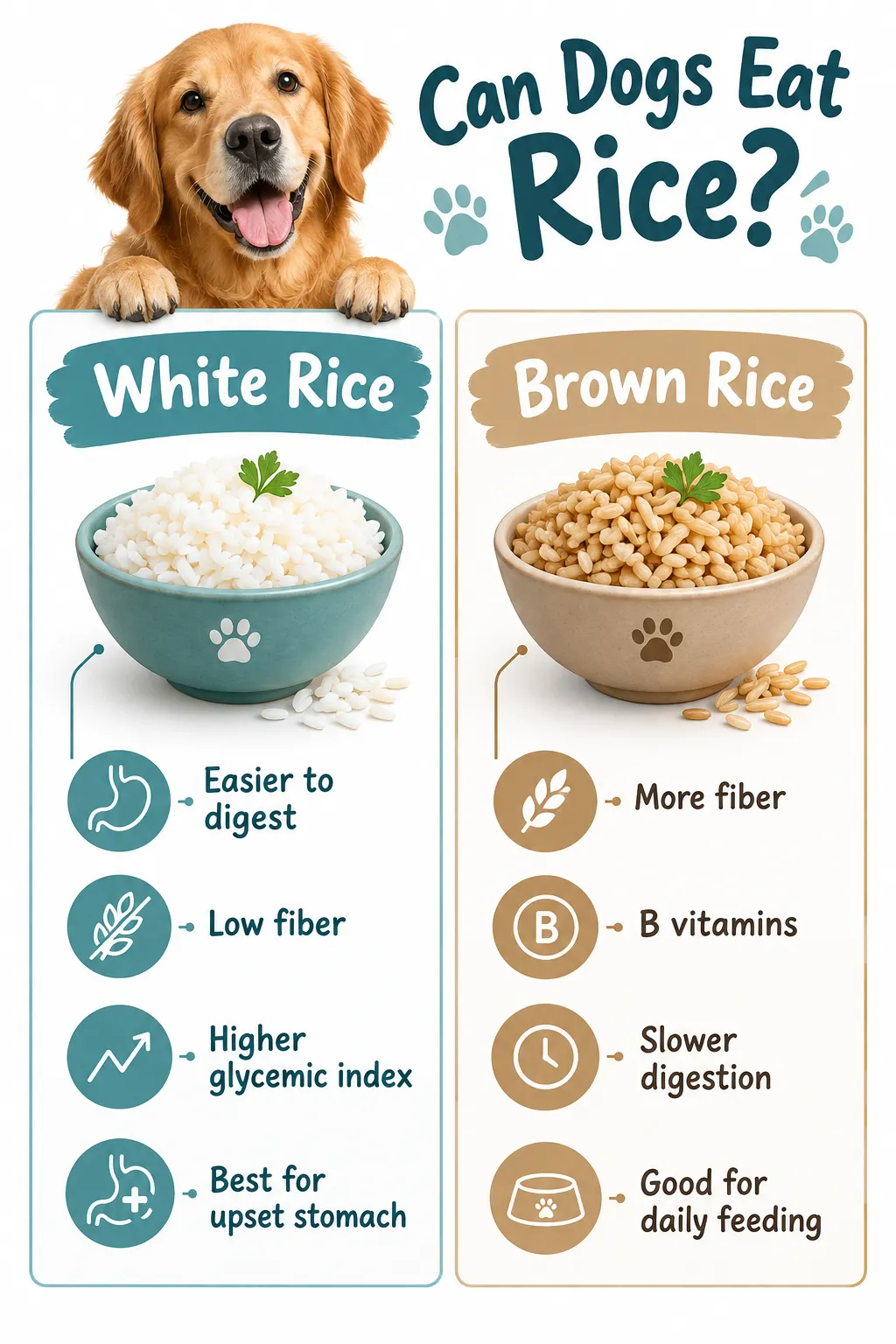
White Rice vs Brown Rice for Dogs: Which Is Better?
Neither type is universally “better”, the right choice depends on why the dog is eating rice in the first place. White rice is preferred for short-term digestive upset, while brown rice fits better into a regular, balanced feeding routine.[1][9][10]
The American Kennel Club notes that white rice is typically the go-to choice for dogs with diarrhea or acute gastrointestinal issues, because its starch content helps firm up loose stool. Brown rice, by contrast, is usually avoided during active stomach upset since its extra fiber can be harder on an already sensitive gut.[1]
Outside of illness, brown rice tends to be the stronger everyday option. Purina and Hill’s Pet Nutrition both describe brown rice as a solid source of B vitamins, minerals, and fiber that isn’t just a cheap filler when used appropriately in a complete diet.[9][10] The tradeoff is digestibility, brown rice takes longer to break down, which matters for dogs with sensitive stomachs or pancreatic issues.
One more factor: white rice has a higher glycemic index than brown rice, meaning it raises blood sugar faster. This matters most for diabetic or insulin-resistant dogs, where brown rice (or a non-rice carbohydrate) is usually the smarter pick.[1]
Decision rule: Choose white rice if your dog has diarrhea or an upset stomach right now. Choose brown rice if your dog is healthy and you’re adding rice as a regular, balanced ingredient.
Can Dogs Eat Rice Every Day?
Technically yes, but daily rice should stay within that roughly 10% calorie limit and shouldn’t crowd out protein-rich food.[6][9] A small daily spoonful mixed into a complete, balanced diet is very different from rice being half the bowl.
If a dog eats rice every day as a minor addition to a nutritionally complete commercial food, that’s generally fine. Problems show up when rice starts replacing meat, vegetables, or a portion of a dog’s regular formulated diet, that’s when nutrient gaps and weight gain become real risks.
Edge case: Dogs on a vet-prescribed therapeutic diet (for kidney disease, diabetes, or weight loss) may need rice limited further or removed entirely. Always defer to a vet’s specific plan over general guidance.
Does Rice Help Dogs With an Upset Stomach?
Yes, rice is a classic ingredient in bland diets used for mild diarrhea or an upset stomach, usually paired with a lean, boiled protein. It is meant as a short-term fix, not a permanent diet change.[2][8]
PetMD recommends a 2:1 ratio of rice to protein, for example, two parts plain cooked rice to one part boiled, skinless chicken, for dogs with ongoing digestive problems, but only under veterinary supervision and only as a temporary measure.[2] This combination is gentle on the gut and easy to digest while the stomach settles.
Steps for a basic bland-diet approach:
- Boil plain white rice until soft; no seasoning.
- Boil a lean protein like skinless chicken breast separately.
- Mix roughly 2 parts rice to 1 part shredded protein.
- Feed small portions every few hours instead of one big meal.
- Transition back to regular food gradually over 2-3 days once stool firms up.
Common mistake: Keeping a dog on bland rice-and-chicken for weeks. This combo lacks the full nutrient profile dogs need long-term, so it should only bridge the gap until the gut recovers, and if diarrhea lasts more than 48 hours, a vet visit is the next step, not more rice.[8]
Can Puppies Eat Rice?
Yes, puppies can eat small amounts of well-cooked, plain rice, but it should never replace a complete puppy food. Growing puppies have higher protein and calorie needs than adult dogs, and rice doesn’t come close to meeting those requirements on its own.
A few spoonfuls of plain rice mixed into a puppy’s regular meal, or used briefly during a mild stomach upset, is usually fine for puppies over the weaning stage. Avoid giving rice to very young puppies still transitioning off milk, and always check with a vet before changing a puppy’s diet, since nutritional mistakes early in life can affect growth. For a broader look at which human foods are appropriate across all life stages, see this guide on what dogs can safely eat.
Is Rice Toxic to Dogs? What Happens If a Dog Eats Too Much?
Rice is not toxic to dogs, there’s no poison risk from plain cooked rice itself. The real risks come from what’s mixed into the rice (seasoning, onion, garlic, excess salt or butter) or from feeding too much of it.
If a dog eats too much rice, expect digestive symptoms rather than poisoning:
- Bloating or gas from the starch and fiber load
- Loose stool or constipation, depending on the type and amount eaten
- Weight gain over time if rice regularly displaces protein-based meals
- Blood sugar spikes, especially in diabetic dogs given white rice[1]
Edge case: Raw or undercooked rice is harder to digest and can carry bacteria like Bacillus cereus, so rice should always be fully cooked before serving. A dog that raids an entire bag of uncooked rice or eats a large bowl of fried, buttery, or seasoned rice at a party is a different situation than one eating a measured serving of plain rice, the former warrants a call to the vet, especially if vomiting, lethargy, or severe bloating follows.
Best Way to Prepare Rice for Dogs
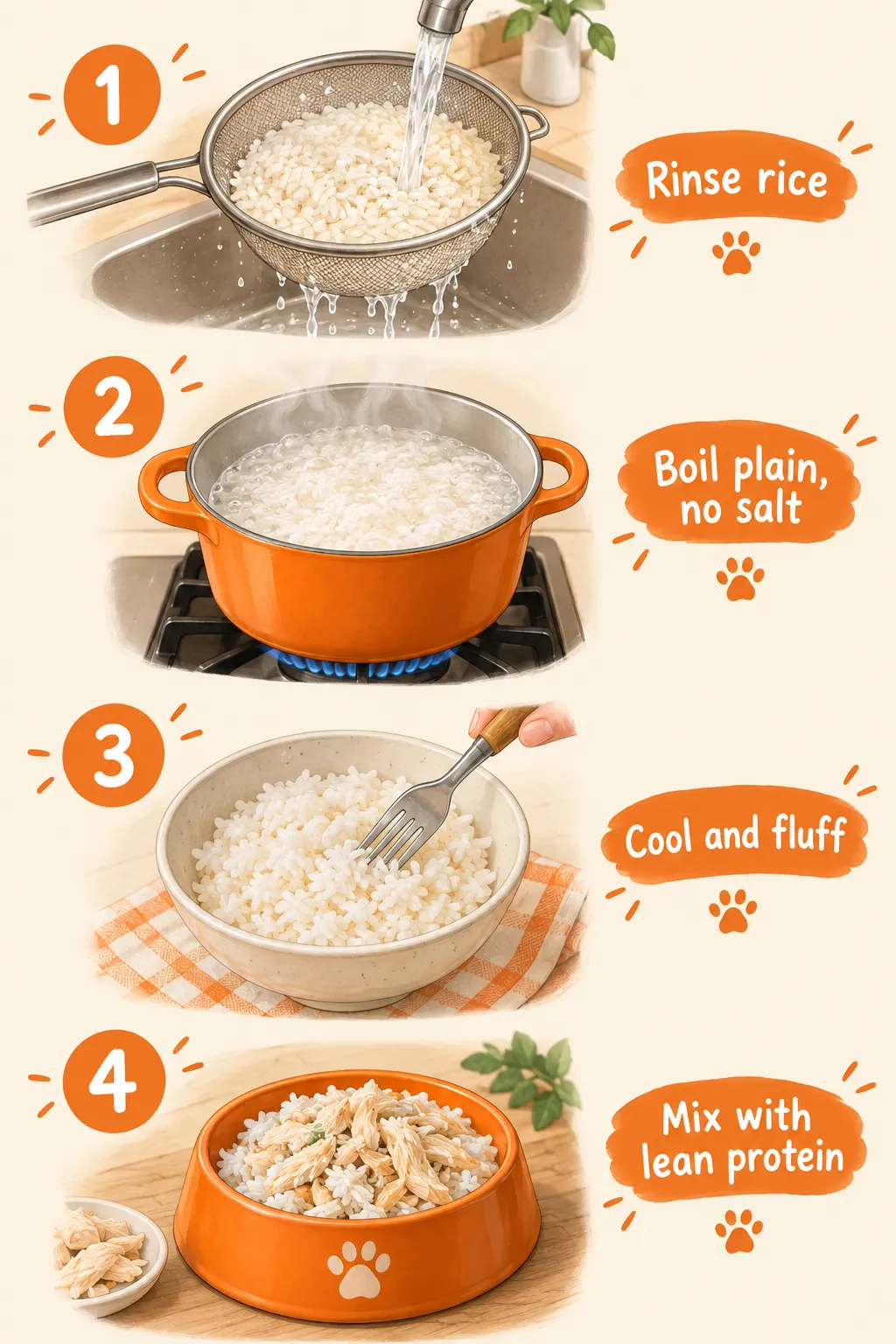
The safest way to prepare rice for a dog is to boil it plain in water, with no salt, butter, oil, broth, or seasoning, until it’s fully soft.[1][2] Simplicity is the whole point, rice for dogs should look boring compared with rice made for people.
Preparation checklist:
- Rinse raw rice under water before cooking to remove excess surface starch.
- Boil in plain water only, skip bouillon cubes, broth packets, and seasoning blends.
- Cook until fully soft; dogs digest soft, fully cooked rice more easily than firm or al dente rice.
- Let it cool completely before serving to avoid mouth burns.
- Mix with a small amount of lean cooked protein for better nutritional balance.
- Skip the butter, oil, or olive oil in the rice itself, if adding healthy fats, drizzle a vet-approved small amount separately rather than cooking the rice in it.
Common mistake: Using flavored rice packets, fried rice, or restaurant leftovers. These often contain onion, garlic, excess sodium, or oils that can upset a dog’s stomach or, in the case of onion and garlic, cause real toxicity.
Can Dogs Eat Rice With Chicken?
Yes, rice with plain boiled chicken is one of the most common and safest combinations for dogs, especially during recovery from an upset stomach. This pairing shows up constantly in vet-recommended bland diets because it balances easy digestion with a usable protein source.[2]
Keep it simple:
- Use skinless, boneless chicken breast, boiled plain.
- Shred or dice it small.
- Combine with plain cooked rice in the roughly 2:1 rice-to-protein ratio mentioned by PetMD for digestive issues.[2]
- Avoid seasoning, sauces, or chicken cooked in oil or butter.
For dogs without a chicken sensitivity, this combo works well as an occasional meal topper too, not just during illness. Dogs with a chicken allergy can swap in another lean protein, lamb is a common alternative used in limited-ingredient diets, and this guide on lamb for dogs and allergy considerations covers when that swap makes sense.
Rice Dog Food Recipes: Homemade Ideas
A simple, balanced homemade rice meal for dogs combines plain cooked rice, a lean protein, and a dog-safe vegetable, but it should only supplement, not replace, a nutritionally complete diet unless a vet or veterinary nutritionist has reviewed the recipe.
Basic homemade bowl (for healthy adult dogs, as an occasional meal or topper):
- 1 part plain cooked white or brown rice
- 2 parts boiled, shredded chicken, turkey, or lean beef
- A spoonful of plain cooked carrots, green beans, or peas
- No salt, oil, onion, or garlic
This isn’t a complete and balanced diet on its own, it’s missing key vitamins, minerals, and fatty acid ratios that commercial dog food is formulated to provide. Homemade meals used regularly (not just occasionally) should be designed with a veterinary nutritionist to avoid long-term deficiencies.[7]
Quick example: For a dog recovering from a mild stomach bug, a bowl of 1 cup plain rice mixed with ½ cup shredded boiled chicken, fed in small portions over the day, is a reasonable short-term recipe, paired with a vet check if symptoms don’t improve within a day or two.
Rice Alternatives for Dogs
Yes, there are several good alternatives to rice for dogs, especially for those with grain sensitivities, diabetes, or weight concerns. The best substitute depends on why rice isn’t the right fit.
- Sweet potato, fiber-rich and lower glycemic impact; see this guide on feeding sweet potatoes to dogs for safe serving sizes.
- Plain peas, a small, protein-adjacent vegetable addition; details in this guide to peas for dogs.
- Pumpkin, gentle on digestion, often used alongside or instead of rice for stool issues.
- Quinoa, higher in protein than rice, though it should still be a minor addition, not a main ingredient.
- Grain-free carbohydrate sources, for dogs on a vet-recommended grain-free plan; this overview of grain-free dog food explains when that approach actually makes sense versus when it doesn’t.
Decision rule: Choose a lower-glycemic alternative like sweet potato or pumpkin if your dog is diabetic, overweight, or doesn’t tolerate rice well. Stick with rice if your dog handles it fine and you’re using it short-term for stomach upset.
When Should You Feed Your Dog Rice?
The best times to feed a dog rice are during mild digestive upset (as part of a short-term bland diet), as an occasional small addition to a balanced meal, or as an ingredient in a vet-approved homemade recipe. Rice isn’t something a healthy dog needs daily, but it’s a useful, low-risk tool to have on hand.
Good moments to use rice:
- Mild diarrhea or an unsettled stomach, mixed with lean protein
- Recovery after a vet visit when a bland diet is recommended
- As an occasional topper to add variety to regular meals
- In homemade recipes designed with veterinary input
Times to avoid or limit rice:
- Diabetic or insulin-resistant dogs (especially white rice)
- Overweight dogs on a calorie-controlled plan
- Diarrhea lasting more than 48 hours, that calls for a vet visit, not more rice
- As a full meal replacement for an extended period
Frequently Asked Questions
Can dogs eat rice every single day without harm? Small amounts of plain rice daily are generally safe for healthy dogs when kept under about 10% of total calories and paired with a protein-rich diet.[6][9] Daily large portions are not recommended.
Is white rice or brown rice better for a dog with diarrhea? White rice is better for diarrhea because its starch helps firm up stool; brown rice’s extra fiber can make loose stool worse during active flare-ups.[1]
Can dogs eat rice with chicken as a regular meal? Rice with plain boiled chicken works well as an occasional meal or short-term bland diet, but it’s not nutritionally complete on its own and shouldn’t fully replace a balanced commercial diet long-term.[2]
What happens if a dog eats a lot of rice at once? Expect bloating, gas, or loose stool rather than poisoning, since rice itself isn’t toxic. Large amounts of seasoned, buttery, or fried rice carry more risk due to added fats, salt, or onion/garlic.
Can puppies eat rice safely? Yes, in small amounts mixed into their regular puppy food, but rice should never replace a complete puppy diet since puppies need higher protein and calorie levels than rice provides.
Is rice toxic to dogs in any form? Plain cooked rice is not toxic. Raw or undercooked rice can be harder to digest and may carry bacteria, and heavily seasoned rice dishes can introduce toxic ingredients like onion or garlic.
How much rice can I give my dog for an upset stomach? A common approach is a 2:1 ratio of rice to boiled lean protein, fed in small portions, for a short period under veterinary guidance, not as a long-term diet.[2]
Are there better alternatives to rice for dogs with weight issues? Yes, sweet potato, pumpkin, and plain green vegetables tend to have less impact on blood sugar and calorie load than white rice, making them useful swaps for overweight or diabetic dogs.
Conclusion
Rice is a safe, low-drama ingredient for most dogs when it’s plain, fully cooked, and kept to a modest portion of the overall diet. White rice earns its place during tummy trouble, brown rice fits better into everyday balanced feeding, and neither should push protein out of the bowl. The next steps are simple: check with a vet before making rice a regular habit, measure portions instead of guessing, and watch how an individual dog responds. For dogs with diabetes, weight concerns, or chronic digestive issues, a tailored plan from a veterinarian beats any general rule. And for a wider view of what else belongs, or doesn’t belong, on a dog’s plate, the complete guide to safe and toxic foods for dogs is a solid next read.
References
[1] Can Dogs Eat Rice – https://www.akc.org/expert-advice/nutrition/can-dogs-eat-rice/ [2] Can Dogs Eat Rice – https://www.petmd.com/dog/nutrition/can-dogs-eat-rice [6] Can Dogs Eat Rice – https://www.pumpkin.care/post/can-dogs-eat-rice [7] Re Evaluating Your Dogs Diet – https://www.vet.cornell.edu/departments-centers-and-institutes/riney-canine-health-center/canine-health-topics/re-evaluating-your-dogs-diet [8] What To Feed Dog With Diarrhea – https://www.chewy.com/education/dog/food-and-nutrition/what-to-feed-dog-with-diarrhea [9] Brown Rice – https://www.purina.com/articles/dog/feeding/can-dogs-eat/brown-rice [10] Can Dogs Eat Brown Rice – https://www.hillspet.ca/en-ca/dog-care/nutrition-feeding/can-dogs-eat-brown-rice