

Quick Answer
If your dog is pooping blood, the cause could be anything from a minor diet upset to a life-threatening condition like parvovirus or internal bleeding. Bright red blood usually points to the colon or rectum, while dark, tarry stool (melena) often means bleeding higher up in the digestive tract and needs urgent vet attention. When in doubt, call your vet the same day, this is not a symptom to wait out at home.
Key Takeaways
- Why is my dog pooping blood? Common causes include parasites, infections, dietary changes, stress colitis, and inflammatory bowel disease [1][2].
- Bright red blood (hematochezia) usually comes from the lower bowel; dark, tarry stool (melena) often signals bleeding higher in the GI tract and is more serious [3][7].
- Bloody stool paired with vomiting, weakness, pale gums, or a swollen belly is a medical emergency, don’t wait [6][9].
- Puppies with bloody diarrhea need immediate testing for parvovirus, which can be fatal within days.
- Vets typically run a fecal exam, bloodwork, and sometimes imaging to find the cause [9].
- Treatment costs can range from under $150 for a simple parasite case to $1,500+ for hospitalization or surgery.
- Never give over-the-counter human medications to a dog with bloody stool without vet approval [5].
- Mild stress colitis can clear up in a few days with bland food, but it should still be checked if it’s the first occurrence.
Why Is My Dog Pooping Blood? What It Means
When a dog poops blood, it means there’s bleeding somewhere along the digestive tract, from the stomach all the way down to the rectum. The exact spot matters because it changes how worried you should be and what treatment is needed [1][2].
Vets describe this in two main categories:
- Hematochezia: bright red, fresh-looking blood, usually from the colon or rectum.
- Melena: black, tarry, sticky stool that smells unusually foul, caused by digested blood from higher up in the gut (stomach or small intestine) [3][7].
Both are signs the body is losing blood somewhere it shouldn’t be. Sometimes it’s a small irritation that heals on its own. Other times it’s a sign of a serious infection, organ problem, or internal injury. That’s why a single bloody stool is worth watching closely, and more than one episode is worth a vet call.
Is Bloody Stool in Dogs an Emergency?
Bloody stool in dogs is an emergency when it’s heavy, repeated, or paired with other symptoms like vomiting, collapse, pale gums, or severe lethargy. A single small streak in an otherwise happy, eating, playful dog is less urgent but still deserves a vet check within a day or two.
The American Veterinary Medical Association lists sudden bleeding and signs of shock among the situations that need immediate care [6]. Watch for these red flags:
- Large amounts of blood or blood clots
- Black, tar-like stool (melena)
- Vomiting blood or vomiting repeatedly
- Pale or white gums
- Collapse, extreme weakness, or a distended abdomen
- A known toxin ingestion (like rat poison) alongside bleeding
Decision rule: if your dog is acting completely normal, eating well, and you see only a small streak of red once, you can call your vet for guidance the same day. If you see any red flag above, treat it as an emergency and go straight to the clinic or an emergency animal hospital [5][9].
Common Reasons Dogs Have Blood in Stool
The most common reasons dogs have blood in their stool are parasites, infections, dietary problems, and chronic gut inflammation. Less common but serious causes include cancer, clotting disorders, and organ disease [1][4].
Here’s a closer look at the usual suspects:
- Intestinal parasites: hookworms and whipworms are classic causes of bloody, mucus-covered stool, especially in puppies and dogs that haven’t had recent deworming.
- Viral infections: parvovirus causes severe, often bloody diarrhea in unvaccinated puppies and young dogs, along with vomiting and extreme lethargy.
- Bacterial infections: Salmonella, Campylobacter, and Clostridium overgrowth can irritate the gut lining enough to cause bleeding.
- Dietary indiscretion: eating garbage, bones, spoiled food, or something toxic can scrape or inflame the intestines.
- Inflammatory bowel disease (IBD): chronic gut inflammation that comes and goes, often with soft stool, mucus, and occasional blood.
- Hemorrhagic gastroenteritis (HGE): a sudden, severe condition that causes bloody, often jelly-like diarrhea and needs same-day vet care [4].
- Anal gland problems or rectal polyps: can cause localized bleeding that looks worse than it is.
- Tumors or masses in the colon or rectum, more common in older dogs.
Can Parasites Cause Blood in Dog Stool?
Yes. Parasites are one of the most common causes of bloody stool, especially hookworms, whipworms, and giardia in puppies or dogs with outdoor access [1][2]. A simple fecal test at the vet usually confirms this, and treatment is often inexpensive and fast-acting once the right dewormer is used.
If your puppy has black, tarry stool along with weakness, read our guide on black puppy poop causes and when to worry for more on how dark stool differs from bright red bleeding in young dogs. And if bloody stool shows up alongside vomiting and extreme fatigue in an unvaccinated puppy, check the signs and symptoms of parvo in puppies right away, since that combination needs emergency care.
How to Tell If My Dog’s Poop Has Blood in It
You can usually tell by looking for bright red streaks on the surface, red-tinged diarrhea, or stool that’s unusually dark, sticky, and foul-smelling. Fresh blood is easy to spot; digested blood (melena) is sneakier because it just looks like very dark poop.
Quick checklist for inspecting stool:
- Look at the color: bright red, maroon, or black/tarry?
- Check the texture: formed, soft, watery, or jelly-like with mucus?
- Smell it: melena often has an unusually sharp, metallic odor.
- Note the amount: a few drops versus streaks throughout the whole stool.
- Watch for patterns: one-time event or repeated over 24-48 hours?
Common mistake: owners sometimes assume reddish stool is always from beets, food dye, or a treat the dog just ate. That’s possible, but it’s risky to assume. If your dog hasn’t eaten anything red recently, treat the color as blood until a vet rules it out.
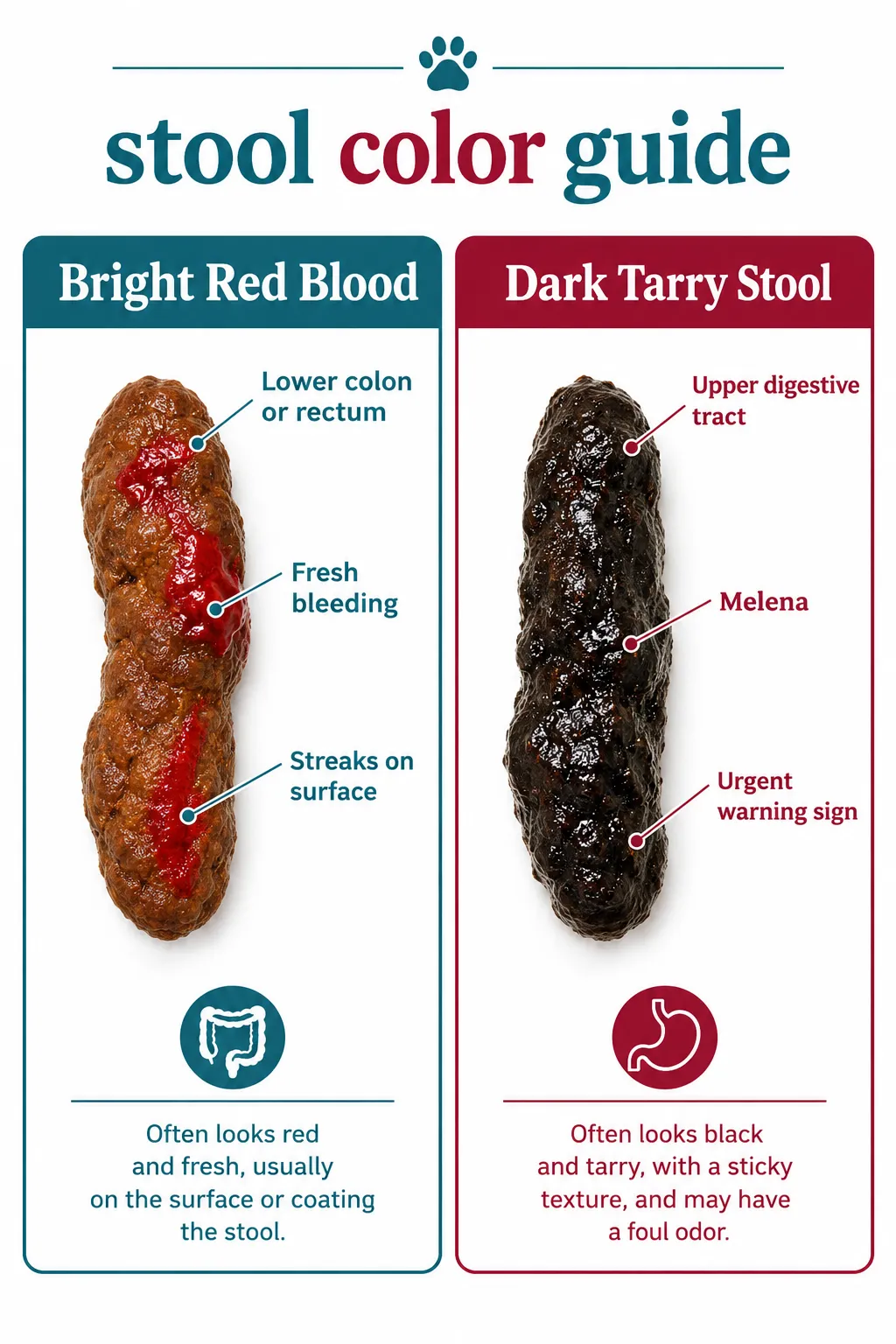
Bright Red vs. Dark Blood in Dog Poop: What’s the Difference?
Bright red blood (hematochezia) usually comes from the lower digestive tract, like the colon or rectum, and often looks fresh and streaky. Dark, tarry blood (melena) comes from higher up, like the stomach or small intestine, and tends to signal more serious internal bleeding [3][7].
| Feature | Bright Red Blood (Hematochezia) | Dark/Tarry Blood (Melena) |
|---|---|---|
| Likely source | Colon, rectum, anus | Stomach, small intestine |
| Appearance | Red streaks or fresh-looking blood | Black, sticky, tar-like |
| Common causes | Colitis, parasites, anal irritation, stress | Ulcers, internal bleeding, certain toxins |
| Urgency level | Moderate (vet check soon) | High (same-day vet visit) |
Edge case: some dogs show both at once, which usually means bleeding is happening in more than one spot or the condition has progressed. That combination almost always warrants an emergency visit [3][9].
When Should I Take My Dog to the Vet for Bloody Poop?
You should take your dog to the vet the same day if there’s a large amount of blood, repeated episodes, or any accompanying symptoms like vomiting, lethargy, or loss of appetite. Even a single mild streak deserves a phone call to your vet within 24 hours for guidance.
Use this simple rule of thumb:
- Go now (emergency vet): heavy bleeding, black tarry stool, collapse, pale gums, repeated vomiting, known toxin exposure [6].
- Call today, schedule soon: one episode of mild blood streaking, dog still eating and acting normal, no other symptoms [10].
- Monitor for 24 hours, then call if it continues: very mild, single occurrence right after a diet change, with no other symptoms.
A dog “pooping blood but acting normal” can still have something brewing internally, since early-stage parasites, mild colitis, or early IBD often don’t slow a dog down right away [10]. If you’re also noticing changes in energy or breathing, it’s worth comparing notes with our guide on why your dog might be shaking, since combined symptoms often point to a bigger underlying issue.
Can Stress Cause Bloody Stools in Dogs?
Yes, stress can cause bloody stool in dogs through a condition vets often call stress colitis. It’s triggered by anxiety, travel, boarding, a new home, or a sudden environment change, and it usually causes mild blood streaking in soft stool rather than heavy bleeding.
Signs this might be stress-related rather than something more serious:
- Started right after a known stressful event (vet visit, move, new pet, fireworks)
- Blood is mild streaking, not heavy or clotted
- Dog is still eating, drinking, and playing normally
- Stool firms up again within a few days
Decision rule: choose “likely stress colitis” if the timing lines up with a stressful event and your dog seems otherwise fine. Choose “something else” if there’s no clear trigger, if it lasts more than 2-3 days, or if any red-flag symptoms appear.
Can a Diet Change Cause Blood in Dog Poop?
Yes, a sudden diet change can cause blood in dog poop because the gut needs time to adjust to new ingredients. Switching foods too fast, feeding rich table scraps, or introducing bones can irritate the intestinal lining enough to cause streaking.
To avoid this:
- Transition to new food over 7-10 days, mixing old and new gradually
- Avoid sudden fatty treats, like large amounts of butter, bacon, or fried food
- Be cautious with bones, since sharp fragments can scrape the gut lining (our guide on whether dogs can eat chicken bones safely covers this risk in detail)
- Keep human food swaps in check, see our breakdown of safe and toxic human foods for dogs before sharing your plate
If you’re building a diet from scratch, a balanced approach like the one in our vet-approved homemade dog food guide is gentler on digestion than random food swaps.
Quick example: a dog that gets a big bowl of table scraps at a holiday gathering and then has bloody diarrhea the next morning is a textbook diet-related case, especially if the dog is otherwise acting normal.
Is Bloody Poop in Dogs Always Serious?
No, bloody poop in dogs isn’t always serious, but it should always be checked. Mild, one-time streaking from stress or a diet hiccup often resolves on its own, while repeated or heavy bleeding usually points to something that needs treatment [8].
The safest approach is to treat every first occurrence as worth a vet call, then let your vet help you decide if it’s something to watch or something to treat immediately. This is more cautious than older advice, and current guidance leans toward checking early rather than waiting [10].
What Tests Will the Vet Do for Bloody Dog Poop?
Vets typically start with a physical exam, a fecal test for parasites, and basic bloodwork, then add imaging or more specific tests if something looks abnormal. This stepwise approach helps rule out the most common causes first before moving to more advanced diagnostics [9].
Typical workup:
- Physical exam, checking hydration, pain level, and abdomen
- Fecal exam, looking for parasites, parasite eggs, or abnormal bacteria
- Complete blood count (CBC) and chemistry panel, checking for anemia, infection, or organ issues
- Parvovirus test, for unvaccinated puppies or young dogs with bloody diarrhea
- Abdominal X-rays or ultrasound, if a blockage, mass, or internal bleeding is suspected
- Endoscopy or biopsy, for chronic cases suspected to be IBD or cancer
How Much Does It Cost to Treat Bloody Stool in Dogs?
Treatment costs for bloody stool in dogs usually range from $100-$300 for simple cases like parasites, up to $1,500 or more for hospitalization, IV fluids, or surgery. The final cost depends heavily on the underlying cause and whether your dog needs overnight care.
Rough cost ranges to expect:
- Fecal test + deworming: $75-$200
- Bloodwork + exam: $150-$400
- Parvovirus testing and basic treatment: $500-$2,000+ depending on hospitalization length
- Imaging (X-ray/ultrasound): $200-$600
- Surgery for a blockage or mass: $1,500-$5,000+
Edge case: pet insurance or a vet payment plan can make emergency costs more manageable, so it’s worth asking your clinic about options before assuming you can’t afford care.
What Home Remedies Can Help a Dog With Bloody Stool?
Mild cases from stress or a minor diet upset can sometimes be helped at home with a short bland diet and close monitoring, but you should never self-medicate bloody stool with human medications [5]. Home care is a bridge to a vet visit, not a replacement for one.
Safe supportive steps for mild cases (no red-flag symptoms):
- Offer small amounts of plain boiled chicken and white rice for 24-48 hours
- Make sure your dog stays well-hydrated
- Keep your dog calm and limit stressful activity
- Avoid fatty treats, bones, and new foods during recovery
- Track stool color and frequency every few hours
Mistake to avoid: giving over-the-counter anti-diarrheal medication, aspirin, or other human drugs without vet guidance. Some of these can worsen bleeding or mask a serious problem [5]. If your dog’s bloody stool is linked to vomiting too, our guide on why dogs throw up and when it’s an emergency can help you spot overlapping warning signs.
How Long Does It Take for Bloody Stool to Go Away in Dogs?
Mild cases from stress or diet usually clear up in 2-4 days with rest and a bland diet. Cases caused by parasites, infections, or IBD can take 1-2 weeks or longer, and may need ongoing management if the underlying condition is chronic.
Rough recovery timelines:
- Stress colitis: 2-4 days
- Diet-related irritation: 1-3 days after returning to normal food
- Parasite infections: 3-7 days after proper deworming
- Bacterial infections: 5-10 days with appropriate antibiotics
- IBD or chronic conditions: ongoing management, with flare-ups managed over weeks to months
If blood is still present after 3-4 days of home care, or if it was never mild to begin with, go back to your vet rather than waiting longer. Repeated bloody diarrhea that looks like loose, jelly-like stool fits the pattern often compared in resources on why dogs develop diarrhea and how it’s treated, which is a useful companion read if your dog’s symptoms overlap with general digestive upset.
FAQ
Can a dog poop blood and still act completely normal? Yes. Mild cases, especially early parasite infections or small streaks from stress, often don’t slow a dog down right away. It’s still worth a vet call since internal problems don’t always show obvious symptoms early on [10].
Is one streak of blood in dog poop an emergency? Usually not an emergency by itself, but it’s worth calling your vet within 24 hours, especially if it happens more than once.
What color is melena in dog stool? Melena looks black, tarry, and sticky, often with a strong, unpleasant odor, because it’s digested blood from higher in the digestive tract [3].
Can worms cause a dog to poop blood? Yes, hookworms and whipworms are common causes of bloody stool in dogs, especially puppies. A fecal test confirms this quickly [1][2].
Should I withhold food if my dog is pooping blood? A short 12-24 hour fast with access to water can help mild cases, but check with your vet first, especially for puppies, seniors, or small dogs who can’t go long without food.
Can anxiety alone cause bloody poop in dogs? Yes, stress colitis is a real and fairly common cause of mild blood streaking, usually tied to a specific stressful event.
What does it mean if my dog’s poop has blood and mucus? Blood with mucus often points to colitis or inflammation in the large intestine, which can be caused by stress, parasites, or IBD.
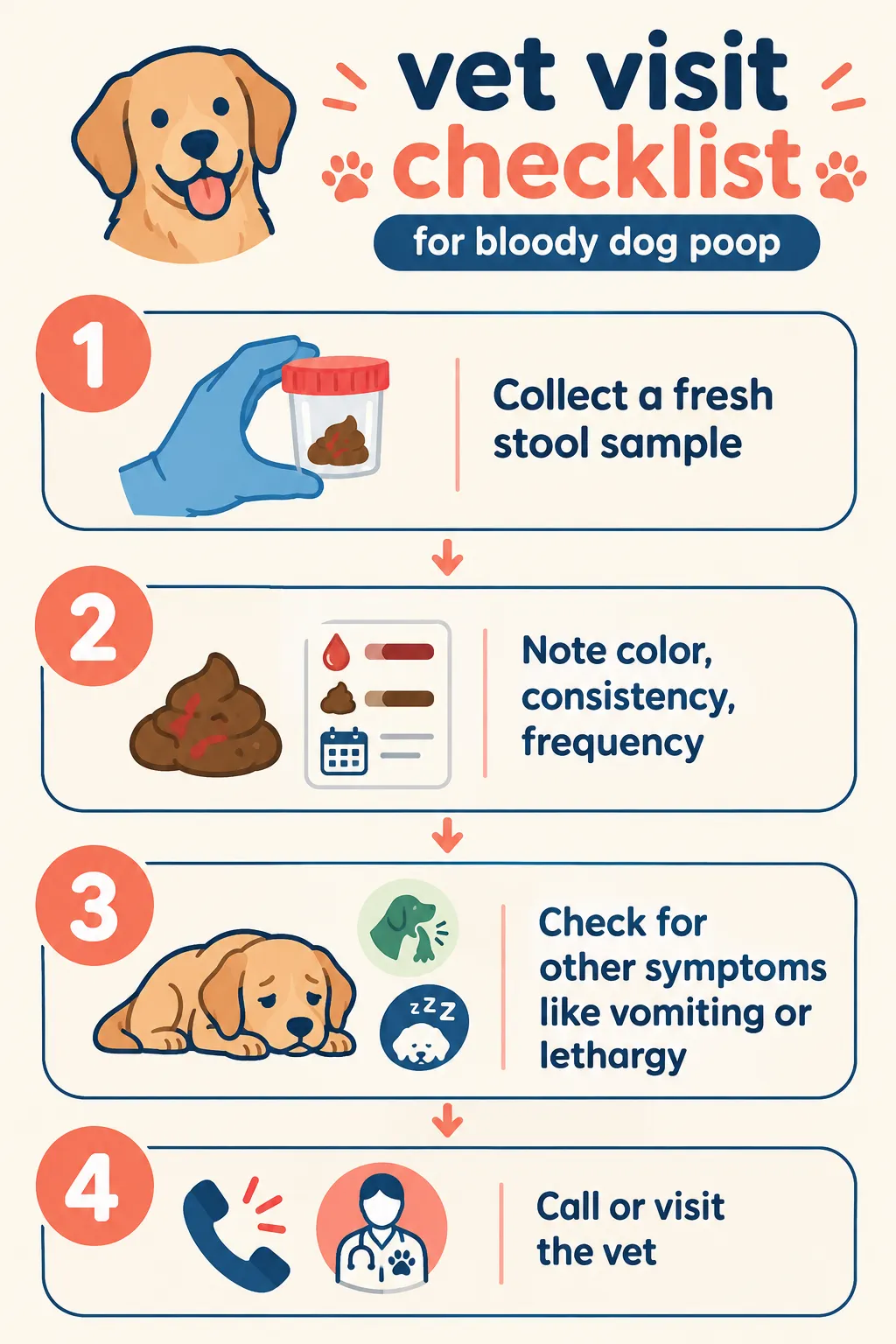
Do I need to bring a stool sample to the vet? Yes, if possible. A fresh sample helps the vet run fecal tests immediately and speeds up diagnosis.
Why Is My Dog Pooping Blood: Bottom Line
Bloody stool in dogs covers a wide range, from a mild stress reaction to a true emergency like parvovirus or internal bleeding. The color, amount, and any other symptoms your dog shows are the biggest clues to how urgent the situation is.
Next steps:
- Check the color and texture of the stool using the checklist above.
- Watch for red-flag symptoms like vomiting, pale gums, or weakness.
- Call your vet the same day for anything beyond a single mild streak.
- Bring a fresh stool sample to your appointment if you can.
- Avoid home medication without vet guidance, and stick to a bland diet only for mild cases.
When in doubt, trust your gut and make the call. Catching the cause early almost always means an easier, cheaper, and faster recovery for your dog.
References
[1] Blood In Dog Stool – https://www.hillspet.co.uk/dog-care/healthcare/blood-in-dog-stool [2] Blood In Dog Poop – https://www.akc.org/expert-advice/health/blood-in-dog-poop/ [3] Melena Blood In Stool In Dogs – https://www.petplace.com/article/dogs/pet-health/melena-blood-in-stool-in-dogs [4] Blood In Dogs Poop – https://www.dogster.com/ask-the-vet/blood-in-dogs-poop/ [5] Mcm Client Brochures Pet First Aid 2025 – https://ebusiness.avma.org/files/ProductDownloads/mcm-client-brochures-pet-first-aid-2025.pdf [6] 13 Animal Emergencies Require Immediate Veterinary Consultation Andor Care – https://www.avma.org/resources/pet-owners/emergencycare/13-animal-emergencies-require-immediate-veterinary-consultation-andor-care [7] Hematochezia In Dogs – https://www.whole-dog-journal.com/health/hematochezia-in-dogs/ [8] Blood In Stool – https://www.webvet.com/symptom-checker/dog/blood-in-stool/ [9] What To Do If Your Dog Has Bloody Poop – https://vetster.com/en/wellness/what-to-do-if-your-dog-has-bloody-poop [10] Dog Pooping Blood Acting Normal – https://www.zubairkhalid.com/knowledge/veterinary-medicine/digestive-and-urinary-care/dog-pooping-blood-acting-normal