

Quick Answer: Can Dogs Have Chia Seeds?
Yes, dogs can have chia seeds. Most healthy adult dogs can eat small, soaked amounts of plain chia seeds as an occasional add-on to their regular food, and vet-informed sources confirm chia is non-toxic to dogs when fed in moderation.[4][6][8][10] The key rules: soak the seeds first, keep the dose small relative to body weight, and never treat chia as a meal replacement.
Key Takeaways
- Chia seeds are not toxic to dogs and are generally safe for healthy adults in small, soaked portions.[4][8][10]
- A common dosing guide is ¼ teaspoon per 10 lb of body weight per day, roughly 1 teaspoon for small dogs and 2 teaspoons for large dogs.[1][2][7][12]
- Always soak chia seeds before feeding; dry seeds can absorb about 10 times their weight in liquid.[9][12]
- Chia offers fiber, omega-3 fatty acids, plant protein, calcium, and magnesium that may support skin, coat, and digestion.[2][6][7][8]
- Too much chia, too fast, can cause gas, loose stool, or diarrhea.[8][11][12]
- Puppies can have chia seeds, but only in very small, closely monitored amounts.[8][14]
- Dogs on blood-thinning medication or with GI disease should get a vet’s okay first.[8][11][12]
- Plain chia seed pudding (no sugar, chocolate, or xylitol) can be an occasional treat in small amounts.[9]
Can Dogs Have Chia Seeds? Why the Answer Is Usually Yes
Dogs can eat chia seeds safely when the seeds are plain, soaked, and served in weight-appropriate amounts. Vet-reviewed nutrition sources updated through October 2026 describe chia as non-toxic and suitable as a supplemental ingredient, not a core part of the diet.[4][6][8][10][12]
This matters for owners because chia has become a popular “superfood” add-in for homemade dog meals and store-bought treats. The seeds are tiny, odorless, and easy to mix into wet food, which makes them simple to introduce gradually.[6][7][8]
- Choose chia if: a dog is healthy, eats a balanced diet, and the owner wants a small fiber or omega-3 boost.
- Skip or delay chia if: a dog has active digestive upset, is on new medication, or has never tried seeds before.
- Common mistake: pouring dry seeds straight onto kibble instead of soaking them first.
For dogs already eating a complete commercial diet, chia should stay a small extra rather than a daily staple. Readers exploring other plant-based add-ins may also want the guide on pumpkin seeds for dogs, which covers a similar low-risk seed option.
Are Chia Seeds Toxic to Dogs?
No, chia seeds are not toxic to dogs. There is no known poisonous compound in chia that harms canines, and current pet-safety databases list chia as safe for dogs in moderate amounts.[4][8]
The real risks come from how chia is fed, not from the seed itself:
- Dry seeds swallowed whole can swell in the stomach because they absorb large amounts of liquid.
- Flavored chia products (puddings, drinks, snack bars) often contain added sugar, chocolate, or xylitol, which are genuinely toxic.
- Large quantities fed suddenly can overwhelm digestion, even though the seed itself is not poisonous.
Edge case: a dog that steals a bag of dry chia seeds and eats a large amount at once is different from a dog given a measured, soaked teaspoon. If a large unmonitored amount is swallowed, especially dry, contact a veterinarian because of the swelling and blockage risk rather than toxicity.[9][12][15]
How Much Chia Seed Can I Give My Dog?
A widely used dosing guide is about ¼ teaspoon of chia seeds per 10 lb (4.5 kg) of body weight per day, which works out to roughly 1 teaspoon for small dogs and up to 2 teaspoons for large breeds.[1][2][7][12]
| Dog size (approx. weight) | Daily chia seed amount | Notes |
|---|---|---|
| Small (under 20 lb) | ¼,½ teaspoon | Start with less; watch stool |
| Medium (20-50 lb) | ½,1 teaspoon | Increase slowly over a week |
| Large (50-90 lb) | 1-1½ teaspoons | Mix into regular meals |
| Giant (90 lb+) | up to 2 teaspoons | Don’t exceed without vet input |
Decision rule: start at the low end of the range for the dog’s weight bracket, keep that dose for 5-7 days, and only increase if stool and energy stay normal.[2][7][12][14] A common mistake is scaling up chia the same week it’s introduced, which raises the odds of an upset stomach.
What Are the Health Benefits of Chia Seeds for Dogs?
Chia seeds can support coat health, digestion, and general nutrition because they contain fiber, omega-3 fatty acids, plant protein, calcium, and magnesium.[2][6][7][8] These nutrients work best as a complement to, not a substitute for, a dog’s regular balanced diet.
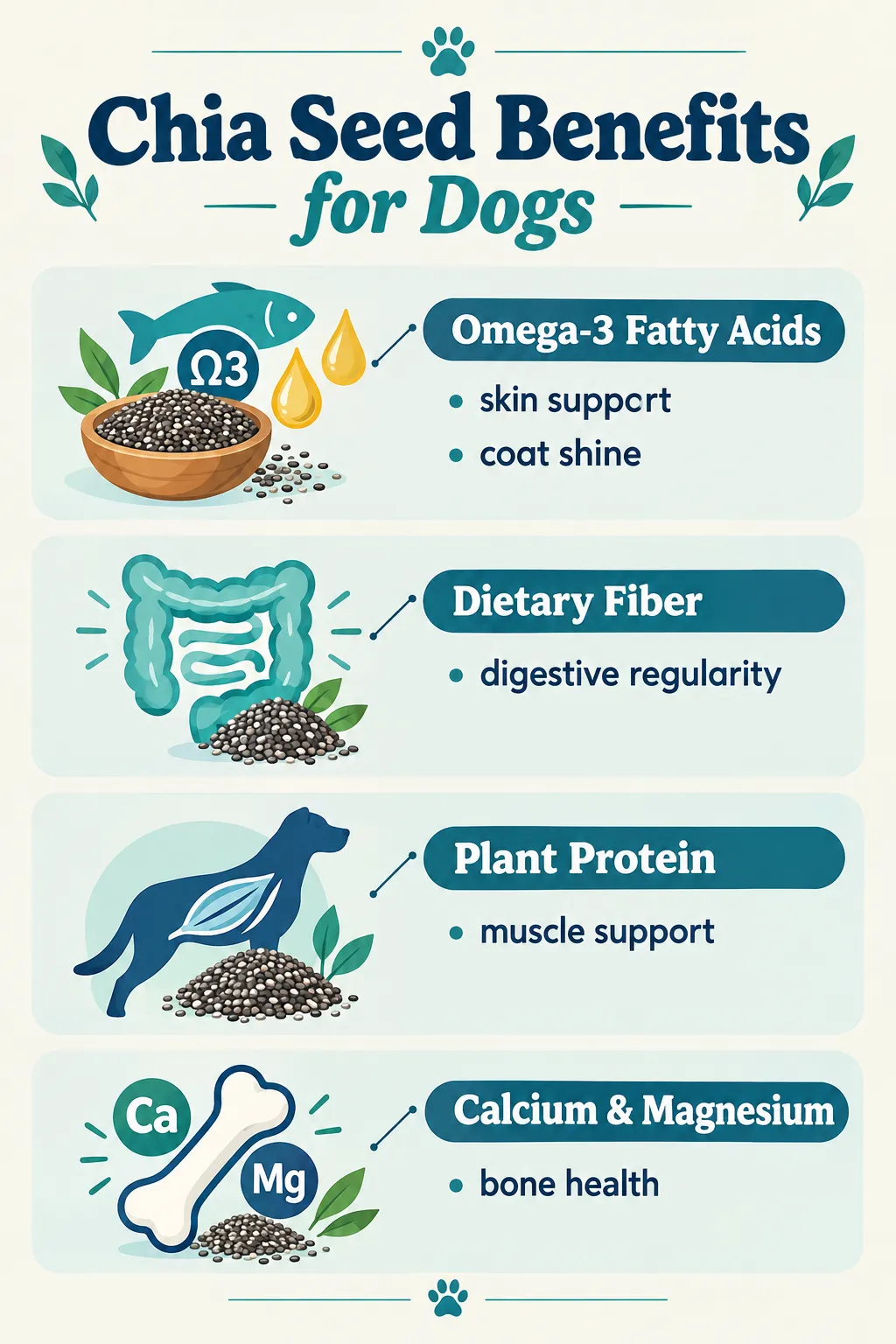
- Omega-3 fatty acids may help support skin and coat condition and have mild anti-inflammatory effects.[6][7][8][14]
- Dietary fiber supports regular digestion when dosed appropriately.
- Plant protein adds a modest nutritional boost without major calories.
- Calcium and magnesium contribute to normal bone and muscle function.
A 2026 in vitro feeding study found that a diet with just 1% chia seed inclusion showed better dry matter, protein, and fat digestibility than both a standard commercial diet and a 3% chia diet, suggesting low-level inclusion may work better than heavier dosing.[5] Owners wanting another omega-rich option for coat support can compare notes with the guide on olive oil for dogs.
“Chia works best as a small daily extra, not a nutritional centerpiece, the dose makes the benefit.”
Do Chia Seeds Cause Digestive Issues in Dogs?
Yes, chia seeds can cause digestive upset in dogs if fed in large amounts or introduced too quickly, mainly because of their high fiber and water-absorbing properties.[8][11][12] This is the most common side effect owners report, and it’s usually preventable.
Signs to watch for after introducing chia:
- Gas or bloating
- Loose stool or diarrhea
- Reduced appetite the following meal
Common mistake: feeding chia dry and skipping the soaking step, which increases the chance of stomach discomfort because the seeds keep absorbing moisture after swallowing.[9][12][15] If loose stool appears, cut the dose in half or pause for a few days before trying again. Dogs with ongoing loose stool unrelated to diet changes should be checked against the broader causes covered in why does my dog have diarrhea.
Chia Seeds vs Flax Seeds for Dogs: Which Is Better?
Neither seed is universally “better”, chia tends to be easier to feed because it doesn’t need grinding, while flax offers a similar omega-3 profile but must be ground to be digestible.[2][7] The right choice depends on convenience and the dog’s tolerance.
| Feature | Chia Seeds | Flax Seeds |
|---|---|---|
| Needs grinding? | No | Yes, whole seeds pass undigested |
| Soaking required? | Yes, before feeding | Not required |
| Omega-3 content | High | High |
| Fiber content | Very high | High |
| Storage | Stable at room temp | Can go rancid faster once ground |
Choose chia if: convenience matters and the owner wants a no-grind option. Choose flax if: the dog already tolerates flax well and a vet or nutritionist has recommended it.
Both seeds sit in the same “functional add-in” category as pumpkin seeds, which some owners rotate alongside chia for variety.
Can Puppies Have Chia Seeds?
Puppies can have chia seeds, but only in very small, closely monitored amounts well below the standard adult dosing guide.[8][14] Puppies have more sensitive digestion, so caution matters more here than with adult dogs.
- Introduce chia only after the puppy is fully weaned onto solid food.
- Use a fraction of the ¼-teaspoon-per-10-lb rule, and increase slowly if at all.
- Watch closely for loose stool or vomiting during the first few feedings.
Edge case: toy and small-breed puppies have very low calorie and fiber tolerance, so many owners skip chia entirely until the dog is closer to adult size. When unsure, ask a veterinarian before adding any seed-based supplement to a growing puppy’s diet.
Chia Seeds for Dogs With Allergies
Chia seeds are considered a low-allergen food for most dogs, but any new ingredient, including chia, can occasionally trigger a sensitivity in an individual dog.[8][10][11] True chia allergies in dogs are not common, but they’re not impossible.
- Introduce chia alone the first time, without mixing in other new foods, so a reaction is easier to trace.
- Watch for: itching, hives, facial swelling, or digestive upset within 24 hours.
- Stop immediately and call a veterinarian if any of these signs appear.
Dogs with known seed or nut allergies should be introduced to chia carefully, similar to the caution recommended for dogs trying almonds for the first time. If a dog has a documented food allergy profile, running new ingredients past a vet first is the safer route.
How to Prepare Chia Seeds for Dogs
The safest way to prepare chia seeds for dogs is to soak them in water or low-sodium broth before serving, never offering them dry straight from the bag.[9][12][15] Dry chia can absorb roughly 10 times its weight in liquid, which is why soaking first matters so much.
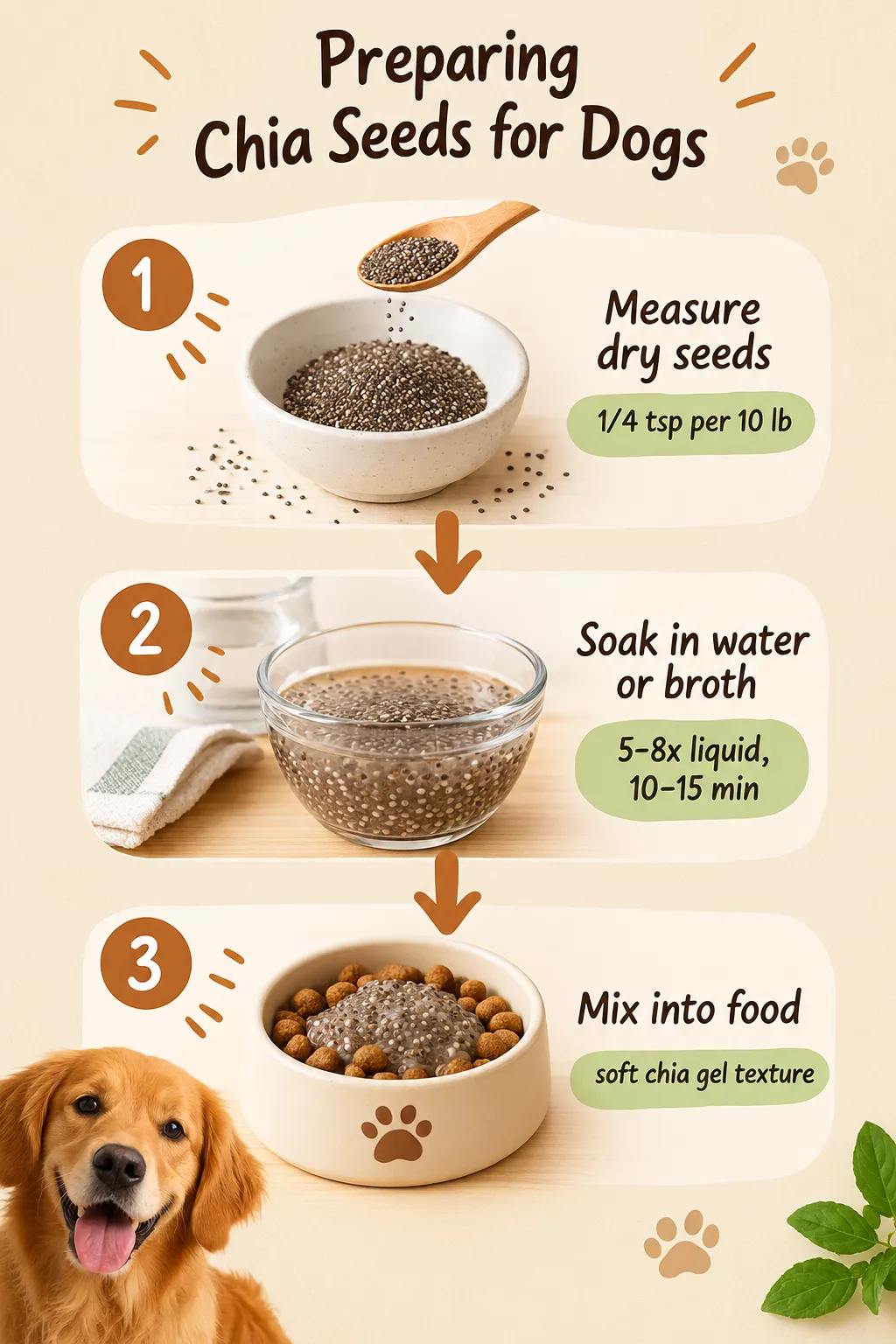
Step-by-step prep:
- Measure the dose based on the dog’s weight (see dosing table above).
- Add 5-8 times as much water or plain broth.
- Let the mixture sit 10-15 minutes until it turns into a soft gel.
- Stir the gel into the dog’s regular food.
Best Way to Add Chia Seeds to Dog Food
Mixing soaked chia gel directly into wet food or a small amount of plain broth is the most reliable method, since it blends in without changing the texture of a meal too much.[2][7][12] Avoid sprinkling dry seeds on top of dry kibble, since the dog may not chew them and they can still swell in the stomach.
Can Dogs Have Chia Seed Pudding?
Yes, dogs can have chia seed pudding occasionally if it’s plain and free of sugar, chocolate, or xylitol.[9] A dog-safe version uses only chia, water or unsweetened plain yogurt, and nothing else, no sweeteners, flavored milks, or chocolate chips. Treat it as an occasional extra, not a regular snack, and keep the portion small for the dog’s size.
Chia Seeds for Dog Weight Loss
Chia seeds may support a weight management plan because their fiber content can help dogs feel fuller without adding many calories.[2][7][8] This effect is modest, and chia should be viewed as one small piece of a broader weight-loss strategy, not a stand-alone solution.
- Fiber from chia can slow digestion and support satiety between meals.
- Chia should replace a small portion of treats, not be added on top of the existing diet.
- Weight loss still depends mainly on total calorie intake and exercise.
Decision rule: use chia as a treat swap if a dog is on a vet-approved weight loss plan, not as the main tool for shedding pounds. Dogs on commercial weight-management diets should check with a vet before adding chia on top of a formulated food; this pairs well with guidance in is grain-free dog food good for dogs for owners comparing diet formats.
What Happens If a Dog Eats Too Many Chia Seeds?
Eating too many chia seeds can cause gas, bloating, cramping, or diarrhea in dogs because of the sudden spike in fiber and the seeds’ water-absorbing nature.[8][11][12] In rare cases involving large amounts of dry seeds, swelling in the stomach could contribute to discomfort or, in extreme cases, a risk of blockage.[9][12][15]
What to do:
- Withhold extra food for a few hours, but keep fresh water available since chia can bind water in the gut.
- Monitor stool and energy over the next 12-24 hours.
- Call a veterinarian if the dog shows vomiting, lethargy, straining, or a swollen abdomen.
Common mistake: assuming “more chia equals more benefit.” The nutritional upside plateaus quickly, while the GI risk rises with overfeeding.
Are There Any Dogs That Shouldn’t Eat Chia Seeds?
Yes, some dogs should avoid chia seeds or only have them under veterinary guidance. This includes dogs with chronic gastrointestinal disease, diabetes, known seed allergies, or dogs taking blood-thinning or anti-platelet medication.[8][11][12][13]
- Blood-thinning medication: chia’s omega-3 content may mildly increase bleeding time, so extra caution is advised.[8][11][12]
- GI disease or diabetes: high fiber content can interact with existing digestive or blood sugar management.
- Known seed allergy: avoid entirely and discuss alternatives with a vet.
If a dog falls into any of these categories, a quick call to the vet before adding chia is the safer move than guessing at a safe dose.
Frequently Asked Questions
Can dogs have chia seeds every day? Yes, small, soaked amounts within the weight-based dosing guide can be given daily, but chia should stay a minor add-on to a balanced diet, not a daily requirement.[2][7][12]
Do chia seeds help with a dog’s coat? Chia’s omega-3 content may support skin and coat condition over time, though results vary by dog and overall diet quality.[6][7][8]
Can dogs eat chia seeds raw and dry? It’s not recommended. Dry chia should be soaked first to prevent excess swelling in the stomach.[9][12][15]
Is chia seed oil the same as chia seeds for dogs? No, chia seed oil is a different product with a different fat concentration. Stick to prepared chia seeds unless a vet recommends otherwise.
Can chia seeds replace fish oil supplements for dogs? Chia can complement omega-3 intake but isn’t a direct replacement for fish oil, since the omega-3 types and absorption differ.[6][7][8]
How long does it take to see benefits from chia seeds? Coat and digestive changes, if any, typically take several weeks of consistent, correctly dosed feeding to become noticeable.
Can senior dogs have chia seeds? Yes, in most cases, though senior dogs with kidney issues, GI disease, or on medication should get vet clearance first.[8][11][12]
What’s the safest way to introduce chia seeds to a dog? Start with a small soaked amount mixed into one meal, wait several days, and watch stool and energy before increasing the dose.[2][7][12]
Conclusion
Chia seeds are a safe, non-toxic add-on for most healthy dogs when soaked first and dosed by body weight, roughly ¼ teaspoon per 10 lb of weight per day.[1][2][4][8][12] The nutritional upside, fiber, omega-3s, plant protein, and minerals, is real but modest, and it only applies when chia stays a small part of an already balanced diet rather than a replacement for complete dog food.[2][6][7][8]
Next steps for owners:
- Confirm the dog is healthy and not on blood-thinning medication or managing a GI condition.
- Start with the low end of the weight-based dose and soak the seeds first.
- Watch stool and energy for a week before increasing the amount.
- Call a veterinarian if diarrhea, vomiting, or unusual lethargy shows up after feeding chia.
When in doubt about dosage or a dog’s specific health condition, a quick conversation with a veterinarian remains the safest path before making chia a regular part of the bowl.
References
[1] Chia For Dogs – https://wonderbarktreats.com/blogs/news/chia-for-dogs [2] Chia For Pets – https://www.dogsnaturallymagazine.com/chia-for-pets/ [4] Chia Seeds – https://www.safefordogs.com.au/can-dogs-eat/chia-seeds [5] Ijan 41 1 020 – https://indianjournals.com/article/ijan-41-1-020 [6] Chia Seeds For Dogs – https://www.thedogchef.co.uk/fresh-ingredients/nuts-seeds/chia-seeds-for-dogs/ [7] Ingredient Spotlight Chia Seeds – https://blog.ollie.com/ingredient-spotlight-chia-seeds/ [8] Can Dogs Eat Chia Seeds – https://www.caninebible.com/can-dogs-eat-chia-seeds/ [9] Can Dogs Have Chia Seed Pudding – https://www.dogster.com/dog-nutrition/can-dogs-have-chia-seed-pudding/ [10] Can Dogs Eat Chia Seeds A Vets Opinion – https://clinic.vetnoms.com/en/can-dogs-eat-chia-seeds-a-vets-opinion/ [11] Can Dogs Eat Chia Seeds A Vets Opinion – https://clinic.vetnoms.com/en/can-dogs-eat-chia-seeds-a-vets-opinion/ [12] Can Dogs Eat Chia Seeds – https://www.caninebible.com/can-dogs-eat-chia-seeds/ [13] Ingredient Spotlight Chia Seeds – https://blog.ollie.com/ingredient-spotlight-chia-seeds/ [14] Can Dogs Eat Chia Seeds – https://www.caninebible.com/can-dogs-eat-chia-seeds/ [15] Can Dogs Have Chia Seed Pudding – https://www.dogster.com/dog-nutrition/can-dogs-have-chia-seed-pudding/