

Quick Answer
How Can You Tell If a Dog Is Pregnant
You can often spot early clues like nipple changes, appetite shifts, and nesting behavior around three to four weeks after breeding, but the only reliable way to confirm pregnancy is through a veterinary exam. Abdominal palpation works around day 28-30, a relaxin blood test works from about day 22-27, and ultrasound can detect embryos as early as day 17-20.[5][13]
Key Takeaways
- Dog pregnancy lasts roughly 58 to 68 days, averaging about 63 days from the breeding date.[7][8]
- Early signs include nipple enlargement, a pinkish discharge, reduced appetite followed by increased hunger, and tiredness.[1][6]
- Relaxin blood tests are the earliest reliable lab confirmation, detectable around day 22-27 post-breeding.[5][13]
- Ultrasound is the gold-standard imaging method and can see embryos from about day 17-20 to day 21.[10][13]
- Vets can feel puppies through abdominal palpation around day 28-30, but home attempts risk injuring the fetuses.[13]
- Pregnant dogs typically gain 20-30% of their pre-pregnancy body weight, mostly in the final three weeks.[2][6]
- False pregnancy mimics real pregnancy symptoms without a litter and usually resolves on its own within a few weeks.[1]
- Dogs can get pregnant again while still nursing a litter if they’re not spayed, so separation from intact males matters.[4]
What Are the First Signs of Dog Pregnancy?
The earliest signs of dog pregnancy usually show up two to three weeks after breeding and include nipple changes, mild vomiting, and low energy. These signs mimic a mild stomach bug in many dogs, which is why they’re easy to miss.
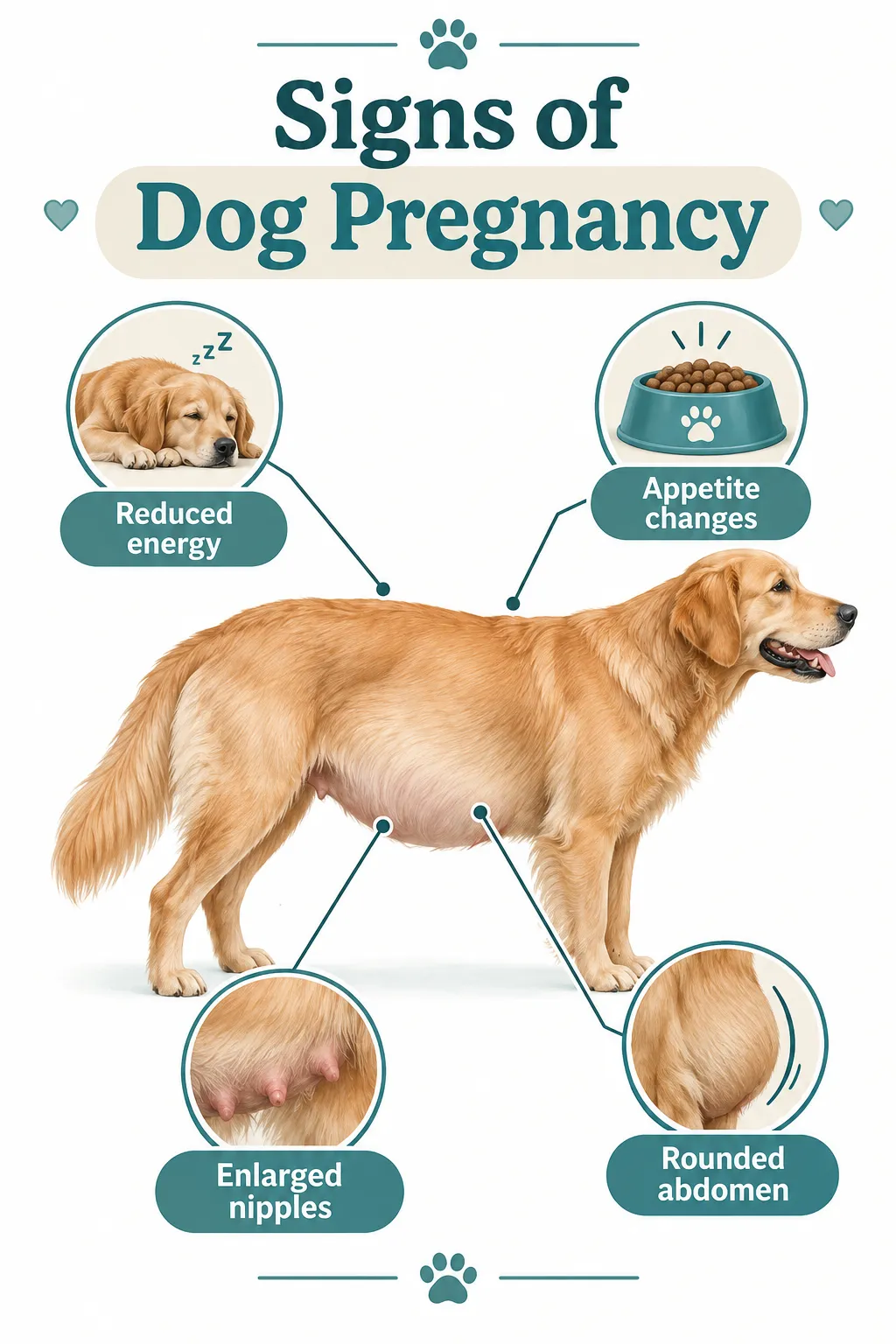
Watch for this cluster of changes:
- Enlarged, pinker nipples, often the first visible clue, appearing around week 2-3.[1][6]
- Appetite dips then surges, some dogs eat less in early pregnancy, then eat noticeably more by week 5-6.[6]
- Lower energy and more sleep, similar to first-trimester fatigue in humans.[1]
- Mild vomiting or “morning sickness”, typically brief and resolves on its own.[6]
- Clear or straw-colored vaginal discharge, a normal finding in some pregnant dogs.[1]
A common mistake is assuming a swollen belly means pregnancy right away. Bloating, weight gain from diet, or false pregnancy can all look similar, so symptoms alone are not proof.
Can You Feel Puppies Moving in a Pregnant Dog?
Yes, but usually not until the final two to three weeks of gestation, and gentle feeling should be left to someone experienced or a vet. Puppy movement becomes noticeable around day 45-50 when fetuses are large enough to kick against the uterine wall.
Owners sometimes feel subtle rippling movement while their dog rests calmly on her side. Pressing firmly to “find” puppies earlier than this is not recommended, because the uterus is fragile and rough handling can cause harm.
How Much Weight Do Pregnant Dogs Gain?
Pregnant dogs typically gain 20% to 30% of their pre-pregnancy body weight, with most of that gain happening in the last three weeks of pregnancy.[2][6] A 30-pound dog carrying a normal-sized litter might gain 6 to 9 pounds by whelping day.
Weight gain varies by litter size: a dog carrying eight puppies gains more than one carrying two. Sudden, dramatic weight gain in week 1 or 2, though, is more likely bloating or unrelated illness than pregnancy weight.
How Long Does Dog Pregnancy Last?
Dog pregnancy lasts an average of 63 days, with a normal range of about 58 to 68 days from the breeding date.[7][8] Because ovulation timing varies, the exact due date can shift by several days even within the same breed.
For a complete breakdown of trimester-by-trimester changes, see this detailed guide on how long dogs are pregnant. Knowing the expected whelping window helps owners schedule the right vet checks and prepare a whelping box on time.
Edge case: Small breeds and toy breeds sometimes whelp a few days earlier than large breeds, and litters with only one or two puppies can also run slightly longer than average because there’s less hormonal signal to trigger labor.
How Can You Tell If a Dog Is Pregnant? Vet Confirmation Methods
The most reliable way to confirm pregnancy is a combination of veterinary tools: relaxin blood testing, abdominal palpation, ultrasound, and radiographs, each useful at a different stage. Visual guessing is far less accurate than any of these clinical methods, especially in the first few weeks.[5][11][13]
| Method | Earliest Detection | What It Shows |
|---|---|---|
| Relaxin blood test | ~Day 22-27 | Confirms implantation occurred[5][13] |
| Abdominal palpation | ~Day 28-30 | Vet feels distinct fetal swellings[13] |
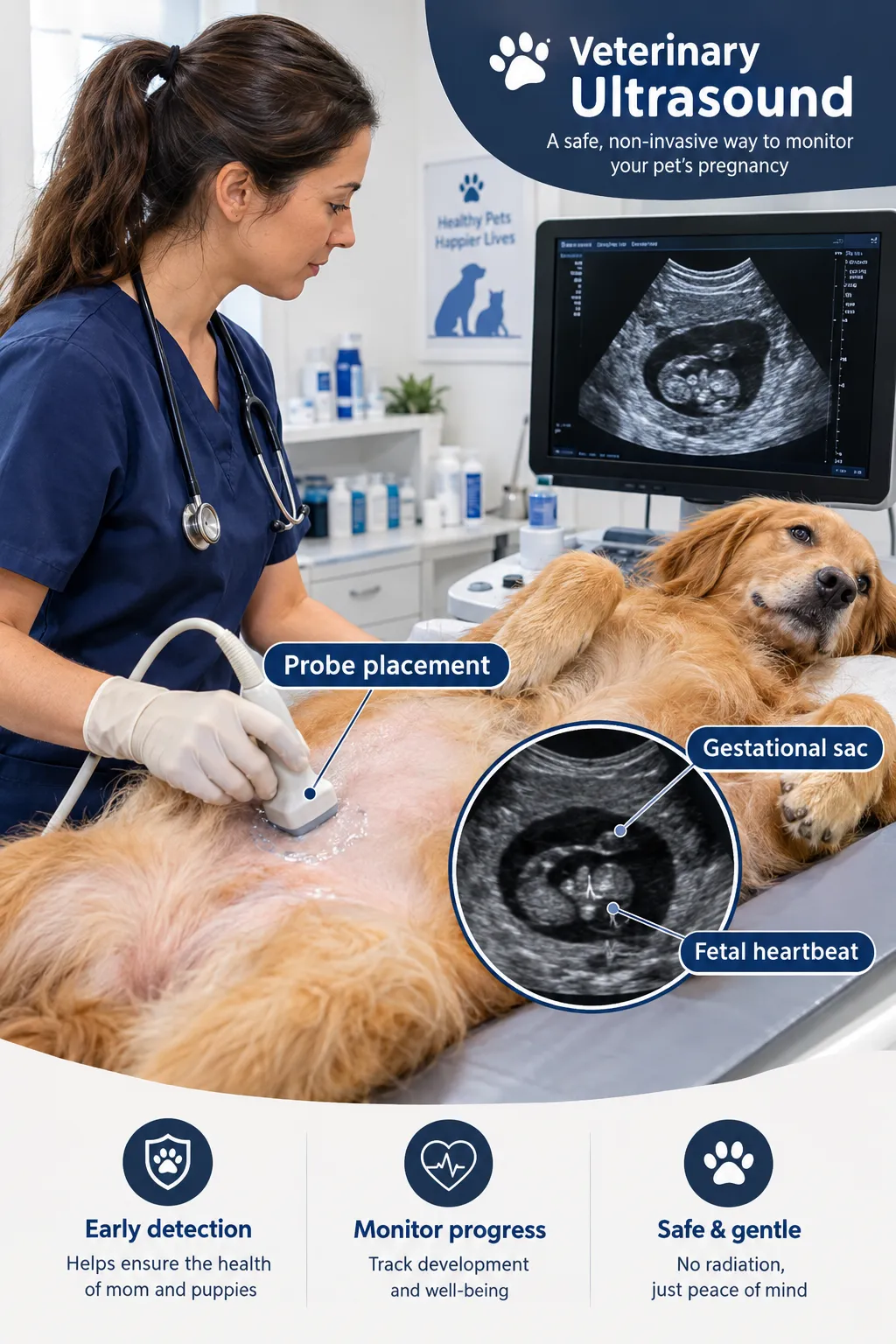
| Ultrasound | ~Day 17-21 | Visualizes sacs, heartbeat, fetal movement[10][13] |
| X-ray (radiograph) | ~Day 45+ | Counts puppies via skeletal mineralization[13] |
Relaxin is a hormone made only by the placenta once an embryo implants in the uterine wall, which makes it a highly specific marker for true pregnancy rather than false pregnancy.[3][10][13] Ultrasound remains the preferred first choice for most vets because it confirms viability (a visible heartbeat) rather than just the presence of tissue.[5][10][11]
Decision rule: Choose a relaxin test if you need an early yes/no answer around day 25. Choose ultrasound if you want to see a heartbeat and estimate how many puppies are developing. Choose an X-ray only in the last two weeks if you need an exact puppy count before whelping.
Can You Tell If a Dog Is Pregnant Without a Vet?
You can notice physical and behavioral clues at home, but you cannot confirm pregnancy without professional testing. Home observation is a useful first step, not a diagnosis.
At-home clues worth tracking in a simple log:
- Nipple size and color changes starting week 2-3
- Appetite and weight changes week 3 onward
- Nesting behavior (seeking quiet, soft spots) in the final two weeks
- Behavioral softening or increased affection
- A visibly rounder abdomen by week 5-6
Common mistake: Relying on a home pregnancy test made for humans or guessing based on a single missed heat cycle. Neither works for dogs. A missed heat can also mean a false pregnancy, an infection, or a hormonal irregularity, so a vet visit is still the only way to know for sure.
What Should You Feed a Pregnant Dog?
A pregnant dog needs a gradual increase in high-quality, calorie-dense food starting around week 5, moving toward a puppy or performance-formula diet by whelping. Feeding changes should match each trimester rather than happening all at once.
- Weeks 1-4: Keep regular adult food and portions; big changes aren’t needed yet.[2]
- Weeks 5-6: Begin transitioning to a nutrient-dense formula and slightly larger portions.[2]
- Weeks 7-9: Feed smaller, more frequent meals since the growing litter limits stomach space.[6]
If you’re unsure about the right food type, this grain-free dog food guide breaks down what vets actually recommend for nutrient-dense diets. Always confirm any diet change with a vet, since pregnant dogs have different calcium and calorie needs than typical adult dogs.
How Many Puppies Do Dogs Usually Have?
Most dogs have litters of four to six puppies, though this varies widely by breed size and the individual dog.[6][9] Small breeds often have smaller litters of one to four puppies, while large breeds can have eight or more.
Litter size is usually only confirmed accurately by X-ray in the last two weeks of pregnancy, once puppy skeletons have mineralized enough to show up clearly.[13] Guessing litter size by belly shape alone is unreliable and often wrong in either direction.
Can a Dog Get Pregnant While Nursing?
Yes, an unspayed female dog can get pregnant again while still nursing a current litter, because nursing does not reliably suppress heat cycles in dogs the way it can in some other species.[4] This is a key reason breeders and shelters strongly recommend keeping intact males separated from nursing mothers.
A dog that becomes pregnant again while nursing faces real health risk, since her body is already under heavy nutritional demand. If this happens accidentally, contact a vet promptly to discuss safe options.
False Pregnancy in Dogs: Signs That Mimic Pregnancy
False pregnancy (pseudopregnancy) in dogs produces real pregnancy-like symptoms, including nipple swelling, nesting, and even milk production, without any puppies actually present.[1] It happens because of normal hormone shifts after a heat cycle, not because something is wrong with the dog.
Typical signs include:
- Mammary gland swelling and milk-like discharge
- Nesting or mothering behavior toward toys
- Reduced appetite or restlessness
- Symptoms appearing 4-9 weeks after a heat cycle, even without breeding
Edge case: If signs last longer than 3 weeks or the dog seems distressed, a vet visit is warranted to rule out a real pregnancy or a mammary infection rather than assuming it’s “just” a false pregnancy.
Preparing Your Home and Vet Visits for a Pregnant Dog
Preparing for a pregnant dog means setting up a quiet whelping area by week 7 and scheduling vet checkups at key milestones rather than waiting for an emergency. A calm, predictable routine reduces stress for the mother and lowers complication risk.
How to Prepare Your Home for a Pregnant Dog
- Set up a warm, enclosed whelping box lined with washable bedding in a low-traffic room by week 7.
- Remove access to stairs, high furniture, and other pets that may cause stress.
- Stock supplies: clean towels, a heat lamp, a digital thermometer, and your vet’s after-hours contact number.
- If puppies are expected soon after whelping, review this puppy vaccine schedule guide so you’re ready for their first vet visits.
When Should You Take a Pregnant Dog to the Vet?
Schedule vet visits for pregnancy confirmation (around day 25-30), a mid-pregnancy ultrasound check, and a final X-ray in the last two weeks to count puppies and plan for whelping.[13] Beyond scheduled visits, call the vet immediately if labor hasn’t started 24 hours after temperature drop, or if more than 2-4 hours pass between puppies during active labor.
What Not to Do With a Pregnant Dog
Avoid vaccinating, deworming with unapproved products, giving human medications, or allowing rough play during pregnancy, since each of these can harm developing puppies. Always clear any medication, supplement, or activity change with a vet first.
Specific things to skip:
- No unsupervised rough play with other dogs, especially in the last trimester.
- No unapproved flea, tick, or deworming products without vet guidance.
- No sudden diet changes without a transition period.
- No skipping prenatal checkups, even if the dog seems fine.
How to Know If Your Dog Is Having Complications During Pregnancy
Warning signs of pregnancy complications include a greenish or foul discharge, fever, prolonged labor without a puppy, or extreme lethargy, and any of these call for an emergency vet visit. Heavy, labored breathing is also worth watching closely; this guide on fast or labored breathing in dogs explains when panting crosses into an emergency sign. Repeated vomiting that won’t stop is another red flag worth checking against this breakdown of why dogs throw up, and noticeably increased thirst should be compared with typical causes in this guide to excessive water drinking in dogs.
Quick example: A dog that strains for more than 30 minutes without delivering a puppy, or that goes quiet and weak mid-labor, needs an emergency vet call right away, not a “wait and see” approach.
FAQ
How soon can you tell if a dog is pregnant? Behavioral and physical clues may appear around week 2-3, but reliable lab confirmation (relaxin testing) is possible around day 22-27 after breeding.[5][13]
Does a dog’s belly get hard when pregnant? The abdomen typically firms and rounds out gradually from week 5 onward as puppies grow, rather than becoming hard suddenly.[6]
Can an ultrasound be wrong about pregnancy? Ultrasound is highly accurate for confirming pregnancy and viability, but very early scans (before day 17-20) can sometimes miss tiny embryos.[10][13]
Do pregnant dogs act differently right before labor? Yes, most dogs show nesting behavior, restlessness, and appetite loss in the final 24-48 hours before whelping.
Is nipple change the most reliable early sign? Nipple enlargement is one of the more common early signs but isn’t definitive on its own, since hormonal shifts from false pregnancy cause similar changes.[1]
How many puppies can one ultrasound detect accurately? Ultrasound confirms pregnancy and viability well but is less reliable for an exact puppy count; X-ray after day 45 gives a more accurate litter count.[13]
Can stress cause a false pregnancy? False pregnancy is driven mainly by normal post-heat hormone shifts, not primarily stress, though stress can worsen symptoms in some dogs.[1]
What is the safest way to confirm pregnancy at home? There is no fully safe or accurate home test for dogs; tracking physical signs is a reasonable first step, but a vet visit is needed to confirm.
Conclusion
Spotting the early signs of dog pregnancy, like nipple changes, appetite shifts, and tiredness, gives a useful first clue, but only veterinary tools confirm it with confidence. A relaxin blood test around day 22-27, an ultrasound from day 17-21, and palpation around day 28-30 remain the most trusted methods.[5][13] If a dog has recently bred and is showing any of these signs, the best next step is booking a vet visit within the next two to three weeks rather than waiting to see what happens. Early confirmation gives enough time to adjust diet, prepare a whelping space, and schedule the checkups that keep both mother and puppies safe through delivery.
References
[1] Signs Dog Pregnant – https://www.webmd.com/pets/dogs/signs-dog-pregnant [2] Dog Pregnancy Care Prep – https://www.akc.org/expert-advice/dog-breeding/dog-pregnancy-care-prep/ [3] Defaultadv1 – https://www.vin.com/apputil/content/defaultadv1.aspx?id=3852295&pid=11181&print=1 [4] Dog Pregnancy Care Prep – https://www.akc.org/expert-advice/health/dog-pregnancy-care-prep/ [5] Pregnancy Testing In The Dog – https://vcahospitals.com/know-your-pet/pregnancy-testing-in-the-dog [6] Dog Pregnancy – https://www.petmd.com/dog/general-health/dog-pregnancy [7] How Long Are Dogs Pregnant – https://www.petfinder.com/dogs-and-puppies/health-wellness/concerns/how-long-are-dogs-pregnant/ [8] How Long Are Dogs Pregnant – https://www.chewy.com/education/dog/health-and-wellness/how-long-are-dogs-pregnant [9] Akc Gazette March2023 Cbest Summary – https://www.akc.org/wp-content/uploads/2023/10/AKC-Gazette-March2023-CBEST-summary.pdf [10] Fm6vzw5cyfdkqpdzdyjcqrk – https://www.scielo.br/j/rbspa/a/fm6VZW5cyfDkQpdZdyJcqRK/?format=pdf&lang=en&ilang=pt_BR [11] Pregnancy Testing In The Dog – https://vcahospitals.com/know-your-pet/pregnancy-testing-in-the-dog [13] Dog Pregnancy Care Prep – https://www.akc.org/expert-advice/dog-breeding/dog-pregnancy-care-prep/