
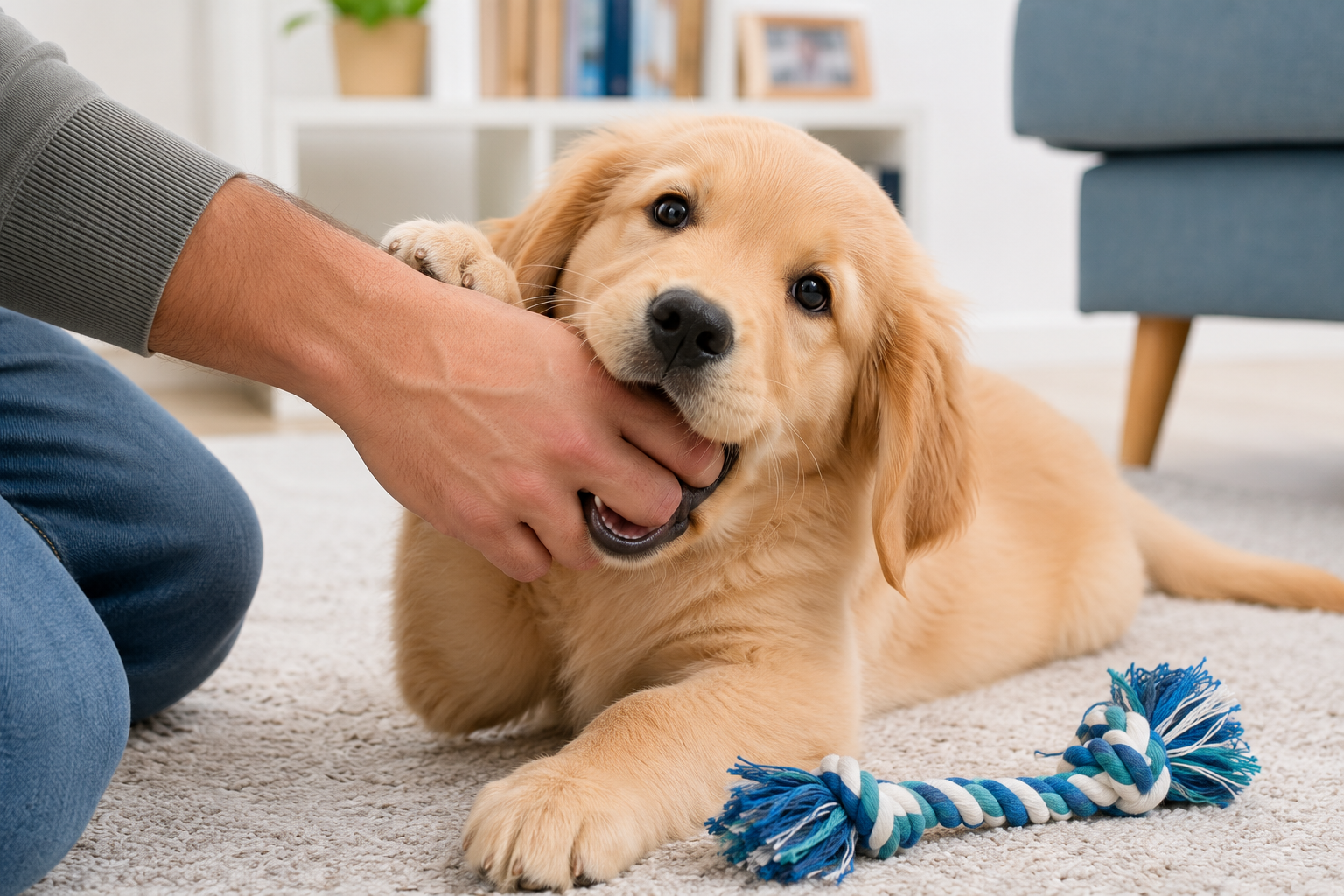
Quick Answer: To stop a puppy from biting, immediately end play whenever their teeth touch your skin, redirect them to an appropriate chew toy, and reward calm behavior. Puppy biting is a normal part of development, especially during teething and play, but consistent training teaches bite inhibition and helps puppies learn that human skin is never an acceptable chew toy. Most puppies improve significantly with patient, daily practice. However, if your puppy’s biting becomes unusually intense, causes repeated injuries, or is accompanied by stiff body language, growling, or resource guarding, consult your veterinarian or a qualified positive-reinforcement trainer to rule out underlying behavioral or medical concerns. Key Takeaways Why Do Puppies Bite? Puppy biting is a normal part of growing up. Puppies use their mouths to explore the world, interact with people and other animals, and learn how much pressure they can safely use during play. Unlike humans, who rely primarily on their hands, puppies use their mouths to investigate new objects, textures, and experiences. One of the most important skills puppies develop is bite inhibition—the ability to control the force of their bite. While living with their littermates, puppies naturally learn this skill through play. If one puppy bites too hard, the other usually yelps and stops playing. This teaches the biting puppy that rough play has consequences. When puppies join a new home, they continue practicing these behaviors with their human family. Since human skin is much more sensitive than fur, they need consistent guidance to learn that biting people immediately ends the fun. Is Puppy Biting Normal? Yes. Gentle mouthing and nipping are completely normal during the first few months of life. Puppies commonly bite because they are: Normal puppy biting is usually accompanied by loose, wiggly body language, a wagging tail, and playful behavior. While those sharp puppy teeth can hurt, this type of biting is rarely a sign of aggression. At What Age Do Puppies Stop Biting? Most puppies begin biting less between 3 and 5 months of age as they gain better impulse control and progress through teething. By 6 to 8 months, biting should decrease significantly if owners consistently reinforce appropriate behavior. Some energetic breeds, including Border Collies, Australian Shepherds, and Jack Russell Terriers, may continue mouthing longer because they naturally enjoy interactive play and movement. How Teething Affects Biting Teething is one of the biggest reasons puppies chew and bite more frequently. As adult teeth replace baby teeth—typically between 3 and 6 months of age—the gums become sore and itchy, encouraging puppies to chew on almost anything they can find. Common signs of teething include: You can help soothe sore gums by offering: Avoid cooked bones or objects that can splinter, as they may damage developing teeth or create a choking hazard. 🐾 Owner Tip: Puppies often become especially mouthy when they’re teething, tired, or overstimulated. Before assuming your puppy is being “naughty,” try offering a safe chew toy or giving them time for a nap. Puppy Biting vs. Aggression Most puppy biting is playful and harmless, but it’s important to recognize the difference between normal mouthing and behavior that may require professional attention. Playful puppies usually have loose, relaxed bodies, wagging tails, and frequently invite interaction with a play bow. Their bites are quick, playful, and not intended to injure. Aggressive behavior is very different. Puppies showing aggression may become stiff, freeze before biting, stare intensely, curl their lips, growl deeply, or guard food, toys, or other valued items. Puppy Bite Triage: Play vs. Aggression Behavior Normal Play Possible Aggression Body posture Loose and bouncy Stiff and rigid Tail Relaxed, wagging Stiff or tucked Eyes Soft, blinking Hard stare Growling Playful or excited Deep, threatening Bite Gentle mouthing Hard bite intended to injure If your puppy repeatedly displays stiff body language, hard bites, resource guarding, or bites without obvious play signals, contact your veterinarian or a qualified behavior professional for guidance. 🩺 Vet Insight: Most puppies grow out of playful biting with consistent training, but aggressive behavior should never be dismissed as “just a phase.” Early intervention greatly improves long-term outcomes. How to Stop a Puppy From Biting Teaching bite inhibition takes patience and consistency. Every member of the household should respond the same way whenever the puppy bites. Redirect to a Chew Toy Keep an appropriate chew toy within reach during play. If your puppy starts biting your hands or clothing, calmly replace your hand with the toy and encourage them to chew on that instead. End Play Immediately If your puppy’s teeth touch your skin, stop interacting right away. Stand up, fold your arms, and ignore the puppy for 10 to 20 seconds. This teaches that biting makes the fun end. Reward Calm Behavior As soon as your puppy settles down or begins chewing an appropriate toy, reward them with praise, gentle attention, or a treat. Positive reinforcement encourages good choices. Prevent Hand and Foot Biting Avoid rough games that encourage your puppy to chase hands or feet. Children should be taught to stand still like a “tree” if the puppy begins nipping, since running often encourages chasing. Choose the Right Chew Toys Offer durable chew toys designed for puppies and rotate them regularly to maintain interest. Frozen toys can also provide relief for teething puppies. Should You Yelp or Stay Quiet? Some puppies respond well to a brief “Ouch!” because it resembles feedback from littermates. Others become more excited and bite harder. If yelping increases your puppy’s excitement, quietly end play instead and redirect them to a chew toy. When Puppy Biting Becomes a Problem Although most puppy biting is harmless, some situations require closer attention. Puppy Bites That Draw Blood Sharp puppy teeth can accidentally scratch or puncture skin during play. Wash any bite that breaks the skin with soap and water and monitor for redness, swelling, or other signs of infection. Seek medical advice if the wound becomes infected or is severe. Biting That Gets Worse Instead of Better If your puppy’s biting becomes more
Can Dogs Have Autism? Understanding Canine Behavioral Differences
Last updated: July 15, 2026 Quick Answer: Dogs cannot be formally diagnosed with autism, but they can exhibit autism-like behaviors. Veterinary behaviorists refer to these patterns as canine dysfunctional behavior (CDB). Dogs with CDB may show social withdrawal, repetitive actions, and heightened sensitivity to sensory stimuli, which mirror symptoms seen in human autism spectrum disorder. Key Takeaways: 🚨 Urgency Triage Box: When to Seek Veterinary Care Exploring the Enigma of Canine ‘Autism’ What is autism in dogs, and is it common? While dogs cannot be diagnosed with autism spectrum disorder (ASD) as humans can, they can display repetitive and antisocial behaviors that closely resemble the condition. Veterinary professionals instead use the term canine dysfunctional behavior (CDB) to describe these patterns, which are not common but are recognized in behavioral medicine. The concept of “canine autism” has gained attention as veterinary behaviorists observe dogs exhibiting behaviors similar to autism in humans. Instead of a formal diagnosis, CDB serves as a framework for understanding canine behaviors that deviate from the norm. Many owners search for information about autism dogs, wondering if their pet’s quirks are signs of a deeper disorder. Research suggests that while dogs exhibiting autism-like behaviors exist, the prevalence is relatively low compared to other behavioral conditions like anxiety or canine compulsive disorder (OCD) 1. Understanding canine behaviors requires looking at the intersection of genetics, environment, and neurology. Dogs display behaviors that might seem odd, but true CDB involves persistent, inflexible patterns that interfere with a dog’s quality of life. Such behaviors often include a lack of social competence and difficulty adapting to change 3. Signs of Autism-like Behaviors in Dogs What are the signs of autism in dogs? Dogs exhibiting autism-like behaviors often show signs of social withdrawal, repetitive actions, and unusual responses to sensory stimuli. These symptoms are collectively referred to as canine dysfunctional behavior, and they can vary widely in severity from one dog to another. Recognizing the signs of CDB early can help owners provide better support. Common signs include: Many owners don’t realize that these signs can overlap significantly with other conditions. For example, a dog spinning in circles might just be bored, or it could be a sign of canine compulsive disorder. A common mistake is assuming a dog is just “quirky” when they are actually experiencing anxiety or a neurological issue. If your dog displays behaviors resembling autism, it is crucial to document the frequency and triggers of these actions. Can Dogs Be Diagnosed with Autism? Can dogs be diagnosed with autism, and how much does dog autism testing cost? Dogs cannot be formally diagnosed with autism because the diagnostic criteria for autism spectrum disorder (ASD) are specific to humans. However, veterinary behaviorists can diagnose canine dysfunctional behavior (CDB) through detailed behavioral histories and observations, with consultations typically costing between $200 and $500 depending on the specialist and region. Diagnosing CDB is challenging because there is no definitive blood test or brain scan for the condition. Instead, the process relies heavily on the owner’s observations and the vet’s clinical assessment. A veterinary behaviorist will look for persistent patterns of social deficits, repetitive behaviors, and sensory issues that cannot be better explained by another medical or behavioral condition 1. The field is still developing its diagnostic framework for dysfunctional behavior CDB. Vets often use non-invasive electroencephalography (EEG) to study canine cognitive processes, which aids in understanding the neural underpinnings of behaviors similar to autism in dogs 4. If you are concerned about the cost, start with a standard veterinary visit to rule out underlying medical issues before seeking a specialized behaviorist. How Is Canine Autism Different from Human Autism? How is canine autism different from human autism? The primary difference is that human autism is a formally recognized neurodevelopmental disorder with established diagnostic criteria, whereas canine autism is an informal term for behaviors resembling autism, officially termed canine dysfunctional behavior (CDB). While both share traits like social challenges and repetitive behaviors, the cognitive and emotional complexities of human autism are far more intricate. Comparisons to human autism traits help researchers understand both species. In humans, autism spectrum disorder (ASD) involves complex differences in communication, social interaction, and restricted interests. Dogs exhibiting autism-like behaviors show parallel traits, such as reduced attention to human eyes and difficulty with social interactions 3. However, we cannot know if a dog experiences the world the same way a human with autism does. Research into autism-like behaviors dogs provides valuable insights into human autism. Studying the shared genetic factors and behavioral similarities helps scientists develop better therapies for both humans and affected dogs 2. While the label “canine autism” is used colloquially, it’s important to remember that dogs do not have the same self-reflective cognitive abilities as humans. What Causes Autism-like Behaviors in Dogs? What causes autism-like behaviors in dogs, and which dog breeds are prone to autism? The exact causes of canine dysfunctional behavior (CDB) are not fully understood, but research points to a combination of genetic mutations and environmental factors. Certain breeds, particularly Beagles and Bull Terriers, have been studied for genetic links to autism-like traits and repetitive behaviors. Exploring the causes behind CDB reveals fascinating genetic insights. A significant study at Peking University introduced mutations in the SHANK3 gene in Beagle dogs, a gene strongly associated with autism in humans. The mutant dogs exhibited social deficits, reduced human interaction, and increased anxiety, suggesting a direct genetic link to autism-like behaviors in canines 2. Beyond genetics, environmental factors like early trauma, lack of socialization, or chronic stress can contribute to behaviors similar to autism. Conditions like canine cognitive dysfunction (CCD) in older dogs can also mimic some of these symptoms. Understanding the root cause is essential for managing the disorder effectively. Autism vs. Anxiety in Dogs What is the difference between autism and anxiety in dogs? Autism-like behaviors (CDB) in dogs are characterized by persistent social deficits and repetitive actions, whereas anxiety is typically triggered by specific situations or stimuli, causing fear, restlessness, and avoidance. While they