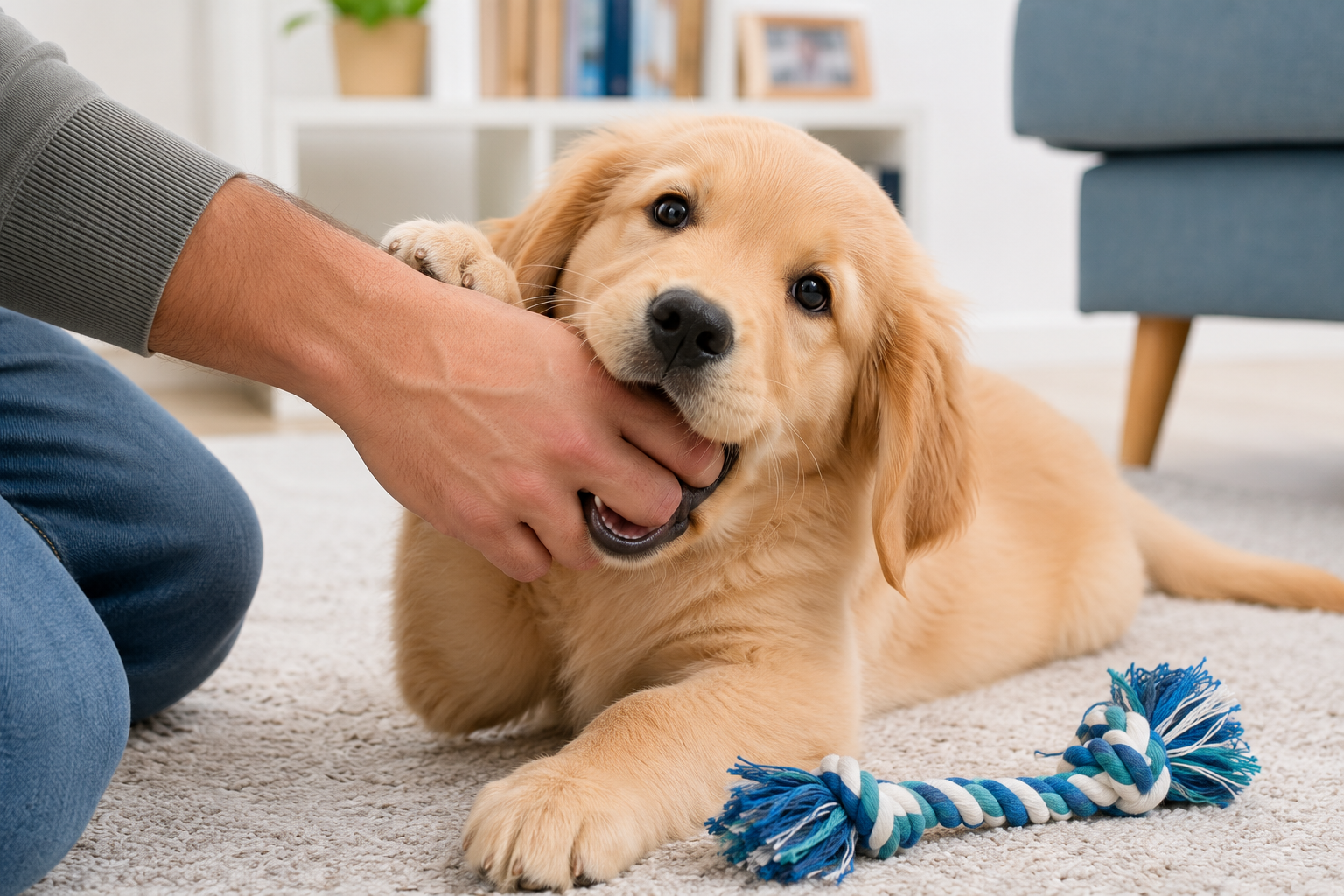
Quick Answer: To stop a puppy from biting, immediately end play whenever their teeth touch your skin, redirect them to an appropriate chew toy, and reward calm behavior. Puppy biting is a normal part of development, especially during teething and play, but consistent training teaches bite inhibition and helps puppies learn that human skin is never an acceptable chew toy. Most puppies improve significantly with patient, daily practice. However, if your puppy’s biting becomes unusually intense, causes repeated injuries, or is accompanied by stiff body language, growling, or resource guarding, consult your veterinarian or a qualified positive-reinforcement trainer to rule out underlying behavioral or medical concerns. Key Takeaways Why Do Puppies Bite? Puppy biting is a normal part of growing up. Puppies use their mouths to explore the world, interact with people and other animals, and learn how much pressure they can safely use during play. Unlike humans, who rely primarily on their hands, puppies use their mouths to investigate new objects, textures, and experiences. One of the most important skills puppies develop is bite inhibition—the ability to control the force of their bite. While living with their littermates, puppies naturally learn this skill through play. If one puppy bites too hard, the other usually yelps and stops playing. This teaches the biting puppy that rough play has consequences. When puppies join a new home, they continue practicing these behaviors with their human family. Since human skin is much more sensitive than fur, they need consistent guidance to learn that biting people immediately ends the fun. Is Puppy Biting Normal? Yes. Gentle mouthing and nipping are completely normal during the first few months of life. Puppies commonly bite because they are: Normal puppy biting is usually accompanied by loose, wiggly body language, a wagging tail, and playful behavior. While those sharp puppy teeth can hurt, this type of biting is rarely a sign of aggression. At What Age Do Puppies Stop Biting? Most puppies begin biting less between 3 and 5 months of age as they gain better impulse control and progress through teething. By 6 to 8 months, biting should decrease significantly if owners consistently reinforce appropriate behavior. Some energetic breeds, including Border Collies, Australian Shepherds, and Jack Russell Terriers, may continue mouthing longer because they naturally enjoy interactive play and movement. How Teething Affects Biting Teething is one of the biggest reasons puppies chew and bite more frequently. As adult teeth replace baby teeth—typically between 3 and 6 months of age—the gums become sore and itchy, encouraging puppies to chew on almost anything they can find. Common signs of teething include: You can help soothe sore gums by offering: Avoid cooked bones or objects that can splinter, as they may damage developing teeth or create a choking hazard. 🐾 Owner Tip: Puppies often become especially mouthy when they’re teething, tired, or overstimulated. Before assuming your puppy is being “naughty,” try offering a safe chew toy or giving them time for a nap. Puppy Biting vs. Aggression Most puppy biting is playful and harmless, but it’s important to recognize the difference between normal mouthing and behavior that may require professional attention. Playful puppies usually have loose, relaxed bodies, wagging tails, and frequently invite interaction with a play bow. Their bites are quick, playful, and not intended to injure. Aggressive behavior is very different. Puppies showing aggression may become stiff, freeze before biting, stare intensely, curl their lips, growl deeply, or guard food, toys, or other valued items. Puppy Bite Triage: Play vs. Aggression Behavior Normal Play Possible Aggression Body posture Loose and bouncy Stiff and rigid Tail Relaxed, wagging Stiff or tucked Eyes Soft, blinking Hard stare Growling Playful or excited Deep, threatening Bite Gentle mouthing Hard bite intended to injure If your puppy repeatedly displays stiff body language, hard bites, resource guarding, or bites without obvious play signals, contact your veterinarian or a qualified behavior professional for guidance. 🩺 Vet Insight: Most puppies grow out of playful biting with consistent training, but aggressive behavior should never be dismissed as “just a phase.” Early intervention greatly improves long-term outcomes. How to Stop a Puppy From Biting Teaching bite inhibition takes patience and consistency. Every member of the household should respond the same way whenever the puppy bites. Redirect to a Chew Toy Keep an appropriate chew toy within reach during play. If your puppy starts biting your hands or clothing, calmly replace your hand with the toy and encourage them to chew on that instead. End Play Immediately If your puppy’s teeth touch your skin, stop interacting right away. Stand up, fold your arms, and ignore the puppy for 10 to 20 seconds. This teaches that biting makes the fun end. Reward Calm Behavior As soon as your puppy settles down or begins chewing an appropriate toy, reward them with praise, gentle attention, or a treat. Positive reinforcement encourages good choices. Prevent Hand and Foot Biting Avoid rough games that encourage your puppy to chase hands or feet. Children should be taught to stand still like a “tree” if the puppy begins nipping, since running often encourages chasing. Choose the Right Chew Toys Offer durable chew toys designed for puppies and rotate them regularly to maintain interest. Frozen toys can also provide relief for teething puppies. Should You Yelp or Stay Quiet? Some puppies respond well to a brief “Ouch!” because it resembles feedback from littermates. Others become more excited and bite harder. If yelping increases your puppy’s excitement, quietly end play instead and redirect them to a chew toy. When Puppy Biting Becomes a Problem Although most puppy biting is harmless, some situations require closer attention. Puppy Bites That Draw Blood Sharp puppy teeth can accidentally scratch or puncture skin during play. Wash any bite that breaks the skin with soap and water and monitor for redness, swelling, or other signs of infection. Seek medical advice if the wound becomes infected or is severe. Biting That Gets Worse Instead of Better If your puppy’s biting becomes more