
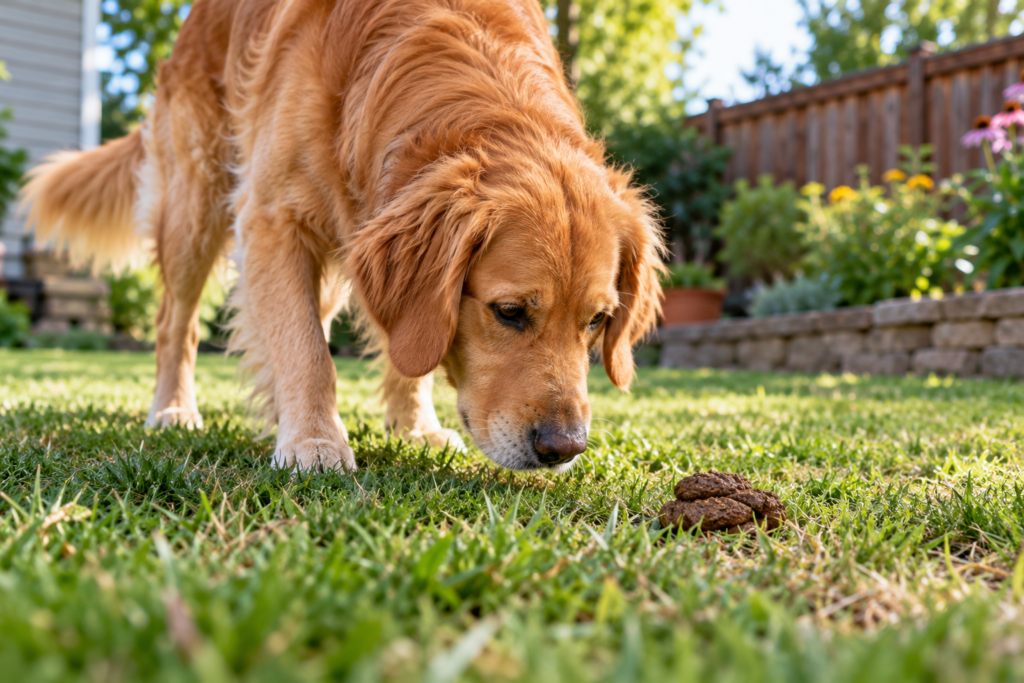
Dogs eat poop, a behavior called coprophagia, for several reasons, including habit, boredom, stress, attention-seeking, hunger, and instinct. Most cases are behavioral rather than signs of serious illness, but a sudden change in an adult dog can sometimes point to parasites, malabsorption, or another medical problem.
The behavior is unpleasant, but it’s surprisingly common. Understanding why it happens makes it easier to decide whether your dog needs training and better management or a veterinary check.
Table of Contents
Key Takeaways
- Coprophagia is the scientific term for stool-eating in dogs.
- Most cases are behavioral and may be linked to boredom, stress, attention-seeking, or instinct.
- About 16% of dogs are frequent stool eaters, while 24% have tried it at least once [1].
- Puppies may learn the behavior by watching their mother clean the whelping area.
- Eating feces can expose dogs to parasites and other pathogens.
- Dogs often target fresh stools, which may support an inherited parasite-avoidance behavior [1].
- Immediate clean-up, supervision, and teaching a reliable “leave it” cue are important prevention strategies [3].
- A sudden onset in an adult dog, especially with weight loss or digestive symptoms, deserves veterinary attention [2].
Why Do Dogs Eat Poop
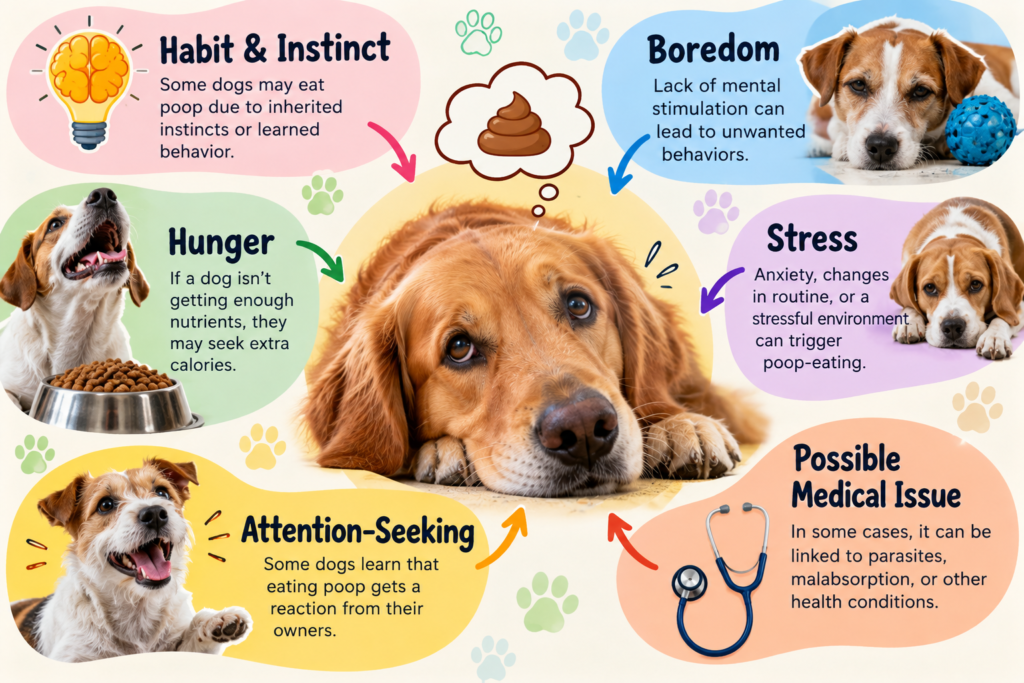
Dogs eat poop primarily because of behavioral habits, stress, boredom, attention-seeking, hunger, or inherited instincts rather than because they are necessarily sick. A survey on canine coprophagy found that roughly 16% of dogs were serious stool eaters, with the behavior associated with factors including greedy eating and inherited pack instincts [1].
One evolutionary explanation is that eating fresh feces may have helped ancestral canids keep parasite eggs from developing into infectious stages around their dens. This may help explain why some dogs show a particular interest in fresh stool [1].
Hunger can also contribute. Active or underweight dogs may seek additional calories, and feces can contain undigested nutrients from another animal’s diet [4].
The important distinction is that poop-eating can be a behavioral habit while still being worth addressing. If the behavior is sudden, excessive, or accompanied by other changes, medical causes should be considered [2].
Is Poop-Eating Normal in Dogs?
Poop-eating is relatively common in dogs, particularly puppies, although it is a behavior most owners should discourage. Mother dogs naturally consume their puppies’ feces while cleaning the whelping area, and puppies may learn the behavior by observing them [2][4].
Young dogs also explore their surroundings with their mouths, so feces can become part of that experimentation. Many puppies reduce or stop the behavior as they mature.
Did you know? Dogs often target fresh stools rather than very old feces. This preference is consistent with the theory that the behavior may have developed as a way for ancestral canids to remove fresh feces before parasite eggs became infectious [1].
What Coprophagia Can Mean in Dogs
When a dog eats poop, the behavior may reflect boredom, stress, attention-seeking, hunger, environmental conditions, or instinct. In some cases, however, it can occur alongside a medical problem that affects appetite or nutrient absorption [2].
Behavioral Causes
Behavioral causes are among the most common explanations. A dog left alone for long periods in a barren yard or dirty kennel may investigate feces simply because there is little else to do.
Owner reactions can also unintentionally reinforce the behavior. Chasing, yelling, or punishing a dog after an accident may teach them to eat the stool quickly to hide the evidence. A dramatic reaction can also turn the behavior into a way of getting attention [3].
Medical Causes
Medical conditions are less common but important to rule out, particularly when an adult dog suddenly develops coprophagia. Possible medical causes include:
- Intestinal parasites: Heavy parasite burdens can interfere with nutrient availability and increase hunger.
- Exocrine pancreatic insufficiency (EPI): A lack of digestive enzymes can prevent proper nutrient absorption.
- Malabsorption syndromes: Problems in the digestive tract can interfere with nutrient absorption.
- Endocrine disorders: Diabetes, thyroid disease, and Cushing’s disease can contribute to increased appetite [2].
If a medical condition is driving the behavior, treating the underlying problem is more useful than relying on deterrents alone.
Dogs Most Likely to Develop Coprophagia
Not every dog eats feces, but the behavior is more commonly reported in puppies, former breeding females, and dogs living in multi-dog households. About 24% of dogs may try feces at least once, while age, diet, and other factors do not consistently predict which dogs will become habitual stool eaters [1].
Puppies vs. Adult Dogs
Puppies commonly explore their surroundings with their mouths and may learn coprophagia from their mother, who naturally cleans the whelping area by consuming feces. Many puppies stop the behavior as they mature [2][4].
Adult dogs can develop the habit for different reasons. A sudden change may be associated with stress, environmental changes, competition for food in a multi-dog household, or an underlying medical condition [2][4].
Health Risks of Eating Poop
Eating poop is usually not dangerous for an otherwise healthy dog, but feces can carry intestinal parasites, pathogens, medications, or other substances that may cause problems [2].
The risk depends partly on whose stool the dog consumed. Feces from another dog, a sick animal, or wildlife may expose your dog to organisms or substances they would not otherwise encounter.
Health Problems Linked to Stool-Eating
Poop-eating can cause problems when the stool contains parasites, pathogens, medications, or foreign substances. A dog that eats feces from another animal taking medication could potentially ingest traces of that medication [2].
Regular parasite prevention and veterinary care can help reduce some of these risks. If your dog develops vomiting, diarrhea, lethargy, or another concerning symptom after eating feces, contact your veterinarian.
How to Stop a Dog From Eating Poop
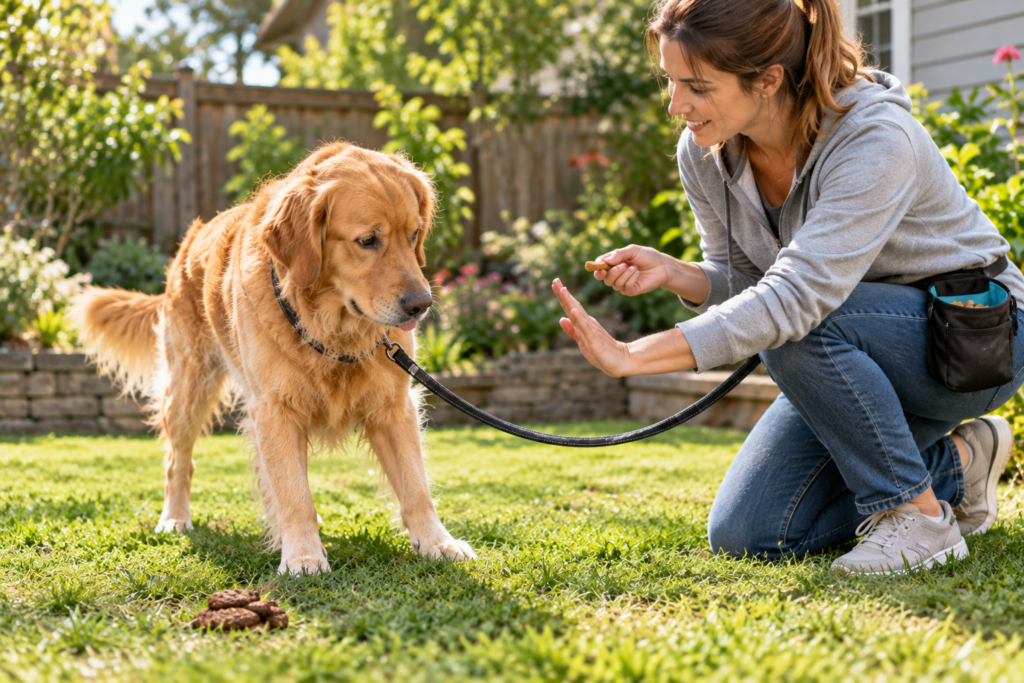
The most effective approach combines environmental management, supervision, and positive training. Pick up stools immediately, supervise your dog outdoors, and teach a reliable “leave it” cue [3].
The American Kennel Club emphasizes management and training rather than punishment [3]. Use these steps consistently:
- Clean up immediately: Pick up stools as soon as your dog eliminates so there is no opportunity to eat them.
- Use a leash: Keep your dog supervised in areas where other animals may have left feces.
- Teach “Leave it”: Reward your dog for turning away from stools and other unwanted objects.
- Add enrichment: Increase exercise, play, walks, and mental stimulation to reduce boredom and stress.
- Review feeding: Make sure your dog is receiving enough food for their activity level. Under-feeding can contribute to the behavior in active dogs [4].
Avoid chasing or punishing your dog around feces. That can encourage them to eat the stool faster or hide the behavior [3].
Preventing Coprophagia at Home
Prevention starts with controlling the environment. Keep the yard clean, supervise your dog during outdoor time, and clean kennels regularly.
In multi-dog households, feeding dogs separately can also reduce competition around food. Consistent routines, adequate exercise, and mental enrichment give your dog fewer opportunities to turn stool-eating into a habit [3][4].
Behavioral vs. Medical Coprophagia
| Feature | Behavioral Cause | Medical Cause |
|---|---|---|
| Onset | Gradual, often starts as a puppy | Sudden, usually in adult dogs |
| Weight | Stable and healthy | Weight loss or poor coat condition |
| Appetite | Normal | Excessive hunger or increased thirst |
| Solution | Training, enrichment, clean-up | Vet diagnosis, diet change, medication |
This comparison is not a diagnosis. A dog can have behavioral coprophagia and a medical issue at the same time, so sudden changes or additional symptoms deserve veterinary attention [2].
Poop-Eating Deterrents and Pumpkin
Pumpkin is sometimes suggested as a way to discourage coprophagia because its fiber may alter stool texture or taste, but evidence that it reliably stops the behavior is limited.
Other commonly suggested home remedies include pineapple or meat tenderizer. These approaches do not address the underlying reason a dog is eating feces and should not replace environmental management or training.
If you suspect your dog is hungry because of underfeeding or a nutritional or digestive problem, discuss the diet with your veterinarian rather than relying on stool-deterrent foods or supplements [2][4].
What to Do After a Dog Eats Poop Once
A single incident usually isn’t a reason to panic. If your dog eats one stool and remains completely normal, clean up the remaining feces and increase supervision.
Watch for vomiting, diarrhea, lethargy, loss of appetite, or other unusual symptoms. If the behavior becomes repetitive or symptoms develop, contact your veterinarian to discuss whether parasites or another medical problem should be ruled out [2].
When to Call the Vet
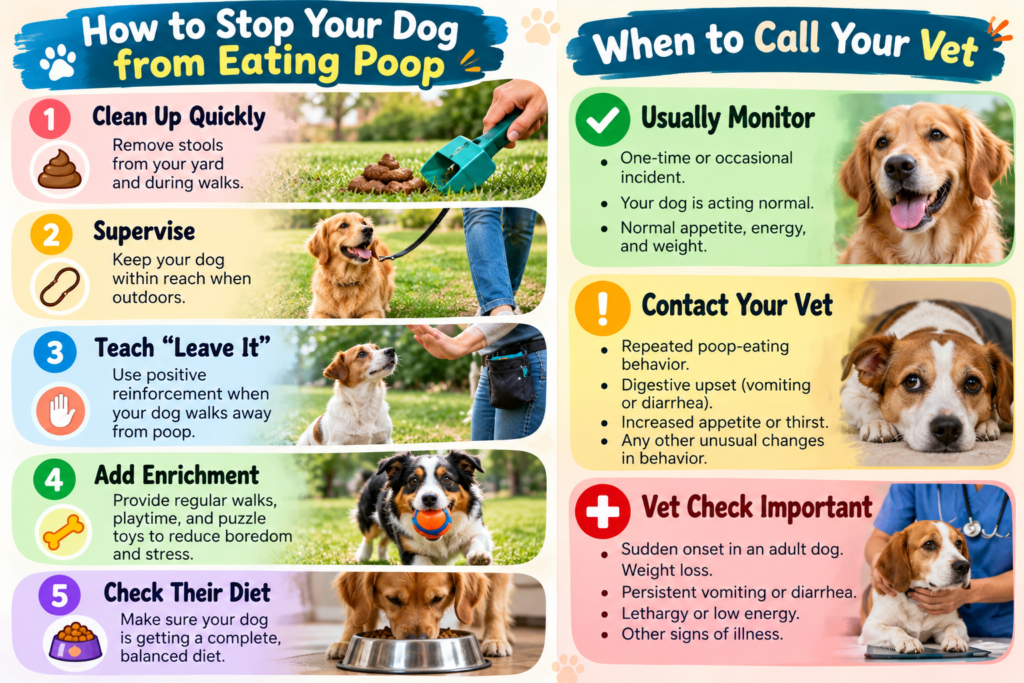
A veterinary check is especially appropriate when an adult dog suddenly begins eating feces, when the behavior becomes frequent, or when it occurs alongside weight loss, increased hunger, digestive problems, or other changes [2].
A veterinarian can evaluate possible causes such as parasites, exocrine pancreatic insufficiency, malabsorption, or endocrine disease [2].
Coprophagia may also occur alongside stress or poor welfare. If your dog is also pacing, panting, destroying furniture, or showing other anxiety-related behaviors, discuss those changes with your veterinarian or a qualified behavior professional [5].
Frequently Asked Questions
Is coprophagia a sign of a nutritional deficiency?
Sometimes, but it is not the most common explanation. Most dogs that eat poop are receiving a complete diet, although conditions such as exocrine pancreatic insufficiency can interfere with nutrient absorption. A veterinarian can investigate a suspected deficiency if other symptoms are present [2].
Will my dog get sick from eating cat poop?
Cat feces can contain parasites and may be appealing to dogs because of its protein content. Eating it can cause digestive upset or expose your dog to parasites, so keep litter boxes where your dog cannot reach them [2].
Does punishing my dog stop poop-eating?
Punishment can make the behavior worse. Chasing or yelling may teach your dog to eat the stool faster or hide the behavior. Positive reinforcement, supervision, and prompt clean-up are more useful approaches [3].
Why does my dog only eat fresh poop?
Dogs often show a preference for fresh stools. One evolutionary explanation is that ancestral canids may have consumed fresh feces to remove parasite eggs from their living areas before those eggs became infectious [1].
Can changing my dog’s diet fix coprophagia?
Diet changes may help if a dog is under-fed or has a nutritional or digestive problem, but diet alone usually does not address behavioral coprophagia. If you suspect your dog’s current diet is inadequate, discuss it with your veterinarian [2][4].
Are certain breeds more likely to eat poop?
Large surveys have not established a strong breed-specific pattern. Puppies and dogs living in multi-dog households appear more likely to show the behavior, while individual circumstances and environment can also play a role [1].
Conclusion
Watching your dog eat poop is unpleasant, but coprophagia is a common and often manageable behavior. Boredom, stress, attention-seeking, hunger, and instinct can all contribute, while medical problems such as parasites or malabsorption are important possibilities when the behavior appears suddenly or comes with other symptoms [1][2].
The most practical starting point is simple: clean up stools quickly, supervise your dog outdoors, teach “leave it,” provide enough exercise and enrichment, and avoid punishment [3].
If the behavior is sudden, persistent, or accompanied by weight loss, digestive symptoms, excessive hunger, or other changes, schedule a veterinary check to rule out an underlying problem [2].
Actionable Next Steps
- Book a vet check: Especially if an adult dog suddenly develops the habit or has other symptoms.
- Clean up promptly: Remove stools from the yard and pick them up immediately during walks.
- Train “Leave it”: Reward your dog for turning away from feces.
- Increase enrichment: Add walks, play, and puzzle toys to reduce boredom and stress.
With consistent supervision, positive training, and good environmental management, many dogs can reduce or stop this unpleasant habit.
References
[1] Canine Coprophagy Study — PMC
Research article on canine coprophagy
[2] Why Do Dogs Eat Poop? — PetMD
PetMD: Why Do Dogs Eat Poop?
[3] Why Do Dogs Eat Poop? — American Kennel Club
AKC: Why Dogs Eat Poop
[4] Why Do Dogs Eat Poop? — Purina
Purina: Why Do Dogs Eat Poop?
[5] Why Do Dogs Eat Poop? — Encyclopedia Britannica
Encyclopedia Britannica: Why Do Dogs Eat Poop?