

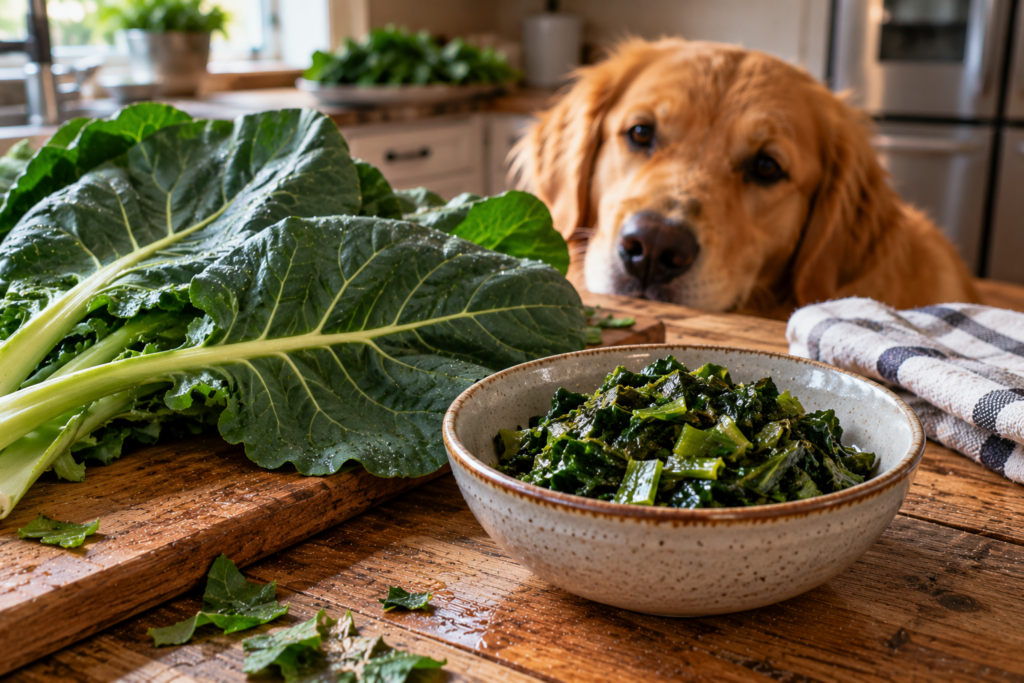
Can Dogs Eat Collard Greens? Yes, dogs can eat collard greens in moderation. They are non-toxic and provide fiber, vitamins A, C, and K, but they also contain goitrogens and oxalates that may be a concern for dogs with thyroid or kidney problems. For most healthy dogs, collard greens are best served cooked, finely chopped, and in small portions.
Collard greens aren’t as straightforward as vegetables such as carrots or green beans. They offer useful nutrients, but preparation, portion size, and your dog’s health history all matter.
Table of Contents
Key Takeaways
- Collard greens are safe for healthy dogs in small, occasional amounts.
- They provide fiber, vitamins A, C, and K, and minerals such as calcium.
- Goitrogens may interfere with thyroid function in susceptible dogs.
- Oxalates may contribute to bladder and kidney stones in dogs that are prone to them.
- Cooking reduces some goitrogenic compounds and makes the greens easier to digest.
- Dogs with hypothyroidism or a history of certain stones should avoid collard greens.
- Puppies have sensitive digestive systems and should not eat collard greens.
- Green beans, carrots, and zucchini are simpler vegetable alternatives.
🥦 Collard Greens Quick Reference for Dogs
| Safe | Use Caution / Avoid |
|---|---|
| ✅ Cooked and finely chopped | ❌ Large amounts |
| ✅ Small portions | ❌ Raw, whole leaves |
| ✅ Plain, without seasoning | ❌ With onions or garlic |
| ✅ Occasional treat or topper | ❌ Regular feeding for dogs with thyroid or kidney concerns |
Collard Greens and Dog Safety
Collard greens are generally safe for healthy dogs when fed in small quantities as an occasional treat. They are not listed among the ASPCA’s toxic plants, and most healthy dogs can tolerate a small amount of chopped, cooked leaves. The main concerns are overfeeding, poor preparation, and the presence of goitrogens and oxalates [1][5].
A small amount mixed into your dog’s regular food is very different from feeding collard greens as a daily vegetable. Raw, unchopped leaves are also less suitable because they’re tougher to digest and may be difficult for smaller dogs to manage.
Practical takeaway: If your dog is healthy and has no thyroid or kidney history, start with a bite-sized portion of cooked, chopped collard greens and watch for digestive changes over the next 24 hours.
Nutritional Benefits of Collard Greens
Collard greens provide dietary fiber along with vitamins A, C, and K. They also contain calcium, iron, and small amounts of omega-3 fatty acids, which can add nutritional variety when the greens are used as a topper rather than a replacement for a complete diet [5].
Fiber is one of their more useful features. It supports regular bowel movements and can contribute to satiety, although too much fiber at once can cause digestive upset.
| Nutrient | Benefit for Dogs |
|---|---|
| Fiber | Supports digestion and satiety |
| Vitamin A | Eye and immune health |
| Vitamin C | Antioxidant support |
| Vitamin K | Blood clotting, bone metabolism |
| Calcium | Bone and teeth strength |
Practical takeaway: Treat collard greens as a small nutritional addition rather than a dietary staple. A modest amount of cooked, chopped greens can add variety without replacing balanced dog food.
Collard Greens and Thyroid Health
Collard greens contain goitrogens, compounds that can interfere with iodine uptake and thyroid hormone production. This matters most for dogs that already have hypothyroidism, borderline thyroid function, or take thyroid medication [1][2][7].
Cooking can reduce some goitrogenic activity, but it does not eliminate it completely. A healthy dog eating a small amount occasionally is less likely to have problems, while regular feeding may be a concern for dogs with existing thyroid issues [1].
Dogs receiving thyroid medication should be particularly cautious about adding cruciferous vegetables to their regular diet. If your dog has a thyroid disorder, discuss suitable vegetables with your veterinarian.
Practical takeaway: Dogs with hypothyroidism or other thyroid problems should avoid regular collard greens unless their veterinarian specifically approves them.
Serving Size and Frequency
A healthy adult dog can have roughly one to two chopped, cooked collard green leaves per week as a treat or food topper. This is approximately one or two tablespoons of cooked greens, although the appropriate amount varies with the dog’s size and individual tolerance [5][9].
A large dog may tolerate more than a small dog, but moderation still matters. Start with less than the maximum amount, particularly if your dog has never eaten collard greens before.
Practical takeaway: Keep the serving small and occasional. A teaspoon may be more appropriate for a small dog, while a larger dog may tolerate a tablespoon.
Digestive Risks and Side Effects
Collard greens can cause digestive upset when fed raw, in large amounts, or to dogs with sensitive stomachs. Gas, bloating, loose stools, and mild abdominal discomfort are possible, particularly when a dog suddenly receives a large amount of fiber [5].
Large raw leaves can also be difficult for dogs to break down. Chopping and cooking the greens softens the leaves and makes them easier to eat and digest.
Practical takeaway: Introduce collard greens gradually. If your dog develops digestive problems after eating them, stop offering them and consider a gentler vegetable instead.
Raw vs. Cooked Collard Greens
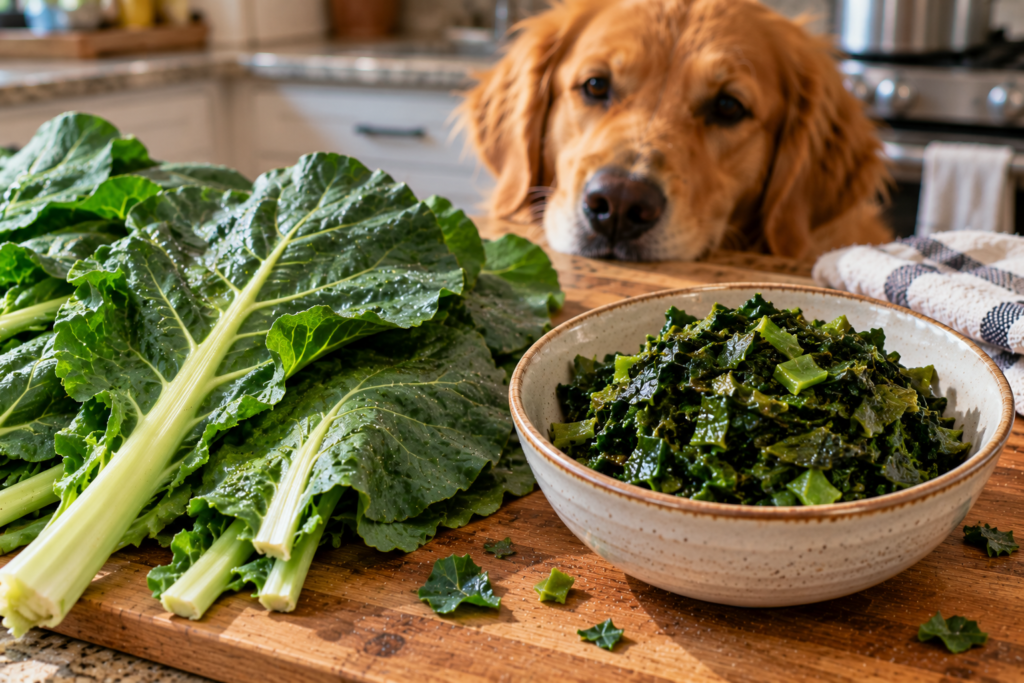
Cooked collard greens are the better choice for dogs. Cooking softens the fibrous leaves, makes them easier to digest, and reduces some goitrogenic compounds. Raw collard greens are tougher and may provide greater exposure to goitrogens and oxalates [5][9].
Steaming or boiling without added salt, oil, or seasoning is the simplest preparation method. Avoid collard greens cooked with onions, garlic, ham fat, or other seasonings that may be unsafe or unhealthy for dogs.
Practical takeaway: Cook collard greens until tender, chop them finely, and let them cool before serving.
How to Prepare Collard Greens Safely
To prepare collard greens for a dog, wash the leaves thoroughly, remove the thick center stems, cook the leaves until tender, chop them finely, and serve a small amount without seasoning [5].
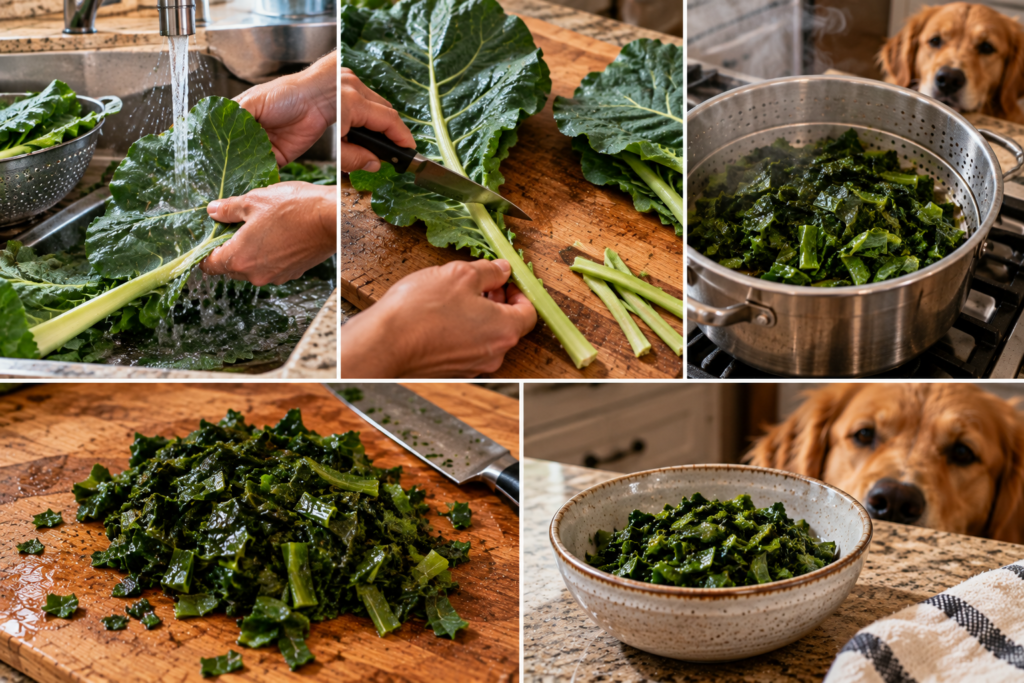
- Wash the leaves under running water to remove dirt and residue.
- Remove the tough center stems, which are harder for dogs to chew and digest.
- Steam for 5–7 minutes until the leaves are tender.
- Chop the leaves finely into small, manageable pieces.
- Cool to room temperature before serving.
- Mix a small amount into regular food rather than serving a large portion on its own.
Practical takeaway: You can batch-cook a small amount and refrigerate it for up to three days, making it easier to keep portions consistent.
Dogs That Should Avoid Collard Greens
Dogs with hypothyroidism, a history of calcium oxalate kidney or bladder stones, sensitive digestive systems, or food allergies should not eat collard greens. Puppies under six months should also avoid them because their digestive and thyroid systems are still developing [1][3][7].
Certain breeds, including Miniature Schnauzers, Yorkshire Terriers, and Shih Tzus, can be more prone to bladder stones. Golden Retrievers and Doberman Pinschers are among breeds commonly affected by hypothyroidism, so regular feeding of goitrogenic vegetables deserves extra caution [1].
Practical takeaway: If your dog has a thyroid condition, stone history, significant digestive sensitivity, or another dietary concern, ask your veterinarian about safer vegetables.
Collard Greens for Constipation
Collard greens may help with mild constipation because they contain fiber, but they shouldn’t be the first remedy for persistent constipation. A small amount of steamed, chopped greens may add bulk to stool, while ongoing constipation needs veterinary attention [5].
More fiber isn’t always better. If a dog isn’t drinking enough water, a sudden increase in fiber can sometimes make constipation worse.
Practical takeaway: If your dog is repeatedly constipated, speak with your veterinarian rather than relying on collard greens as a home remedy. Pumpkin puree, rather than pie filling, may be a gentler fiber option.
Collard Greens for Puppies
Puppies should not eat collard greens. Their digestive systems are still developing, and the goitrogens in cruciferous vegetables could potentially affect a young, developing thyroid gland. Puppies also need a carefully balanced diet designed for growth [5].
Practical takeaway: Keep puppies on their formulated puppy food unless your veterinarian recommends an appropriate treat or vegetable.
Safer Vegetable Alternatives
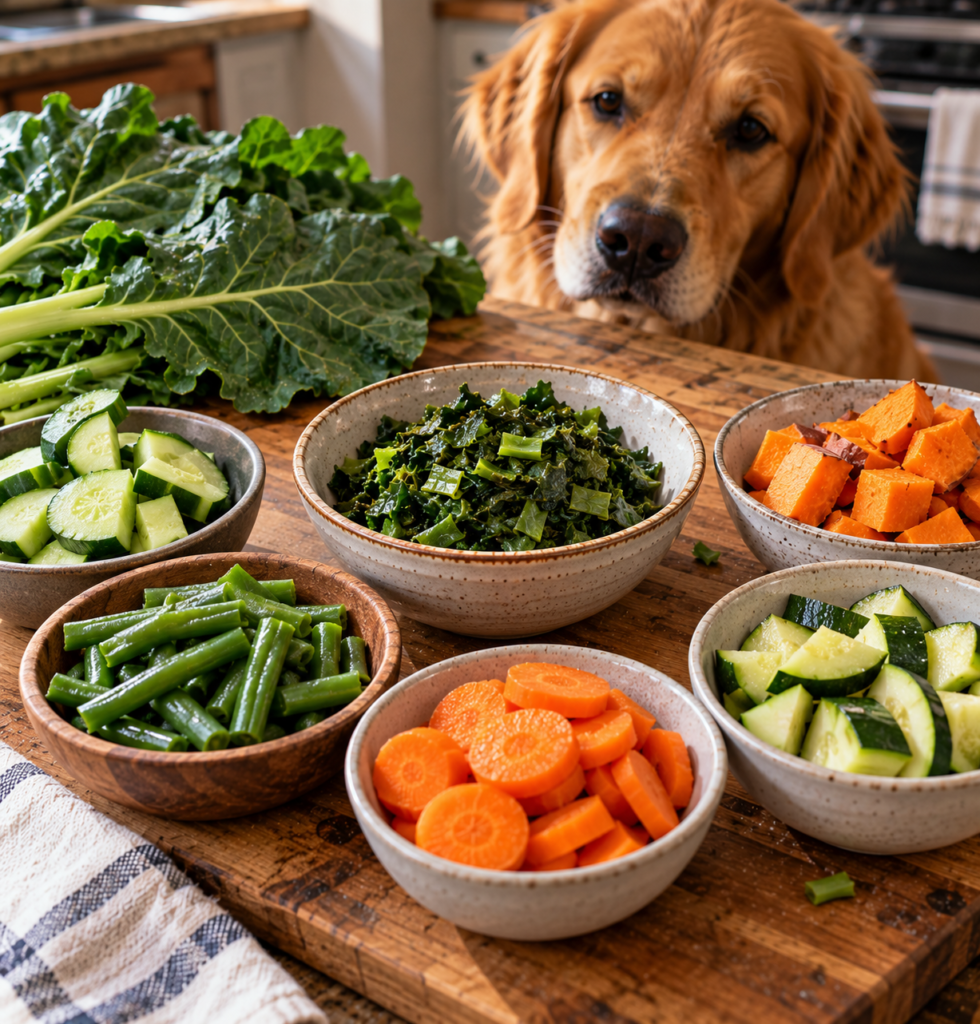
Vegetables such as green beans, carrots, zucchini, cucumber, and cooked sweet potato are presented as safer alternatives because they provide fiber, vitamins, or hydration without the same concerns associated with collard greens [5][6].
| Vegetable | Why It’s Safer |
|---|---|
| Green beans | Low oxalates, high fiber, easy to digest |
| Carrots | Low goitrogens, good for teeth and vision |
| Zucchini | Gentle on digestion, low calorie |
| Cucumber | Hydrating, very low risk |
| Sweet potato (cooked) | Excellent fiber, no goitrogenic concern |
Practical takeaway: Green beans are a straightforward alternative when you want a vegetable that provides fiber without the thyroid and oxalate concerns associated with collard greens.
What to Do If Your Dog Eats Collard Greens Accidentally
If your dog eats a small amount of plain collard greens accidentally, they will likely be fine. Monitor for gas, loose stools, or other digestive changes over the next 12–24 hours. If the greens contained onions, garlic, or heavy seasoning, contact your veterinarian or a pet poison hotline promptly [9].
Practical takeaway: A small accidental bite of plain collard greens is generally less concerning than collard greens prepared with potentially toxic ingredients.
When to Call the Vet: Safety Triage
| Situation | Action |
|---|---|
| Dog ate a small amount of plain, cooked collard greens | Monitor at home; no action needed |
| Dog ate raw collard greens and has mild gas | Monitor for 24 hours; ensure water intake |
| Dog ate collard greens cooked with onions or garlic | Call vet or pet poison hotline immediately |
| Dog shows vomiting, diarrhea, or lethargy after eating collards | Call your vet the same day |
| Dog with thyroid condition eats collard greens regularly | Schedule a vet check to recheck thyroid levels |
Frequently Asked Questions
Can dogs eat collard greens raw?
Dogs can technically eat raw collard greens, but cooked greens are a better option. Raw leaves are tougher to digest and may cause gas or stomach upset. Cooking softens the leaves and reduces some of the compounds associated with thyroid concerns [5].
Do collard greens have too much fiber for dogs?
Collard greens don’t necessarily contain too much fiber for a healthy adult dog when served in small amounts. The concern is portion size. Larger servings can lead to loose stools, bloating, or digestive discomfort, particularly in dogs that aren’t accustomed to high-fiber foods [5].
Are collard greens toxic to dogs?
No, collard greens are not considered toxic to dogs. However, they contain goitrogens and oxalates, so regular or excessive feeding may be inappropriate for dogs with thyroid conditions or a history of certain bladder or kidney stones [1][3].
Can dogs eat collard green stems?
It’s best to remove collard green stems before serving them to dogs. The stems are tough and fibrous and can be difficult to chew and digest. Removing them leaves the softer portion of the vegetable, which can then be cooked and finely chopped.
Can dogs eat collard greens with salt or seasoning?
No. Dogs should not be given collard greens prepared with salt, butter, oil, garlic, onions, or spices. Garlic and onions are particularly dangerous for dogs because they can damage red blood cells, while excessive salt can also cause health problems [9]. Plain preparation is the safest approach.
Can small breed dogs eat collard greens?
Small dogs can have collard greens only in very small portions. Their smaller body size means a serving that seems modest can represent a much larger amount relative to their daily food intake. Finely chop the cooked leaves and start with a very small amount.
How often can I give my dog collard greens?
Collard greens should remain an occasional food rather than a daily vegetable. The article recommends no more than once or twice a week, with small portions and careful monitoring for digestive changes. Safer vegetables such as green beans or carrots can be rotated in for variety.
Conclusion
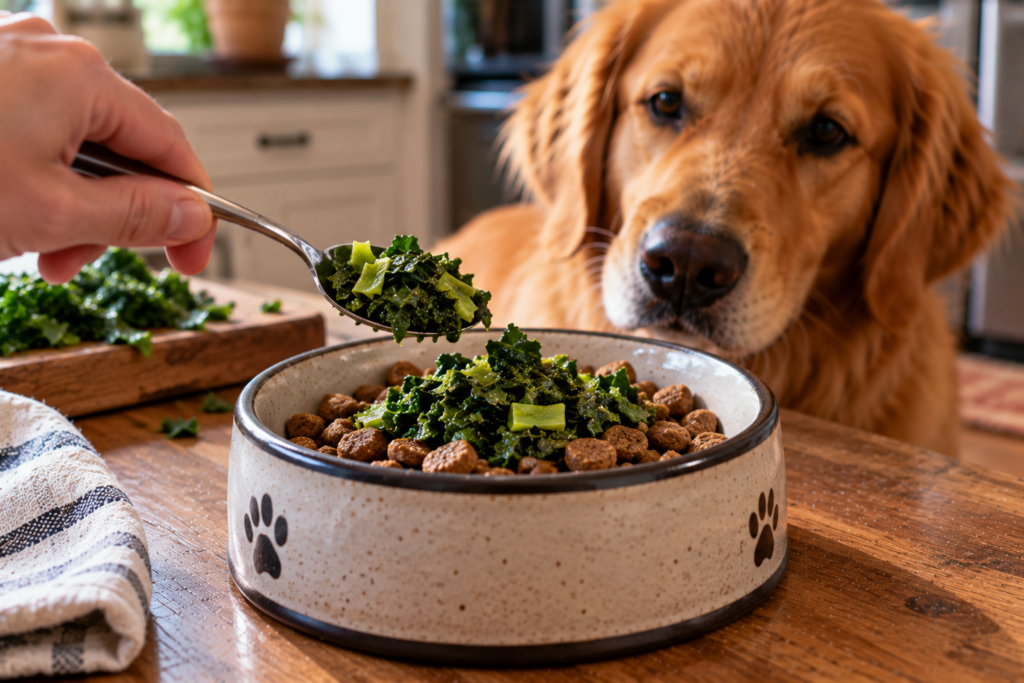
Collard greens can provide fiber and useful nutrients, but they’re not the simplest vegetable choice for every dog. Small, occasional portions of plain, cooked, finely chopped leaves may be tolerated by healthy adult dogs, while dogs with thyroid problems, certain stone histories, or sensitive digestion may need to avoid them.
If you decide to offer collard greens, keep the preparation simple and the portion small. When your dog has an underlying health condition, or you’re unsure whether a particular vegetable fits their diet, check with your veterinarian first.
References
[1] Faq Re Canine Thyroid Dosage Kelp Vegetables –
https://hemopet.org/faq-re-canine-thyroid-dosage-kelp-vegetables/
[2] Goitrogenic Foods And Thyroid Health –
https://kresserinstitute.com/goitrogenic-foods-and-thyroid-health/
[3] Spinach Kale For Dogs –
https://www.alqo.ca/en/blog/spinach-kale-for-dogs/
[5] What Vegetables Can Dogs Eat –
https://www.dogsnaturallymagazine.com/what-vegetables-can-dogs-eat/
[6] Is Kale Toxic To Dogs –
https://www.dogsnaturallymagazine.com/is-kale-toxic-to-dogs/
[7] Thyroid Iodine Deficiency –
https://www.ncbi.nlm.nih.gov/books/NBK285556/table/tyd-iodine-deficienc.goitrogenm/
[9] Can Dogs Eat Kale –
https://www.akc.org/expert-advice/nutrition/can-dogs-eat-kale/