
Quick Answer: A dry dog nose is usually normal and does not automatically mean your dog is sick or has a fever. Why is my dog’s nose dry? Common reasons include sleeping, dry weather, indoor heating, sun exposure, and age-related changes.
However, a nose that becomes cracked, crusty, swollen, discolored, or starts bleeding deserves closer attention. If dryness occurs alongside vomiting, lethargy, loss of appetite, or other unusual symptoms, contact your veterinarian.
Key Takeaways
- A dry nose alone is not a reliable sign of illness or fever.
- Sleeping, weather changes, and indoor heating can temporarily dry a dog’s nose.
- Cracking, bleeding, swelling, and persistent crusting are more concerning than dryness alone.
- Dehydration can contribute to dryness, but other signs are needed to assess it.
- Older dogs and certain breeds may develop a rough, thickened nose because of excess keratin.
- Pet-safe nose balm and fresh drinking water can help with mild dryness.
- Contact your vet if the problem persists, worsens, or appears with other symptoms.
Why Is My Dog’s Nose Dry?
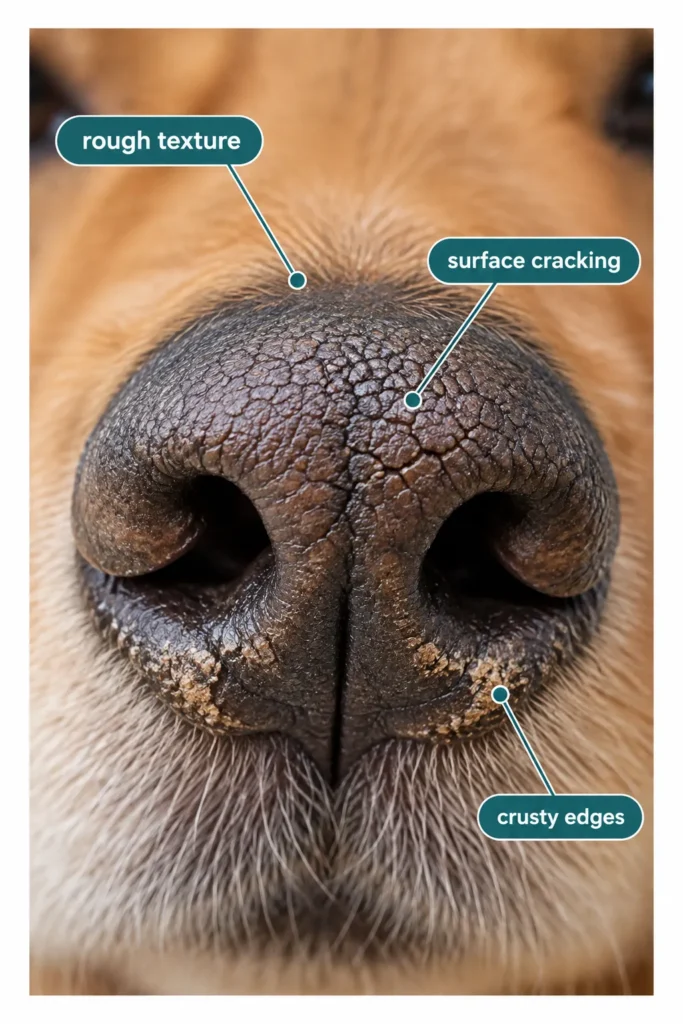
A dry, cracked nose can result from environmental exposure, sunburn, or a skin condition that causes excess keratin to build up on the nose. Ordinary, temporary dryness does not usually cause deep cracks, so persistent roughness or splitting deserves more attention.
Common causes include:
- Sun exposure: Dogs with light-colored or lightly pigmented noses can develop sunburn, irritation, and cracking.
- Cold weather and indoor heating: Cold, windy conditions and low indoor humidity can remove moisture from the nose.
- Nasodigital hyperkeratosis: This condition causes excess keratin to accumulate, making the nose thick, rough, and sometimes cracked. It is more common in older dogs and certain breeds.
- Allergies or autoimmune skin conditions: These are less common causes of ongoing dryness, crusting, and inflammation.
When can you manage it at home? If the dryness is mild, there is no bleeding, and your dog is behaving normally, gentle home care may be reasonable.
When should you see a vet? Arrange an examination if the nose develops deep cracks, bleeding, swelling, significant pain, or persistent crusting. Do not assume every cracked nose is simply dry skin.
Is a Dry Nose in Dogs Normal or a Sign of Illness?
In many cases, a dry nose is completely normal. A dog’s nose moisture changes throughout the day, and its texture alone cannot reliably tell you whether your dog is healthy.
The common belief that a warm, dry nose means a dog is sick is misleading. Here is why:
- After sleeping: Dogs may have drier noses because they have not been licking them regularly.
- After drinking or licking: Moisture can make the nose feel wetter.
- During dry weather: Wind, heat, and low humidity can reduce surface moisture.
- With normal temperature changes: A warm nose does not reliably indicate a fever.
For example, if your dog wakes from a nap with a warm, dry nose but is eating, playing, and behaving normally, there is usually no reason to panic.
Instead of judging your dog’s health by its nose, pay attention to appetite, energy, drinking, breathing, and any other changes in behavior.
What Causes a Dry Nose in Dogs?
Most dry noses are linked to everyday conditions rather than disease. The following table summarizes common causes and what they may mean.
| Cause | Examples | What to do |
|---|---|---|
| Normal daily changes | Sleeping or licking less often | Observe if your dog acts normally |
| Environmental dryness | Wind, dry air, indoor heating | Reduce exposure and consider pet-safe balm |
| Sun exposure | Sunburn or irritation | Provide shade and use dog-safe sun protection when appropriate |
| Age-related changes | Excess keratin on the nose | Ask your vet about persistent thickening or cracking |
| Possible dehydration | Reduced water intake, heat, heavy exercise | Offer fresh water and look for other signs |
| Allergic or autoimmune conditions | Redness, crusting, recurring irritation | Arrange a veterinary examination |
| Other illness | Dryness alongside fever or lethargy | Assess the accompanying symptoms and contact your vet |
A common mistake is assuming a dry nose always means sickness—or dismissing a dry nose when other concerning symptoms are present. The overall picture matters much more than nose moisture alone.
Dry Nose vs. Wet Nose in Dogs: What’s the Difference?
A wet nose has a thin layer of moisture from nasal secretions and licking. A dry nose simply has less moisture on its surface at that moment.
| Wet Nose | Dry Nose |
|---|---|
| May follow licking or drinking | May occur after sleeping |
| Moisture can help capture scent particles | Less surface moisture does not mean the nose is malfunctioning |
| Common in humid conditions | Common in dry or heated indoor environments |
| Can be completely normal | Can also be completely normal |
Dogs use their noses to explore the world through smell, and moisture helps capture scent molecules. However, a dog does not need to have a constantly wet nose to be healthy.
Remember: Neither a wet nose nor a dry nose is a reliable stand-alone test for illness.
Can a Dry Nose in Dogs Mean Dehydration?
Yes, dehydration may contribute to a dry nose, but dryness alone cannot confirm that your dog is dehydrated.
Look for other possible signs, including:
- Gums that feel dry or sticky rather than moist.
- Sunken-looking eyes.
- Unusual tiredness or weakness.
- Reduced urination.
- A history of heavy exercise, overheating, vomiting, diarrhea, or inadequate water intake.
Skin elasticity can sometimes provide a clue, but it is not a dependable test in every dog, especially older dogs. Do not rely on a single home check to rule dehydration in or out.
Make sure fresh water is available. If your dog is weak, repeatedly vomiting, unable to keep water down, or showing signs of significant dehydration, seek veterinary care promptly.
When Should I Be Worried About My Dog’s Dry Nose?
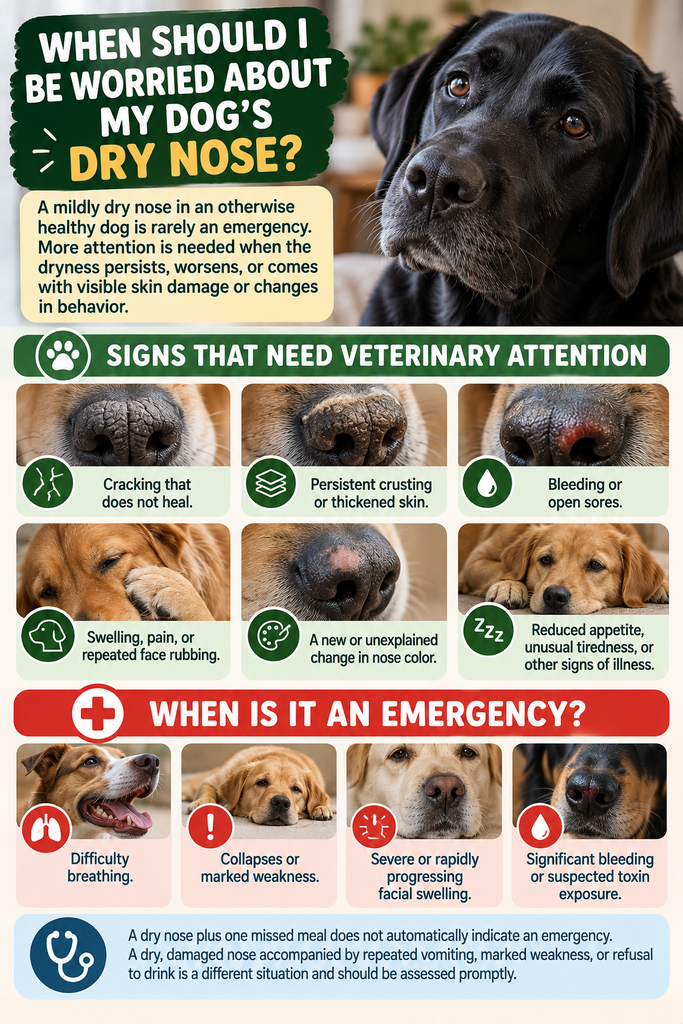
A mildly dry nose in an otherwise healthy dog is rarely an emergency. More attention is needed when the dryness persists, worsens, or comes with visible skin damage or changes in behavior.
Signs that need veterinary attention
- Cracking that does not heal.
- Persistent crusting or thickened skin.
- Bleeding or open sores.
- Swelling, pain, or repeated face rubbing.
- A new or unexplained change in nose color.
- Reduced appetite, unusual tiredness, or other signs of illness.
When is it an emergency?
Seek urgent veterinary care if your dog has difficulty breathing, collapses, develops severe or rapidly progressing facial swelling, or shows other signs of serious illness. Significant bleeding or suspected toxin exposure also warrants prompt professional advice.
A dry nose plus one missed meal does not automatically indicate an emergency. A dry, damaged nose accompanied by repeated vomiting, marked weakness, or refusal to drink is a different situation and should be assessed promptly.
Dry Nose Plus Other Symptoms: What Does It Mean?
A dry nose becomes more concerning when it appears alongside other symptoms. The combination may help your vet understand what is happening, but it does not establish a diagnosis on its own.
- Dry nose plus vomiting or diarrhea: Your dog may be losing fluids or experiencing another illness. Contact your vet if symptoms are repeated, severe, or accompanied by weakness.
- Dry nose plus shaking or trembling: Pain, anxiety, fever, or other problems may be responsible. Look for additional changes and seek advice if the shaking is unexplained or persistent.
- Dry nose plus lethargy or loss of appetite: These changes matter more than the dryness itself, especially if they continue or worsen.
- Dry nose plus crusting around the nostrils: Local irritation, allergies, or a skin condition may be involved.
- Dry nose plus swelling or bleeding: Arrange veterinary assessment rather than relying on home moisturizing alone.
If your dog seems unwell, do not delay care while waiting to see whether the nose becomes wet again.
Can Allergies Cause a Dry Nose in Dogs?
Yes. Allergies can sometimes cause irritation around a dog’s nose, although ordinary environmental dryness is a more common explanation.
Possible signs include:
- Redness around the nostrils or nose pad.
- Itching or frequent face rubbing.
- Crusting or irritation that keeps returning.
- Symptoms that appear to worsen after particular environmental exposures.
Contact irritation may also occur when a dog reacts to something touching its skin. However, nose changes alone cannot confirm an allergy.
Autoimmune skin conditions are less common but can cause persistent crusting, sores, or changes in pigmentation. If your dog’s nose remains irritated or keeps getting worse, a veterinarian can determine whether testing or treatment is needed.
Breeds That Commonly Have Dry Noses
Some dogs are more prone to nose dryness or roughness because of their age, skin characteristics, facial structure, or exposure to the environment.
- Older dogs: Age-related nasal hyperkeratosis can cause a thick, rough buildup on the nose.
- Dogs with light-colored or lightly pigmented noses: These dogs may be more vulnerable to sun damage.
- Some short-muzzled breeds: Facial structure and individual skin characteristics may contribute to nose or surrounding skin problems.
- Outdoor-active dogs: Frequent exposure to sunlight, wind, and dry conditions can irritate the nose.
These tendencies do not mean every dog in these groups will develop a dry nose. Nor does breed alone establish the cause.
If your dog repeatedly develops thickened skin or cracks, ask your vet whether a nose balm is appropriate and whether an underlying condition needs treatment.
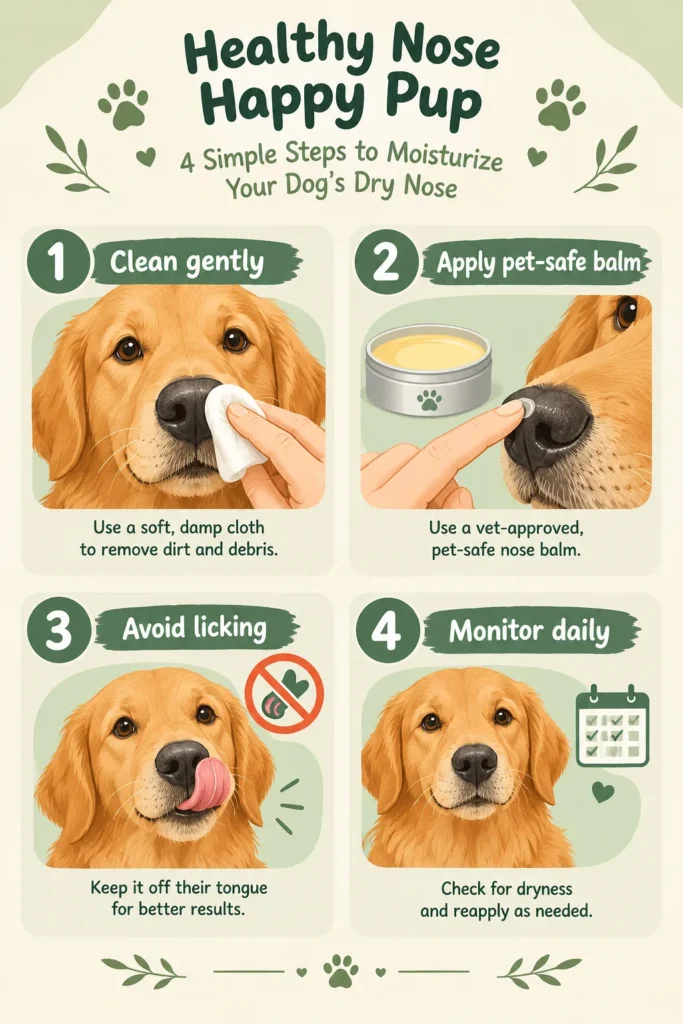
How to Treat and Moisturize a Dry Dog Nose at Home
Mild dryness can often be managed with simple care, provided your dog otherwise seems well, and there are no signs of significant skin damage.
Home-care checklist
- Provide fresh water. Make sure your dog can drink whenever needed.
- Use a pet-safe nose balm. Choose a product specifically formulated for dogs and follow its directions.
- Avoid irritating products. Do not apply human lip balms, fragranced creams, menthol products, or zinc oxide products unless your veterinarian specifically advises otherwise.
- Reduce excessive sun exposure. Offer shade, especially for dogs with lightly pigmented noses. Use only sunscreen formulated as safe for dogs.
- Observe the nose. Check for improvement and watch for new cracks, redness, swelling, or bleeding.
- Contact your vet if it persists or worsens. Do not continue home treatment indefinitely when the cause is unclear.
What products are safe for a dog’s dry nose?
A dog-specific nose balm is generally the best starting point for mild dryness. Use a small amount as directed and prevent your dog from licking excessive quantities.
Ingredients such as coconut oil or shea butter may appear in pet products, but an ingredient being natural does not automatically make every formulation safe. Check the complete ingredient list and ask your vet if your dog has sensitive skin or a persistent nose problem.
Moisturizers may help protect dry skin, but they will not treat every cause of cracking, infection, allergy, or excess keratin.
Is My Dog’s Dry Nose Tool Helpful? Try This Quick Check
Use the interactive tool below to get a fast read on whether your dog’s dry nose needs home care or a vet visit, based on the symptoms you’re seeing right now.
.cg-wrap{font-family:Arial,Helvetica,sans-serif;max-width:480px;margin:0 auto;padding:16px;background:#f7f7f5;border-radius:10px;border:1px solid #ddd} .cg-wrap h3{margin:0 0 10px;font-size:18px;color:#1f3b30} .cg-opt{display:block;margin:8px 0;font-size:14px;color:#333} .cg-opt input{margin-right:8px} .cg-btn{margin-top:12px;background:#2f6b4f;color:#fff;border:none;padding:10px 16px;border-radius:6px;font-size:14px;cursor:pointer} .cg-btn:hover{background:#255a41} .cg-result{margin-top:14px;padding:12px;border-radius:6px;font-size:14px;display:none} .cg-low{background:#e7f6ec;color:#1f5c36;display:block} .cg-mid{background:#fff6e0;color:#7a5900;display:block} .cg-high{background:#fde8e8;color:#8a1f1f;display:block}🐾 Dry Nose Quick Check
FAQ
Why is my dog’s nose dry when it wakes up? Dogs stop licking their nose during sleep, so the thin moisture layer dries out naturally. This is normal and usually resolves within minutes of waking [2][7].
Is a dry nose always a sign my dog has a fever? No. Current veterinary guidance confirms a dry nose does not reliably indicate fever or illness in dogs [1][5][6][7].
Can heaters or air conditioning dry out my dog’s nose? Yes, indoor heating and air conditioning both lower humidity and can dry the nose, the same way they dry human skin and lips [4].
What’s the difference between a dry nose and a cracked nose? Dry nose means less surface moisture; cracked nose means the skin has actually split or roughened, usually from prolonged dryness, sun, or age-related changes [1][4][9].
Should I put sunscreen on my dog’s nose? Yes, for light-colored or thin-haired noses, a dog-safe sunscreen can prevent sunburn-related dryness and cracking during long outdoor time [1].
Can allergies really affect a dog’s nose? Yes, though it’s less common than environmental dryness. Allergic or autoimmune skin conditions can cause chronic nose dryness, crusting, or color change [6][9].
Is nasodigital hyperkeratosis dangerous? It’s generally not dangerous, just a buildup of extra keratin common in older dogs, though it can crack if left unmoisturized [4][9].
When is a dry nose actually an emergency? When it comes with sudden bleeding, rapid swelling, collapse, or breathing trouble. Isolated dryness is not an emergency [4][6].
Conclusion
A dry nose, on its own, is one of the least reliable signs of illness in dogs. Why is my dog’s nose dry? Most of the time it’s sleep, weather, age, or simple genetics, not disease. What actually matters is the full picture: watch for cracking, bleeding, swelling, fever, lethargy, or appetite changes alongside the dryness.
Here’s what to do next: check your dog’s water intake today, apply a thin layer of pet-safe balm if the nose looks rough, and give it three to five days of simple home care. If things don’t improve, or you notice any of the red-flag symptoms covered above, call your vet rather than guessing. Trust the whole-body picture over the nose alone, and you’ll rarely get it wrong.
References
- American Kennel Club — Why Is My Dog’s Nose Dry?
https://www.akc.org/expert-advice/health/why-is-my-dogs-nose-dry/ - VCA Animal Hospitals — Why Do Dogs Have Wet Noses?
https://vcahospitals.com/know-your-pet/why-do-dogs-have-wet-noses - PetMD — Why Do Dogs Have Wet Noses?
https://www.petmd.com/dog/general-health/why-do-dogs-have-wet-noses - Hill’s Pet Nutrition — Dry Dog Nose Concerns
https://www.hillspet.com/dog-care/healthcare/dry-dog-nose-concerns - FirstVet — My Dog’s Nose: Wet or Dry?
https://firstvet.com/uk/articles/my-dogs-nose-wet-or-dry - PetMD — Dry Nose: Is It a Sign of Illness in Dogs?
https://www.petmd.com/dog/conditions/respiratory/dry-nose-sign-illness-dogs - Texas A&M University School of Veterinary Medicine — Canine Wet Nose
https://vetmed.tamu.edu/news/pet-talk/canine-wet-nose/ - Texas A&M University — Canine Wet Nose
https://vetmed.tamu.edu/news/uncategorized/canine-wet-nose/ - WebVet — Dog Dry Nose
https://www.webvet.com/dog-dry-nose/ - Fetch Pet Insurance — Dog Dry Nose
https://www.fetchpet.com/the-dig/dog-dry-nose