

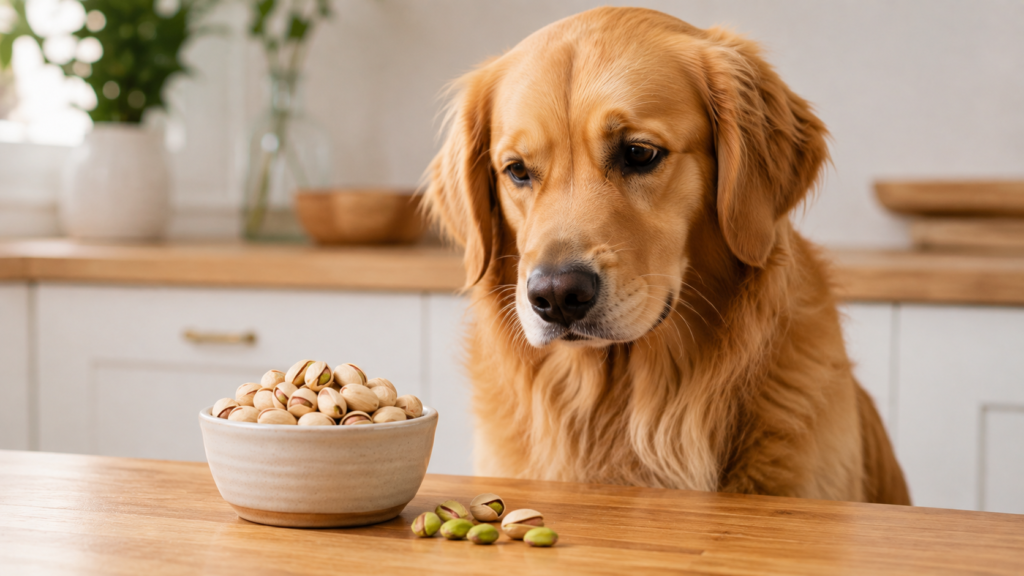
Quick Answer: Dogs can technically eat a small amount of plain pistachio without immediately becoming ill, but pistachios are not a recommended dog treat.
The main concerns are their high fat content, possible aflatoxin contamination, hard shells, and ingredients found in salted or flavored varieties. Pistachios containing xylitol are particularly dangerous because xylitol is toxic to dogs.
If your dog ate one or two plain, shelled, unsalted pistachios and is acting normally, serious problems are unlikely. If your dog ate a large amount, swallowed shells, ate flavored pistachios, or develops concerning symptoms, contact your veterinarian.
Table of Contents
Pistachio Safety Quick Reference
| Situation | What to Do |
|---|---|
| 1–2 plain, unsalted, shelled pistachios | Monitor your dog |
| Many pistachios or salted/flavored pistachios | Contact your veterinarian |
| Pistachio shells swallowed | Contact your veterinarian, especially if symptoms develop |
| Xylitol-containing pistachios | Emergency veterinary care immediately |
| Vomiting, severe weakness, collapse, seizures, or jaundice | Emergency veterinary care |
Key Takeaways
- Pistachios are not considered acutely toxic to dogs, but that doesn’t make them a good treat.
- Their high fat content can contribute to digestive problems and may trigger pancreatitis.
- Aflatoxin contamination is another potential concern.
- Pistachio shells can cause choking or gastrointestinal obstruction.
- Salted and flavored pistachios can contain excessive sodium or other unsafe ingredients.
- Xylitol is toxic to dogs and requires immediate veterinary attention.
- Puppies, small dogs, and dogs with certain health conditions may be more vulnerable.
- There are safer treats you can give your dog instead.
Are Pistachios Safe for Dogs?
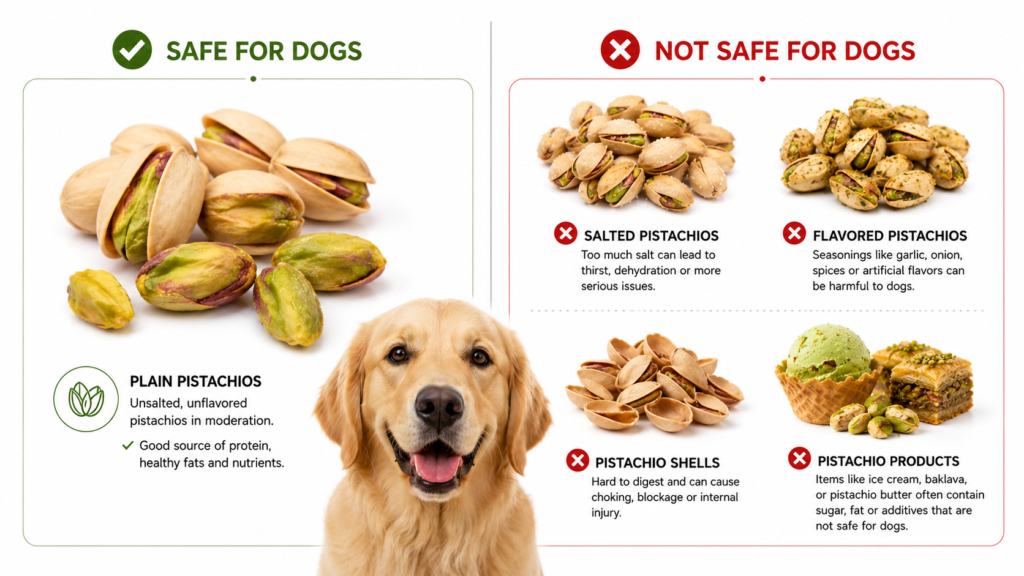
The honest answer is: it’s better not to feed pistachios to dogs.
A single plain pistachio is unlikely to cause a crisis in a healthy adult dog. However, pistachios come with several avoidable risks.
They are high in fat, and repeated exposure to high-fat foods can contribute to pancreatitis. Pistachios can also be contaminated with aflatoxin, a toxin produced by certain molds that can damage the liver.
The problem becomes greater when pistachios are salted, seasoned, sweetened, or coated with other ingredients.
So while pistachios aren’t in the same category as foods that are inherently toxic to dogs, they are still a poor choice for a regular treat.
Aflatoxin: The Hidden Mold Risk
Aflatoxin is a mycotoxin produced by certain molds, including Aspergillus. It can contaminate foods such as nuts under certain conditions.
According to the source material, dogs are particularly sensitive to aflatoxin exposure. Serious exposure can cause liver damage and may result in signs such as:
- Sluggishness
- Loss of appetite
- Vomiting
- Jaundice
Aflatoxin contamination isn’t something you can reliably identify just by looking at a pistachio, which is another reason not to make pistachios part of your dog’s diet.
High Fat and Pancreatitis Risk
Pistachios are a high-fat food, with the supplied source listing approximately 44 grams of fat per 100 grams.
A high-fat food can be particularly problematic for dogs prone to pancreatitis.
Signs that may occur with pancreatitis include:
- Vomiting
- Loss of appetite
- Abdominal pain
- A hunched posture
- Lethargy
If your dog develops these signs after eating a large amount of pistachios or another high-fat food, contact your veterinarian.
Why Salted and Flavored Pistachios Are More Dangerous
Plain, unsalted pistachios are the least concerning variety, but they still aren’t recommended as a regular treat.
Salted and flavored varieties introduce additional risks.
Excessive sodium can cause serious problems when consumed in large amounts. Some flavored products may also contain xylitol, an artificial sweetener that is toxic to dogs.
Always check the ingredient label if your dog has eaten a flavored product.
Pistachio Shells, Seeds, and Other Safety Risks
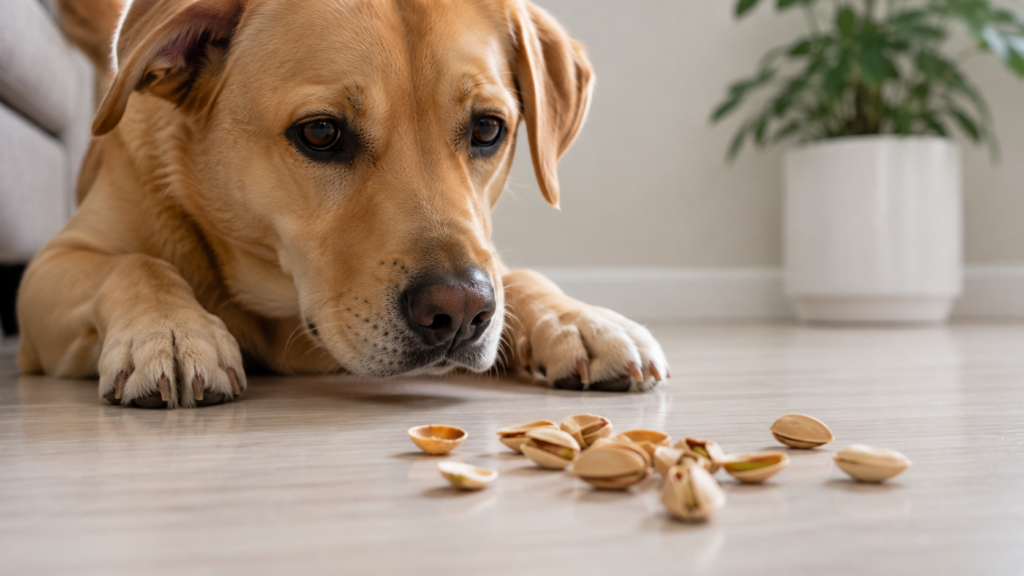
Pistachio shells should never be intentionally fed to dogs.
They are hard, indigestible, and can become choking hazards or contribute to intestinal obstruction. This risk can be especially important in small dogs.
A dog that has swallowed a shell may develop:
- Gagging
- Pawing at the mouth
- Vomiting
- Loss of appetite
- Abdominal discomfort
- Straining to defecate
A blockage can become a veterinary emergency and may require surgery.
The safest approach is therefore simple: don’t give your dog pistachios, and keep the bag or container somewhere your dog cannot reach.
How Many Pistachios Can a Dog Eat?
There is no established universal safe dose of pistachios for dogs.
The supplied material states that one or two plain, unsalted, shelled pistachios are unlikely to harm a healthy adult dog.
That doesn’t mean you should make them a routine snack.
The risk depends on factors such as:
- Your dog’s size
- How many pistachios were eaten
- Whether they were salted or flavored
- Whether shells were swallowed
- Your dog’s existing health conditions
Small dogs can be affected by relatively small amounts of high-fat foods.
The source also notes the general guideline that treats should account for no more than about 10% of a dog’s daily calorie intake.
Pistachios simply aren’t a good way to use that treat allowance.
What Happens If a Dog Eats Pistachios?

A dog that eats one or two plain pistachios may show no symptoms at all.
Problems are more likely when a dog eats a larger quantity, consumes salted or flavored varieties, or swallows shells.
Possible signs include:
- Vomiting
- Diarrhea
- Lethargy
- Loss of appetite
- Abdominal pain
- Excessive thirst
- Weakness
- Yellowing of the eyes or gums
More serious signs such as seizures, collapse, severe abdominal pain, or significant weakness require immediate veterinary attention.
What Should You Do?
Use the amount and type of pistachio eaten as a guide:
Monitor closely:
Your healthy adult dog ate one or two plain, shelled, unsalted pistachios and is acting normally.
Call your veterinarian:
Your dog ate many pistachios, ate salted or flavored pistachios, swallowed shells, or develops vomiting, diarrhea, lethargy, or loss of appetite.
Seek emergency veterinary care:
Your dog may have eaten xylitol-containing pistachios or is showing seizures, collapse, severe weakness, severe abdominal pain, or other serious symptoms.
Do not induce vomiting unless a veterinarian specifically instructs you to do so.
If you know the product your dog ate, keep the packaging so you can provide the ingredient list to your veterinarian.
What About Pistachio Ice Cream, Butter, and Baked Goods?
Pistachio-flavored foods are not safer alternatives to plain pistachios.
Pistachio ice cream may contain:
- Dairy
- Added sugar
- Artificial flavors
- Other ingredients unsuitable for dogs
Pistachio butter may contain:
- Salt
- Added sugar
- High levels of fat
- Xylitol in some products
Pistachio cakes, muffins, and other baked goods can contain additional ingredients such as large amounts of sugar and butter. Some recipes may also include chocolate or raisins, which create their own serious risks for dogs.
So the safest rule is simple:
Don’t give your dog pistachio-flavored human desserts or spreads.
If your dog accidentally eats one, check the ingredient list and contact your veterinarian if the product contains xylitol, chocolate, raisins, or another potentially harmful ingredient.
Pistachios vs. Other Nuts for Dogs
Not all nuts carry the same risks for dogs.
| Nut | Risk Level for Dogs | Main Concern |
|---|---|---|
| Macadamia nuts | 🔴 High | Toxicity and neurological signs |
| Walnuts | 🔴 High | Mold toxins and other risks |
| Pistachios | 🟡 Moderate | Fat, aflatoxin, shells |
| Pecans | 🟡 Moderate | Aflatoxin and fat |
| Almonds | 🟡 Moderate | Choking and fat |
| Cashews | 🟢 Lower risk, plain only | Fat content |
| Peanuts | 🟢 Lower risk, plain only | Fat and xylitol risk in some peanut butter |
“Lower risk” does not mean unlimited or automatically healthy.
For example, plain peanuts or cashews may be tolerated by some dogs in small amounts, but they are still calorie-dense and should not replace appropriate dog treats.
Macadamia nuts are a different situation because they are known to be toxic to dogs and can cause neurological and gastrointestinal signs.
What About Puppies and Dogs With Health Conditions?
Puppies are more vulnerable to problems from inappropriate foods, particularly because of their smaller size and developing digestive systems.
For that reason, pistachios are best avoided in puppies.
The same cautious approach applies to dogs with conditions such as:
- Previous pancreatitis
- Liver disease
- Kidney disease
- Other conditions requiring a controlled diet
If your dog has an existing health condition, ask your veterinarian before introducing high-fat human foods or new treats.
Safer Snack Alternatives for Dogs

There are plenty of better options than pistachios.
Some options include:
- Blueberries — a small, low-calorie fruit treat for many dogs
- Carrots — crunchy and naturally low in fat
- Plain cooked fish — can provide protein and omega-3 fatty acids
- Watermelon — seedless and rind-free, given in moderation
- Plain pumpkin — commonly used as part of dietary management for some digestive issues
- Dog-specific treats — formulated specifically for canine diets
As with any treat, portions matter. Your dog’s main diet should provide the majority of their daily nutrition.
Frequently Asked Questions
How many pistachios can a dog eat?
One or two plain, unsalted, shelled pistachios are unlikely to cause serious problems in a healthy adult dog. There is no established universal safe dose, however, so pistachios are better avoided as a regular treat.
Which nuts can dogs not eat?
Dogs should not eat macadamia nuts, which are toxic. Other nuts, including pistachios, walnuts, pecans, and almonds, can also present risks related to fat, mold toxins, choking, shells, or other factors.
Can dogs have pistachio butter?
It’s best to avoid pistachio butter. Commercial products may contain high amounts of fat, salt, sugar, or potentially toxic ingredients such as xylitol.
Are pistachios bad for dogs even in small amounts?
A single plain pistachio is unlikely to cause acute harm to a healthy adult dog. However, pistachios aren’t a recommended regular treat because of their fat content and other potential risks.
Does my dog need emergency vet care for eating pistachios?
Emergency care is particularly important if your dog ate xylitol-containing pistachios, swallowed shells and is showing signs of obstruction or choking, ate a large amount, or develops severe symptoms such as seizures, collapse, severe abdominal pain, or significant weakness.
Can puppies eat pistachios?
It’s best to avoid giving pistachios to puppies. Their smaller size and developing digestive systems make inappropriate high-fat treats and choking hazards more concerning.
Conclusion
So, can dogs eat pistachios?
A healthy adult dog that accidentally eats one or two plain, shelled, unsalted pistachios will probably be fine. But that doesn’t make pistachios a good choice for your dog’s treat bowl.
The concerns include high fat content, possible aflatoxin contamination, hard shells, and potentially dangerous ingredients in salted or flavored products.
There are much safer treats available, so there’s little reason to intentionally give your dog pistachios.
If your dog eats a large quantity, swallows shells, consumes a flavored product, or develops concerning symptoms, contact your veterinarian promptly.
References
- American Kennel Club — Can Dogs Eat Pistachios?
- ASPCA Animal Poison Control
- U.S. Food and Drug Administration — Aflatoxins
- Merck Veterinary Manual — Pancreatitis in Dogs and Cats
- VCA Animal Hospitals — Can Dogs Eat Nuts?
- USDA FoodData Central — Pistachio Nutritional Profile
- PetMD — Can Dogs Eat Pistachios?
- American Animal Hospital Association — Nutrition and Weight Management Guidelines