

Quick Answer
A dog ear infection happens when bacteria, yeast, or both overgrow inside the ear canal, usually triggered by allergies, moisture, or excess wax. Common signs include head shaking, scratching, odor, redness, and discharge. Most outer ear infections clear up in 1 to 3 weeks with vet-prescribed drops and cleaning, but chronic or middle ear infections need longer courses of medication and a full diagnostic work-up.
Key Takeaways
- Ear infections (otitis) are one of the most common reasons dogs see a veterinary clinic, affecting an estimated 20% of dogs at some point in their lives (AKC, 2024).
- Allergies, not dirty ears, are the root cause behind most chronic ear infections in dogs.
- Head shaking, scratching, odor, and dark discharge are the earliest symptoms of a dog ear infection.
- Yeast and bacterial infections look and smell different, and vets confirm the type with a quick cytology test.
- Home remedies rarely fix an active infection and can delay proper treatment.
- Left untreated, outer ear infections can spread to the middle and inner ear, risking hearing loss or facial nerve damage.
- Certain breeds, especially those with floppy ears or skin folds, are far more prone to recurring ear problems.
- Prevention means managing allergies, keeping ears dry, and routine veterinary checks, not aggressive at-home cleaning.
Why Do Dogs Get Ear Infections So Often?
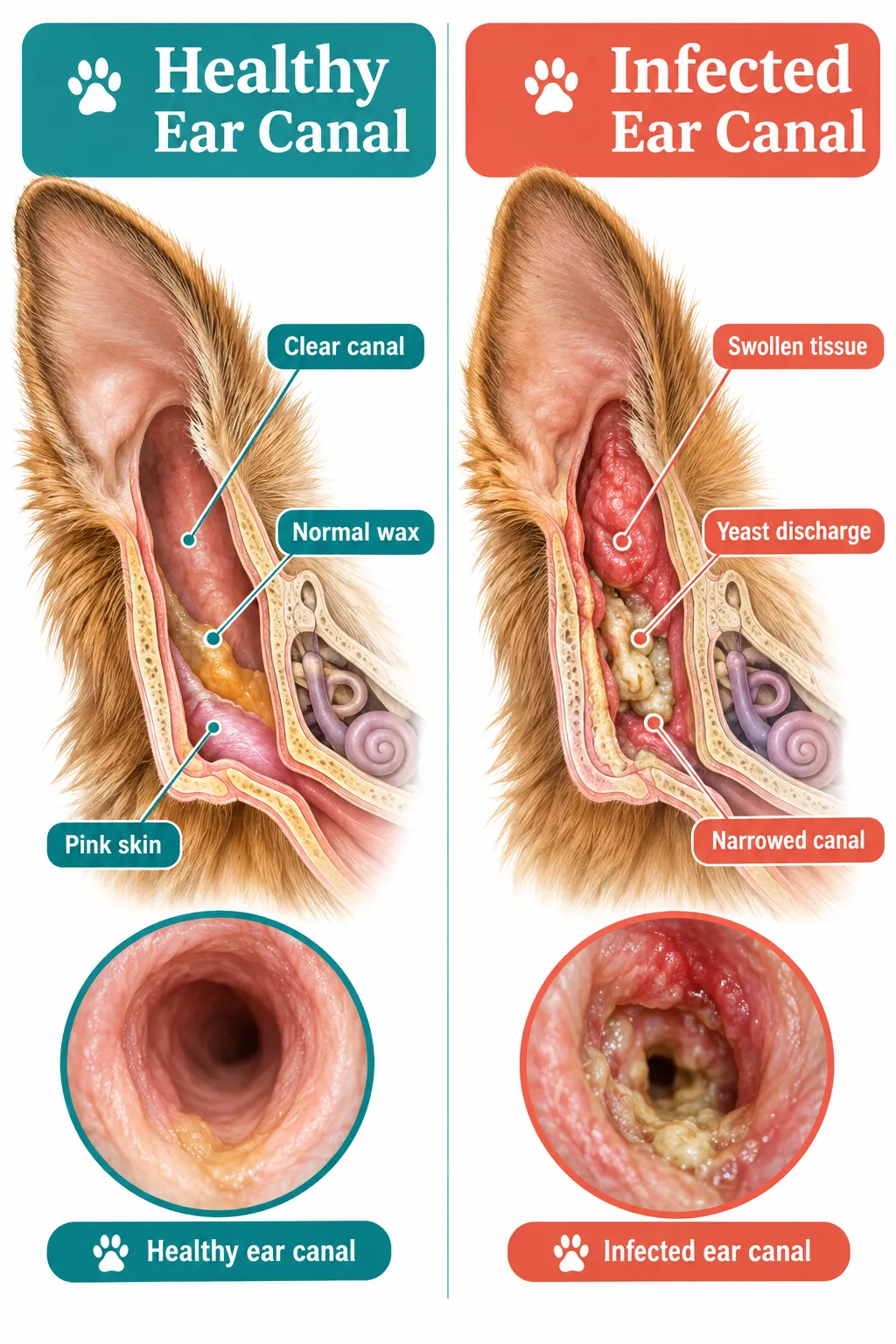
Dogs get ear infections often because their ear canal is shaped like an L, trapping moisture, wax, and debris deep inside where air can’t circulate. Add allergies, floppy ear flaps, or excess hair, and the warm, damp environment becomes an ideal breeding ground for yeast and bacteria [1].
Some dogs also get infections far more often than others. A dog with underlying food or environmental allergies will keep producing inflamed, overly waxy skin inside the ear canal no matter how many times the ears are cleaned. That’s why a single round of antibiotic drops rarely solves the problem for an allergic dog, the ear keeps flaring up because the real driver, the allergy, is still active [2]. According to the AAHA 2023 allergic skin disease guidelines, allergies are now considered the primary driver behind the majority of chronic recurring ear cases in dogs, which is why 2026 clinical guidance pushes vets to treat the skin disease, not just the ear.
Decision rule: if your dog’s ear infection returns within weeks of finishing treatment, assume allergy involvement and ask your vet for an allergy work-up rather than another round of the same drops.
What Causes Dog Ear Infections?
Dog ear infections are usually caused by an overgrowth of yeast (Malassezia), bacteria, or a mix of both inside the ear canal, often triggered by an underlying condition rather than appearing on its own. The ear canal’s warm, moist environment lets microorganisms that are normally present in small numbers multiply out of control [3].
Common causes ear infections share include:
- Allergies, environmental (pollen, dust mites) or food-related allergies inflame the skin lining the ear canal [1]
- Moisture, swimming, bathing, or humid weather trapped inside floppy ears
- Excess wax or hair, blocks airflow and feeds yeast growth
- Ear mites, especially in puppies, causing intense itching and dark, crumbly debris
- Hormonal disorders, hypothyroidism and other endocrine disease can change skin and wax production
- Foreign objects, grass seeds or debris lodged in the ear canal
- Anatomy, narrow canals, excess hair, or heavy ear flaps that limit airflow
Food allergies deserve special attention because they’re an underrated cause ear infections keep recurring from. A dog with a reaction to a protein source, grain, or additive may show chronic ear inflammation alongside digestive upset; if your dog also has ongoing loose stools, it’s worth reading about why dogs get diarrhea since food sensitivities often affect the gut and the ear canal together.
Common mistake: assuming a smelly ear always means “dirty” ears and reaching for a cotton swab. Pushing debris deeper rarely helps and can make inflammation worse.
How Do I Know If My Dog Has an Ear Infection?
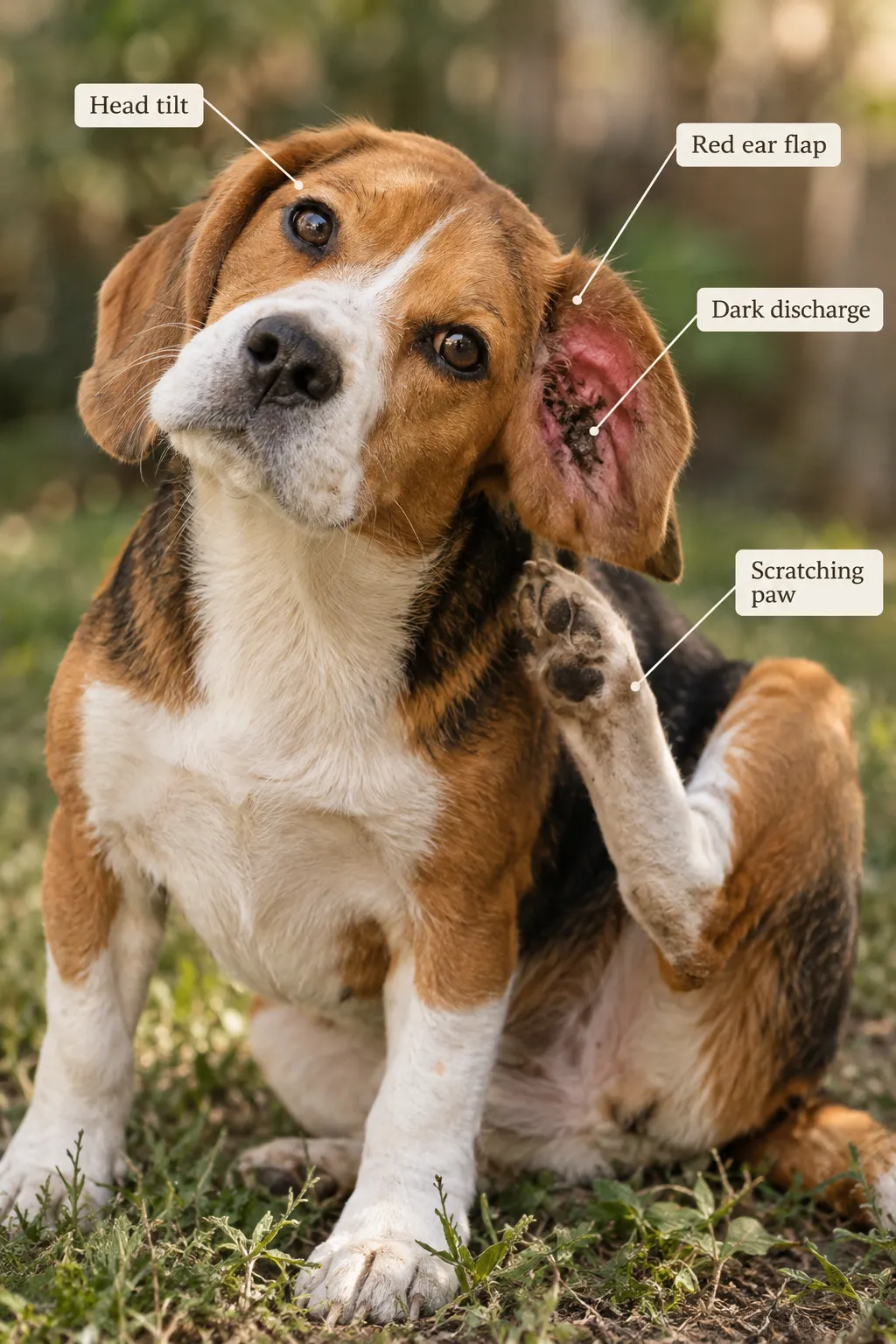
You can tell your dog has an ear infection by watching for head shaking, scratching at the ear, odor, redness, swelling, and discharge from the affected ear. These symptoms usually appear gradually and worsen without treatment [1].
Signs typically include:
- Frequent head shaking or head tilt
- Scratching, pawing, or rubbing the ear against furniture or the floor
- A strong, yeasty or foul odor
- Dark brown, yellow, or bloody discharge
- Redness, swelling, or crusting on the visible ear flap
- Sensitivity or pain when the ear or head is touched
- Hearing loss or disorientation in long-standing cases
- Visible head tilt toward the affected ear when inner ear involvement is present
If your dog is also shaking its whole body rather than just its head, that can point to generalized discomfort, and it’s worth comparing notes with this guide on why dogs shake to rule out other causes before assuming it’s only the ear.
Quick example: a Labrador that’s been swimming all weekend starts shaking its head Monday morning and smells faintly yeasty, that pattern strongly suggests a moisture-triggered outer ear infection, not a mite infestation.
Yeast vs Bacterial Ear Infections: What’s the Difference?
Yeast infections usually produce a dark brown, musty-smelling discharge, while bacterial infections often cause a yellow or greenish, foul-smelling discharge, sometimes with more pain and swelling. Many dogs actually have both at once, called a mixed infection [6].
| Feature | Yeast infection | Bacterial infection |
|---|---|---|
| Discharge color | Dark brown | Yellow/green |
| Smell | Musty, yeasty | Foul, sharp |
| Pain level | Mild to moderate | Moderate to severe |
| Common trigger | Allergies, moisture | Secondary to yeast or trauma |
| Diagnosis tool | Cytology swab | Cytology swab + culture |
A vet confirms the type with cytology, a quick swab and microscope check, rather than guessing from appearance alone, since treatment differs for each [3]. This step matters because an antibiotic won’t clear a pure yeast overgrowth, and an antifungal won’t touch a bacterial infection.
How Are Dog Ear Infections Diagnosed?
Dog ear infections are diagnosed through a combination of history, a physical exam with an otoscope, and cytology to identify whether yeast, bacteria, or both are present. Updated 2026 clinical guidance stresses a full diagnostic work-up rather than treating blind with leftover drops [3].
A typical visit includes:
- A review of your dog’s history, past infections, swimming habits, diet, and allergy signs
- Visual exam of the ear canal and eardrum with an otoscope
- Cytology (a swab sample viewed under a microscope) to confirm yeast, bacteria, or mites
- In chronic or non-responsive cases, culture and sensitivity testing to pick the right antibiotic
- Bloodwork or allergy testing if recurring infections suggest an underlying disease
This matters because treating the wrong organism, or missing a ruptured eardrum, can make things worse. Vets check the eardrum specifically because drops that are safe in the outer ear canal can damage hearing if pushed into the middle ear through a rupture [5].
How Are Dog Ear Infections Treated?
Standard dog ear infection treatment combines a thorough professional ear cleaning with medicated drops targeting the specific organism found on cytology, plus pain relief when the ear is inflamed. Most outer ear infections clear within 1 to 3 weeks, while middle or inner ear disease often needs 4 to 8 weeks of combined topical and oral medication [5].
Typical treatment options include:
- Medicated ear drops containing an antifungal, antibiotic, or combination, applied daily for 1 to 4 weeks
- Professional ear cleaning to flush debris so medication can reach the infected tissue
- Corticosteroids to reduce swelling and pain, often built into combination drops
- Oral antibiotics or antifungals for infections that have crossed into the middle ear
- Pain control since inflamed ear canals are genuinely painful, not just itchy
- Allergy management (diet trial, medication, or immunotherapy) for dogs with recurring disease
Cost varies by region and severity. A straightforward outer ear infection visit, including an exam, cytology, and a tube of drops, commonly runs $150 to $300 at a general practice vet in the US, while chronic cases needing imaging, culture, or specialist referral can run several hundred dollars more. Many clinics offer wellness plans that bundle exams and medication refills to help offset the cost of recurring visits.
“Treat the whole dog, not just the ear” is the core message behind the 2026 push toward guideline-based, multimodal ear infection treatment rather than a single quick fix.
Can I Treat My Dog’s Ear Infection at Home?
Mild, early-stage irritation can sometimes be managed at home with a vet-approved cleanser, but an active ear infection with discharge, odor, or pain should not be treated with home remedies alone. Over-the-counter cleaners are appropriate only for maintenance after a vet has confirmed the ear canal and eardrum are healthy [6].
Home remedies you’ll see suggested online, and why they fall short:
- Green tea rinses have mild antimicrobial properties but won’t clear an established bacterial or yeast overgrowth.
- Calendula tincture can soothe surface irritation but doesn’t penetrate deep enough for a true infection.
- Grapefruit seed extract is sometimes diluted as a natural cleanser, but concentration errors can burn sensitive ear tissue.
Trying to treat a dog ear infection without vet help is tempting because it’s cheaper and faster, but it risks masking symptoms while the infection spreads toward the middle ear. If you skip the vet visit and the ear doesn’t improve within 2 to 3 days, or gets worse, book an exam right away.
Edge case: dogs with ear mites sometimes look like they’re clearing up with home cleaning because mites shed naturally, but the underlying infestation often returns within weeks without a prescribed parasiticide.
What Happens If Ear Infections Are Left Untreated?
Untreated or poorly managed chronic ear disease can progress from the outer ear into the middle and inner ear, leading to permanent hearing loss, chronic pain, facial nerve paralysis, or a head tilt that never fully resolves. In the worst-case scenario, deep inner ear infections can affect balance permanently and, in rare cases, contribute to more serious intracranial complications [5].
Possible complications include:
- Ruptured eardrum from pressure and infection buildup
- Partial or full hearing loss in the affected ear
- Chronic thickening and narrowing of the ear canal (sometimes requiring surgery)
- Facial nerve damage causing drooping lips or an uneven blink, which can leave the eye dry and irritated, a pattern worth comparing with causes covered in why a dog’s eye looks red
- Vestibular signs: stumbling, circling, or a persistent head tilt
- Spread of bacterial infection beyond the ear in severe, neglected cases
If your dog suddenly can’t walk straight, collapses, or shows severe disorientation, don’t assume it’s only an ear problem. Other neurological conditions, including spinal issues like IVDD in dogs, can produce overlapping symptoms and also need urgent veterinary attention.
When Should I Consult a Veterinary Dermatologist for Chronic Ear Disease?
A veterinary dermatologist referral makes sense when a dog has had three or more ear infections in a year, when infections don’t clear with standard treatment, or when allergy testing and diet trials haven’t been tried yet. Dermatologists specialize in the skin and allergy disease that usually drives chronic ear problems [7].
Signs it’s time for a referral:
- Infections return within a month of finishing treatment
- The ear canal is visibly narrowing or thickening over time
- Standard antibiotics or antifungals stop working
- Your dog also has recurring skin rashes, paw licking, or facial itching
Are Certain Dog Breeds More Prone to Ear Infections?
Yes, breeds with floppy ears, narrow canals, or skin folds are significantly more prone to ear infections because airflow to the canal is restricted. Cocker Spaniels, Basset Hounds, Labrador Retrievers, Shar-Peis, and Poodles are frequently cited as higher-risk breeds [6].
- Floppy-eared breeds (Cocker Spaniel, Basset Hound) trap heat and moisture
- Water-loving breeds (Labrador, Golden Retriever) get wet ears often
- Wrinkly-skinned breeds (Shar-Pei) have narrower canals and more skin folds
- Allergy-prone breeds (Bulldogs, Poodles) get secondary ear flare-ups from skin disease
Knowing your breed’s risk level helps you build prevention into a normal routine rather than reacting only after symptoms appear.
What Should I Do If My Dog Keeps Getting Ear Infections?
If your dog keeps getting ear infections, the next step is a structured diagnostic plan rather than another round of drops: allergy testing or a diet trial, imaging if the canal looks chronically changed, and a maintenance ear-care routine built around the actual cause. Recurrent otitis is now treated as a dermatologic and allergic disease management problem, not an isolated ear issue [7].
A practical recurring-infection checklist:
- Ask your vet for cytology at every visit, even if symptoms look familiar
- Request allergy testing or an 8 to 12 week elimination diet trial
- Switch to a low-residue, vet-recommended ear cleaner for maintenance between flares
- Track infection dates and triggers (swimming, new food, seasonal allergies)
- Ask about long-term maintenance medication if allergic skin disease is confirmed
How Can I Prevent My Dog From Getting Ear Infections?
Preventing ear infections in dogs mostly comes down to keeping ears dry, cleaning them gently and only as often as recommended, and managing any underlying allergy or skin disease long term. Over-cleaning with cotton buds or aggressive scrubbing can injure the canal and make infections more likely, not less [8].
Practical prevention steps:
- Dry ears thoroughly after swimming or bathing
- Use a vet-recommended cleaner, not water alone, for routine maintenance
- Never insert cotton swabs into the ear canal
- Trim or pluck excess hair around the
References
- Dog Ear Infections
- Itchy Ear Problems
- Ear Infections And Otitis Externa In Dogs
- Otitis Externa Dogs And Cats
- Otitis Media And Interna Middle And Inner Ear Infections In Dogs
- Dog Ear Infections
- 2023 Aaha Management Of Allergic Skin Diseases Guidelines
- Ear Infections In Dogs
- Javma.23.01.0002
- Pet Ear Infections
- Otitis Externa
- Default
- Reformulated Topical Medications For Management Of Allergic Otitis Externa
- Inner Ear Infection Otitis Interna In Dogs
- Defaultadv1