
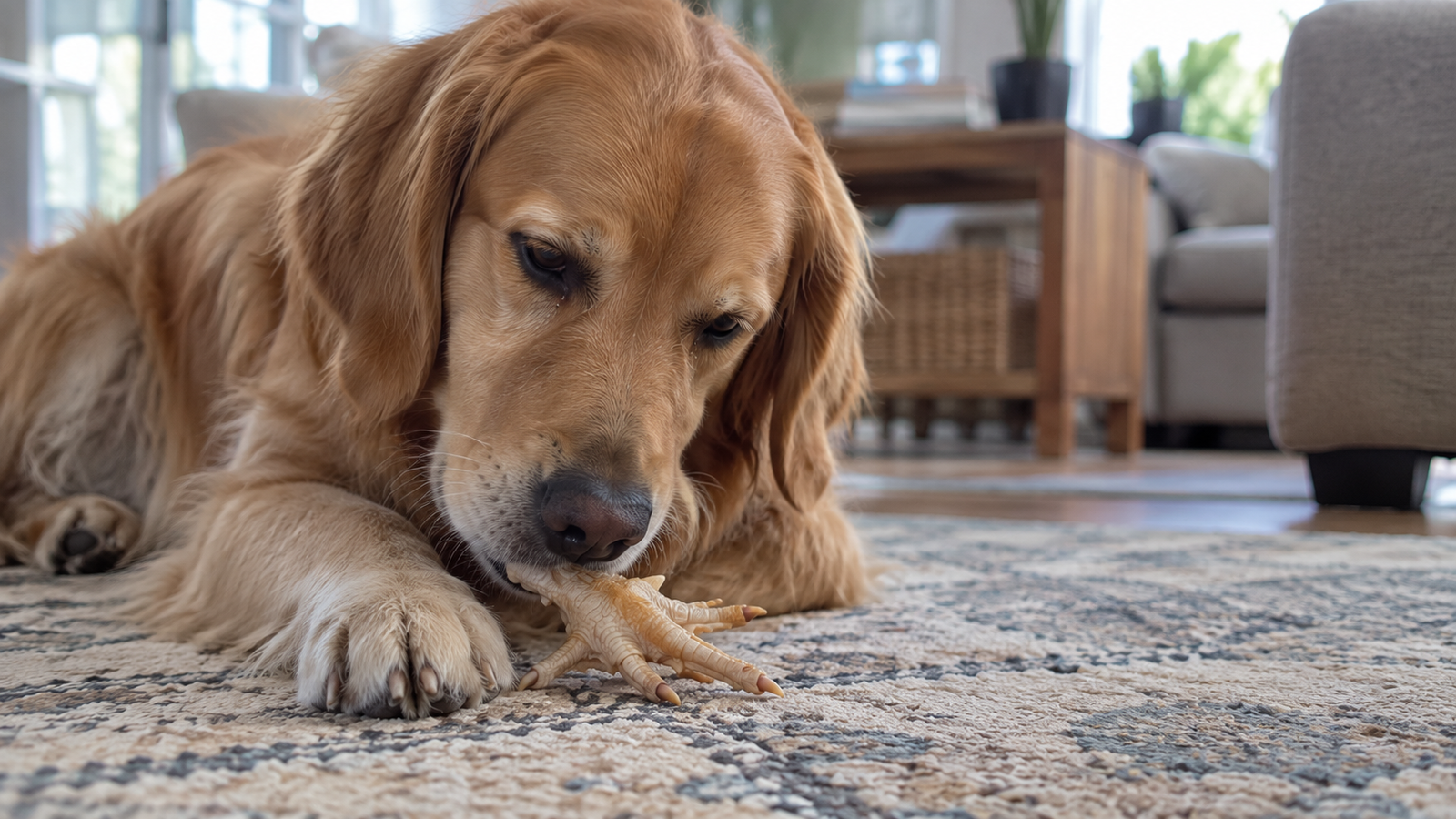
Chicken feet are sometimes offered to dogs as a crunchy treat, but are they safe? They contain cartilage, skin, connective tissue, and small bones, and some owners use them as chews for their dogs. However, preparation matters. Raw chicken feet can carry harmful bacteria, while cooked bones can splinter. Even dehydrated products can pose choking or digestive risks. In this guide, you’ll learn about the potential benefits of chicken feet, the risks to consider, how to choose treats more carefully, and when to contact your veterinarian. Quick Answer: Can Dogs Eat Chicken Feet? Some healthy adult dogs may be able to eat commercially prepared chicken feet as an occasional chew, but they are not risk-free. Raw chicken feet can carry harmful bacteria; cooked chicken feet should be avoided because their bones can splinter, and dehydrated products can still pose choking or digestive risks. Key takeaways: Are Chicken Feet Safe for Dogs? Raw vs. Dehydrated vs. Cooked The main safety concerns are bone-related injuries, choking, and bacterial contamination. The way chicken feet are prepared affects these risks. Raw chicken feet Raw chicken feet may contain bacteria such as Salmonella and other pathogens. Dogs can become ill, and they may also spread bacteria to people through their mouths, saliva, bowls, or contaminated surfaces. Freezing and ordinary washing do not reliably eliminate these pathogens. Raw poultry also presents a food-handling risk for households with young children, older adults, pregnant people, or anyone with a weakened immune system. Dehydrated chicken feet Dehydrated chicken feet are sold as dog chews and are easier to store than fresh raw poultry. However, dehydration alone does not guarantee that harmful bacteria have been destroyed. Choose products from reputable manufacturers that provide clear safety and storage instructions. Follow the package directions, supervise chewing, and discard any chew that becomes small enough to swallow whole. Cooked chicken feet Do not give dogs cooked chicken feet or cooked chicken bones. Cooking can make bones more brittle and prone to splintering, potentially causing choking, mouth injuries, digestive tract damage, or obstruction. Avoid boiled, roasted, fried, or otherwise cooked chicken feet, including leftovers from human meals. Potential Benefits of Chicken Feet for Dogs Chicken feet contain cartilage, connective tissue, skin, and bone. They may provide nutrients, and chewing can offer enrichment, but the benefits should not be overstated. Joint health Chicken feet contain cartilage and naturally occurring compounds such as glucosamine and chondroitin. These substances are associated with joint health, but the amount provided by an individual chicken foot can vary. There is not enough consistent evidence to conclude that feeding chicken feet will treat arthritis, repair cartilage, or prevent joint disease. They should not replace a veterinarian-recommended joint supplement or treatment plan. Dental health Chewing can help remove some surface material from teeth, depending on the chew and the way a dog uses it. However, chicken feet are not a proven replacement for toothbrushing or professional dental care. Hard or unsuitable chews can also damage teeth. Ask your veterinarian whether a particular chew is appropriate for your dog’s size, chewing style, and dental condition. Practical takeaway: Consider chicken feet a potential treat, not a medical treatment or a substitute for balanced nutrition and routine veterinary care. How Often Can Dogs Eat Chicken Feet? There is no single portion or feeding frequency that is appropriate for every dog. The right choice depends on your dog’s size, chewing behavior, health, daily calorie needs, and the specific product. If your veterinarian considers the treat suitable: Treats generally should make up no more than about 10% of a dog’s daily calories, with the rest coming from a complete and balanced diet. This is a general guideline, not a guarantee that chicken feet are suitable for an individual dog. Dogs with a history of pancreatitis, obesity, food sensitivities, gastrointestinal disease, or other dietary restrictions should be assessed by a veterinarian before receiving rich or bone-in treats. Can Puppies and Small Dogs Eat Chicken Feet? Puppies and small dogs require particular care because a chew that seems manageable for one dog may be a choking hazard for another. Puppies have developing teeth and chewing skills, and their age alone does not establish whether a bone-in chew is safe. Small dogs may also struggle with the size or shape of a whole chicken foot. Before offering chicken feet to a puppy or small dog, ask your veterinarian to assess whether the product is appropriate. Do not assume that cutting a chicken foot into smaller pieces makes it safer; small pieces can sometimes be swallowed whole. Avoid bone-in chews for dogs that gulp food, have difficulty chewing, or have previously choked or swallowed inappropriate objects. Where to Buy Chicken Feet for Dogs and How to Store Them Chicken feet may be available from pet stores, specialist pet-food suppliers, and some butchers or grocery stores. If you choose to purchase them, prioritize product safety and clear handling instructions over price alone. When shopping: Follow the package instructions for storage and disposal. Keep raw poultry separate from human food, wash hands and contact surfaces after handling it, and clean your dog’s bowl and feeding area carefully. Do not assume that a homemade dehydrating temperature or drying time makes raw poultry safe. If you are considering preparing chicken feet at home, use a validated food-safety process rather than relying on appearance or texture. Chicken Feet Allergies and Other Health Concerns Chicken is a potential food allergen for some dogs. If your dog has a diagnosed chicken allergy or develops signs of a reaction after eating chicken feet, stop feeding the product and contact your veterinarian. Possible signs of a food-related reaction include persistent itching, skin irritation, recurrent ear problems, or digestive upset. These symptoms can have other causes, so they do not confirm a chicken allergy on their own. Chicken feet may also be unsuitable for dogs that need a restricted diet or have certain digestive or medical conditions. For example, dogs with a history of pancreatitis may need careful fat management.

Can Dogs Eat Chicken Bones? What Every Dog Owner Needs to Know
Chicken bones may seem like a harmless leftover to share with your dog, but they can cause serious health problems. Dogs should not be given chicken bones, especially cooked ones, because they can splinter, cause choking, or injure the digestive tract. [1][2][3] If your dog has already swallowed a chicken bone, don’t panic. The safest next step is to contact your veterinarian promptly for advice, even if your dog appears normal. Never induce vomiting or try home remedies unless your veterinarian specifically instructs you to do so. [2][4] Quick Answer: Can Dogs Eat Chicken Bones? No. Chicken bones are not a recommended treat for dogs. Cooked bones can become brittle and break into sharp fragments, while raw chicken bones can carry harmful bacteria and still cause choking or digestive injuries. [2][3][7] If your dog eats a chicken bone, the level of risk depends on factors such as the size of the dog, the amount swallowed, the type of bone, and whether symptoms develop. Why Chicken Bones Are Dangerous for Dogs Chicken bones can cause several problems as a dog chews or swallows them. The most important risks include: Not every dog that swallows a chicken bone will develop complications. However, it is impossible to determine the outcome safely at home, so veterinary guidance is important. Cooked Chicken Bones Are Especially Risky Cooking changes the structure of chicken bones, making them more brittle and likely to break into sharp pieces. These fragments may cause choking or injure the digestive tract. [1][2][3] Avoid giving dogs bones from cooked chicken, including roasted chicken, fried chicken, grilled chicken, and leftovers from meals. Removing the meat from a cooked chicken bone does not make the bone itself safe to feed. Raw Chicken Bones Are Not Risk-Free Raw chicken bones may be less brittle than cooked bones, but that does not make them safe. They can still cause choking, dental or mouth injuries, digestive obstruction, and internal damage. Raw chicken may also contain bacteria that can make dogs and people sick. [3][5][7] For these reasons, raw chicken bones are not a risk-free alternative to cooked bones. What Can Happen If a Dog Eats a Chicken Bone? The outcome varies from dog to dog. Some dogs may not develop obvious problems, while others may experience complications that require urgent veterinary treatment. Possible outcomes include: A dog may initially appear comfortable even when a problem is developing. Do not rely on normal behavior alone to decide that your dog is safe. [2][4][9] What to Do If Your Dog Swallows a Chicken Bone If your dog has eaten a chicken bone, take the following steps. 1. Stay Calm and Remove Any Remaining Bones Move any leftover bones out of reach, so your dog cannot swallow more. Do not put your fingers deep into your dog’s mouth or throat to retrieve a bone that is lodged there. 2. Contact Your Veterinarian Promptly Tell your veterinarian what happened, including: Your veterinarian can advise whether your dog needs an immediate examination or other care. 3. Do Not Induce Vomiting Do not try to make your dog vomit. A sharp bone fragment could cause further injury while coming back up. Only follow instructions from a veterinarian who knows the circumstances. [2][4] 4. Avoid Home Remedies and Forced Feeding Do not force your dog to eat bread, rice, cotton, or other foods in an attempt to cushion the bone or push it through. These approaches are not a substitute for veterinary assessment and may complicate the situation. 5. Watch for Changes While Following Veterinary Advice Follow your veterinarian’s instructions and monitor your dog closely. If warning signs develop, seek veterinary care immediately rather than waiting to see whether the bone passes. Seek emergency veterinary care immediately if your dog has difficulty breathing, is choking, collapses, repeatedly vomits, has severe abdominal pain, or shows other signs of serious distress. [2][4][9] Signs of a Chicken Bone Injury or Blockage Symptoms can appear quickly or develop later. Watch for the following warning signs: Warning sign What it may indicate Gagging, choking, or difficulty breathing A possible airway obstruction Repeated vomiting or retching Irritation, obstruction, or another complication Excessive drooling or difficulty swallowing Possible injury or a bone lodged in the mouth or esophagus Abdominal pain, swelling, or a hunched posture Possible digestive tract irritation or injury Loss of appetite or unusual lethargy Possible discomfort or illness Straining to defecate or passing very hard stools Possible difficulty passing waste Blood in vomit or stool Possible injury or bleeding These signs do not confirm that a bone is stuck, but they warrant prompt veterinary attention. Difficulty breathing, collapse, severe pain, repeated vomiting, or significant bleeding should be treated as emergencies. [2][4][9] Do not wait for every symptom to appear before seeking help. If you know your dog swallowed a chicken bone, contact your veterinarian even if there are no immediate warning signs. How Long Do Chicken Bones Take to Pass? There is no reliable timeline that guarantees a swallowed chicken bone will pass safely. The outcome depends on the size and shape of the bone, how much was swallowed, the dog’s size, and whether the bone causes an obstruction or injury. Some dogs may pass swallowed material without obvious complications, while others may need veterinary treatment. A bowel movement or a period without symptoms does not necessarily prove that everything is fine. Contact your veterinarian for guidance rather than waiting a specific number of hours or days. Follow any monitoring instructions you receive, and seek urgent care if symptoms develop. [2][4][5] Are Chicken Bones Dangerous for Puppies? Yes. Chicken bones can be dangerous for puppies, just as they can be for adult dogs. Puppies are smaller, and a bone or fragment may present a serious choking or obstruction risk. Puppies may also chew or swallow items before their owners can intervene. Keep chicken bones and food scraps securely out of reach, and contact a veterinarian promptly if a puppy swallows one. Do not assume that a small piece

Can Puppies Eat Lamb Bones? Safe Chewing Guidelines
Quick Answer: Can Puppies Eat Lamb Bones? No, puppies should not eat cooked lamb bones. Cooking makes bones brittle, causing them to splinter into sharp fragments that can injure the mouth or digestive tract. Raw lamb bones are more controversial, but many veterinarians advise against them for puppies because of choking, bacterial contamination, tooth damage, and gastrointestinal risks. [2][10] Key Takeaways 🦴 Lamb Bone Safety Quick Reference for Puppies Bone Type Safe for Puppies? Main Risk Cooked lamb bones Never Splintering, perforation, blockage Raw lamb bones Generally no Bacterial infection, choking, tooth damage Processed lamb bone treats No Preservatives, splintering, additives Raw, meaty lamb bone (large) Extreme caution only Supervised, short sessions, vet-approved Can Puppies Eat Cooked Lamb Bones? Cooked lamb bones are unsafe for dogs of any age, and puppies are particularly vulnerable. Cooking removes moisture from the bone, making it brittle and more likely to break into sharp pieces that can injure the mouth, throat, stomach, or intestines. [2][10] The Royal Federation of Veterinary Surgeons (RFVS) and Purina both issued updated guidance in 2026 reinforcing that cooked bones should never be given to dogs. [2][10] The concern is not simply that a bone might break; sharp fragments can become lodged or damage the gastrointestinal tract. Another common misconception is that a small cooked bone is safer for a small puppy. In reality, a puppy’s smaller digestive tract can make swallowed fragments more difficult to pass safely. Takeaway: Never give your puppy a cooked lamb bone, whether it comes from a chop, roast, or another cut. [2][3] Are Raw Lamb Bones Safe for Puppies? Raw lamb bones are more complicated because expert opinion is divided. Some raw-feeding advocates consider raw bones less likely to splinter because they retain moisture and flexibility. [5][7] However, veterinary organizations and many practitioners warn about bacterial contamination, choking, tooth fractures, and digestive problems, particularly in puppies. [6][10] Raw bones may be less brittle than cooked bones, but that does not eliminate the other risks. Puppies also have developing teeth and swallowing skills, making it harder to predict how they will chew and handle a bone. If a veterinarian does approve a raw lamb bone for an older puppy, it should be large enough that the puppy cannot fit the entire bone in their mouth, meaty rather than bare, and offered only under direct supervision for a limited session of 10–15 minutes. [7] Takeaway: Raw lamb bones are not recommended for puppies under 6 months. For older puppies, speak with your veterinarian first and follow any supervision and hygiene instructions they provide. [5][6] What Happens If a Puppy Eats Lamb Bones? If a puppy eats a lamb bone, the outcome depends on the bone’s size, whether it was cooked or raw, and how it was chewed. Cooked bones are especially concerning because they can splinter, while raw bones still carry choking, bacterial, and digestive risks. [4][6] The most serious complications include: Takeaway: If your puppy eats a lamb bone, contact your veterinarian for guidance even if they appear normal. Some complications may not be immediately obvious. 🚨 Emergency Triage: Puppy Ate a Lamb Bone When to Act, and How Fast 🟡 Monitor at home if: 🟠 Call your vet today if: 🔴 Go to emergency care NOW if: How Old Do Puppies Need to Be to Chew Bones? Puppies should not be given bones, raw or cooked, before 12 weeks of age, and many veterinarians recommend waiting until at least 6 months. Before 12 weeks, baby teeth are still developing, and the digestive system is immature. [4][7] The 3- to 6-month period is also when puppies are actively teething and chewing more intensely. Although that makes bones tempting to some owners, it is also a period when developing teeth can be damaged by very hard objects. Frozen chew toys, damp frozen washcloths, and veterinary-approved teething rings can provide chewing relief without the risks associated with bones. Takeaway: Wait until your puppy is at least 6 months old and discuss bone chewing with your veterinarian before introducing any bone. Cooked bones should never be offered. [4][7] Lamb Bones vs Chicken Bones for Puppies: Which Is Safer? Neither lamb nor chicken bones are recommended for puppies. Chicken bones, particularly small hollow bones, can be especially brittle when cooked, while lamb bones are denser and harder. [3][9] However, a difference in risk does not make lamb bones safe. Cooked lamb bones can still splinter, raw lamb bones can still carry bacteria, and harder bones can still damage a puppy’s teeth. Factor Lamb Bones Chicken Bones Splinter risk (cooked) High Very high Bone density Denser, harder Lighter, more brittle Choking risk Moderate High (small pieces) Tooth fracture risk Higher (harder bone) Lower Overall puppy safety Not recommended Not recommended Takeaway: Neither type is appropriate for puppies. If a veterinarian approves a recreational bone for an older puppy, follow their recommendation on size, type, and supervision. [3][9] Best Bones and Alternatives to Lamb Bones for Puppies to Chew The safest chewing options for puppies are generally alternatives to bones. Veterinary dentists and nutritionists recommend options that satisfy the urge to chew without the same splintering, bacterial, or blockage concerns. [2][4] Safer alternatives include: If you’re comparing lamb bones with rawhide, keep in mind that rawhide has its own risks, including choking and intestinal blockage from softened pieces. [2] Takeaway: For puppies, veterinary-approved chew toys and dental products designed for their age and size are a more practical choice than lamb bones or rawhide. [2][4] How to Prepare Lamb Bones for Puppies (If Vet-Approved) If your veterinarian specifically approves a raw lamb bone for an older puppy, preparation and supervision are important. Never cook, boil, bake, or microwave the bone before giving it to a puppy; heating changes the bone and increases the risk of splintering. [2][10] Ingredients Important: If this broth is intended for a puppy, keep it plain and unseasoned. Do not add salt, stock cubes, or other seasonings. Also, never give the cooked bones to the puppy—remove
Can Dogs Eat Bananas? Safe Portions, Benefits & Risks
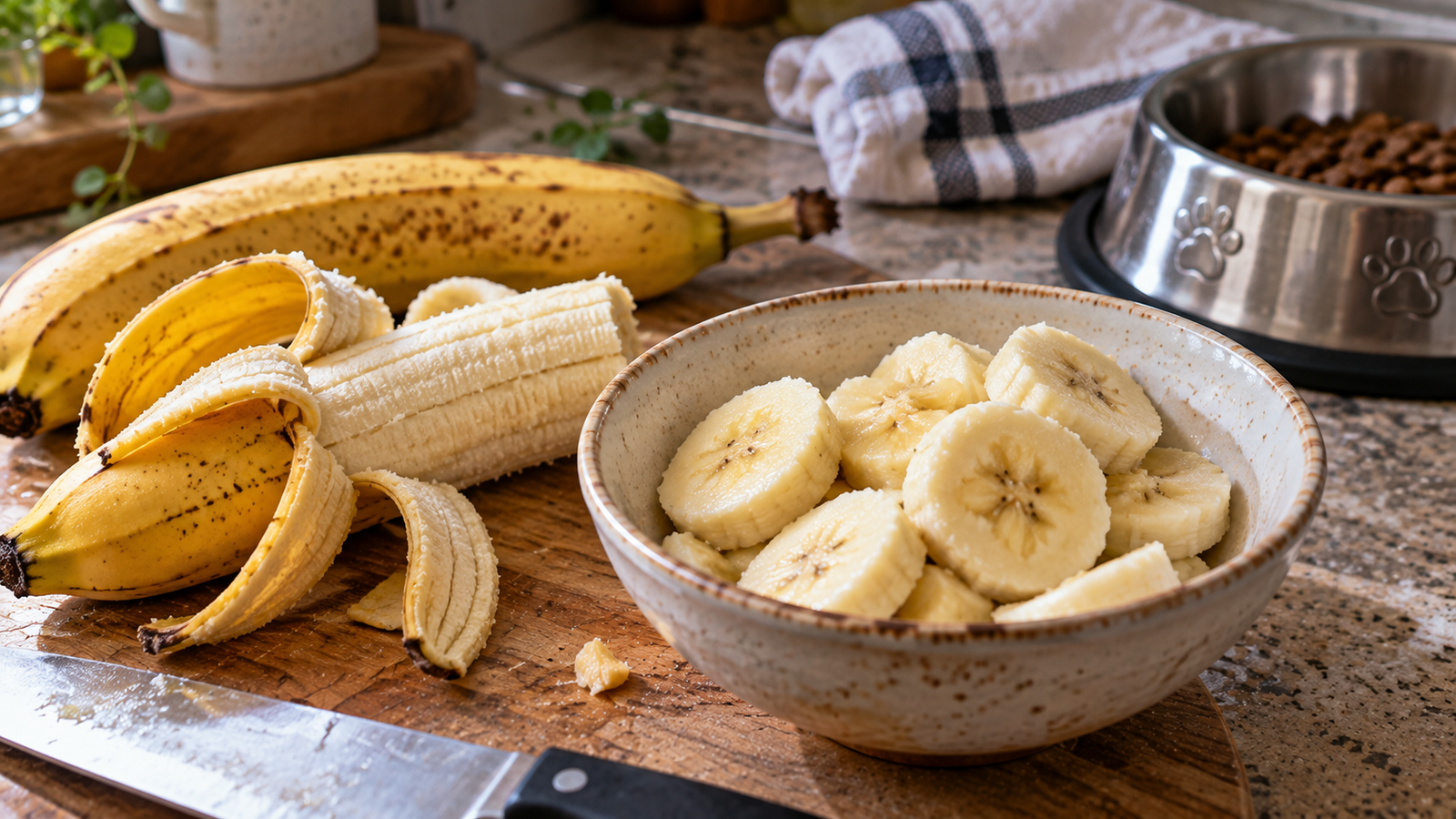
I’ve always liked keeping a few simple fruits around that I can share with my dog, and bananas are one of the easiest. They’re soft, easy to portion, and there’s no cooking involved. I can simply peel one, cut off a few small pieces, and have a quick treat ready. The part I pay attention to is how much I give. Can dogs eat bananas, but they’re naturally sweet and more calorie-dense than some other fruits. A few pieces can be a nice treat; an entire banana is a very different story, especially for a small dog. So if you’re wondering whether your dog can have banana, how much is appropriate, or whether the peel is safe, here’s what you need to know. Quick Answer Yes, most dogs can eat plain, ripe banana in moderation. Bananas provide nutrients including potassium, vitamin B6, vitamin C, fiber, and magnesium. However, they also contain natural sugar and calories, so they should remain an occasional treat rather than a regular part of your dog’s diet. Always: How Much Banana Can Dogs Eat? There isn’t one portion that works for every dog. The appropriate amount depends on your dog’s size, weight, age, activity level, overall diet, and health. A practical starting point is: Dog Size Starting Portion Extra-small 1–2 thin slices Small 2–3 thin slices Medium 3–6 thin slices Large A small handful of slices Extra-large Up to about ½ banana These are general starting portions, not strict daily requirements. A dog that is overweight, diabetic, or following a calorie-controlled diet may need considerably less. If you’re introducing banana, start with just one or two small pieces and see how your dog responds. The bigger rule is that treats—including fruit—should make up only a small part of your dog’s overall calorie intake. Your dog’s complete and balanced food should remain the foundation of their diet. Are Bananas Good for Dogs? Bananas contain several nutrients that can make them a useful occasional treat. Potassium Potassium helps support normal muscle and nerve function. Vitamin B6 Vitamin B6 plays a role in normal metabolism and other important functions in the body. Vitamin C Bananas provide vitamin C, although healthy dogs generally do not need fruit as a source of vitamin C because their nutritional needs should already be covered by a complete diet. Fiber Bananas contain dietary fiber, which is one reason some dogs tolerate small amounts well. Magnesium Bananas also provide magnesium, a mineral involved in numerous normal body processes. These nutrients are a nice bonus, but they don’t make bananas necessary for dogs. Think of banana as a tasty food that can add variety—not something your dog needs to meet their nutritional requirements. What Happens If a Dog Eats Too Much Banana? Too much banana can cause digestive upset. Depending on the dog and how much they ate, you may notice: The combination of fiber, carbohydrates, and natural sugar can simply be too much for some dogs. If your dog accidentally eats more banana than intended but otherwise seems normal, remove access to the fruit and keep an eye on them. If vomiting, severe diarrhea, weakness, abdominal pain, or other concerning symptoms develop, contact your veterinarian. For a dog with an existing medical condition, ask your veterinarian about appropriate treats rather than assuming a food is suitable based on its general safety. Can Dogs Eat Banana Peels? No. Don’t intentionally feed banana peels to dogs. The peel isn’t considered toxic, but it is tough, fibrous, and difficult to digest. A large piece can also create a choking or intestinal blockage risk. Always peel the banana before giving it to your dog. If your dog manages to swallow part of a peel, don’t automatically assume something serious will happen. Monitor them closely and contact your veterinarian if they develop vomiting, loss of appetite, abdominal pain, lethargy, constipation, or other unusual symptoms. If you believe your dog swallowed a large amount of peel or is showing signs of a possible obstruction, seek veterinary care promptly. Can Puppies Eat Bananas? Yes, puppies can eat small amounts of banana once they’re eating solid food, but I would introduce it slowly. Puppies have different nutritional needs from adult dogs, and their complete puppy food should provide the nutrition they need for growth. Banana should remain a very small treat rather than becoming a regular part of their meals. Start with a tiny piece and avoid introducing several new foods at the same time. That makes it much easier to tell what caused a problem if your puppy develops diarrhea or vomiting. If your puppy has a sensitive stomach or is on a specific feeding plan, ask your veterinarian before introducing new treats. Dogs Who May Need to Avoid Bananas Banana isn’t the right treat for every dog. Extra caution is appropriate for dogs that: The natural sugar and calorie content can matter more for these dogs than it does for a healthy dog. If your dog has a medical condition or is eating a prescription diet, check with your veterinarian before adding banana. Safe Ways to Give Banana to Your Dog Once peeled and portioned appropriately, banana is easy to serve. Fresh Banana Slices This is the simplest option. Cut the banana into thin slices and make the pieces smaller for small dogs. Mashed Banana Mash a small amount and mix it into your dog’s regular food or use it in a food-stuffing toy. Frozen Banana Small frozen pieces can make a refreshing treat on a warm day. Avoid giving your dog a whole frozen banana because the portion is too large and the shape can create a choking or digestive risk. Homemade Banana Treats Banana can also be used in homemade dog treats. If you’re baking with it, keep the rest of the ingredients dog-safe and avoid added sugar or sweeteners. Banana Bread, Banana Chips & Other Banana Products A banana itself may be suitable for dogs, but that doesn’t mean every banana-flavored food is. Banana Bread Skip banana
Homemade Sweet Potato Dog Chews
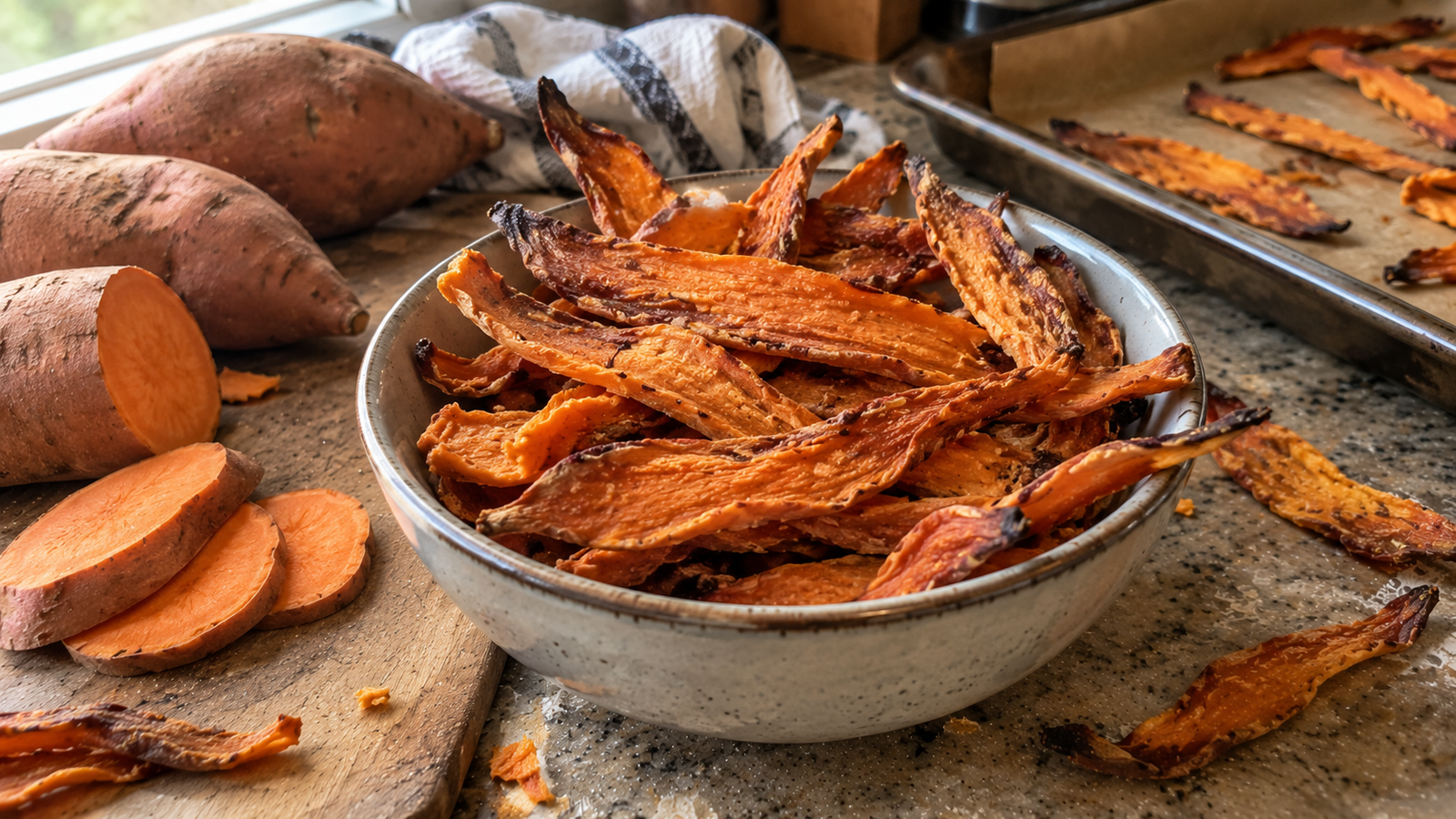
I started making these sweet potato dog chews when I wanted something simple I could give my dog without pulling out a long list of ingredients. Sweet potatoes are already naturally flavorful, so I found that I really didn’t need to add much at all. What I like most about this recipe is how easy it is. I slice the sweet potatoes into long strips, put them in the oven, and let them slowly dry until they’re chewy and firm. The pieces don’t all come out perfectly — some are thicker, some curl a little, and the edges get darker than others — and honestly, that’s part of what makes them feel homemade. I usually make a batch at once and keep the cooled chews in the refrigerator so I have a simple treat ready when I need one. They’re especially handy when I want to give my dog something different without making another complicated recipe. Quick Answer Yes, dogs can eat plain, fully cooked sweet potato in moderation. For homemade chews, use fresh sweet potatoes and avoid adding sugar, salt, butter, oil, spices, or sweeteners. These chews are made by slicing sweet potatoes lengthwise and slowly baking them at a low temperature until they are dried and chewy. Important: These are treats, not a replacement for your dog’s regular balanced diet, and they should always be given according to your dog’s size, chewing habits, and individual needs. Recipe Snapshot Detail Homemade Sweet Potato Dog Chews Prep Time 10 minutes Cook Time About 3 hours Total Time About 3 hours 10 minutes Ingredients 1 Yield About 15–20 chews Texture Chewy and slightly firm Storage Refrigerate after cooling Key Takeaways Are Sweet Potatoes Safe for Dogs? Plain, fully cooked sweet potato can be a suitable occasional treat for many dogs. Sweet potatoes provide fiber and nutrients, but they are still a carbohydrate-rich food, so portion size matters. Raw sweet potato is harder to chew and digest and can create a choking or digestive risk, particularly when served in large pieces. Cooking softens the vegetable and makes it easier to eat. For these chews, avoid turning the recipe into a human-style snack. There is no need for butter, brown sugar, maple syrup, salt, cinnamon, nutmeg, or other seasonings. If your dog has diabetes, a prescribed diet, digestive problems, or another health condition affected by diet, check with your veterinarian before adding homemade treats. How to Make Sweet Potato Dog Chews Ingredients That’s it. Choose firm sweet potatoes without soft spots, mold, sprouts, or green areas. 1. Wash the Sweet Potatoes Scrub the sweet potatoes thoroughly under running water. If you prefer, peel them completely. Removing the skin gives you a smoother chew and eliminates the need to worry about pieces of tough skin. Pat the potatoes dry before slicing. 2. Slice Into Long Strips Cut the sweet potatoes lengthwise into strips approximately ¼ inch thick. Try to keep the thickness as consistent as possible. Very thin slices will dry much faster and may become crisp, while thicker pieces will take longer and retain more chew. For larger dogs, longer strips can work well. For smaller dogs, make the pieces shorter after drying or start with smaller portions. 3. Arrange on a Baking Sheet Line a baking sheet with parchment paper. Place the sweet potato slices in a single layer with a little space between them. Avoid overlapping the pieces because trapped moisture will slow the drying process. You do not need to add oil or cooking spray. 4. Bake Low and Slow Preheat your oven to 250°F / 120°C. Bake the sweet potato slices for approximately 3 hours, turning them about halfway through. The exact time will depend on the thickness of the slices and how much moisture your sweet potatoes contain. You’re looking for pieces that are dried and firm on the outside while still having some flexibility when bent. 5. Cool Completely Remove the chews from the oven and allow them to cool completely on the baking sheet or a wire rack. They will continue to firm up as they cool. Do not seal warm chews in a container because trapped heat and moisture can encourage spoilage. Getting the Right Chewy Texture The thickness of your slices makes a noticeable difference. For softer, chewier pieces:Cut them closer to ¼–⅓ inch thick and stop baking once they are dry on the outside but still flexible. For firmer chews:Use slightly thinner slices or extend the baking time. For smaller treats:Cut the finished strips into bite-sized pieces after they have cooled. Don’t aim for a rock-hard texture. A homemade sweet potato chew should be appropriately sized for the individual dog and easy for them to manage. Serving, Storage & Variations How Much Can I Give My Dog? Start with a small piece the first time you offer sweet potato. A small dog may only need a small bite, while a larger dog can generally handle a larger treat. The correct amount depends on the dog’s size, normal diet, activity level, and overall health. Keep these treats within the dog’s daily treat allowance rather than adding them on top of unlimited snacks. How Should I Store Them? Once completely cool, place the chews in an airtight container and refrigerate them. Because these are homemade treats without preservatives, refrigeration is a safer storage choice than leaving a batch at room temperature for an extended period. Discard any pieces that develop mold, an unusual smell, or excessive moisture. Can I Freeze Them? Yes. After cooling completely, arrange the chews in a freezer-safe container or bag and freeze them. Separate layers with parchment paper if the pieces stick together. Thaw only the amount you intend to use. Can I Make Them in a Dehydrator? Yes. A food dehydrator can work particularly well for this type of treat because it is designed to remove moisture gradually. Drying time will vary considerably depending on the dehydrator, slice thickness, and desired texture, so use flexibility and dryness rather than
Homemade Pumpkin Carrot Dog Chews
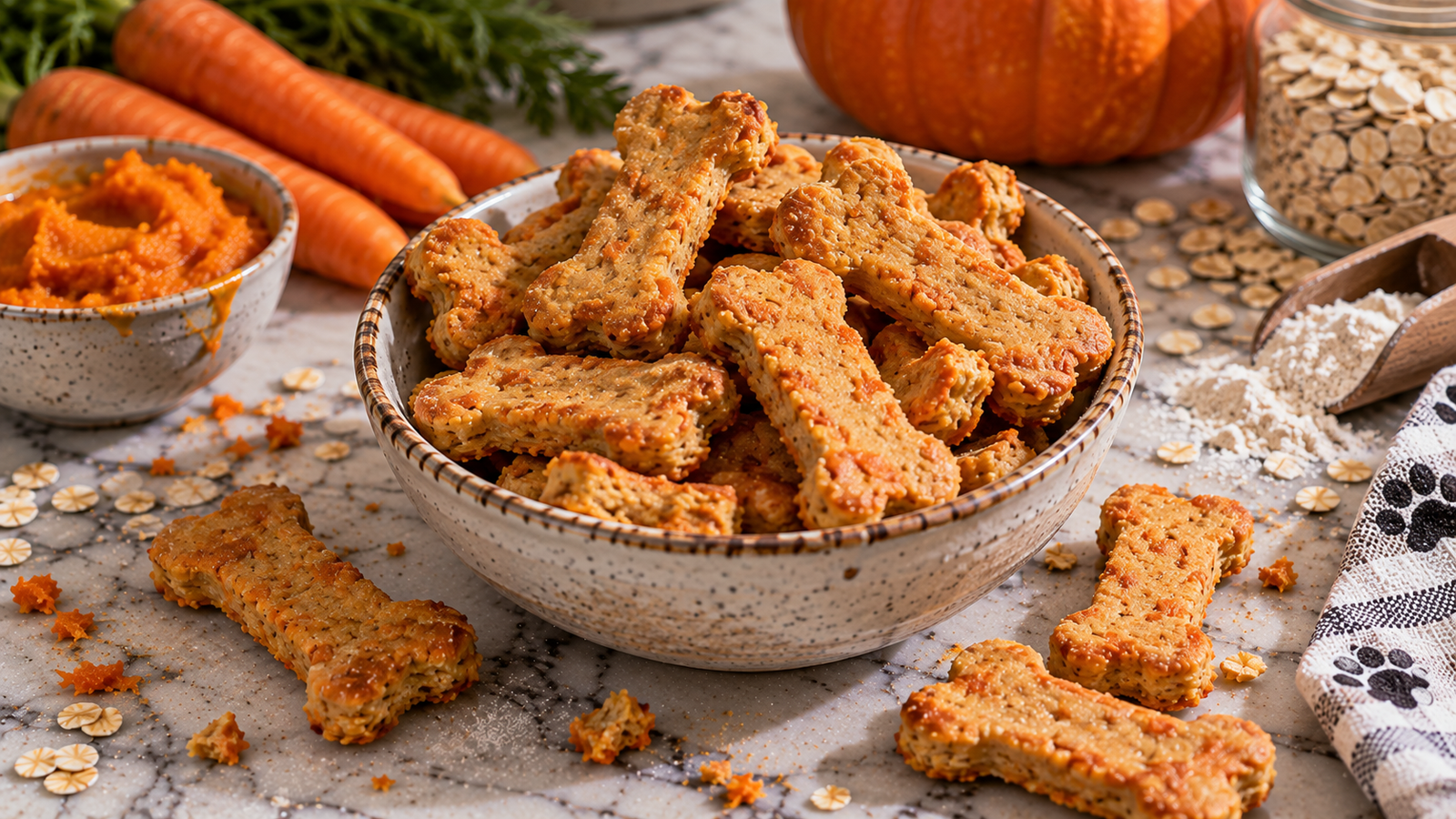
Making homemade treats when I can keep the ingredients simple and recognizable is fun, and these pumpkin carrot dog chews are exactly that kind of recipe. They have a soft, chewy texture, a little natural sweetness from pumpkin and carrot, and they’re easy to make with ingredients you may already have in the kitchen. I especially like making these when I want something different from a crunchy biscuit. Instead of baking them until they become hard and dry, I keep the pieces a little thicker and take them out while they’re still tender in the center. Once they cool, they firm up slightly while keeping that soft, chewy texture. They’re also easy to portion into small bites, which makes them useful as an occasional treat or training reward. Quick Answer Yes, dogs can enjoy homemade pumpkin carrot chews when they are made with plain pumpkin, finely grated carrot, and other dog-safe ingredients. Plain pumpkin and carrots are generally safe for dogs when served appropriately, while treats should remain a small part of the overall diet. For this recipe, use 100% plain pumpkin puree, not pumpkin pie filling, and grate the carrot finely. The finished chews should be tender and easy to break apart rather than extremely hard. Recipe Snapshot Detail Information Prep time 10 minutes Bake time 25–30 minutes Total time About 40 minutes Texture Soft and chewy Yield About 30–40 small chews Storage Refrigerate up to 1 week Freezer Up to 3 months Key Takeaways Why Pumpkin and Carrot Work Well in Dog Treats Pumpkin and carrots are both commonly used as dog-safe ingredients when prepared plainly and served in moderation. Pumpkin provides fiber and can be a useful addition to a dog’s diet, while carrots provide fiber and nutrients such as beta-carotene. Neither ingredient needs sugar, salt, butter, or heavy seasoning to make a treat appealing. The combination also works particularly well in a baked treat because pumpkin supplies moisture while finely grated carrot adds texture and natural color. One important distinction: these are chewy treats, not dental chews. They should not be baked or dehydrated until they become extremely hard. How to Make Homemade Pumpkin Carrot Dog Chews Ingredients 1. Prepare the Oven Preheat your oven to 325°F (165°C). Line a baking sheet with parchment paper or a silicone baking mat. 2. Prepare the Carrot Wash the carrot well and grate it finely. Fine shreds are important because larger pieces can remain firm inside the chew and make the dough harder to shape. If the grated carrot is particularly wet, gently squeeze out a little excess moisture with a clean kitchen towel. 3. Mix the Wet Ingredients Add the pumpkin puree, grated carrot, and egg to a large mixing bowl. Stir until everything is evenly combined. 4. Add the Oat Flour Add about 1 cup of oat flour and mix. Gradually add the remaining flour until you have a soft dough that can be shaped without being extremely sticky. Because pumpkin puree and carrots vary in moisture, you may not need the entire amount of flour. If the dough feels too dry, add water one teaspoon at a time. 5. Shape the Chews Transfer the dough to a lightly floured surface. Roll or press it to about ¼ inch thick for a moderately chewy texture. For larger dogs, you can make slightly thicker pieces. For small dogs, make smaller pieces that are easy to break apart. Use a small bone-shaped cutter, or simply cut the dough into small squares or strips with a knife. 6. Bake Arrange the pieces on the prepared baking sheet with a little space between them. Bake for 25–30 minutes, checking toward the end of the baking time. The outside should be set, and the center should still have a little give. Avoid baking them for a long time just to make them harder. The goal of this recipe is a tender chew, not a rock-hard biscuit. 7. Cool Completely Remove the baking sheet from the oven and let the chews cool completely. They will firm up slightly as they cool. Once completely cool, check one before storing. It should be firm enough to hold its shape but still easy to break apart. Serving, Storage & Variations Serving Size Start with a small piece the first time your dog tries the recipe. The appropriate amount depends on your dog’s size, calorie needs, activity level, existing diet, and other treats given that day. Treats should generally make up only a small portion of daily calories, with the majority coming from a complete and balanced diet. For training, you can make very small pieces so your dog receives several rewards without eating a large amount. For Small Dogs Make small flattened pieces rather than long strips. This makes them easier to portion and reduces the chance of giving more food than intended. For Larger Dogs You can make the chews slightly larger or thicker, but they should still be easy to break apart. I prefer making medium-sized pieces and breaking them into smaller portions when needed. Make Them Softer For a softer chew, make the pieces slightly thicker and avoid extending the baking time. Store them in the refrigerator once cooled. Make Them Firmer If your dog prefers a firmer texture, bake them toward the longer end of the recommended time. Keep in mind that additional drying changes the texture significantly. These should not become extremely hard, particularly for dogs with dental problems. Storage Because these chews contain moisture and don’t contain commercial preservatives, store them in an airtight container in the refrigerator for up to 1 week. For longer storage, freeze them in a freezer-safe container for up to 3 months. Cool the treats completely before sealing them. Warm treats trapped in a container can create condensation and shorten their shelf life. Discard any treat that develops mold, an unusual smell, sliminess, or another obvious change in texture. Common Mistakes Using Pumpkin Pie Filling This is one of the easiest mistakes to make.
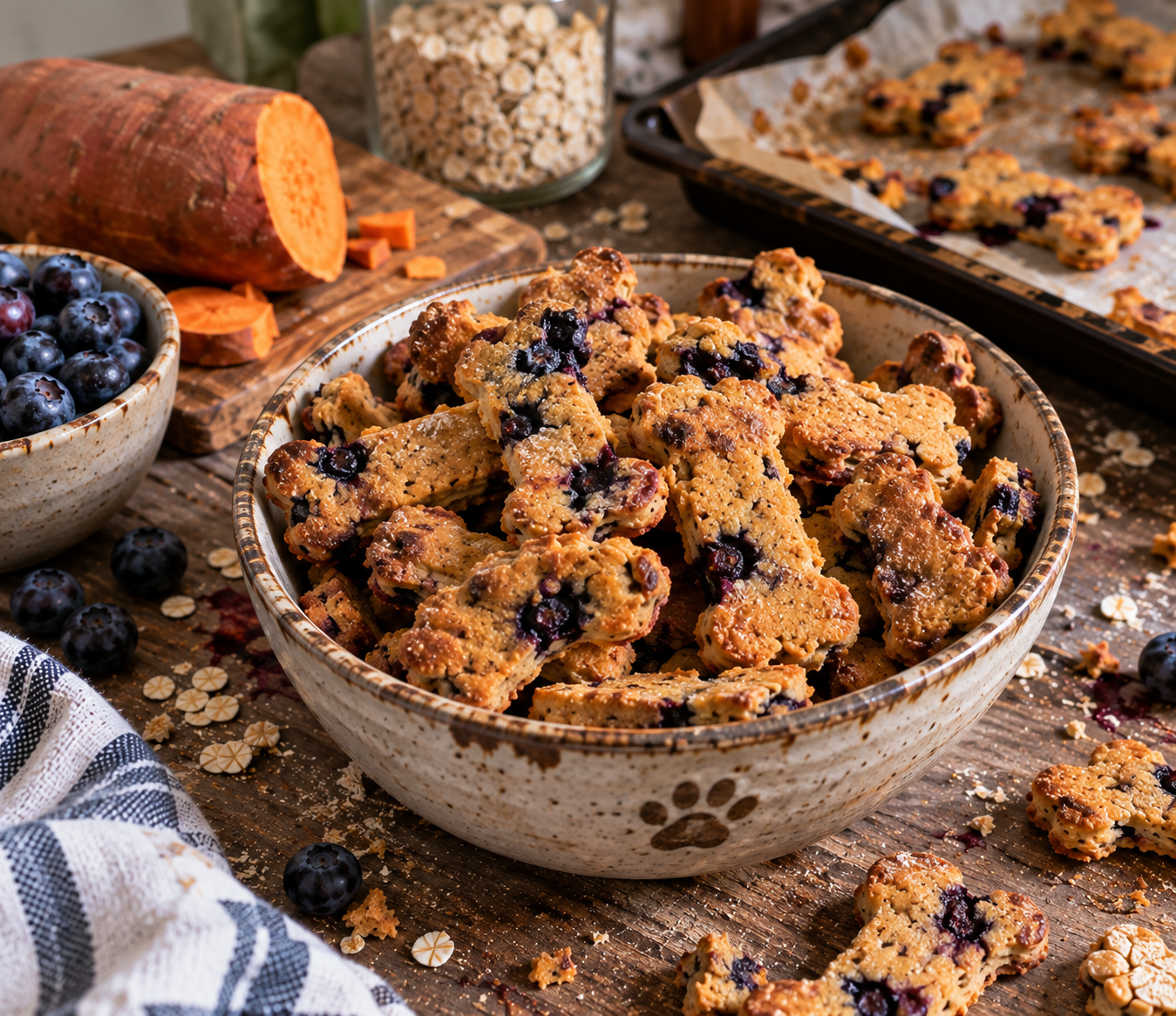
Sweet Potato and Blueberry Chews for Dogs
I love making homemade treats when I can keep the ingredients simple and still make something my dog gets excited about. These sweet potato and blueberry chews are one of those recipes I keep coming back to because they use everyday ingredients and have a naturally sweet, fruity flavor without needing added sugar. The sweet potato makes the dough soft and easy to work with, while blueberries add little bursts of flavor and color throughout the treats. I bake them until they’re firm around the edges but still have a slightly chewy texture in the middle. They’re especially nice when you want a homemade treat that feels a little different from the usual crunchy dog biscuit. Quick Answer Yes, plain cooked sweet potato and blueberries can be suitable ingredients for many dogs when served in moderation. Sweet potato should be cooked and plain, while blueberries should be fresh or frozen and free from added sugar or syrup. These homemade chews combine both ingredients with oat flour and egg to create a soft, chewy dog treat. Recipe Snapshot Prep time 15 minutes Cook time 25–30 minutes Total time About 45 minutes Yield About 18–24 small chews Texture Soft and chewy Oven temperature 350°F / 175°C Storage Refrigerate for up to 1 week Key Takeaways Why Sweet Potato and Blueberries Work Well in Homemade Dog Treats Sweet potato gives these chews their soft texture and naturally sweet flavor. Once cooked and mashed, it also helps bind the dough without requiring much added fat. It provides fiber and several nutrients, including beta-carotene, while blueberries contribute fiber and naturally occurring antioxidants. The important part is keeping both ingredients plain. Sweet potato should be cooked before adding it to the recipe, and blueberries should not come packed in syrup or mixed with added sweeteners. Because these treats contain concentrated ingredients in a smaller package, portion size still matters. Treats should remain a small part of your dog’s overall daily calorie intake. How to Make Sweet Potato and Blueberry Chews for Dogs Ingredients 1. Cook the Sweet Potato Peel the sweet potato and cut it into chunks. Bake, steam, or boil until completely tender. Let it cool enough to handle, then mash it until mostly smooth. Avoid adding butter, salt, sugar, milk, or seasoning. 2. Prepare the Blueberries Wash fresh blueberries thoroughly. If using frozen blueberries, thaw them first and drain away excess liquid. Gently mash the berries with a fork. You don’t need to turn them completely into a smooth puree—leaving a few small pieces gives the finished chews little pockets of blueberry. 3. Make the Dough Add the mashed sweet potato, blueberries, egg, and optional melted coconut oil to a mixing bowl. Stir until combined. Gradually add the oat flour, mixing as you go. The finished dough should be soft and workable rather than runny. If it feels very sticky, add a little more oat flour. If it seems unusually dry or crumbly, add a teaspoon of water at a time until it comes together. 4. Roll and Cut the Chews Preheat the oven to 350°F (175°C) and line a baking sheet with parchment paper. Place the dough between two sheets of parchment and roll it to about ¼ inch thick. Cut the dough into small strips, rectangles, or bone shapes. Keep the pieces small enough to be an appropriate treat for your dog. 5. Bake Arrange the chews on the prepared baking sheet with a little space between them. Bake for 25–30 minutes, or until the treats are set and lightly browned around the edges. For a softer chew, stay toward the shorter end of the baking time. For a firmer texture, leave them in a little longer, watching carefully so they don’t become excessively hard. 6. Cool Completely Transfer the treats to a wire rack and allow them to cool completely before serving. They will firm up slightly as they cool. Serving, Storage & Variations How Much Should You Give Your Dog? Start with a small piece when introducing the recipe for the first time. A small dog may only need part of a chew, while a larger dog may be able to have a whole small chew. The right amount depends on the size of the treat, your dog’s normal diet, activity level, and total daily treat intake. Remember that treats should generally account for no more than about 10% of a dog’s daily calories. How to Store Them Because these are homemade treats without commercial preservatives, I prefer keeping them refrigerated. Store cooled chews in an airtight container in the refrigerator for up to 1 week. For longer storage, place them in a freezer-safe container or bag and freeze for up to 3 months. Thaw individual treats in the refrigerator or allow them to sit briefly at room temperature before serving. For a Firmer Chew If your dog prefers a firmer texture, roll the dough slightly thinner and extend the baking time carefully. You can also allow the baked treats to cool completely and then return them to a low oven for additional drying. The goal is a firm dog treat—not a rock-hard object that could be difficult for a dog to chew safely. Can I Use Frozen Blueberries? Yes. Frozen blueberries work well in this recipe. Thaw them first and drain excess liquid so they don’t make the dough unnecessarily wet. Can I Use Other Flour? Plain oat flour is my preferred option here, but the recipe can be adjusted with another dog-appropriate flour if needed. If changing the flour, add it gradually because different flours absorb moisture differently. Common Mistakes Using Sweet Potato With Added Ingredients Plain cooked sweet potato is what you want. Avoid sweet potato prepared with butter, sugar, salt, sauces, or seasoning blends. Using Sweetened Blueberries Don’t use blueberries packed in syrup or sweetened blueberry products. Fresh or frozen plain blueberries are the simplest choice. Making the Chews Too Large Large treats can contribute more calories than expected and may be harder for smaller
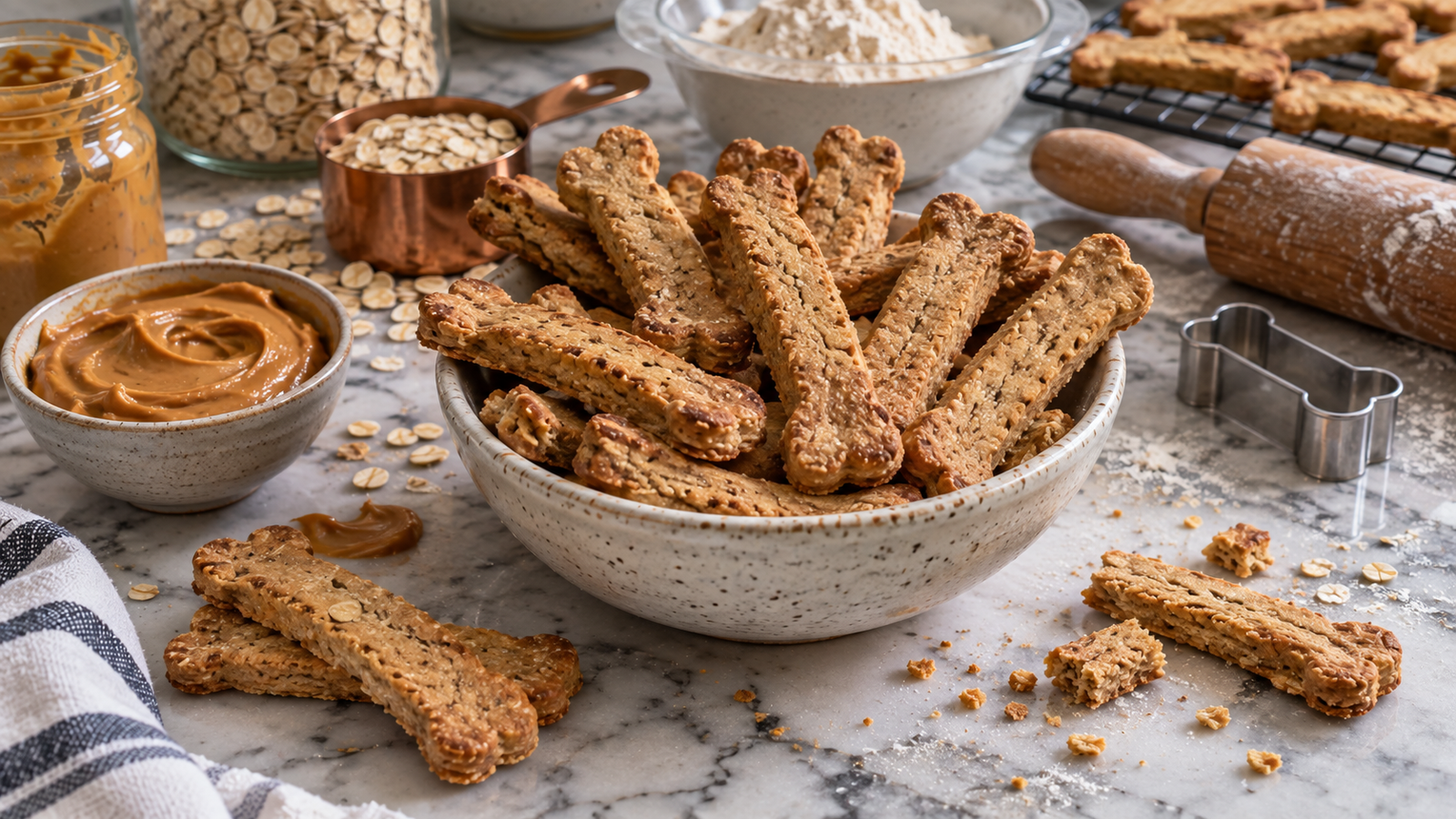
Homemade Peanut Butter Dog Sticks
I love making homemade treats for my dog, especially when I can turn a few simple ingredients into something that feels a little more special than an everyday biscuit. These homemade peanut butter dog sticks are one of my favorites because they are easy to mix, easy to shape, and bake up with a satisfying crunch. The dough comes together with peanut butter, egg, and simple pantry ingredients, then gets cut into little sticks that are easy to portion and store. They make a great occasional reward without needing a long ingredient list or complicated preparation. The most important part is choosing the right peanut butter. It needs to be plain and completely free from xylitol (also called birch sugar), because xylitol is highly toxic to dogs. Quick Answer Yes, you can make homemade peanut butter dog sticks with dog-safe peanut butter. For this recipe, use: The finished sticks are baked until firm and lightly browned. Because peanut butter is relatively high in fat and calories, these should be given as an occasional treat and counted as part of your dog’s daily treat allowance. Recipe Snapshot Details Prep time 15 minutes Bake time 20–25 minutes Total time About 40 minutes Yield About 24–30 sticks Oven 350°F / 175°C Texture Firm and crunchy Storage Up to 1 week refrigerated Key Takeaways Choosing Peanut Butter for Dog Treats Not all peanut butter is equally suitable for homemade dog treats. Look for a peanut butter with a short ingredient list and avoid products containing xylitol, birch sugar, added chocolate, or heavily sweetened ingredients. Unsalted peanut butter without added sugar is a straightforward choice. Xylitol deserves particular attention because it can cause a rapid drop in blood sugar in dogs and can lead to serious poisoning. If you ever suspect your dog has eaten peanut butter containing xylitol, contact a veterinarian or emergency veterinary clinic immediately rather than waiting for symptoms. Peanut butter is also high in fat and calories, so more is not necessarily better. These treats are designed to provide a small amount of peanut butter in each serving rather than becoming a major part of your dog’s diet. How to Make Homemade Peanut Butter Dog Sticks Ingredients Instructions 1. Prepare the oven Preheat your oven to 350°F (175°C). Line a baking sheet with parchment paper. 2. Combine the dry ingredients Add the whole-wheat flour and rolled oats to a large mixing bowl. Stir until evenly combined. 3. Add the peanut butter and egg Add the peanut butter and egg. Mix with a sturdy spoon or your hands until the mixture begins to form a thick dough. 4. Add water gradually Add the water a little at a time, mixing after each addition. Stop when the dough is firm but workable. You want a dough that holds together when pressed without being overly sticky. 5. Roll out the dough Lightly flour your work surface and roll the dough to about ¼-inch thickness. For crunchy sticks, try to keep the thickness fairly even so they bake at the same rate. 6. Cut into sticks Use a knife or pizza cutter to cut the dough into narrow sticks about 3–4 inches long. For small dogs, make shorter and thinner sticks. 7. Arrange on the baking sheet Place the sticks on the prepared baking sheet with a little space between them. Prick each stick once or twice with a fork if you want to reduce puffing during baking. 8. Bake Bake for approximately 20–25 minutes, or until the sticks are firm and lightly browned around the edges. For a harder, crunchier biscuit, turn off the oven and leave the treats inside for another 10–15 minutes with the door slightly open. 9. Cool completely Transfer the sticks to a wire rack and let them cool completely before giving one to your dog or storing the batch. Serving, Storage & Variations Serving These are best treated as occasional rewards rather than something to offer freely throughout the day. A small dog may only need a short stick or half of one, while a larger dog may tolerate a larger portion. Start small, especially if peanut butter is new to your dog. Treats should generally remain a small part of your dog’s overall daily calorie intake. Storage Once completely cool, keep the sticks in an airtight container in the refrigerator for up to 1 week. For longer storage, freeze them in a freezer-safe container with parchment between layers. Thaw one at a time when needed. Make Them Smaller For puppies or small breeds, cut the dough into short, narrow sticks rather than making the full-size version. Make Them Crunchier Roll the dough slightly thinner and give the sticks additional drying time in the turned-off oven after baking. Add Pumpkin For a seasonal variation, replace a small portion of the water with plain pumpkin puree. Avoid pumpkin pie filling, which can contain added sugar and spices. Use Oat Flour You can grind the rolled oats into a fine flour before mixing if you prefer a smoother dough. Common Mistakes Using the wrong peanut butter This is the biggest mistake to avoid. Always inspect the ingredient label for xylitol or birch sugar before using peanut butter in dog treats. Making the sticks too thick Thick pieces can stay soft in the middle while the outside becomes overly brown. Rolling the dough evenly helps the sticks bake consistently. Adding extra sweeteners There is no need to add honey, sugar, syrup, or other sweeteners. The peanut butter provides plenty of flavor on its own. Giving too many Peanut butter is calorie-dense, so several sticks can add up quickly. Keep portions appropriate for your dog’s size and overall diet. Storing them before they cool Warm biscuits can trap moisture inside an airtight container and become soft. Let them cool completely first. FAQ Can dogs eat peanut butter? Many dogs can eat plain peanut butter in moderation, provided it does not contain xylitol or other inappropriate ingredients. Peanut butter is relatively high in
Can Dogs Have Tylenol? Risks, Symptoms, and What to Do
Tylenol contains acetaminophen, a medication used to relieve pain and reduce fever in people. However, Tylenol should never be given to a dog unless a veterinarian specifically prescribes it and provides instructions. Incorrect use can cause serious liver damage, damage to red blood cells, and potentially life-threatening poisoning. If your dog has swallowed Tylenol, contact your veterinarian or an emergency veterinary clinic immediately. Do not wait for symptoms to appear, and do not attempt home treatment without veterinary guidance. This guide explains why Tylenol can harm dogs, the warning signs of acetaminophen poisoning, what to do after accidental ingestion, and which veterinary pain-relief options may be available. Quick Answer Can dogs have Tylenol? Generally, no. Tylenol contains acetaminophen, which can be toxic to dogs when given incorrectly. Although veterinarians may occasionally prescribe acetaminophen for selected dogs under carefully controlled conditions, owners should never give it independently. Acetaminophen poisoning can damage the liver and interfere with the ability of red blood cells to carry oxygen. Some dogs may initially appear normal even while harmful effects are developing. Remember these essential safety points: Why Is Acetaminophen Toxic to Dogs? Acetaminophen is processed by the liver. During this process, the body normally neutralizes potentially harmful byproducts. When too much acetaminophen is absorbed, these protective pathways can become overwhelmed, allowing toxic substances to damage liver cells. Acetaminophen can also affect red blood cells, producing methemoglobin, which cannot carry oxygen normally. This can reduce oxygen delivery to tissues and cause serious illness. [1][4] How poisoning affects the body System affected Possible effects Liver Liver cell damage and impaired liver function Red blood cells Reduced oxygen-carrying ability and damage to blood cells Respiratory system Difficulty breathing when oxygen delivery is impaired Kidneys and other organs Additional complications may develop in severe cases The severity of poisoning depends on several factors, including the amount ingested, the formulation, the time since ingestion, and the dog’s individual health. Why dogs are vulnerable Dogs do not process acetaminophen in exactly the same way humans do. Their ability to neutralize its toxic byproducts can be overwhelmed, especially after excessive or repeated exposure. [4] This is why a medication that is commonly used by people can be dangerous for a dog. Never assume that a human medicine is safe to share with your pet. How Much Tylenol Is Toxic to Dogs? There is no owner-friendly dose calculation that can reliably determine whether an accidental ingestion is safe. The risk depends on the amount and strength of the product, the dog’s size and health, whether exposure was repeated, and whether the product contains other active ingredients. Do not use a toxic-dose threshold to decide whether to seek veterinary care. An amount that appears small may still warrant professional assessment, and early symptoms may be absent. If you know or suspect that your dog swallowed Tylenol, contact a veterinarian promptly. Be prepared to provide: Keep the original packaging so the veterinary team can identify the exact formulation. Why repeated exposure matters Repeated exposure can also be dangerous. Giving smaller amounts on multiple occasions does not guarantee safety, and damage may develop before obvious symptoms appear. Never repeat a dose or use leftover medication prescribed for another animal without speaking to your veterinarian. What Happens If My Dog Eats Tylenol? After ingestion, acetaminophen can be absorbed into the bloodstream and begin affecting the body. The timing and severity of symptoms vary. Some effects may develop within hours, while liver injury can become apparent later. Possible complications include: Not every dog will show all these signs. A dog that appears normal after swallowing Tylenol may still be at risk. Do not wait for symptoms before seeking advice. Early veterinary assessment may allow treatment to begin before serious complications develop. [1][7][9] Symptoms of Tylenol Overdose in Dogs Recognizing the warning signs of acetaminophen poisoning can help you explain the situation to your veterinarian and understand when emergency care is needed. Early warning signs Possible early signs include: These symptoms are not specific to acetaminophen poisoning, but they should be taken seriously when exposure is possible. Signs of red blood cell damage Acetaminophen can interfere with oxygen transport in the blood. Warning signs may include: Signs of possible liver injury or severe poisoning More serious signs may include: The timing and combination of symptoms vary, so do not use a symptom checklist to rule poisoning in or out. Emergency warning: Difficulty breathing, blue or brown gums, collapse, marked weakness, or severe swelling requires immediate veterinary attention. If your dog may have swallowed Tylenol, contact a veterinarian even if these signs are absent. [1][9] Is Children’s Tylenol Safe for Dogs? No. Children’s Tylenol contains acetaminophen and should not be considered a safe alternative to adult formulations. Liquid products may have different concentrations, and some medicines contain additional ingredients that can create further risks. Products marketed for children are designed for human use, not for unsupervised treatment of dogs. Never estimate a dose from a child’s dosing instructions or use a measuring syringe to administer human medicine to your dog without veterinary direction. If your dog has swallowed children’s Tylenol, keep the bottle or packaging and contact your veterinarian immediately. Tell them whether the product was liquid, chewable, or another formulation. Can Dogs Take Ibuprofen or Aspirin Instead? No human pain reliever should be given to a dog without veterinary approval. Switching from Tylenol to another human medication does not automatically make pain treatment safe. These medications are not interchangeable, and their risks differ. A drug that may be appropriate in a particular veterinary situation can still be dangerous when used incorrectly. If your dog is in pain, contact your veterinarian to identify the cause and choose an appropriate treatment. [9] What Pain Medication Is Safe for Dogs? Veterinarians can prescribe pain-relief medications based on a dog’s condition, age, medical history, other medicines, and individual risks. These options may be safer and more effective than human painkillers when selected and monitored appropriately. Dog-specific anti-inflammatory medications Depending on the diagnosis
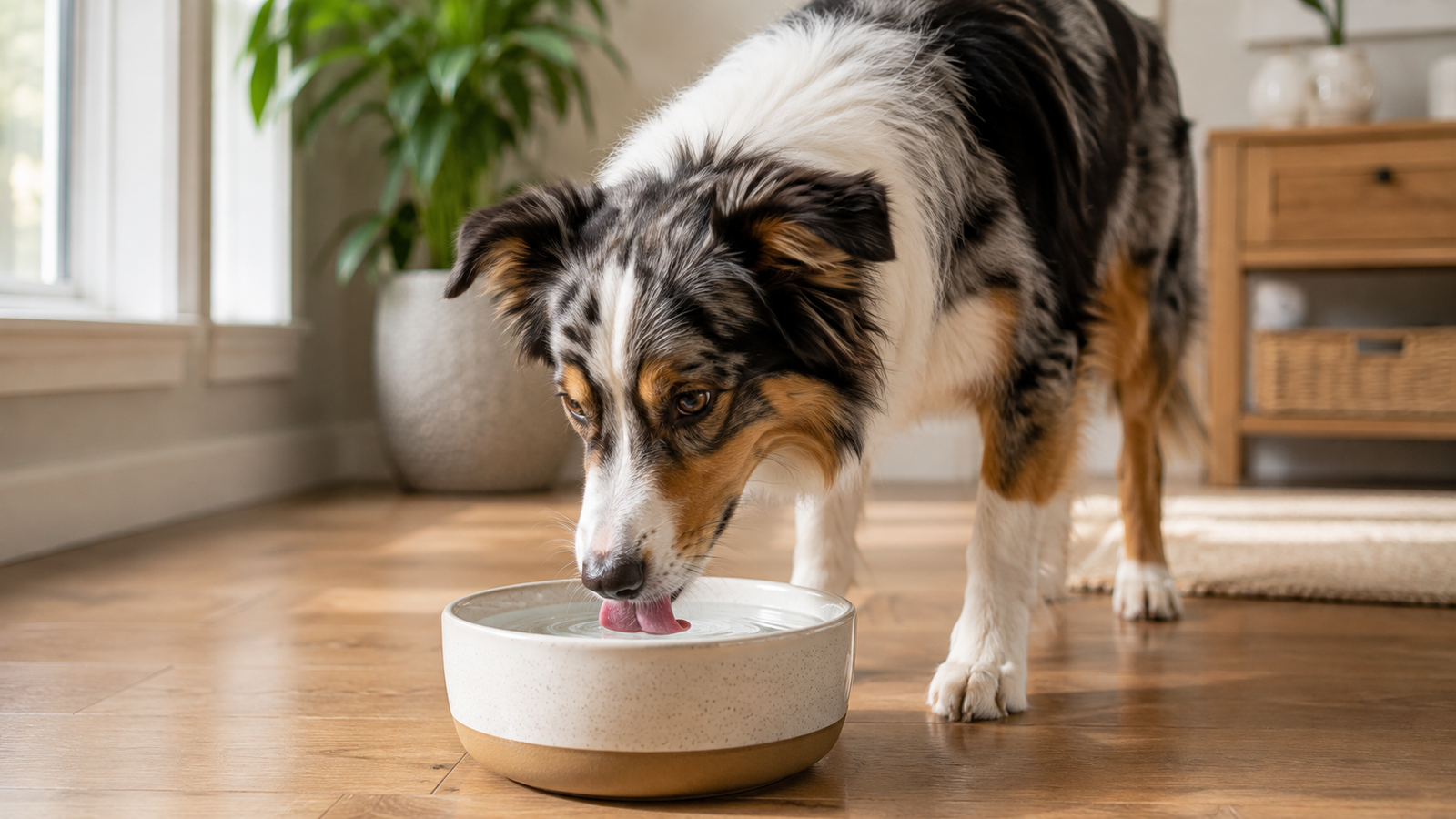
Why Is My Dog Drinking So Much Water? Causes, Normal Amounts & When to Worry
Quick Answer: If your dog is suddenly drinking much more water than usual, it may be caused by something as simple as hot weather, increased exercise, or a change in diet. But persistent excessive thirst, called polydipsia, can also be associated with medical conditions such as kidney disease, diabetes mellitus, Cushing’s disease, liver disease, or pyometra. A general veterinary guideline is around 50–60 mL of water per kilogram of body weight per day. Consistently drinking around 90–100 mL/kg/day or more is considered excessive and deserves veterinary investigation. If your dog is drinking more and urinating more, losing weight, vomiting, becoming lethargic, or showing changes in appetite, contact your veterinarian. Never restrict your dog’s water unless your veterinarian specifically tells you to. Key Takeaways How Much Water Should a Dog Drink Per Day? A general guideline is approximately 50–60 mL of water per kilogram of body weight per day, although individual requirements can vary. For example: Dog Weight Approximate Daily Water 5 kg / 11 lb 250–300 mL 10 kg / 22 lb 500–600 mL 20 kg / 44 lb 1–1.2 L 30 kg / 66 lb 1.5–1.8 L 40 kg / 88 lb 2–2.4 L These are general estimates, not strict requirements. A dog’s water needs can change depending on: Dogs eating canned food may drink less directly from their water bowl because wet food contains substantially more moisture than dry kibble. Likewise, a dog exercising heavily in hot weather may temporarily drink considerably more than usual. How to Measure How Much Water Your Dog Drinks If you’re concerned that your dog is drinking too much, measuring their intake is much more useful than guessing. Step 1: Measure the Water Fill the bowl with a measured amount of water each morning. Step 2: Record Refills Write down how much water you add each time you refill the bowl. Step 3: Measure for 24–48 Hours Continue for at least one full day. Two days can help determine whether the increase is consistent rather than a one-time change. Step 4: Calculate mL/kg/day Divide the total amount consumed in milliliters by your dog’s weight in kilograms. For example: 1,200 mL ÷ 20 kg = 60 mL/kg/day That’s within the general range described above. If your dog’s intake consistently approaches or exceeds 90–100 mL/kg/day, contact your veterinarian. Don’t Forget Other Water Sources Your measurement can be affected by: So try to account for these when possible. 🧮 Dog Water Intake Calculator Use this calculator for a rough estimate of the general daily water range based on body weight. It is not a diagnostic tool and cannot determine whether your dog’s water intake is medically appropriate. <divstyle=”font-family:Arial,sans-serif;max-width:420px;margin:25pxauto;padding:20px;border:1pxsolid #ddd;border-radius:10px;background:#fafafa”><h3style=”text-align:center;margin:008px;color:#333;”> Dog Water Intake Calculator</h3><pstyle=”font-size:13px;color:#666;line-height:1.5;”> Enter your dog’s weight to estimate the general daily water range.</p><labelfor=”dogWaterWeight”style=”display:block;margin-bottom:6px;font-size:14px;”> Dog’s weight:</label><inputid=”dogWaterWeight”type=”number”min=”0.5″step=”0.1″placeholder=”Example: 20″style=”width:100%;box-sizing:border-box;padding:10px;border:1pxsolid #ccc;border-radius:5px;margin-bottom:8px;”><selectid=”dogWaterUnit”style=”width:100%;padding:10px;border:1pxsolid #ccc;border-radius:5px;margin-bottom:10px;”><optionvalue=”kg”>Kilograms (kg)</option><optionvalue=”lb”>Pounds (lb)</option></select><buttontype=”button”onclick=”calculateDogWater()”style=”width:100%;padding:11px;background:#486B32;color:white;border:0;border-radius:5px;cursor:pointer;font-size:14px;”> Calculate</button><divid=”dogWaterResult”style=”display:none;margin-top:15px;padding:12px;background:white;border:1pxsolid #eee;border-radius:5px;font-size:14px;line-height:1.6;”></div></div><script>functioncalculateDogWater() {varweight=parseFloat(document.getElementById(“dogWaterWeight”).value);varunit=document.getElementById(“dogWaterUnit”).value;if (!weight||weight<=0) {alert(“Please enter a valid weight.”);return; }varkg=unit===”lb”?weight/2.20462:weight;varnormalLow=Math.round(kg*50);varnormalHigh=Math.round(kg*60);varconcernLow=Math.round(kg*90);varconcernHigh=Math.round(kg*100);document.getElementById(“dogWaterResult”).style.display =”block”;document.getElementById(“dogWaterResult”).innerHTML =”<strong>Estimated general daily range:</strong> “+normalLow+”–”+normalHigh+” mL<br>”+”<strong>Amount that may warrant investigation if persistent:</strong> “+concernLow+”–”+concernHigh+”+ mL/day<br><br>”+”<small>These are general guidelines, not a diagnosis. Water needs vary between dogs.</small>”;}</script> Why Is My Dog Drinking So Much Water? Once you’ve ruled out a temporary increase caused by heat or exercise, persistent excessive thirst deserves attention. There are two broad categories: Common Non-Medical Reasons Your Dog May Drink More Hot Weather Dogs naturally need more water in hot weather because they lose fluid while cooling themselves. A dog that drinks more after spending time outdoors on a hot day may simply be replacing lost fluids. The concern is when the increased thirst continues even after your dog has cooled down and returned to their normal routine. Exercise A long walk, running session, or energetic play can temporarily increase water consumption. Again, the important thing is whether your dog’s drinking returns to normal afterward. Dry Food Dogs eating dry kibble generally need to drink more directly from their water bowl than dogs eating wet food because canned food contains much more moisture. Diet Changes A change in food, particularly toward a drier or saltier diet, can alter water intake. Some Medications Certain medications, including corticosteroids and diuretics, can increase thirst. Some preventive medications may also list increased drinking as a possible side effect. If your dog’s drinking changed after starting a medication, talk with your veterinarian before stopping the medication yourself. Boredom Some dogs may repeatedly drink water because they are bored or seeking stimulation. However, persistent excessive drinking shouldn’t automatically be blamed on boredom without first considering medical causes. Medical Causes of Excessive Thirst in Dogs When increased drinking is persistent, particularly when it occurs with increased urination or other changes, several medical conditions may be involved. Kidney Disease Kidney disease can interfere with the kidneys’ ability to concentrate urine. As the dog produces more dilute urine, they may drink more water to compensate. Other possible signs include: Diabetes Mellitus With diabetes mellitus, excess glucose can enter the urine and draw water with it. This can lead to increased urination followed by increased thirst. Other possible signs include weight loss and changes in appetite. Cushing’s Disease Cushing’s disease, also called hyperadrenocorticism, involves excessive cortisol production. Common signs can include: Diabetes Insipidus Diabetes insipidus is much less common than diabetes mellitus. It involves problems with the hormone or kidney response responsible for concentrating urine, which can result in very large amounts of dilute urine and increased drinking. Electrolyte Imbalances Certain electrolyte abnormalities, including elevated calcium levels, can contribute to excessive thirst. The underlying cause needs to be investigated by a veterinarian. Dehydration Vomiting, diarrhea, heat exposure, or inadequate water intake can cause dehydration. A dehydrated dog may become thirsty as the body attempts to restore its fluid balance. Liver Disease Liver disease and certain infections can interfere with normal fluid regulation and may be associated with increased drinking. Pyometra Pyometra is a potentially life-threatening infection of the uterus that occurs in intact female dogs. Increased thirst and urination can occur, along with other signs of illness. A female dog showing signs of serious illness after a recent heat cycle needs