

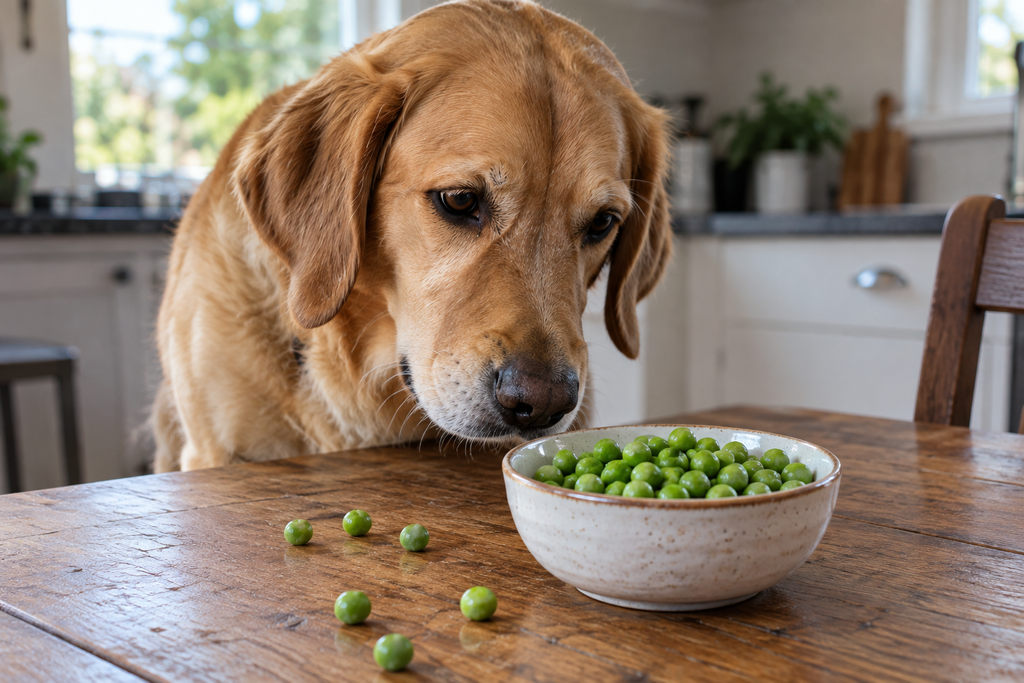
Quick Answer: Yes, dogs can eat peas, and in 2026 the veterinary consensus still supports feeding plain, cooked, or raw peas in moderation to most healthy dogs [1][4]. Peas offer protein, fiber, and vitamins, but they’re a treat, not a diet staple. Skip canned peas, watch portions, and ask your vet first if your dog has kidney disease or a history of legume sensitivity.
Key Takeaways
- Plain green peas are safe for most dogs when served cooked, raw, or frozen-and-thawed, in small amounts [1][8].
- Canned peas are a poor choice because of added sodium and preservatives [4][9].
- Pods and tough shells raise choking risk, especially in small dogs; shell snap peas and snow peas first [5][10].
- Peas should never exceed 10% of your dog’s daily calories, following the standard treat guideline [7].
- Dogs with kidney disease may need lower-phosphorus diets, so ask your vet before adding peas [4].
- Peas are common in commercial dog food as a protein and fiber source, and they’re part of an ongoing FDA review into legume-rich diets and dilated cardiomyopathy (DCM) [8][9].
- Sweet peas (the flowering plant) are toxic and completely different from edible garden peas; never feed them [3][6].
- Introduce peas slowly and watch for gas, bloating, or loose stool for the first day or two [2][5].
Can Dogs Eat Peas Safely?
Yes, most healthy dogs can eat peas safely when they’re plain, fresh or frozen, and served in small, measured amounts [1][4]. Peas are not on the ASPCA or veterinary toxic food lists, which puts them in the same “safe in moderation” category as carrots or green beans.
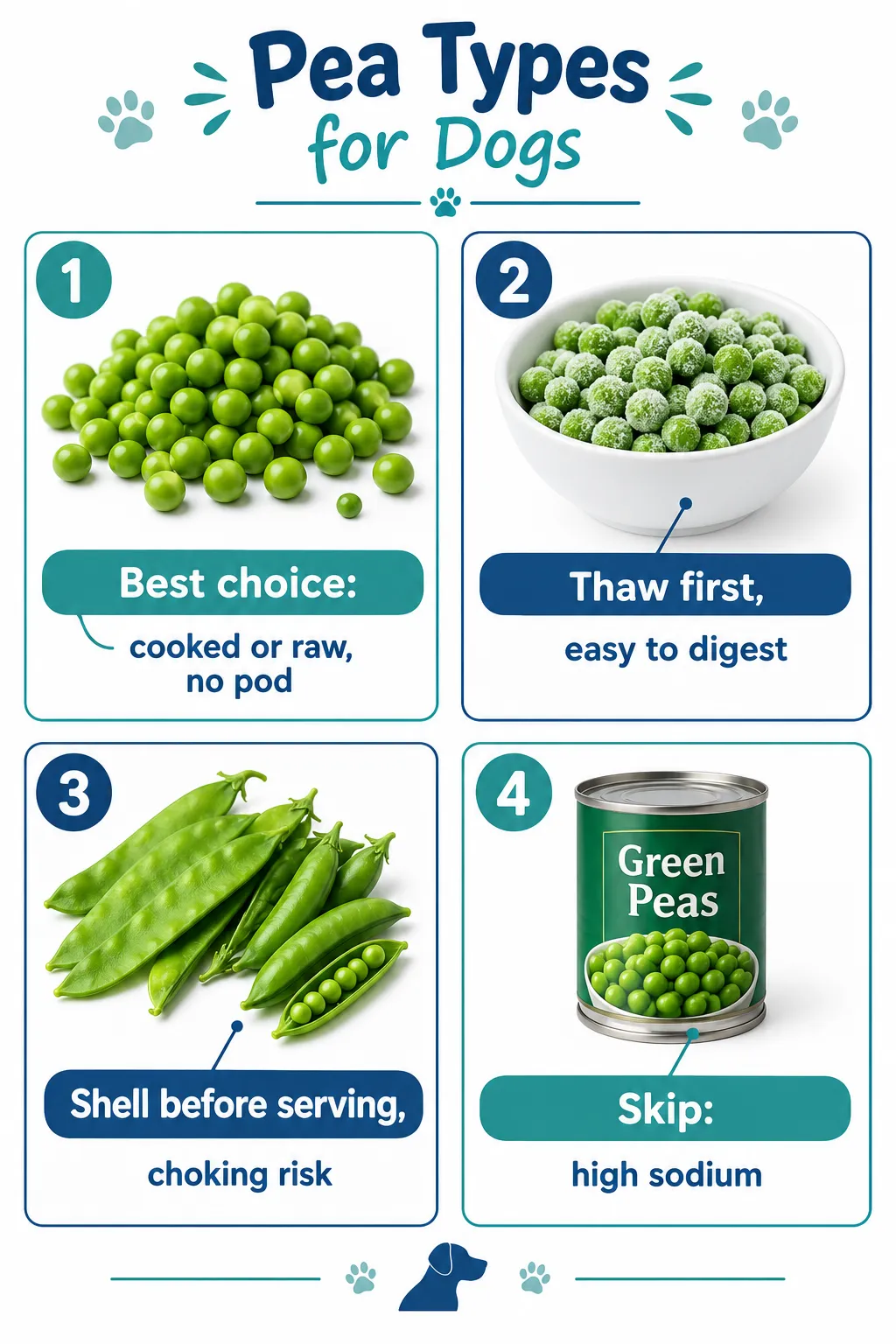
That said, “safe” doesn’t mean “unlimited.” Here’s what makes peas safe versus risky for your dog:
- Safe: Plain, unsalted, cooked, raw, or frozen-and-thawed green peas, English peas, or garden peas.
- Risky: Canned peas (sodium), pea pods for small dogs (choking), peas mixed with onion or garlic seasoning (toxic to dogs).
- Decision rule: If the peas are plain and your dog has no kidney or GI condition, a small spoonful a few times a week is fine. If you’re unsure about an underlying health issue, check with your vet before adding any new food.
A common mistake is assuming all pea-family plants are fine. Garden peas are not the same as the ornamental sweet pea plant, which is toxic to dogs and should never be fed or allowed near your dog’s garden access [3][6].
Are Peas Good for Dogs? Health Benefits Explained
Yes, peas bring real nutritional value: they’re low in calories, high in fiber, and contain plant protein, vitamin A, vitamin K, and several B vitamins [1][8]. For a healthy dog, a few peas as a treat can be more nutritious than many processed snacks.
Specific benefits include:
- Low calorie density, good for weight-conscious dogs or those on a diet plan.
- Fiber content supports healthy digestion and regular bowel movements.
- Plant protein, contributes a small amount of amino acids, though it shouldn’t replace animal protein.
- Vitamins A, K, and B-complex support eye health, blood clotting, and energy metabolism.
- Antioxidants: Garden peas contain lutein and other compounds linked to general cellular health.
Choose peas as a treat if your dog needs a low-calorie, crunchy snack between meals, or if you’re adding variety to a vet-approved, home-cooked meal plan. For dogs already eating a complete, balanced commercial diet, peas are a bonus, not a requirement, since the research base referenced here treats peas as optional rather than essential [1][7].
How Many Peas Can I Give My Dog?
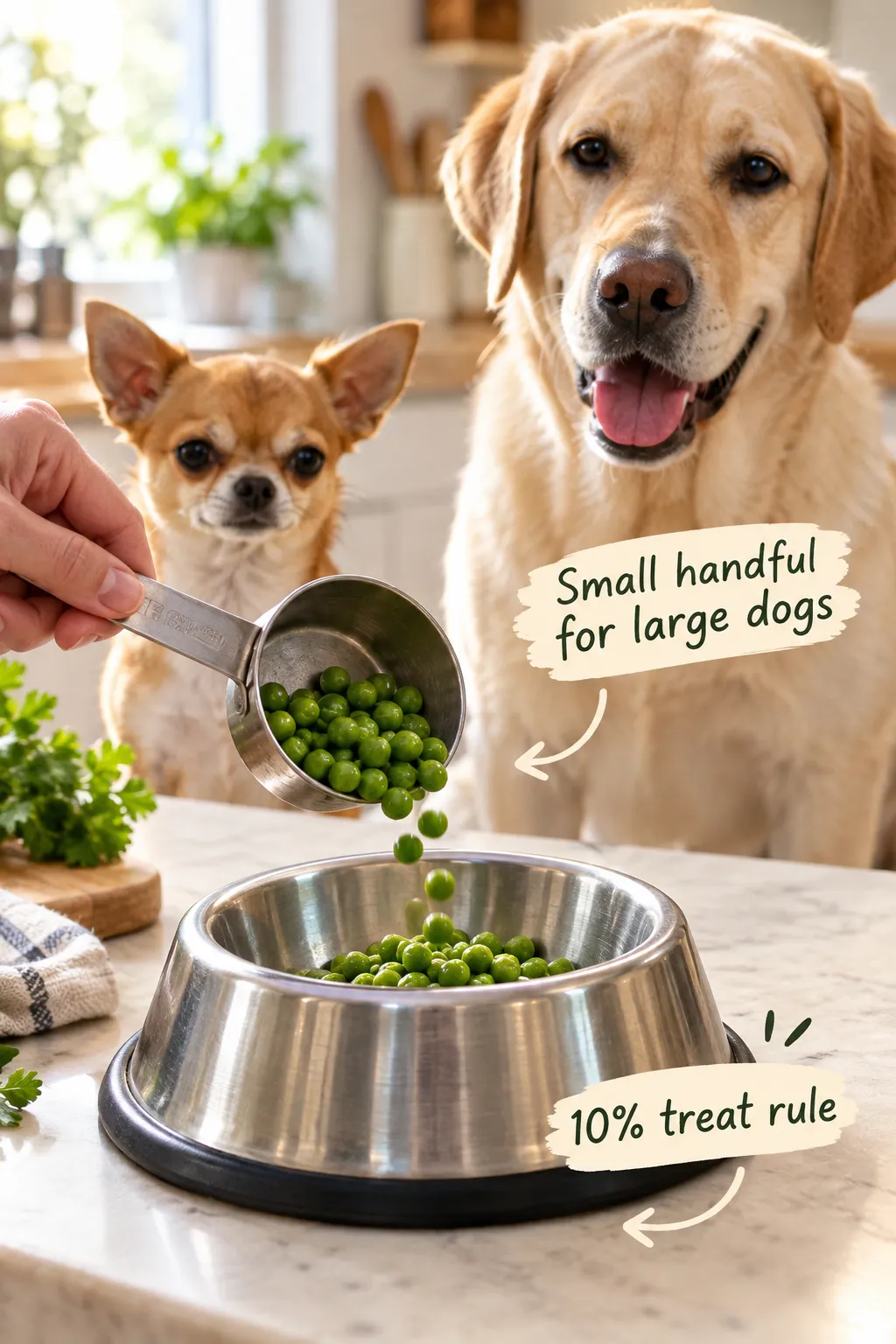
A good rule of thumb is a small handful for large dogs and just a teaspoon or two for small dogs, staying within the general 10% treat guideline vets recommend for all extras combined [7]. There’s no single official “pea dosage,” but portion control matters more than the pea itself.
Quick serving guide by dog size:
| Dog size | Approximate weight | Suggested pea portion |
|---|---|---|
| Small (Chihuahua, Yorkie) | Under 20 lbs | 1 teaspoon, a few times a week |
| Medium (Beagle, Border Collie) | 20-50 lbs | 1-2 tablespoons |
| Large (Labrador, Shepherd) | 50-90 lbs | 2-3 tablespoons |
| Giant (Great Dane, Mastiff) | 90+ lbs | 3-4 tablespoons |
Common mistake: Pouring a whole cup of peas into a food bowl as a “healthy” topper. Even healthy vegetables can cause stomach upset or unwanted weight gain if you overdo them. Start with a small test portion, and only increase gradually once you know your dog tolerates peas well.
🐾 Pea Portion CalculatorEnter your dog’s weight to get a rough daily pea guideline (based on the 10% treat rule).
function cgCalcPeas(){ var w = parseFloat(document.getElementById(‘cg-weight’).value); var r = document.getElementById(‘cg-result’); if(!w || w<=0){ r.innerHTML="Please enter a valid weight."; return; } var tsp = Math.max(1, Math.round((w/20)*1)); r.innerHTML = "Suggested: about " + tsp + " teaspoon(s) of plain peas, a few times a week, as part of a balanced diet."; }Can Dogs Eat Frozen Peas or Canned Peas?
Yes to frozen, no to canned. Frozen peas are a convenient, safe option once thawed or slightly softened, while canned peas are generally discouraged because of their high sodium content and preservatives [4][9].
- Frozen peas: Great for hot days as a cool treat, or thawed and mixed into food. No cooking required, though some dogs prefer them slightly warmed.
- Canned peas: Often packed in salty liquid with added sodium that can strain a dog’s kidneys and cardiovascular system over time. If canned is all you have, rinse thoroughly under water first to cut down on sodium, but fresh or frozen is always the better choice.
Edge case: If your dog has heart disease or is on a sodium-restricted diet, avoid canned peas entirely, even rinsed.
Pea Pods, Snap Peas, Snow Peas, and Pea Shoots: What’s Safe?
Snap peas and snow peas are generally safe in small, cut-up pieces, but the pods carry a higher choking risk than loose peas, especially for small or toy breeds [5][10]. Pea shoots (the young leafy growth) are also considered non-toxic in small amounts.
- Snap peas and snow peas: Safe if cut into small pieces; remove tough strings along the pod edge.
- Pea pods: Shell them when possible, particularly for dogs under 20 lbs, since whole pods can be tough and fibrous.
- Pea shoots: Fine as an occasional nibble, but not a replacement for proper vegetables in the diet.
- Sweet pea plants: Not edible peas at all; this flowering garden plant is toxic and must be kept away from dogs [3][6].
Decision rule: Choose shelled, chopped snap or snow peas if your dog is small or tends to gulp food. Choose whole pods only for larger dogs that chew thoroughly, and always supervise the first few times.
Peas for Dogs with Allergies, Digestive Issues, or Gas
Peas are low-allergen for most dogs, but they can still cause gas, bloating, or loose stool in sensitive dogs, especially if introduced too quickly or fed in large amounts [2][5]. True pea allergies are uncommon but not impossible.
Watch for these signs after introducing peas:
- Excessive gas or a bloated-looking belly
- Soft stool or diarrhea within 12-24 hours
- Itching, hives, or excessive licking (possible allergy, rare)
- Vomiting shortly after eating
Common mistake: Feeding a large portion the very first time. Instead, offer two or three peas, wait a day, and watch your dog’s stool and energy before increasing the amount. For dogs that already struggle with sensitive stomachs, consider a vegetable your vet has already approved, such as a small portion discussed in our guide to can dogs eat cucumbers, which tends to be gentler on digestion.
Can Puppies Eat Peas?
Yes, puppies can usually have a few plain, cooked, mashed, or finely chopped peas once they’re eating solid food, but portions should be smaller than for adult dogs [7][8]. Puppies have smaller stomachs and more sensitive digestive systems, so moderation matters even more.
- Mash or finely chop peas to reduce choking risk in young puppies.
- Introduce one or two peas at a time, not a handful.
- Avoid pea pods for puppies under six months; their chewing and swallowing control is still developing.
- Puppies on a complete commercial puppy food don’t need peas added for nutrition; they’re purely a training treat or occasional extra.
Example: A 10-week-old Labrador puppy can safely have one or two mashed peas mixed into their regular food as a taste test, rather than a spoonful of whole peas.
Peas vs Other Vegetables for Dogs
Peas hold up well against other common dog-safe vegetables, but each one brings something slightly different to the table. Here’s how peas compare:
| Vegetable | Calories (per 1/2 cup, approx.) | Key benefit | Watch-out |
|---|---|---|---|
| Peas | ~60 | Protein + fiber | Portion control, canned sodium |
| Carrots | ~25 | Vitamin A, crunchy | Choking if not sliced |
| Green beans | ~17 | Very low calorie | Minimal, generally well tolerated |
| Sweet potato | ~90 (cooked) | Fiber, vitamin A | Must be cooked, no skin for some dogs |
| Celery | ~8 | Hydration, low calorie | Stringy texture |
For dogs needing weight management, green beans or celery often edge out peas on calorie count. For dogs needing a protein boost alongside fiber, peas are a solid pick. If you’re building a rotating vegetable list, our guides on can dogs eat sweet potatoes and can dogs eat celery are useful companions to this one.
My Dog Ate Too Many Peas: What Should I Do?
Stay calm; in most cases, a dog that eats too many peas will only experience mild gas, bloating, or loose stool, not a medical emergency [2][5]. Peas are not toxic, so the main concern is digestive discomfort rather than poisoning.
Steps to take:
- Check what was eaten. Plain peas are low-risk; canned peas with high sodium or peas seasoned with onion or garlic need closer attention.
- Watch for 24 hours. Mild gas, soft stool, or a slightly upset tummy usually resolves on its own.
- Withhold treats, not food. Let your dog’s regular diet continue, but skip extra snacks for a day.
- Call your vet if you see vomiting, repeated diarrhea, lethargy, or a swollen, painful abdomen; these could signal something more serious, including bloat, which is a true emergency regardless of the cause.
- Note any seasoning. If the peas were part of a seasoned dish with onion, garlic, or heavy butter, call your vet immediately, since those ingredients are genuinely toxic.
Edge case: A dog that gulped a large bag of frozen peas whole (bag and all) needs a vet call right away because of potential plastic ingestion, not the peas themselves.
Best Way to Prepare Peas for Dogs
The best way to prepare peas for dogs is plain: steamed, boiled, or served raw/frozen with no salt, butter, onion, or garlic added [1][4]. Simplicity keeps peas safe and easy to digest.
Preparation checklist:
- Rinse fresh or frozen peas under water before serving.
- Steam or boil briefly if your dog prefers a softer texture, then let cool completely.
- Mash for puppies or senior dogs with dental issues.
- Mix into plain food like boiled chicken and rice for a balanced home-cooked topper.
- Avoid: canned peas, pea soup, seasoned pea dishes, or anything containing onion, garlic, or excess salt.
If you’re exploring other home-prepared additions, our article on can dogs eat human food covers which everyday ingredients are safe to combine with vegetables like peas.
Dogs That Shouldn’t Eat Peas: Health Conditions to Watch
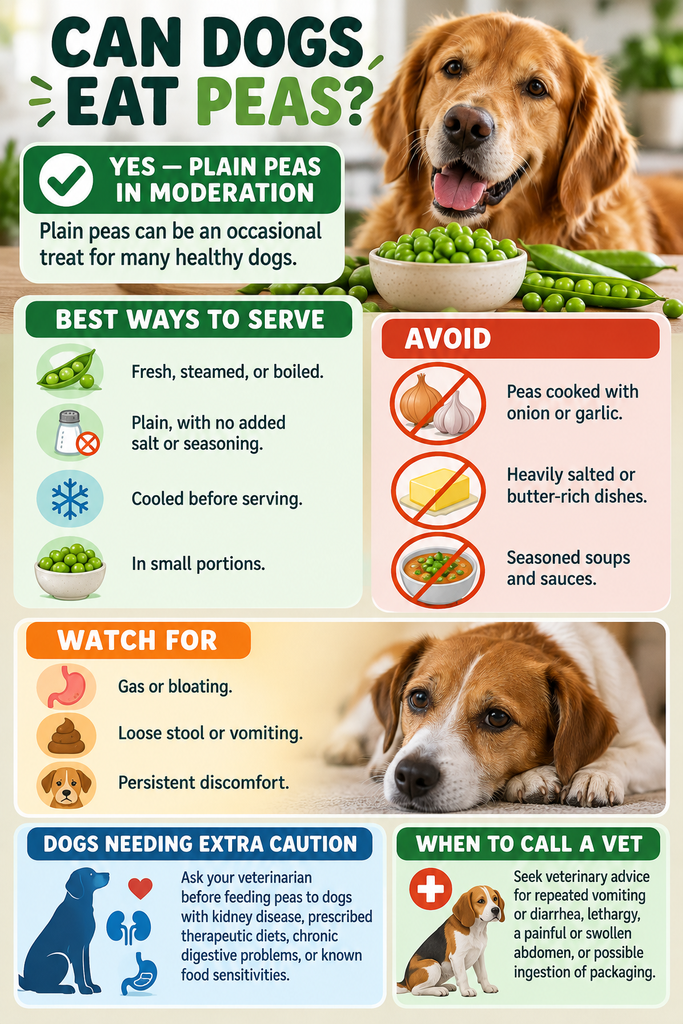
Dogs with kidney disease, certain heart conditions, or a known legume sensitivity may need to avoid or limit peas, so checking with a vet first is the safest move [4][9]. Peas aren’t universally risky, but specific health conditions change the calculation.
- Kidney disease: Peas contain phosphorus and potassium, which may need to be restricted depending on disease stage. Ask your vet before adding peas to a renal diet.
- Heart conditions (including DCM risk): Dogs already diagnosed with heart disease, or breeds genetically predisposed to it, should have their overall diet reviewed by a vet rather than adding more legume-based foods casually.
- History of GI sensitivity: Dogs with chronic diarrhea, IBD, or pancreatitis may react poorly to fiber-rich foods like peas.
- Known legume allergy: Rare, but if your dog has shown itching or GI upset after beans or lentils before, use extra caution introducing peas.
Decision rule: Choose to skip peas entirely, or only use vet-approved tiny amounts, if your dog has a diagnosed kidney, heart, or chronic digestive condition. For everyone else, moderate peas are generally fine.
Frequently Asked Questions
Can dogs eat peas every day? Small amounts of plain peas a few times a week are safer than daily feeding for most dogs, since even healthy treats should stay under 10% of daily calories [7].
Can dogs eat raw peas? Yes, raw peas are safe for most dogs and retain more nutrients than cooked peas, though some dogs digest cooked peas more easily [1].
Are split peas the same as garden peas for dogs? Split peas are a different, dried legume and are typically cooked into soups with onion or garlic, which makes pre-made split pea dishes risky; plain cooked split peas alone are generally fine in small amounts [5].
Can dogs eat pea protein in kibble? Yes, pea protein is a common and generally safe ingredient in dog food, though it’s being studied alongside other legumes in the ongoing DCM research [8][9].
Do peas cause bad breath or gas in dogs? Peas can cause gas in some dogs due to their fiber content, especially if portions are too large or introduced too quickly [2].
Can dogs with diabetes eat peas? Peas have a relatively low glycemic impact compared to starchy vegetables, but any diabetic dog’s diet should be managed closely with a vet [4].
Is it okay to mix peas into homemade dog food? Yes, plain peas mix well into homemade meals with lean protein and dog-safe carbs, as long as the overall recipe is vet-reviewed for balance [1].
Conclusion
So, can dogs eat peas? Yes, plain, fresh, raw, or frozen peas are a safe, nutritious treat for most healthy dogs when served in small, sensible portions. They offer real benefits like fiber, protein, and vitamins, but they work best as a supplement to a balanced diet, not a replacement for it. Skip canned peas, shell the pods for small dogs, introduce new amounts slowly, and check with your vet if your dog has kidney disease, heart problems, or chronic digestive issues.
Next steps: Start with a teaspoon-sized test portion today, watch your dog’s stool and energy over 24 hours, and if all goes well, add peas to your regular treat rotation alongside other vet-approved vegetables. And if you’re curious about expanding your dog’s veggie list further, check out our guides on can dogs eat potatoes and can dogs eat collard greens for more safe, practical options.
References
[1] Can Dogs Eat Peas – https://www.chewy.com/education/dog/food-and-nutrition/can-dogs-eat-peas
[2] Can Dogs Eat Peas – https://www.thedodo.com/dodowell/can-dogs-eat-peas
[3] Can Dogs Eat Peas – https://www.webvet.com/nutrition/can-dogs-eat-peas/
[4] Can Dogs Eat Peas – https://www.petmd.com/dog/nutrition/can-dogs-eat-peas
[5] Can Dogs Eat Peas – https://www.dogster.com/ask-the-vet/can-dogs-eat-peas/
[6] Can Dogs Eat Peas – https://www.purina.com.sg/care-and-advice/dog/feeding-and-nutrition/can-dogs-eat-peas
[7] Your Dog’s Diet – https://www.pdsa.org.uk/pet-help-and-advice/looking-after-your-pet/puppies-dogs/your-dogs-diet
[8] Can Dogs Eat Peas – https://www.akc.org/expert-advice/nutrition/can-dogs-eat-peas/
[9] Can Dogs Eat Peas – https://www.caninejournal.com/can-dogs-eat-peas/
[10] Can Dogs Eat Peas – https://www.forpetshealthcare.com/en/articles/can-dogs-eat-peas