

Quick Answer
Yes, dogs can eat tofu in small, occasional amounts. Plain, cooked tofu is non-toxic and offers plant-based protein, but it should never replace a complete dog food or become a daily habit. Dogs with soy allergies, kidney disease, or a tendency toward bloat should skip it or only have it with a vet’s go-ahead.[2][3]
Key Takeaways
- Tofu is not toxic to dogs, but it’s an occasional treat, not a diet staple.[2][3]
- Stick to plain, unseasoned, fully cooked tofu, no onion, garlic, soy sauce, or salt.[2][3][8]
- A medium-sized dog should get no more than one or two 1-inch cubes per day, as a maximum.
- Soy allergies are uncommon but real; watch for itching, ear infections, or GI upset after a first taste.[9][11]
- Large, deep-chested breeds prone to bloat (GDV) should avoid tofu and other gas-forming foods.[3]
- Silken and firm tofu are both fine; silken is easier to mash for small dogs or sensitive stomachs.[8]
- Dogs with kidney, liver, or thyroid disease, and pregnant or nursing dogs, should avoid soy products unless a vet approves.[5][9]
- If a dog overeats tofu or gets sick after eating it, call a vet if symptoms persist beyond a day.[3][9]
Can Dogs Eat Tofu Safely?
Dogs can eat tofu safely when it’s plain, cooked, and given in small amounts as an occasional snack. Veterinary nutrition sources including the American Kennel Club (AKC) and PetMD agree tofu isn’t poisonous to dogs, but it lacks the complete amino acid profile dogs need from their main diet.[2][3]
That means tofu works best as a side treat, not a meal replacement. A few guardrails make it safer:
- Use plain tofu only, no sauces, oils, or seasoning blends.
- Cook it first. Lightly cooked tofu is easier to digest than raw and reduces contamination risk.[8]
- Cut it small. Bite-sized cubes lower the choking hazard, especially for small breeds.[2][3]
- Introduce it gradually, watching for any reaction over the next 24 hours.[3][5]
Decision rule: Choose tofu as an occasional treat if your dog is healthy, has no soy allergy, and isn’t prone to bloat. Skip it if your dog has a known soy sensitivity or a chronic illness without vet clearance.
Is Tofu Good for Dogs or Bad?
Tofu is neither clearly “good” nor “bad”, it’s a neutral, optional add-on. It brings some nutritional value but isn’t essential, and its downsides (gas, allergy risk, incomplete nutrition) matter more for certain dogs than others.[2][3][11]
Here’s a simple way to weigh it:
| Factor | Why it matters | Bottom line |
|---|---|---|
| Protein source | Plant-based, rich in lysine | Good supplement, not a replacement for animal protein |
| Digestibility | Generally well tolerated | Can upset sensitive stomachs or cause gas |
| Allergy risk | Low but present | Avoid if dog has known soy allergy |
| Bloat risk | Linked to gas-forming foods | Risky for large, deep-chested breeds |
| Nutritional completeness | Lacks full amino acid balance | Treat only, never a main meal |
Common mistake: Treating tofu like a “healthy swap” for meat in homemade meals. Tofu alone cannot meet a dog’s complete nutritional needs, according to AKC guidance.[2]
How Much Tofu Can I Give My Dog?
For a medium-sized dog, vets recommend no more than one or two 1-inch cubes of plain tofu per day, and that’s a ceiling, not a daily target. Smaller dogs need even less, and tofu should stay occasional rather than routine.
A practical portioning guide:
- Small dogs (under 20 lbs): A few small pea-sized pieces, once or twice a week at most.
- Medium dogs (20-50 lbs): One 1-inch cube, a couple of times a week.
- Large dogs (50+ lbs): Up to two 1-inch cubes, but monitor for gas or bloating closely.
AKC Chief Veterinarian Dr. Jerry Klein’s guidance frames tofu as a rare bonus food, not a regular menu item. Start with a tiny piece the first time, then wait a full day before offering more, to see how your dog’s stomach handles it.[3][5]
Quick example: A 30-pound Labrador mix trying tofu for the first time should get one small cube (not a full 1-inch block), then nothing else new that day, so any reaction is easy to trace.
What Are the Health Benefits of Tofu for Dogs?
Tofu offers some real nutritional perks, mainly as a plant-based protein with amino acids, fiber, and select vitamins, but these benefits are modest compared to a dog’s primary diet. Hill’s Pet Nutrition notes soy is often easier to digest than some meat and dairy proteins, which is part of why it shows up in certain commercial dog foods.[11]
Benefits worth knowing:
- Lysine-rich plant protein that supports muscle maintenance.[11]
- Fiber that can support digestive regularity in small amounts.
- Potassium and folic acid, which play small supporting roles in metabolic health.
- Lower allergenicity than some animal proteins for dogs without soy sensitivity.[11]
These benefits don’t make tofu a superfood for dogs, they just mean it’s not junk, either. Think of it as a mild nutritional bonus wrapped in a low-calorie treat.
Does Tofu Have Any Nutritional Value for Dogs?
Yes, tofu has real nutritional value, but it’s supplemental rather than foundational. It contributes protein, a few vitamins, and healthy plant compounds, without delivering everything a dog needs from food.[11]
Compared to a balanced commercial dog food, tofu is missing several nutrients dogs require in specific ratios, like certain fatty acids and minerals tailored to canine metabolism. That’s why every major source, AKC, PetMD, Hill’s, frames tofu as a treat addition, not a dietary cornerstone.[2][3][11]
Edge case: Dogs on a vet-supervised home-cooked diet might have tofu included deliberately by a veterinary nutritionist to balance specific needs. That’s different from casually tossing tofu into a bowl at home, always defer to a professional-designed plan in that scenario.
Tofu vs Other Protein Sources for Dogs
Tofu stacks up as a lighter, plant-based alternative to meat proteins, but it generally falls short of animal protein in completeness and calorie density for active dogs. Here’s a side-by-side look:
| Protein source | Protein quality | Allergy risk | Best use |
|---|---|---|---|
| Tofu | Moderate, plant-based | Low (unless soy-sensitive) | Occasional treat |
| Chicken | High, complete | Moderate | Primary protein in many diets |
| Salmon | High, complete, omega-3 rich | Low | Great occasional protein boost, see salmon skin safety tips |
| Lamb | High, complete | Moderate, common novel protein | Good for dogs with chicken allergies, read more on lamb and allergy considerations |
| Shrimp | High, lean | Low-moderate | Occasional treat, check shrimp prep tips |
Decision rule: Choose tofu if a dog needs a low-fat, meat-free protein break. Choose animal protein like chicken or salmon as the dietary backbone, since dogs are evolutionarily built to thrive on animal-based amino acid profiles.[2][11]
Can Tofu Cause Digestive Problems in Dogs?
Yes, tofu can cause digestive upset in some dogs, especially in large amounts. Common issues include gas, bloating, diarrhea, constipation, or vomiting.[3][5][9]
PetMD specifically flags a bloat risk: tofu may contribute to gastric dilatation-volvulus (GDV) in breeds already prone to bloating, since it’s a gas-forming food.[3] VCA’s soy protein monograph lists vomiting, diarrhea, constipation, and gas as documented reactions to soy products in pets.[9]
Dogs most at risk for digestive trouble:
- Deep-chested breeds (Great Danes, German Shepherds, Standard Poodles), higher bloat risk.
- Dogs with sensitive stomachs or existing GI conditions.
- Dogs eating tofu too fast or in large chunks.
Common mistake: Feeding a whole block of tofu as a “fun treat.” Large quantities overwhelm a dog’s digestive system quickly, even in dogs who tolerate small amounts fine.
Is Silken Tofu Different From Firm Tofu for Dogs?
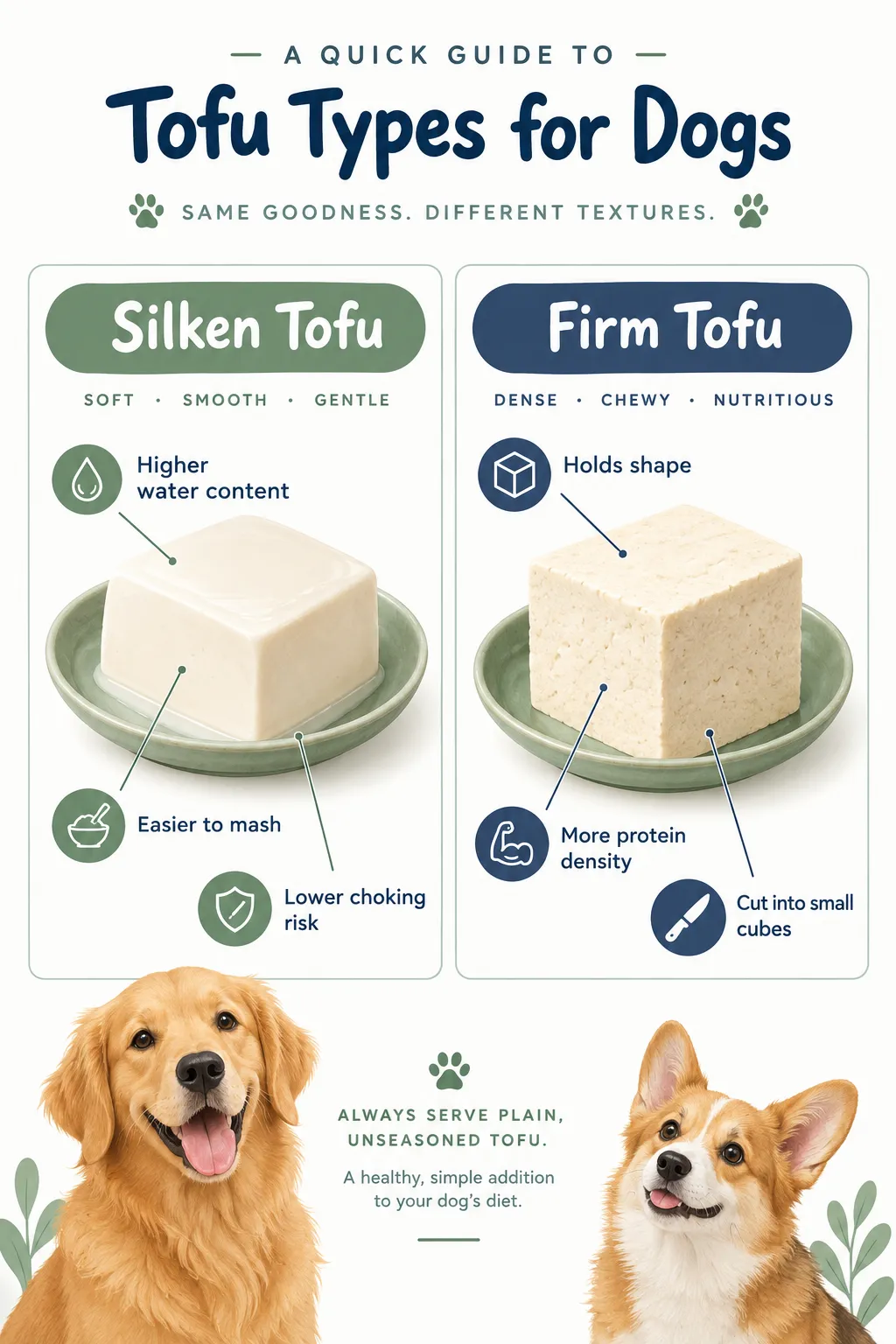
Silken and firm tofu are both safe options for dogs, but they differ in texture and water content, which affects how you serve them. Silken tofu is softer and higher in moisture, making it easier to mash for small dogs or those with chewing difficulty.[8] Firm tofu holds its shape better and works well cut into small, bite-sized cubes.
Quick comparison:
- Silken tofu: Best for mixing into food, mashing for picky eaters, or senior dogs with dental issues.
- Firm tofu: Best for cutting into training-treat-sized cubes.
- Fried or flavored tofu: Avoid entirely, frying adds fat, and flavored varieties often contain onion, garlic, or excess sodium.[2][3][8]
Example: A senior Chihuahua with few teeth does better with a small spoonful of mashed silken tofu mixed into dinner than with a firm cube that requires chewing.
Can Dogs With Allergies Eat Tofu?
Dogs without a soy allergy can usually eat tofu fine, but dogs with a known or suspected soy sensitivity should avoid it entirely.[2][6][9][11] Soy allergies in dogs aren’t as common as chicken, beef, or dairy allergies, but they do happen.

Hill’s Pet Nutrition recommends introducing any new soy-based food slowly and one at a time, so if a reaction occurs, it’s easy to pinpoint the cause.[11] Watch for these signs after a first tofu taste:
- Itching or excessive scratching
- Ear infections or ear redness
- Diarrhea, vomiting, or unusual gas
- Hives or facial swelling (rare but urgent)
Decision rule: Stop tofu immediately and call a vet if any of these signs appear within 24-48 hours of eating it.[3][9]
Can Dogs With Kidney Disease Eat Tofu?
Dogs with kidney disease should generally avoid tofu and other soy products unless a veterinarian specifically approves it. Soy protein can complicate the careful protein management that kidney disease treatment requires.[5][9]
FirstVet and VCA both flag soy-based foods as a caution area for dogs with:
- Kidney disease
- Liver disease
- Thyroid conditions
- Pregnancy or nursing[5][9]
These conditions often require tightly controlled diets, and adding an extra protein source like tofu, even a small amount, can throw off that balance. If your dog has any of these conditions, loop in your vet before adding tofu, even as an occasional treat.
Can Puppies Eat Tofu?
Puppies can try small amounts of plain, cooked tofu, but it should be an even smaller, rarer treat than for adult dogs. Puppies have higher and more specific nutritional needs for growth, and too much of any non-core food can displace calories needed from a complete puppy diet.
Guidelines for puppies:
- Wait until a puppy is fully weaned and eating solid food regularly.
- Offer a tiny piece, smaller than what an adult dog of the same size would get.
- Watch closely for digestive upset, since puppy stomachs are more sensitive.
- Never substitute tofu for puppy-formulated food, which has specific protein and calcium ratios for growth.
Edge case: A growing large-breed puppy (like a Great Dane puppy) should get tofu even more sparingly, given the breed’s later bloat risk as an adult. Building habits around small, controlled treats early sets a safer pattern.
Are There Any Tofu Brands That Are Safe for Dogs?
There’s no official “dog-approved” tofu brand, but any plain, minimally processed tofu sold at a grocery store works fine for dogs when prepared correctly. The brand matters less than the ingredient list and preparation.
What to check on the label:
- Short ingredient list: soybeans, water, and a coagulant (like calcium sulfate), nothing else.
- No added flavors, sauces, or marinades.
- No high sodium content.
- Organic or non-GMO isn’t required for safety, but some owners prefer it for overall quality.
Avoid pre-seasoned, fried, smoked, or “flavored” tofu varieties sold in some grocery aisles, these often contain onion powder, garlic, or excess salt, all of which are unsafe for dogs.[2][3][8]
What Happens if My Dog Eats Too Much Tofu?
If a dog eats too much tofu, the most likely outcome is digestive upset: gas, bloating, diarrhea, vomiting, or stomach discomfort.[3][5][9] In dogs prone to bloat, a large amount of tofu could theoretically contribute to a more serious gastric episode, though this is less common than simple GI upset.
What typically happens after overeating tofu:
- Mild gas or bloating within a few hours.
- Loose stool or diarrhea within 6-24 hours.
- Vomiting, in more sensitive dogs.
- Lethargy or reduced appetite for the rest of the day.
Most mild cases resolve on their own within 24 hours with rest and access to water. Still, monitor closely, especially in large or deep-chested breeds.
What Should I Do if My Dog Ate Tofu and Got Sick?
If a dog got sick after eating tofu, withhold food for a few hours, offer small amounts of water, and watch closely for how symptoms progress. Call a veterinarian if vomiting or diarrhea continues beyond 24 hours, or sooner if symptoms are severe.[3][9]
Seek immediate veterinary attention if any of these apply:
- The dog ate a large amount of tofu (more than a couple of blocks).
- The dog has a known soy allergy.
- The tofu was seasoned with onion, garlic, or heavy sauces.
- Symptoms include abdominal swelling, repeated retching, extreme lethargy, or collapse, these can signal bloat, which is a medical emergency.[3][9]
Common mistake: Waiting too long to call a vet when abdominal swelling or repeated unproductive retching appears. These are signs of possible GDV (bloat), which needs emergency treatment, not a wait-and-see approach.
For broader guidance on feeding dogs beyond typical dog food, check this overview of what human foods dogs can safely eat, or browse this full safe and toxic foods guide for a wider list of options and hazards.
Tofu vs Other Treats: A Quick Comparison
| Treat | Pros | Cons | Best for |
|---|---|---|---|
| Plain cooked tofu | Low-fat, plant protein | Gas risk, allergy potential | Occasional meat-free treat |
| Cucumber slices | Hydrating, low-calorie | Minimal nutrition | Hot days, weight management, see cucumber safety tips |
| Sweet potato | Fiber, vitamin A | Higher in natural sugar | Digestive support, see sweet potato guide |
| Blueberries | Antioxidants, low-calorie | Small serving needed | Training rewards, see blueberry serving guide |
Frequently Asked Questions
Can dogs eat tofu every day? No. Tofu should stay an occasional treat, not a daily food, since it lacks complete nutrition dogs need and can cause gas or bloating with frequent use.[2][3]
Is cooked tofu safer than raw tofu for dogs? Cooked tofu is generally preferred. It’s easier to digest and reduces contamination risk compared to raw tofu, though small amounts of plain raw tofu aren’t toxic.[8]
Can dogs eat tofu skin or tofu puffs? Avoid fried tofu skin or tofu puffs. The added oil and processing make them harder to digest and more likely to cause stomach upset.[2][3][8]
Does tofu help dogs with sensitive stomachs? Not reliably. Some dogs tolerate tofu fine, but others experience gas or loose stool, so it’s not a guaranteed stomach-soother.[3][5]
Can dogs with diabetes eat tofu? Plain tofu has minimal sugar and may be an acceptable occasional treat for diabetic dogs, but always confirm with a vet first given individual health variables.[5][9]
Is edamame the same as tofu for dogs? No. Edamame is whole soybeans, which have a different texture and fiber content than processed tofu. Plain, shelled edamame in small amounts is generally considered safe, but tofu and edamame aren’t interchangeable.[9][11]
Can dogs eat tofu scramble or tofu-based dog treats? Plain tofu scramble without seasoning can work in small amounts. Commercial tofu-based dog treats are fine if they list simple, dog-safe ingredients without onion, garlic, or excess salt.[2][8]
What if my dog is allergic to soy but ate tofu by accident? Watch for itching, GI upset, or swelling. Mild reactions may resolve with monitoring, but contact a vet promptly, especially if symptoms worsen or include facial swelling.[9][11]
Conclusion
Tofu earns a cautious “yes” for most healthy dogs, plain, cooked, cut small, and offered sparingly. It brings a bit of plant protein and fiber to the table, but it was never designed to replace a complete, balanced dog food, and overdoing it can trigger gas, bloating, or worse in sensitive or at-risk dogs.[2][3][9]
Next steps for dog owners:
- Try a tiny piece of plain, cooked tofu first, and wait 24 hours to watch for reactions.
- Keep portions modest: one or two small cubes max for medium dogs, less for small breeds and puppies.
- Skip tofu entirely if your dog has kidney disease, a soy allergy, or a bloat-prone body type, unless a vet says otherwise.
- Call a veterinarian promptly if your dog shows ongoing vomiting, diarrhea, or abdominal swelling after eating tofu.
When in doubt, a quick call to the vet before introducing any new food, tofu included, is always the safer move.
References
[2] Can Dogs Eat Tofu – https://www.akc.org/expert-advice/nutrition/can-dogs-eat-tofu/ [3] Can Dogs Eat Tofu – https://www.petmd.com/dog/nutrition/can-dogs-eat-tofu [5] Can Dogs Eat Tofu – https://firstvet.com/us/articles/can-dogs-eat-tofu [6] Soy In Dog Food – https://www.akc.org/expert-advice/nutrition/soy-in-dog-food/ [8] Can Dogs Eat Tofu – https://www.caninebible.com/can-dogs-eat-tofu/ [9] Soy Protein – https://vcahospitals.com/know-your-pet/soy-protein [10] Can Dogs Eat Tofu – https://www.webvet.com/nutrition/can-dogs-eat-tofu/ [11] Soy Protein – https://vcahospitals.com/know-your-pet/soy-protein