
Quick Answer
Yes, dogs can have almond butter in small amounts, but only if it’s plain, unsalted, and completely free of xylitol or other sweeteners. Almond butter isn’t toxic the way chocolate or grapes are, but its high fat content and the risk of hidden additives mean it should stay an occasional treat, not a regular snack. If your dog has pancreatitis, obesity, or a nut allergy, skip it altogether and ask your vet for a safer alternative.
Key Takeaways
- Can dogs have almond butter? Yes, in tiny amounts, if the label shows no xylitol, chocolate, or added sugar.
- Almond butter is not toxic to dogs like whole almonds can be a choking hazard, but it’s still a high-fat food [3][4].
- Xylitol is the biggest danger in any nut butter. Even trace amounts can cause a life-threatening drop in blood sugar [5][6][7][9].
- Stick to about 1 teaspoon for small dogs and up to 1 tablespoon for large dogs, given only occasionally [3][7].
- Dogs with pancreatitis, obesity, or sensitive stomachs should avoid almond butter entirely [3][5][7][9][10].
- Peanut butter is often the more “tested” option for dogs, but both need the same xylitol check [5][9][10].
- Puppies and seniors can have a tiny taste, but portion control matters even more for them.
- Use almond butter mainly as a pill-hiding trick or rare reward, not a daily habit [4][8].
Is Almond Butter Safe for Dogs to Eat?
Plain almond butter with no added sweeteners is generally considered low-risk for most healthy dogs in very small amounts. Current veterinary guidance classifies it as not toxic, but safe “only with caution,” mainly because of its fat content and the possibility of harmful additives like salt, sugar, xylitol, or chocolate mixed into flavored versions [3][4][8].
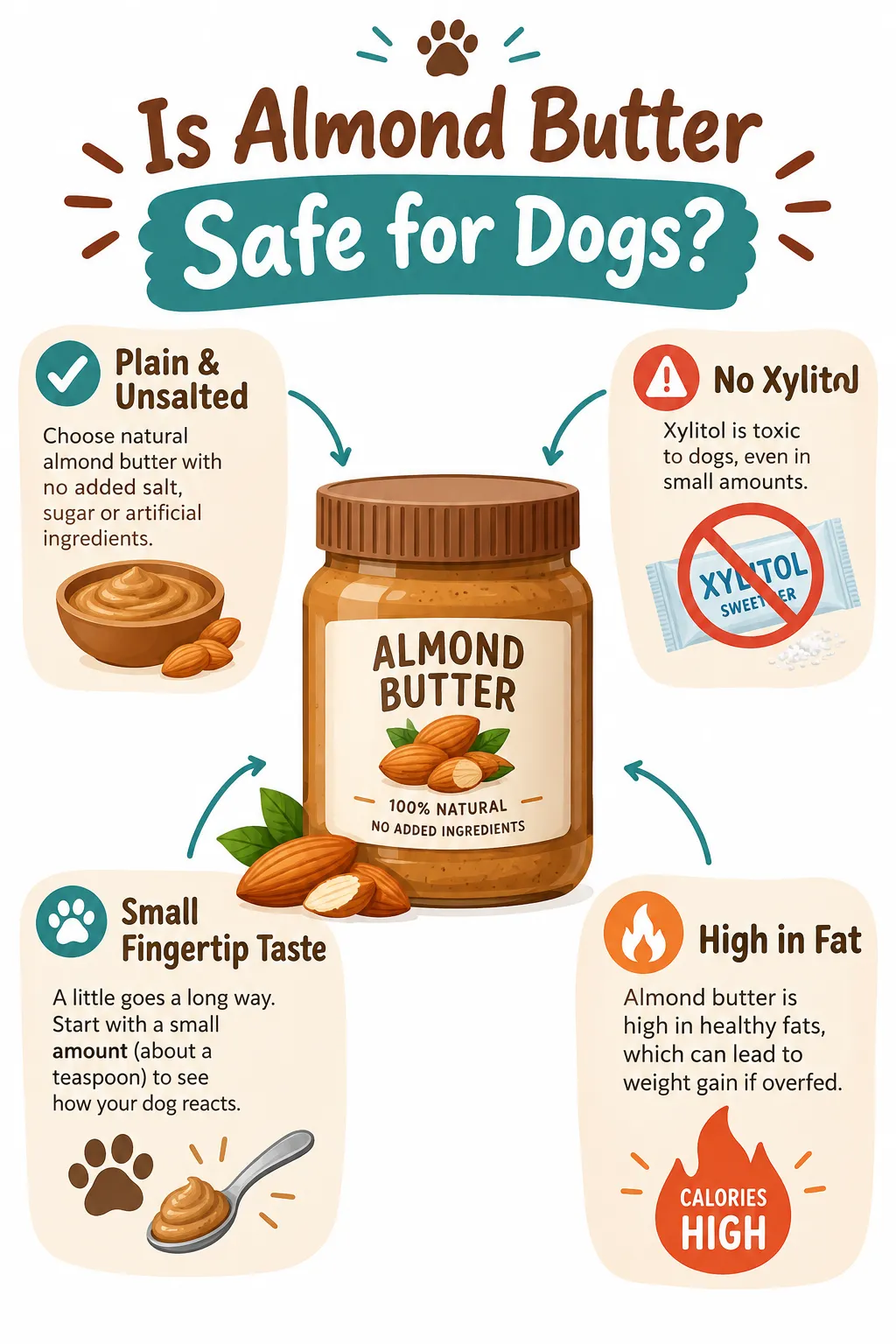
A 2026 update from a major pet-food brand notes that whole almonds aren’t recommended for dogs because of choking and blockage risks, but almond butter can be a safer alternative when it’s completely free of xylitol and other harmful additives. That’s an important distinction: the nut itself is riskier mechanically than the smooth, spreadable form.
A June 2026 veterinary nutrition article adds that a small taste of plain almond butter is usually low-risk for most dogs, as long as the jar contains no xylitol, chocolate, or cocoa, and stresses treating it as an occasional snack rather than a regular food [8].
Choose almond butter if: your dog has no known nut allergies, no pancreatitis history, and the brand you’ve chosen is plain and sweetener-free. Skip it if: your dog is overweight, has had pancreatitis, or you can’t verify the ingredient list.
For context on the raw nut version, see our guide on whether dogs can eat almonds.
How Much Almond Butter Can I Give My Dog?
A safe serving is roughly 1 teaspoon for small dogs and up to 1 tablespoon for large dogs, given only once in a while, not daily. Treats of any kind, including almond butter, should make up no more than about 10% of your dog’s total daily calories [3][7].
Almond butter runs high in calories largely because of its fat content. A single tablespoon can pack close to 100 calories, which adds up fast for a 10-pound dog. Here’s a simple way to think about portions:
| Dog size | Suggested max serving | Frequency |
|---|---|---|
| Small (under 20 lbs) | 1/4 to 1/2 teaspoon | Occasional, not daily |
| Medium (20-50 lbs) | 1/2 to 1 teaspoon | Occasional, not daily |
| Large (over 50 lbs) | Up to 1 tablespoon | Occasional, not daily |
Common mistake: letting dogs lick straight from the jar. This makes it almost impossible to control portions and invites overeating. Always pre-measure a small amount onto a spoon or into a lickable mat instead.
Edge case: if your dog is already eating a calorie-dense diet or taking medication that affects weight, ask your vet before adding any nut butter at all.
What Happens If My Dog Eats Too Much Almond Butter?
Too much almond butter can cause stomach upset, including vomiting, diarrhea, or bloody stool, because of its high fat content. In more serious cases, it can trigger pancreatitis, a painful inflammation of the pancreas that often requires veterinary treatment [3][5][7][9][10].
Signs to watch for after a large or unexpected serving include:
- Vomiting or repeated gagging
- Loose stool or diarrhea
- Abdominal pain, a hunched posture, or reluctance to move
- Lethargy or loss of appetite
- Bloating or a tense belly
Example: a 15-pound dog that sneaks a few tablespoons from an unattended jar is getting a fat load far beyond a “treat” portion. That’s a scenario worth a call to your vet, even if your dog seems fine at first, since pancreatitis symptoms can take hours to show up.
Dogs with a history of digestive sensitivity are more prone to these reactions. If your dog already deals with frequent loose stool, read our guide on why dogs get diarrhea before adding any new fatty food to the mix.
Does Almond Butter Have Xylitol in It?
Some almond butter brands, especially “flavored,” “reduced sugar,” or certain natural lines, do contain xylitol or similar sweeteners, and this is the single biggest danger tied to nut butters for dogs. Xylitol (also listed as “birch sugar” or sweetener E967) can cause a dangerous drop in blood sugar, liver failure, or death in dogs, even in tiny amounts [3][5][6][7][9].
“Even trace amounts of xylitol in a nut butter jar can cause a life-threatening reaction in dogs, check the label every single time you buy a new jar.”
Before giving your dog almond butter, check the ingredient label for:
- Xylitol, listed by name
- Birch sugar, another name for the same sweetener
- E967, the European food additive code for xylitol
- Added chocolate or cocoa flavoring
- Excess salt or added sugar
Decision rule: if the label isn’t crystal clear, or it’s a flavored/diet product, don’t risk it. Buy a separate jar labeled specifically as plain, unsweetened almond butter meant for human snacking on whole foods, and read it every time, since manufacturers do change recipes.
Almond Butter vs Peanut Butter for Dogs: Which Is Better?
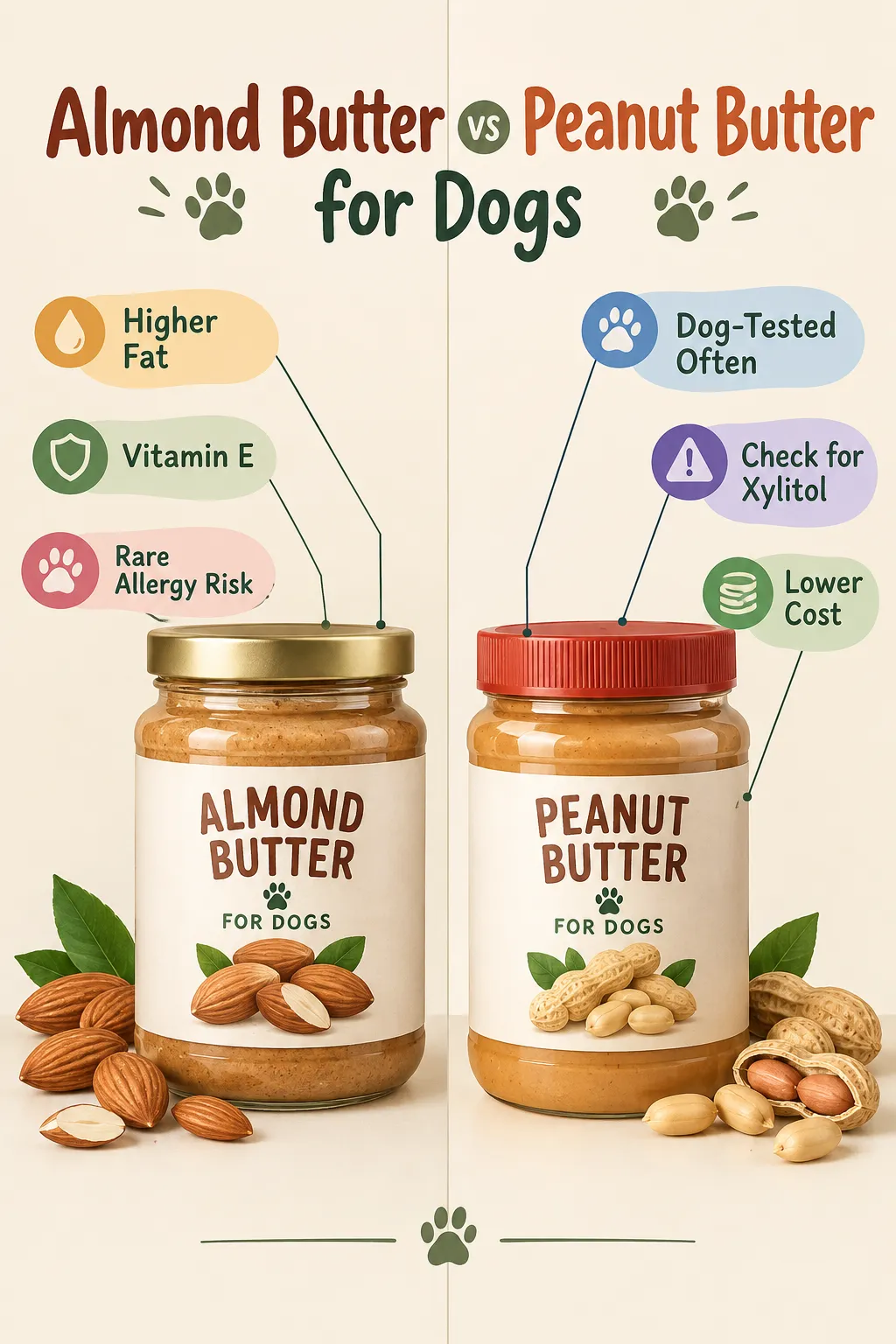
Neither almond butter nor peanut butter is clearly “better” across the board. Peanut butter is more widely used and tested as a dog treat vehicle, while almond butter offers similar nutrients like vitamin E and magnesium but tends to run slightly higher in fat per serving [2][3][5][9][10].
| Factor | Almond Butter | Peanut Butter |
|---|---|---|
| Fat content | Slightly higher | High, but slightly lower |
| Common use | Occasional rare treat | Popular training treat |
| Xylitol risk | Check label every time | Check label every time |
| Nutrients | Vitamin E, magnesium, protein | Protein, niacin, vitamin B |
Both nutrients are already supplied adequately by a complete dog diet, so neither butter is “necessary” nutritionally [2][3]. It’s really about personal preference and tolerance. If your dog has never reacted badly to peanut butter, that’s usually the safer starting point simply because it’s used more often and has a longer track record with dogs. For treat ideas, check out our homemade peanut butter dog sticks or blueberry and peanut butter twists.
Can Dogs Be Allergic to Almond Butter?
Yes, though true nut allergies are uncommon in dogs, almond butter can still trigger reactions in sensitive individuals, including itching, hives, facial swelling, or digestive upset. Any new food, including almond butter, should be introduced in a tiny amount first.
Watch for these signs after a first-time taste:
- Face or muzzle swelling
- Hives or red, itchy skin
- Excessive scratching or licking of paws (if this sounds familiar, our piece on why dogs lick their paws explains other common triggers too)
- Vomiting or diarrhea within a few hours
- Unusual lethargy
Common mistake: assuming “natural” or “plant-based” automatically means hypoallergenic. Tree nuts, including almonds, can still provoke sensitivities in individual dogs regardless of how clean the ingredient list looks.
Decision rule: if your dog has never had almond butter, offer a pea-sized amount and wait 24 hours before giving more.
Best Almond Butter Brands for Dogs (and Is Natural Safer Than Creamy?)
The best almond butter for dogs is plain, unsalted, and free of any sweeteners, regardless of brand name. Natural almond butter isn’t automatically safer than creamy or regular versions, what matters most is the ingredient list, not the marketing label [5][9].
Look for these qualities when scanning a jar:
- Single ingredient or close to it: almonds, maybe a pinch of salt
- No xylitol, birch sugar, or E967 anywhere on the label
- No added sugar or honey
- No chocolate, cocoa, or flavoring
- Stored separately from a “human” jar that other family members might sweeten or flavor over time
Regional nutrition sources from both North America and Australia echo the same advice: plain almond butter with no added sweeteners is the only acceptable choice, and even a “natural” product can still be unsuitable for a dog prone to digestive or weight problems [5][9].
Edge case: some brands market “no added sugar” almond butter that still contains xylitol as a sugar substitute. Reading the full ingredient panel matters more than any front-of-label claim.
Almond Butter for Dogs with Pancreatitis
Dogs with a history of pancreatitis should avoid almond butter entirely. Its high fat content is exactly the kind of food that can trigger a painful, potentially dangerous flare-up in dogs prone to this condition [3][5][7][9][10].
Pancreatitis happens when the pancreas becomes inflamed, often after a high-fat meal, and it can cause severe abdominal pain, vomiting, and a serious illness requiring hospitalization. For these dogs:
- Choose low-fat treats instead, like plain cooked sweet potato or green beans
- Avoid all nut butters, fatty table scraps, and fried foods
- Talk to your vet about safe reward options for training and pill-giving
If your dog has recovered from a pancreatitis episode, this is one case where “just a little taste” isn’t worth the risk, even if other dogs in the house handle almond butter just fine.
My Dog Ate Almond Butter: What Should I Do?
If your dog ate a small amount of plain, xylitol-free almond butter, you likely don’t need to panic, just watch for stomach upset over the next 24 hours. If your dog ate a large amount, or you’re not sure the product is xylitol-free, call your vet or an animal poison control line right away [3][7].
Steps to take:
- Check the label of the jar your dog got into for xylitol, chocolate, or other toxic additives.
- Note the amount eaten as closely as you can estimate.
- Call your veterinarian immediately if xylitol is listed, or if you’re unsure.
- Watch for symptoms: vomiting, diarrhea, weakness, stumbling, or seizures (seizures or collapse signal a medical emergency).
- Withhold food for a few hours if your vet advises it, then offer a bland diet.
- Discontinue almond butter going forward if any reaction occurred.
Example: if your dog ate a tablespoon of plain almond butter meant for your own toast, mild monitoring is usually enough. If your dog got into a “sugar-free” or diet almond butter jar, treat it as an emergency and call your vet immediately.
Can Puppies Have Almond Butter?
Puppies can have a very small taste of plain almond butter occasionally, but their smaller bodies and developing digestive systems make portion control even more important than with adult dogs. A pea-sized amount is plenty for most puppies.
Because puppies are still building their gut tolerance for new foods, a sudden high-fat treat is more likely to cause diarrhea or vomiting than in a mature dog. For young or toy-breed puppies, consider skipping nut butters altogether until they’re a bit older and ask your vet what treat sizes fit their current weight and growth stage.
Almond Butter as Dog Training Treats
Almond butter can work as a high-value training treat in small, controlled amounts, such as a thin smear on a lick mat or a tiny dab on a spoon used as a reward. Because it’s calorie-dense, it’s best reserved for especially tough training sessions rather than everyday practice [4][8].
Tips for using it safely in training:
- Pre-portion servings into an ice cube tray or silicone mold so you’re not dipping straight into the jar
- Use it to load a pill or supplement your dog needs to take
- Save it for high-value moments like vet visits, nail trims, or recall practice in distracting environments
- Count it toward your dog’s daily treat allowance (the 10% rule mentioned earlier)
Many vets suggest treating almond butter mainly as a “vehicle” food, something used to deliver medication or reward rare good behavior, rather than a daily training staple [4][8].
Almond Butter for Senior Dogs or Dogs with Dental Issues
Senior dogs and dogs with dental problems can usually have a small taste of soft almond butter since it requires no chewing, but weight management and digestive sensitivity become bigger concerns with age. Many senior dogs are less active, so the extra calories matter more than they did in younger years.
If your senior dog has missing teeth or gum disease, almond butter’s smooth texture is gentle on the mouth compared to hard treats. Still:
- Ask your vet if your senior dog’s current weight and health history support any added fat
- Use smaller portions than you would for a younger dog of the same size
- Watch more closely for digestive upset, since older dogs often have less tolerance for rich foods
For other soft, senior-friendly snack ideas, our articles on homemade pumpkin biscuits and gentle fruit options may be worth exploring alongside your vet’s guidance.
Frequently Asked Questions
Can dogs have almond butter every day? No. Almond butter should stay an occasional treat because of its fat content, not a daily addition to your dog’s diet.
Is almond butter healthier than peanut butter for dogs? Not really. Both offer similar risks and benefits; almond butter tends to be slightly higher in fat, while peanut butter has a longer track record as a dog treat [5][9][10].
What almond butter ingredients are dangerous for dogs? Xylitol (also called birch sugar or E967), chocolate, cocoa, and excess added sugar or salt are the main dangers to check for on any label [5][6][7][9].
Can a small lick of almond butter hurt my dog? A small lick of plain, xylitol-free almond butter is generally low-risk for most healthy dogs, according to current veterinary guidance [8].
Should dogs with allergies avoid almond butter? Yes, if your dog has shown any reaction to tree nuts before, avoid almond butter and ask your vet about safer treat alternatives.
Can almond butter cause pancreatitis in dogs? Yes, because of its high fat content, especially in large amounts or in dogs already prone to pancreatitis [3][5][7][9][10].
Is it safe to use almond butter to hide a pill? Yes, a small dab is commonly recommended for this purpose, as long as the product is plain and xylitol-free [4][8].
What should I do if my dog shows symptoms after eating almond butter? Contact your veterinarian right away, especially if you see vomiting, diarrhea, weakness, or any sign of low blood sugar.
Conclusion
So, can dogs have almond butter? Yes, as an occasional, carefully measured treat made from plain, xylitol-free almond butter, most healthy dogs can enjoy a small taste without issue. The real risks come from hidden sweeteners, oversized portions, and feeding it to dogs with pancreatitis, obesity, or known nut sensitivities.
Before your dog’s next taste, run through this quick checklist:
- ✅ Confirm the label has no xylitol, birch sugar, or E967
- ✅ Measure a small portion (1 teaspoon to 1 tablespoon, by dog size)
- ✅ Skip it entirely for dogs with pancreatitis or weight concerns
- ✅ Watch for reactions after the first try
- ✅ Count it toward your dog’s daily treat limit
When in doubt, talk to your veterinarian before adding almond butter, or any new treat, to your dog’s routine. And if you’re exploring other foods your dog might enjoy, browse our full guide on human foods dogs can and can’t eat for more vet-informed advice.
References
[1] Almond Butter Ok For Dogs – https://www.reddit.com/r/dogs/comments/wp94rc/almond_butter_ok_for_dogs/ [2] Can Dogs Have Almond Butter – https://blog.justfoodfordogs.com/can-dogs-have-almond-butter.html [3] Can Dogs Eat Almond Butter – https://www.fetchpet.com/the-dig/can-dogs-eat-almond-butter [4] Can Dogs Eat Almonds – https://www.petmd.com/dog/nutrition/can-dogs-eat-almonds [5] Can Dogs Eat Almonds – https://www.hillspet.ca/en-ca/dog-care/nutrition-feeding/can-dogs-eat-almonds [6] Can Dogs Eat Almond Butter – https://www.greenmatters.com/pets/can-dogs-eat-almond-butter [7] Can Dogs Eat Almond Butter – https://www.thedodo.com/dodowell/can-dogs-eat-almond-butter [8] Can Dogs Eat Almond Butter – https://www.webvet.com/nutrition/can-dogs-eat-almond-butter/ [9] Can Dogs Eat Almonds – https://www.petcircle.com.au/discover/can-dogs-eat-almonds [10] Almonds – https://www.petcro.com/can-dogs-eat/almonds