
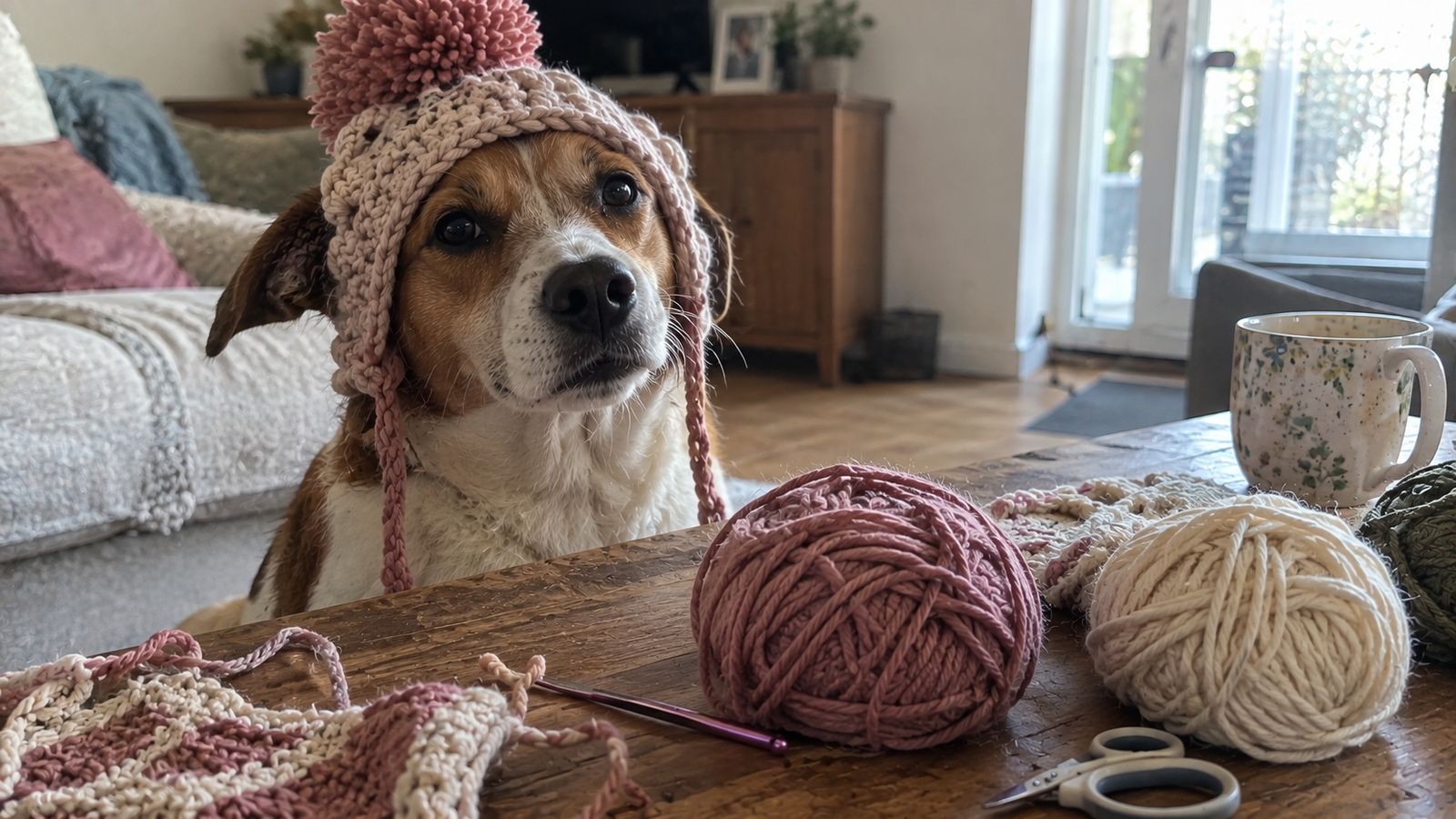
Quick Answer: Crochet dog hat patterns are a fun way to make a personalized accessory for your pup. You can create simple beanies, earflap styles, bucket hats, textured headwarmers, or playful costume-inspired designs. The most important part is getting the fit right. Measure your dog’s head before choosing a size, keep the eyes and ears unobstructed, and avoid decorations or fastenings that could become chewing hazards. Key Takeaways A handmade crochet hat can turn into a surprisingly cute accessory for a dog. Whether you’re making one for a chilly-day walk, a holiday photo, or simply because you enjoy crocheting for your pets, there are plenty of styles to experiment with. The challenge is that dogs don’t come in one standard head shape. A tiny dog’s head can be short and rounded, while a larger dog may have a long muzzle, floppy ears, or a much wider head. That’s why measurement and comfort should come before appearance. Below are seven original project ideas inspired by the different styles available to crocheters. You can use the ideas to choose the type of project you want to make, then follow a suitable free pattern and adjust the design to your dog’s measurements. 1. Simple Crochet Bucket Hat A bucket-style hat is a great choice if you want something different from the usual rounded dog beanie. Its structured shape gives the project a little more personality, while a gently flared brim creates the classic bucket-hat appearance. You can keep the colors simple or use contrasting yarn for the brim. For dogs that have upright or floppy ears, consider a design with ear openings rather than trying to fit the entire ear underneath the hat. Project idea: This style works particularly well for pet photography because the silhouette is easy to recognize. 2. Classic Ear-Hole Dog Beanie A basic beanie is one of the easiest styles to adapt for different dogs. The hat can be crocheted as a rounded piece that follows the shape of the head, with openings positioned where the ears naturally emerge. Keeping the design simple also means fewer decorations for your dog to chew. You can personalize a plain beanie with different yarn colors, stripes, a small crocheted patch, or a pom-pom that is firmly secured. Project idea: Before finishing the hat, check that the ear openings are large enough without being so loose that the hat constantly shifts. 3. Cozy Earflap Dog Hat Want something with a winter-inspired look? Try an earflap design. An earflap hat can extend slightly down the sides of the head and create a cozy appearance without needing a complicated construction. Braided ties can add a classic handmade touch, but they should never be left excessively long or allowed to become something your dog can easily chew. For an especially simple version, skip the decorative elements and concentrate on getting the crown and ear openings right. Project idea: 4. Textured Small-Dog Headwarmer Small dogs can be a fun canvas for more detailed crochet work. A headwarmer-style project uses less yarn than a large hat and gives you an opportunity to experiment with textured stitches. Puff stitches, ribbing, raised stitches, and simple color changes can all add visual interest. Because smaller dogs have less room for bulky construction, keep the finished piece lightweight and flexible. Project idea: This is also a good project when you want something quick rather than a large, elaborate costume. 5. Playful Pirate Dog Hat A themed dog hat can turn an ordinary crochet project into a fun costume accessory. A pirate-inspired design could use dark and neutral yarn with a simple contrasting emblem. You don’t need a complicated construction to create the theme—a recognizable color combination and one or two securely attached details can do most of the work. Because this is more of a novelty accessory, it’s best suited to short, supervised wear. Project idea: Avoid adding hard or easily detachable pieces simply for decoration. 6. Fun Food-Inspired Dog Hat If you’re looking for a conversation starter, take inspiration from your dog’s favorite treats. A food-themed crochet hat can incorporate simple shapes and colors to create an amusing design. Think of a topping-inspired decoration, colorful yarn pieces, or a miniature food motif worked directly into the project. The important thing is to keep decorative elements securely attached. Project idea: This type of project is especially fun for birthday photos, social media pictures, or a themed pet event. 7. Bear-Ear Crochet Snood A snood offers an alternative if you don’t want a conventional hat. Instead of sitting only on top of the head, a snood-style design can extend farther around the head and neck. Adding two small crocheted ears creates an adorable bear-inspired appearance. The opening around the face needs to remain comfortably loose enough for normal movement while still keeping the accessory positioned correctly. Project idea: This design can be particularly cute when made in brown, cream, gray, or other natural-looking shades. How to Choose the Right Crochet Dog Hat Patterns Before picking your yarn, think about your dog. Consider head shape A pattern designed for a rounded head may need adjustment for a dog with a longer or narrower head. Consider the ears Ear openings are useful when the dog’s ears need to remain outside the hat. Check their position before committing to the final size. Consider your dog’s personality Some dogs tolerate accessories for a few minutes, while others immediately try to remove them. If your dog isn’t comfortable wearing headwear, choose a simple project for photographs rather than designing something intended for extended use. Consider your crochet experience Beginners may want to start with a simple beanie or bucket shape. More experienced crocheters can experiment with textures, colorwork, and novelty designs. How to Measure Your Dog for a Crochet Hat Accurate measurements can save you from crocheting an entire hat that doesn’t fit. Measure the head circumference Use a soft measuring tape and wrap it around the widest part of your dog’s head where the hat will
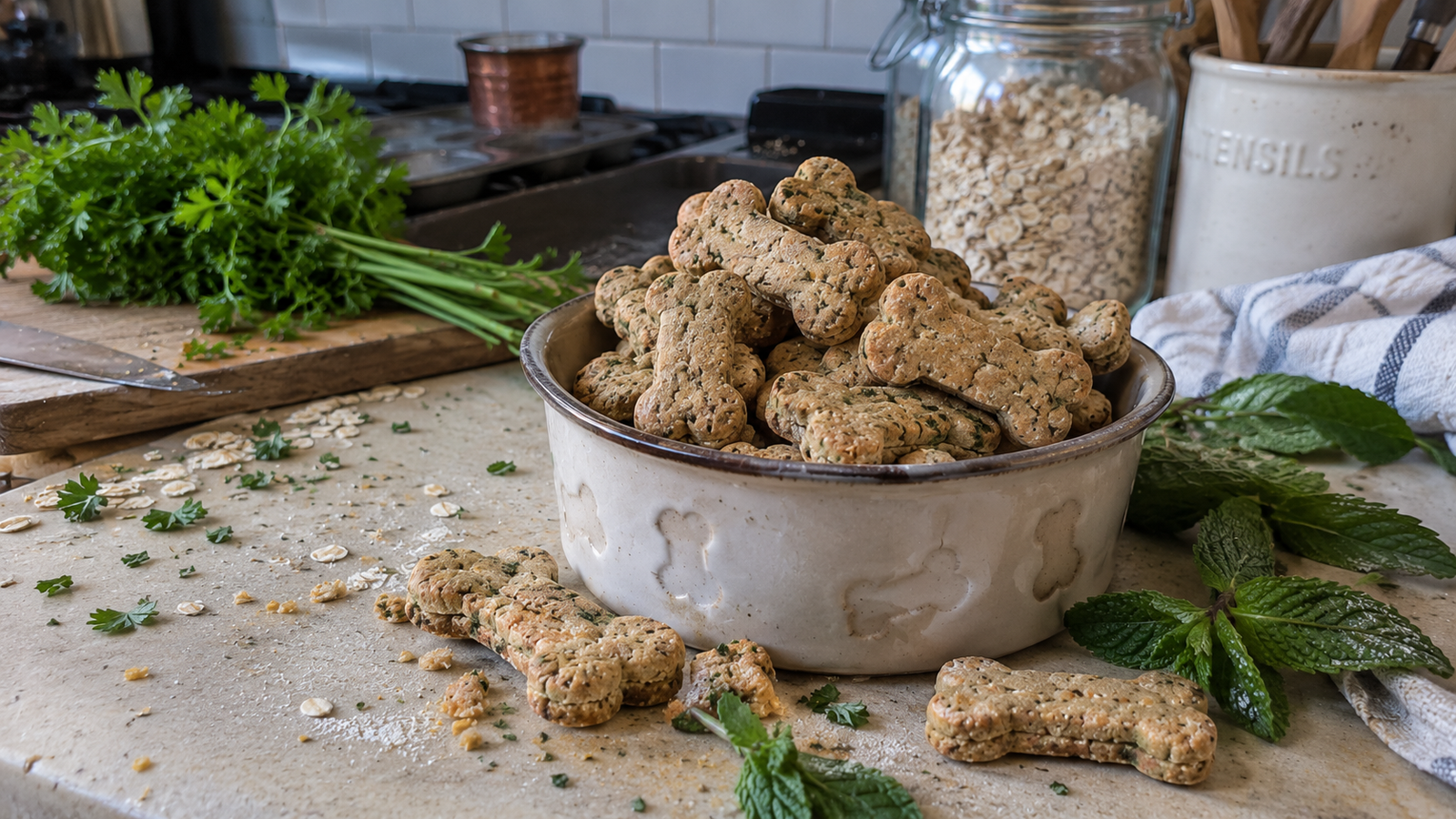
Mint and Parsley Fresh Breath Biscuits for Dogs
If your dog could use a little help keeping their breath smelling fresher, these homemade mint and parsley fresh breath biscuits are an easy treat to add to their routine. Made with simple pantry ingredients, fresh parsley, and a small amount of spearmint, they have a naturally fresh aroma without relying on artificial flavors or commercial breath fresheners. These biscuits are best thought of as an occasional treat rather than a dental treatment. While the herbs can give the biscuits a fresh scent, persistent bad breath in dogs can be associated with plaque, tartar, gum disease, or other oral problems. Regular dental care and veterinary checkups remain the most important ways to support your dog’s oral health. The recipe is simple to prepare, easy to portion into small biscuits, and convenient to keep in the refrigerator or freezer for later. Just be sure to use fresh culinary herbs in modest amounts and avoid concentrated mint products or essential oils. Quick Answer Mint and parsley fresh breath biscuits can be made as an occasional homemade treat for healthy dogs using small amounts of fresh culinary herbs. They may help your dog’s breath smell temporarily fresher, but they should not be used to treat persistent bad breath or replace routine dental care. Recipe Snapshot Prep Time 15 minutes Bake Time 16–20 minutes Total Time About 35 minutes Yield About 35–45 small biscuits Temperature 350°F (180°C) Texture Firm and lightly crisp Best For Occasional treats for healthy adult dogs Key Takeaways Fresh Herbs and Dog Breath Fresh herbs are often included in homemade dog treats designed to give breath a fresher smell. Parsley and mint are particularly popular because of their strong, recognizable aromas. However, the amount matters. Culinary herbs and concentrated herbal products are not interchangeable. This recipe uses a small quantity of fresh parsley and spearmint rather than essential oils or concentrated extracts. It’s also important to distinguish freshening breath from treating the cause of bad breath. If a dog’s breath remains unusually strong or unpleasant, especially with tartar, red or bleeding gums, drooling, difficulty chewing, loose teeth, or reduced appetite, a veterinarian should evaluate the underlying problem. How to Make Mint and Parsley Fresh Breath Biscuits Ingredients Directions Serving, Storage & Variations Start with one small biscuit when introducing the recipe. Smaller dogs may only need a portion of a biscuit. Store completely cooled biscuits in an airtight container in the refrigerator for up to 2 weeks, or freeze them for up to 3 months. Thaw individual biscuits as needed. You can use plain oat flour instead of ground rolled oats. Keep the dough consistency in mind and add water gradually. Do not add additional herbs simply to make the biscuits smell stronger. Avoid peppermint flavoring, mint extracts, essential oils, and other concentrated products. Common Mistakes Using Too Much Mint or Parsley A stronger herbal smell does not make the biscuits more effective. Keep the recipe’s quantities modest. Adding Essential Oils Fresh herbs should never be replaced with concentrated mint or peppermint essential oil. Choosing Sweetened Applesauce Use plain, unsweetened applesauce and check the ingredient label for unnecessary sweeteners or additives. Treating Bad Breath With Biscuits These biscuits can be a pleasant snack, but they cannot replace dental care. Persistent bad breath deserves attention rather than simply being covered up with treats. FAQ Are mint and parsley safe for dogs? Small amounts of culinary herbs are commonly used in homemade dog treats, but safety depends on the plant and quantity. Because concentrated amounts can cause problems, this recipe keeps the herbs modest and should only be served occasionally. Will these biscuits cure my dog’s bad breath? No. They may give the breath a temporarily fresher aroma, but they do not treat dental disease or other underlying causes of persistent bad breath. Can puppies eat mint and parsley biscuits? Healthy puppies that are already eating solid food can generally have small occasional treats, but portions should be appropriate for their size. Puppies with dietary restrictions or medical conditions should have new treats cleared with their veterinarian. Can I use peppermint instead of spearmint? Stick with fresh culinary spearmint for this recipe. Do not use peppermint essential oil, concentrated extracts, or flavoring. Can I make these biscuits without coconut oil? Yes. The coconut oil can be omitted, although the texture may change slightly. How should I store homemade dog biscuits? Allow the biscuits to cool completely before storing them in an airtight container. Refrigeration helps extend freshness, while freezing is useful for keeping a larger batch for later. What if my dog’s bad breath is very strong? Persistent or suddenly worsening bad breath should not be managed only with treats. A veterinary examination can help identify dental disease or another underlying problem, particularly if there are other signs such as swollen gums, drooling, difficulty eating, or loose teeth. Conclusion These mint and parsley fresh breath biscuits are an easy homemade treat with a naturally fresh herbal aroma. They use simple ingredients and can be prepared ahead and stored for later. The most important thing is to keep their purpose realistic: they are a treat, not a treatment for bad breath. Use modest amounts of fresh culinary herbs, avoid concentrated products, and continue your dog’s normal dental-care routine. If your dog’s breath consistently smells unusually bad, have the underlying cause checked rather than relying on breath-freshening treats alone. Medical Disclaimer This recipe is intended as an occasional treat for healthy dogs and is not a substitute for veterinary care, professional dental treatment, or a complete and balanced diet. Dogs with medical conditions, food allergies, dental disease, gastrointestinal problems, or prescription diets may need individualized dietary advice from a veterinarian. References
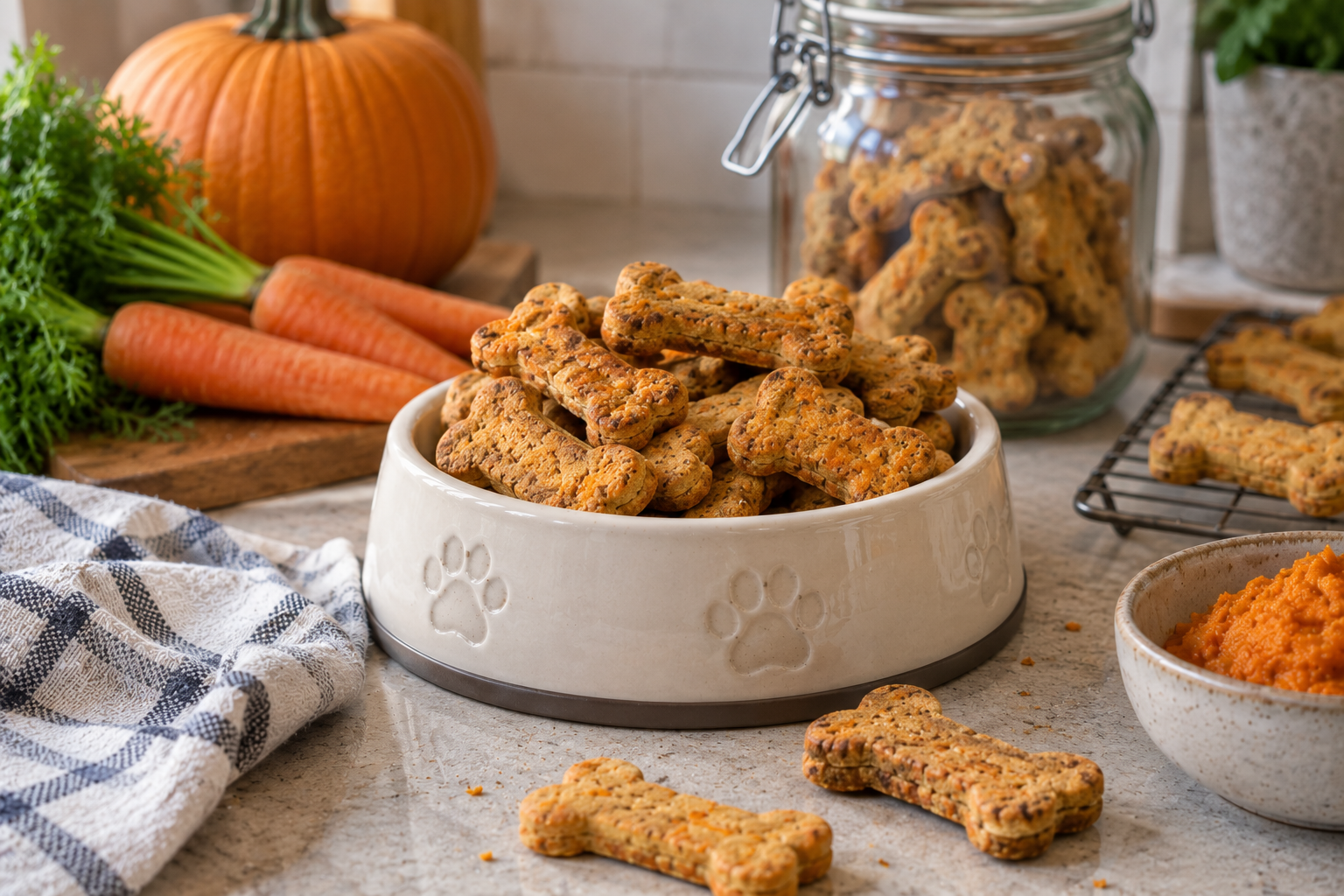
Pumpkin and Carrot Dog Cookies
Homemade pumpkin and carrot dog cookies are an easy baked treat made with simple ingredients you can recognize: plain pumpkin purée, grated carrot, eggs, and flour. These lightly crisp cookies are easy to cut into bone or paw shapes and make a convenient homemade reward for dogs. This recipe takes about 35 minutes from start to finish and makes approximately 80 small 2-inch treats, depending on the cookie cutter you use. The most important ingredient rule is to use 100% plain pumpkin purée—not pumpkin pie filling, which can contain added sugar, spices, or other ingredients that aren’t appropriate for dogs. Quick Answer Yes, dogs can generally enjoy homemade pumpkin and carrot cookies when they’re made with dog-safe ingredients and served in moderation. This recipe combines plain pumpkin, fresh carrot, eggs, and whole-wheat flour into a simple dough that’s rolled, cut, and baked at 350°F (177°C) for about 18–20 minutes. The cookies are intended as an occasional treat, not a replacement for your dog’s complete and balanced food. If your dog has food allergies, follows a prescription diet, or has a medical condition, check with your veterinarian before introducing homemade treats. Recipe Snapshot Detail Info Prep Time 15 minutes Cook Time 18–20 minutes Total Time About 35 minutes Yield About 80 small 2-inch cookies Oven Temperature 350°F (177°C) Storage Refrigerate up to 2 weeks Freezer Up to 3 months Main Ingredients Pumpkin, carrot, egg, whole-wheat flour Are Pumpkin and Carrot Cookies Safe for Dogs? For most healthy dogs, pumpkin and carrots can be safe ingredients when they’re prepared plainly and served in moderation. Plain pumpkin is a source of fiber, while carrots provide fiber and beta-carotene. Both are commonly included in dog-friendly foods and treats. The key is keeping the recipe simple. Dogs don’t need the sugar, butter, heavy fats, or concentrated spices commonly found in human cookies. Pumpkin Use 100% plain pumpkin purée with no added sugar, spices, or other ingredients. Canned pumpkin is convenient, but check the label carefully. Do not substitute pumpkin pie filling. Pumpkin pie products can contain ingredients that aren’t appropriate for dogs, including added sugars and spices, and some formulations may contain xylitol, which is toxic to dogs. Carrots Carrots are generally safe for dogs and can provide fiber and beta-carotene. They can be served raw or cooked, but large pieces can create a choking or blockage risk, so preparing them appropriately for your dog’s size is important. For these cookies, finely grated carrot is ideal because it distributes evenly through the dough. What About the Flour? This version uses whole-wheat flour, which provides the structure needed to roll and cut the cookies. If your dog has a known wheat or grain sensitivity, don’t automatically assume another flour is appropriate. Ask your veterinarian which alternative fits your dog’s diet. What Should You Avoid? Do not add ingredients such as: Some spices and ingredients commonly used in human baked goods can be harmful to dogs. Pumpkin itself is not the problem—it’s often the additional ingredients in human pumpkin desserts that create the risk. 🩺 Vet Insight: A homemade treat can still be inappropriate for an individual dog. Dogs on prescription diets or those with food allergies should not receive new treats without veterinary guidance. How to Make Pumpkin and Carrot Dog Cookies These homemade dog cookies use four basic ingredients and require only a mixing bowl, rolling pin, cookie cutter, and baking sheet. The dough should be firm enough to roll without being excessively sticky. Ingredients The quantities and baking method are based on a simple four-ingredient pumpkin-carrot dog treat recipe that yields approximately 80 small cookies. Equipment Instructions 1. Preheat the Oven Preheat your oven to 350°F (177°C). Line a baking sheet with parchment paper. 2. Combine the Ingredients Add the flour, pumpkin purée, eggs, and grated carrot to a large mixing bowl. Stir with a spatula or spoon until most of the flour has been incorporated. 3. Finish the Dough Once the mixture becomes difficult to stir, use clean hands to work the remaining flour into the dough. The finished dough should be uniform and firm enough to roll. 4. Roll Out the Dough Lightly flour your work surface and rolling pin. Roll the dough to approximately ⅛ inch thick. A thinner dough produces a firmer, crunchier cookie. 5. Cut the Cookies Use a small cookie cutter to cut the dough into shapes. A 2-inch bone-shaped cutter works well, but you can use any small shape appropriate for your dog. Transfer the cookies to the parchment-lined baking sheet. 6. Bake Bake for 18–20 minutes, or a few minutes longer if you prefer a crunchier cookie. The cookies should be firm when finished. 7. Cool Completely Remove the baking sheet from the oven and allow the cookies to cool completely before giving one to your dog. Don’t serve them while they’re still hot. 🐾 Owner Tip: If you want a crunchier cookie, roll the dough thinner and extend the baking time slightly while watching closely. Thicker cookies will retain more moisture and have a softer texture. How Many Cookies Can My Dog Have? There isn’t one cookie count that’s appropriate for every dog because calorie requirements vary by size, age, activity level, and health status. A practical approach is to start with one small cookie and adjust the amount based on the size of the treat and your dog’s overall daily treat allowance. For small dogs, consider using a smaller cookie cutter so individual treats contain fewer calories. How to Store Pumpkin Carrot Dog Cookies Allow the cookies to cool completely before storing. Place them in an airtight container and refrigerate for up to 2 weeks. Check the treats before serving and discard them if you notice: Can You Freeze Them? Yes. The cookies can be frozen in an airtight freezer-safe container for up to 3 months. Freeze them in a single layer initially if you want to prevent them from sticking together, then transfer them to a freezer-safe container or bag. Thaw only
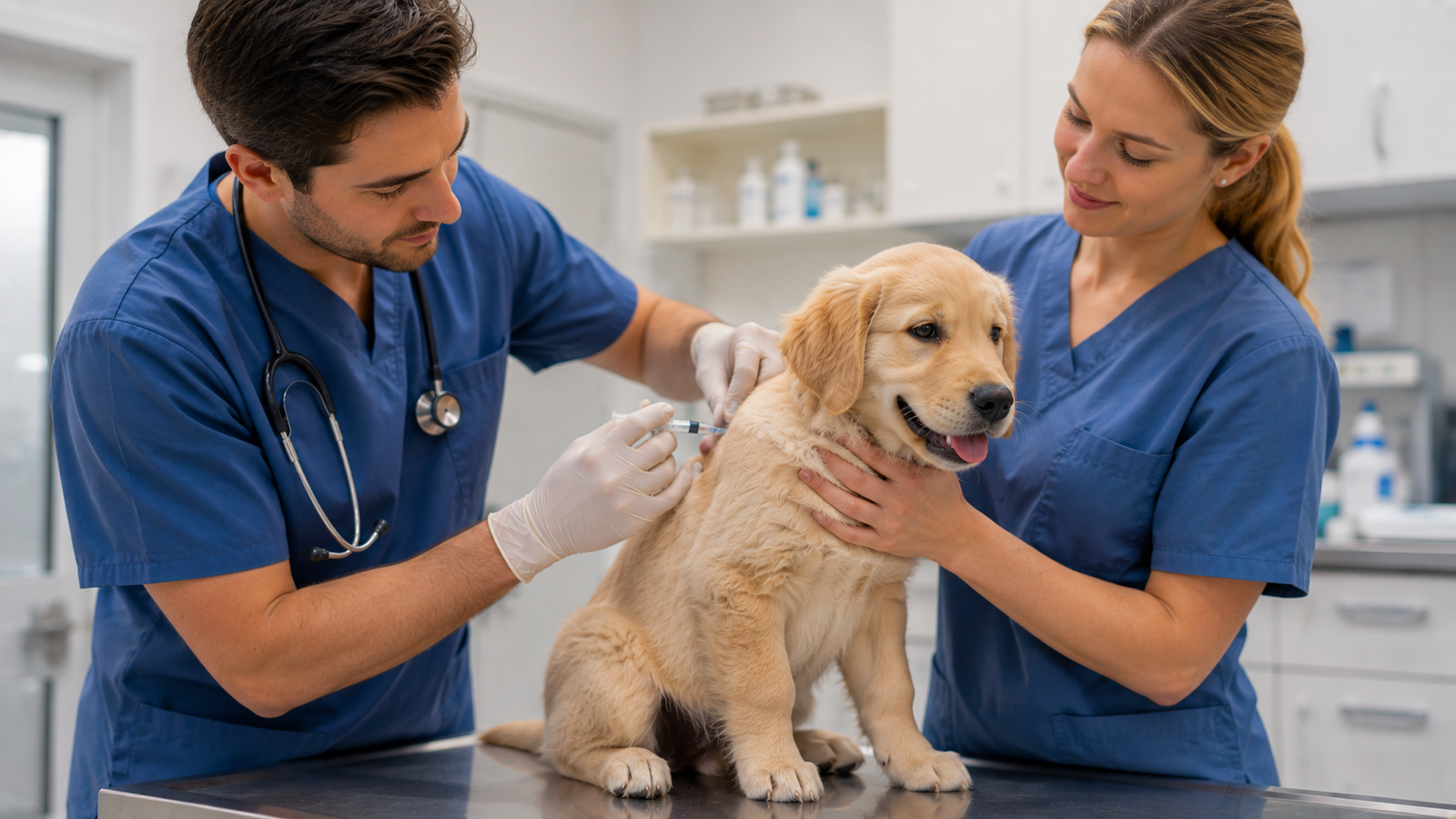
Puppy Vaccination Schedule: Every Shot Your Puppy Needs & When
Quick Answer: Most puppies begin their core vaccination series at around 6–8 weeks of age, with additional doses given every 3–4 weeks until at least 16 weeks. Rabies vaccination is generally given according to local law and your veterinarian’s recommendations. The exact schedule can vary depending on your puppy’s age when vaccination begins, vaccine products used, health history, lifestyle, and local disease risks. Because maternal antibodies can interfere with early vaccine responses, puppies receive a series of vaccinations rather than relying on a single puppy shot. Key Takeaways What Vaccines Do Puppies Need? Puppy vaccination is built around core vaccines and non-core vaccines. Core vaccines are broadly recommended because they protect against serious infectious diseases. Non-core vaccines are selected according to your puppy’s lifestyle, geographic location, and exposure risk. Core Vaccines The source identifies the main core protection as: DAPP/DHPP combination vaccines may protect against several of these diseases in one vaccination. Non-Core Vaccines Depending on your puppy’s lifestyle, your veterinarian may recommend: A non-core vaccine isn’t necessarily unimportant. It simply means the need depends more heavily on the individual dog’s exposure risk. For example, a puppy attending daycare or boarding facilities may have different vaccine needs from one that rarely encounters other dogs. What About Indoor Puppies? Indoor puppies still need their core vaccines. Diseases such as parvovirus can persist in the environment and potentially be brought indoors on shoes, clothing, or other animals. Rabies vaccination may also be required by law regardless of whether a dog spends most of its time indoors. Non-core vaccines are more lifestyle-dependent. Your veterinarian can help decide which ones make sense based on your puppy’s environment. What About Breed Differences? The source states that the core vaccination schedule is generally the same across breeds. However, some breeds or small puppies may have a greater tendency toward vaccine reactions, so your veterinarian may make individual adjustments when appropriate. The important point is that breed does not automatically mean a different basic vaccination schedule. Puppy Vaccination Schedule: 6 Weeks to 16 Months Most puppies begin their first core vaccines around 6–8 weeks, followed by additional doses every 3–4 weeks until at least 16 weeks. Maternal antibodies passed from the mother can interfere with vaccine responses during early puppyhood. Giving several doses helps provide protection as those maternal antibodies decline. Puppy Vaccine Schedule Age Core Vaccines Non-Core / Lifestyle Other Care 6–8 weeks DAPP/DHPP — 1st dose Based on risk Exam, deworming 10–12 weeks DAPP/DHPP — 2nd dose Bordetella, leptospirosis when appropriate Veterinary assessment 14–16 weeks DAPP/DHPP — 3rd dose Lyme, canine influenza when appropriate Rabies according to local law 12–16 months DAPP/DHPP booster Non-core boosters as needed Rabies booster according to requirements The source notes that some clinics use a 3-dose series, while others may use a 4-dose schedule depending on when vaccination starts and the protocol used. So don’t worry if your veterinarian’s schedule doesn’t look exactly like an internet chart. Your puppy’s age, vaccine history, and the products being used all matter. Keep a Puppy Vaccine Record Keep a record of: This can be useful for future veterinary visits, boarding, travel, grooming, and other situations where vaccination records may be requested. How Much Do Puppy Vaccinations Cost? Vaccination costs vary by clinic, location, vaccine type, examination fees, and whether your veterinarian offers a puppy package. The source gives the following approximate costs: Vaccine / Service Estimated Cost DAPP/DHPP per dose $20–$45 Rabies $15–$35 Bordetella $20–$45 Leptospirosis $20–$35 Lyme $20–$40 Canine influenza $25–$45 Exam fee per visit $40–$75 These are estimates, not guaranteed current prices. Some clinics bundle vaccinations with examinations and deworming, while shelters and low-cost vaccination programs may offer lower-cost options. If you’re comparing clinics, ask what is included in the total price rather than comparing the vaccine price alone. Can You Skip or Delay Puppy Vaccinations? Skipping the initial puppy series is not recommended. Core vaccines protect against serious diseases, including parvovirus and distemper, that can be particularly dangerous for puppies. If you’re worried about vaccine reactions, discuss those concerns with your veterinarian rather than simply declining vaccination. Your veterinarian may consider your puppy’s: What If You Miss an Appointment? Don’t restart the vaccination schedule yourself. Contact your veterinarian and provide the date of your puppy’s last vaccination. The veterinarian can determine whether the series can continue from where it stopped or whether additional vaccination is needed. The source notes that longer gaps may sometimes require an additional dose to help ensure adequate immunity. If Cost Is the Problem Ask your veterinarian about: The source notes that some low-cost programs offer core vaccinations for less than standard private-clinic pricing. Can Puppies Go Outside Before They’re Fully Vaccinated? Yes, but the type of exposure matters. Keeping a puppy completely isolated until every vaccination is finished can make socialization more difficult. At the same time, young puppies should avoid environments with a high risk of exposure to infectious disease. Safer Socialization Depending on your veterinarian’s advice, you can introduce your puppy to: The source specifically notes that puppies can interact with healthy, fully vaccinated dogs in controlled environments. Higher-Risk Places to Avoid Until your puppy has adequate protection, be cautious with: The source recommends waiting approximately 1–2 weeks after the final round of puppy shots before exposing a puppy to high-traffic dog environments, while lower-risk walks may be possible sooner depending on veterinary advice. Puppy Boosters After the Initial Series Finishing the puppy series doesn’t mean vaccinations are finished forever. The source’s schedule includes a 12–16 month booster for core vaccines, with future boosters determined according to the vaccine, your veterinarian’s protocol, and local requirements. Rabies boosters are particularly dependent on local laws and the vaccine used. Your veterinarian can create a long-term preventive-care schedule so you don’t have to remember every date yourself. Puppy Vaccine Schedule Checker Enter your puppy’s age to see where they generally fall within the initial vaccination timeline. <divstyle=”font-family:Arial,sans-serif;max-width:520px;margin:25pxauto;padding:20px;border:1pxsolid #ddd;border-radius:10px;background:#fafafa”><h3style=”text-align:center;color:#486B32;margin-top:0;”> 🐶 Puppy Vaccine Schedule Checker</h3><pstyle=”font-size:13px;color:#666;line-height:1.5;”> Enter your puppy’s age in weeks.</p><inputtype=”number”id=”cg-puppy-age”min=”6″max=”16″placeholder=”Example: 10″style=”width:100%;padding:10px;border:1pxsolid #ccc;border-radius:6px;box-sizing:border-box;”><buttontype=”button”onclick=”cgCheckVax()”style=”width:100%;padding:12px;margin-top:12px;background:#486B32;color:#fff;border:0;border-radius:6px;cursor:pointer;font-weight:bold;”> Check Schedule</button><divid=”cg-vax-result”style=”display:none;margin-top:15px;padding:15px;background:#fff;border:1pxsolid #ddd;border-radius:6px;font-size:14px;line-height:1.6;”></div></div><script>functioncgCheckVax() {vara=parseInt(document.getElementById(“cg-puppy-age”).value);varr=document.getElementById(“cg-vax-result”);if
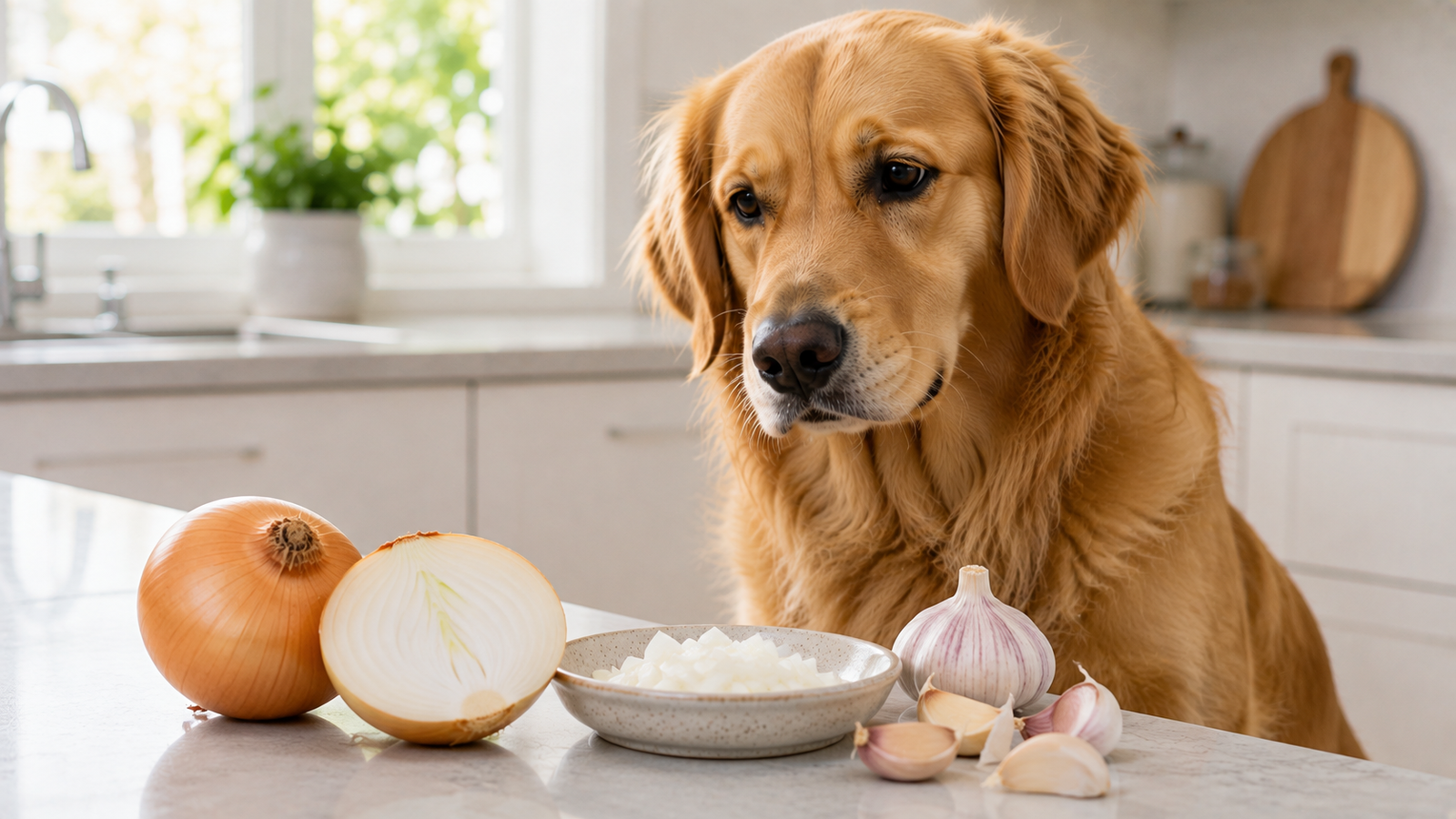
Can Dogs Eat Onions? Toxicity, Symptoms & What to Do
Quick Answer: No. Dogs should not eat onions in any form. Raw, cooked, powdered, dehydrated, and other concentrated onion products can damage a dog’s red blood cells and cause hemolytic anemia. Onion powder can be particularly concerning because it is concentrated and is often hidden in foods such as soup mixes, seasoning blends, sauces, and prepared foods. The risk depends on factors such as the amount eaten, the dog’s size, the form of onion, and whether exposure happens repeatedly. Because symptoms may take time to appear, don’t wait for your dog to become sick before contacting your veterinarian if you know they ate onions. Quick Reference: Onion Safety for Dogs Form of Onion Safe for Dogs? Main Concern Raw onion ❌ No Red blood cell damage Cooked onion ❌ No Toxic compounds remain Onion powder ❌ No Highly concentrated Dehydrated onion ❌ No Concentrated compounds Onion soup mix ❌ No Often contains onion powder Garlic ❌ No Allium toxicity Leeks ❌ No Allium toxicity Chives ❌ No Allium toxicity Shallots ❌ No Allium toxicity Green onions/scallions ❌ No Allium toxicity Key Takeaways Why Are Onions Bad for Dogs? Onions contain compounds that can damage canine red blood cells. This damage can cause the cells to break down, reducing the blood’s ability to carry oxygen and potentially resulting in hemolytic anemia. The problem isn’t limited to biting into a raw onion. Dogs can also be exposed through: One of the tricky things about onion toxicity is that the dog may look fine immediately after eating it. Red blood cell damage can take time to become obvious. Can Repeated Small Amounts Be a Problem? Yes. Repeated exposure can increase the risk because red blood cell damage can accumulate over time. For example, regularly giving a dog table scraps containing onion powder may be more concerning than the owner realizes. That’s why it’s better not to intentionally give dogs foods containing onion, even in small amounts. What Are Alliums and Why Are They Dangerous for Dogs? Alliums are a group of plants that includes onions, garlic, leeks, chives, shallots, and green onions. These foods contain sulfur-containing compounds that can damage a dog’s red blood cells. Common Alliums to Keep Away From Dogs Garlic can be particularly potent by weight, but the safest approach is to avoid giving dogs any member of the allium family. What About Wild Onions or Onion Grass? Wild onions and similar plants can also contain toxic compounds. If your dog likes grazing outdoors, check your yard for plants that could belong to the allium family and prevent access where possible. How Much Onion Is Toxic to Dogs? There isn’t a single amount that can safely be applied to every dog. Risk depends on: The original source cites an approximate toxic range of 15–30 grams of onion per kilogram of body weight, but this should not be treated as a guaranteed safe threshold. Concentrated products such as onion powder can pose a risk at much smaller quantities. Why Dog Size Matters The same amount of onion represents a very different exposure for a 10-pound dog compared with a 70-pound dog. Small dogs can therefore be at greater risk from relatively small quantities. Japanese breeds, including Akitas and Shiba Inus, may also have increased sensitivity to allium toxicity. However, any dog can be affected. The safest practical rule is not to calculate a “safe amount” at home. If your dog ate onion, tell your veterinarian exactly what was eaten and approximately how much. Are Cooked, Powdered, and Dried Onions Safe? No. Cooking does not make onions safe for dogs. Dogs can be exposed to harmful compounds through: Why Is Onion Powder Especially Concerning? Onion powder is concentrated and can be easy to overlook. It may appear in: This is one reason dogs can accidentally consume onion without ever eating a visible piece of onion. Check ingredient labels before sharing human food with your dog. What Happens If a Dog Eats Onions? After onion exposure, the compounds can damage red blood cells. The damaged cells may develop abnormal hemoglobin structures and eventually break down. This process can lead to anemia and, in severe cases, secondary organ complications. The important thing to understand is that the dog may not become visibly sick right away. A dog can initially seem normal and then develop symptoms later as enough red blood cells are affected. How Long Does Onion Toxicity Take to Show? Symptoms may develop over the following days rather than immediately. The supplied material gives a typical window of approximately 1–5 days, although timing can vary. This delayed onset is why you shouldn’t use the absence of immediate symptoms as proof that your dog is safe. If you know your dog ate onions, contact your veterinarian promptly even if they currently seem fine. Symptoms of Onion Poisoning in Dogs Symptoms can vary depending on the amount eaten and the severity of the exposure. Watch for: These signs can occur as red blood cell destruction progresses. Red-Flag Symptoms Pale gums, dark urine, severe weakness, rapid breathing, or collapse are particularly concerning. If your dog develops these symptoms, seek emergency veterinary care. What Should I Do If My Dog Ate Onions? If you know your dog has eaten onion, call your veterinarian as soon as possible. Your veterinarian will want to know: Keep the food packaging or ingredient list if the onion was part of a prepared food. What Not to Do Do not induce vomiting at home unless a veterinarian specifically instructs you to. Do not try to treat the poisoning with milk, bread, oil, or other home remedies. The appropriate treatment depends on the amount, timing, and condition of the dog. What Might a Veterinarian Do? If the exposure was recent, a veterinarian may consider decontamination measures such as inducing vomiting under controlled conditions. Depending on the severity of the poisoning, treatment may include: Treatment depends on the individual dog and the severity of the exposure. Can a Small Amount of Onion Hurt
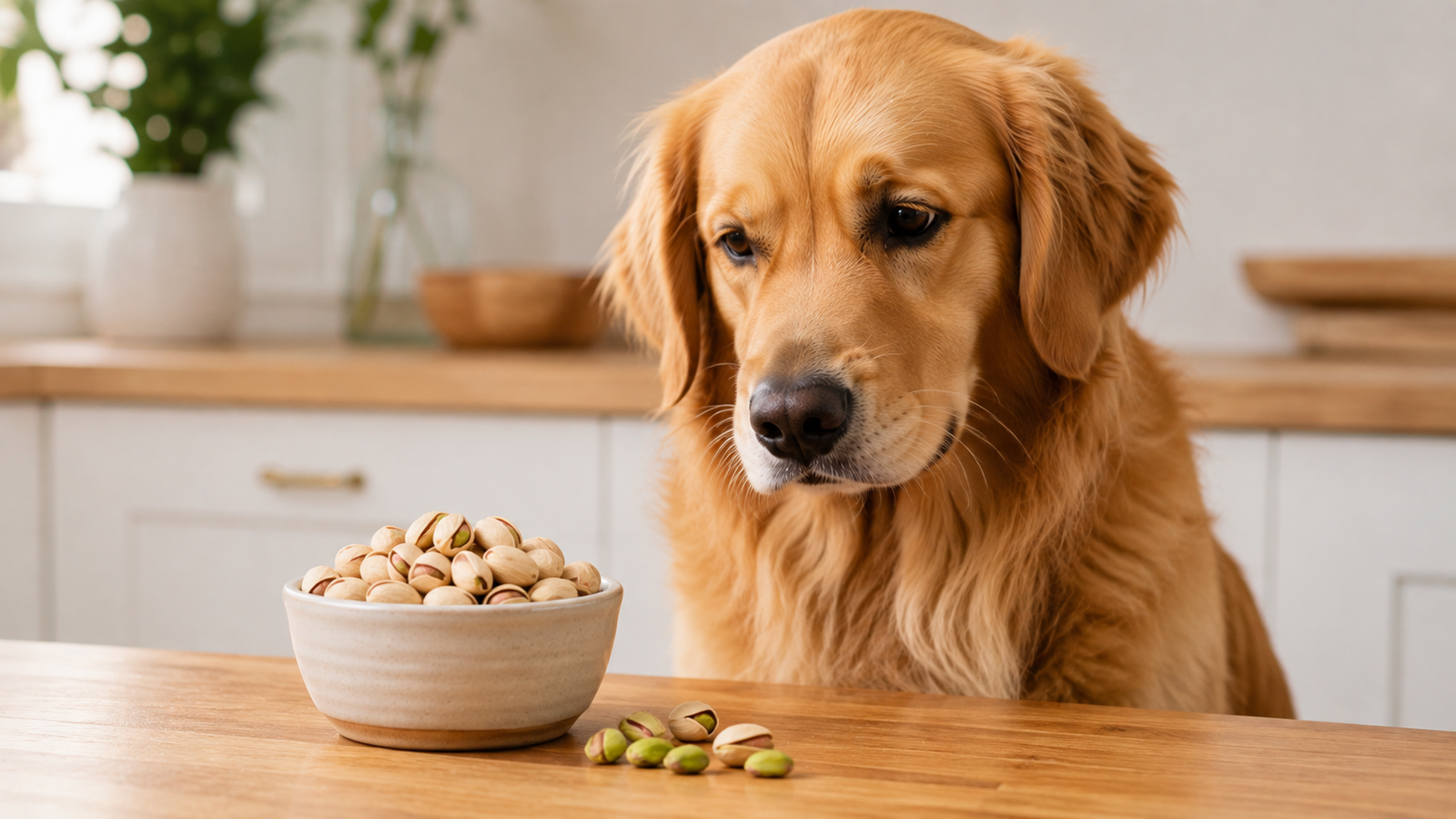
Can Dogs Eat Pistachios? What Dog Owners Need to Know
Quick Answer: Dogs can technically eat a small amount of plain pistachio without immediately becoming ill, but pistachios are not a recommended dog treat. The main concerns are their high fat content, possible aflatoxin contamination, hard shells, and ingredients found in salted or flavored varieties. Pistachios containing xylitol are particularly dangerous because xylitol is toxic to dogs. If your dog ate one or two plain, shelled, unsalted pistachios and is acting normally, serious problems are unlikely. If your dog ate a large amount, swallowed shells, ate flavored pistachios, or develops concerning symptoms, contact your veterinarian. Pistachio Safety Quick Reference Situation What to Do 1–2 plain, unsalted, shelled pistachios Monitor your dog Many pistachios or salted/flavored pistachios Contact your veterinarian Pistachio shells swallowed Contact your veterinarian, especially if symptoms develop Xylitol-containing pistachios Emergency veterinary care immediately Vomiting, severe weakness, collapse, seizures, or jaundice Emergency veterinary care Key Takeaways Are Pistachios Safe for Dogs? The honest answer is: it’s better not to feed pistachios to dogs. A single plain pistachio is unlikely to cause a crisis in a healthy adult dog. However, pistachios come with several avoidable risks. They are high in fat, and repeated exposure to high-fat foods can contribute to pancreatitis. Pistachios can also be contaminated with aflatoxin, a toxin produced by certain molds that can damage the liver. The problem becomes greater when pistachios are salted, seasoned, sweetened, or coated with other ingredients. So while pistachios aren’t in the same category as foods that are inherently toxic to dogs, they are still a poor choice for a regular treat. Aflatoxin: The Hidden Mold Risk Aflatoxin is a mycotoxin produced by certain molds, including Aspergillus. It can contaminate foods such as nuts under certain conditions. According to the source material, dogs are particularly sensitive to aflatoxin exposure. Serious exposure can cause liver damage and may result in signs such as: Aflatoxin contamination isn’t something you can reliably identify just by looking at a pistachio, which is another reason not to make pistachios part of your dog’s diet. High Fat and Pancreatitis Risk Pistachios are a high-fat food, with the supplied source listing approximately 44 grams of fat per 100 grams. A high-fat food can be particularly problematic for dogs prone to pancreatitis. Signs that may occur with pancreatitis include: If your dog develops these signs after eating a large amount of pistachios or another high-fat food, contact your veterinarian. Why Salted and Flavored Pistachios Are More Dangerous Plain, unsalted pistachios are the least concerning variety, but they still aren’t recommended as a regular treat. Salted and flavored varieties introduce additional risks. Excessive sodium can cause serious problems when consumed in large amounts. Some flavored products may also contain xylitol, an artificial sweetener that is toxic to dogs. Always check the ingredient label if your dog has eaten a flavored product. Pistachio Shells, Seeds, and Other Safety Risks Pistachio shells should never be intentionally fed to dogs. They are hard, indigestible, and can become choking hazards or contribute to intestinal obstruction. This risk can be especially important in small dogs. A dog that has swallowed a shell may develop: A blockage can become a veterinary emergency and may require surgery. The safest approach is therefore simple: don’t give your dog pistachios, and keep the bag or container somewhere your dog cannot reach. How Many Pistachios Can a Dog Eat? There is no established universal safe dose of pistachios for dogs. The supplied material states that one or two plain, unsalted, shelled pistachios are unlikely to harm a healthy adult dog. That doesn’t mean you should make them a routine snack. The risk depends on factors such as: Small dogs can be affected by relatively small amounts of high-fat foods. The source also notes the general guideline that treats should account for no more than about 10% of a dog’s daily calorie intake. Pistachios simply aren’t a good way to use that treat allowance. What Happens If a Dog Eats Pistachios? A dog that eats one or two plain pistachios may show no symptoms at all. Problems are more likely when a dog eats a larger quantity, consumes salted or flavored varieties, or swallows shells. Possible signs include: More serious signs such as seizures, collapse, severe abdominal pain, or significant weakness require immediate veterinary attention. What Should You Do? Use the amount and type of pistachio eaten as a guide: Monitor closely:Your healthy adult dog ate one or two plain, shelled, unsalted pistachios and is acting normally. Call your veterinarian:Your dog ate many pistachios, ate salted or flavored pistachios, swallowed shells, or develops vomiting, diarrhea, lethargy, or loss of appetite. Seek emergency veterinary care:Your dog may have eaten xylitol-containing pistachios or is showing seizures, collapse, severe weakness, severe abdominal pain, or other serious symptoms. Do not induce vomiting unless a veterinarian specifically instructs you to do so. If you know the product your dog ate, keep the packaging so you can provide the ingredient list to your veterinarian. What About Pistachio Ice Cream, Butter, and Baked Goods? Pistachio-flavored foods are not safer alternatives to plain pistachios. Pistachio ice cream may contain: Pistachio butter may contain: Pistachio cakes, muffins, and other baked goods can contain additional ingredients such as large amounts of sugar and butter. Some recipes may also include chocolate or raisins, which create their own serious risks for dogs. So the safest rule is simple: Don’t give your dog pistachio-flavored human desserts or spreads. If your dog accidentally eats one, check the ingredient list and contact your veterinarian if the product contains xylitol, chocolate, raisins, or another potentially harmful ingredient. Pistachios vs. Other Nuts for Dogs Not all nuts carry the same risks for dogs. Nut Risk Level for Dogs Main Concern Macadamia nuts 🔴 High Toxicity and neurological signs Walnuts 🔴 High Mold toxins and other risks Pistachios 🟡 Moderate Fat, aflatoxin, shells Pecans 🟡 Moderate Aflatoxin and fat Almonds 🟡 Moderate Choking and fat Cashews 🟢 Lower risk, plain only Fat content Peanuts 🟢 Lower risk, plain only
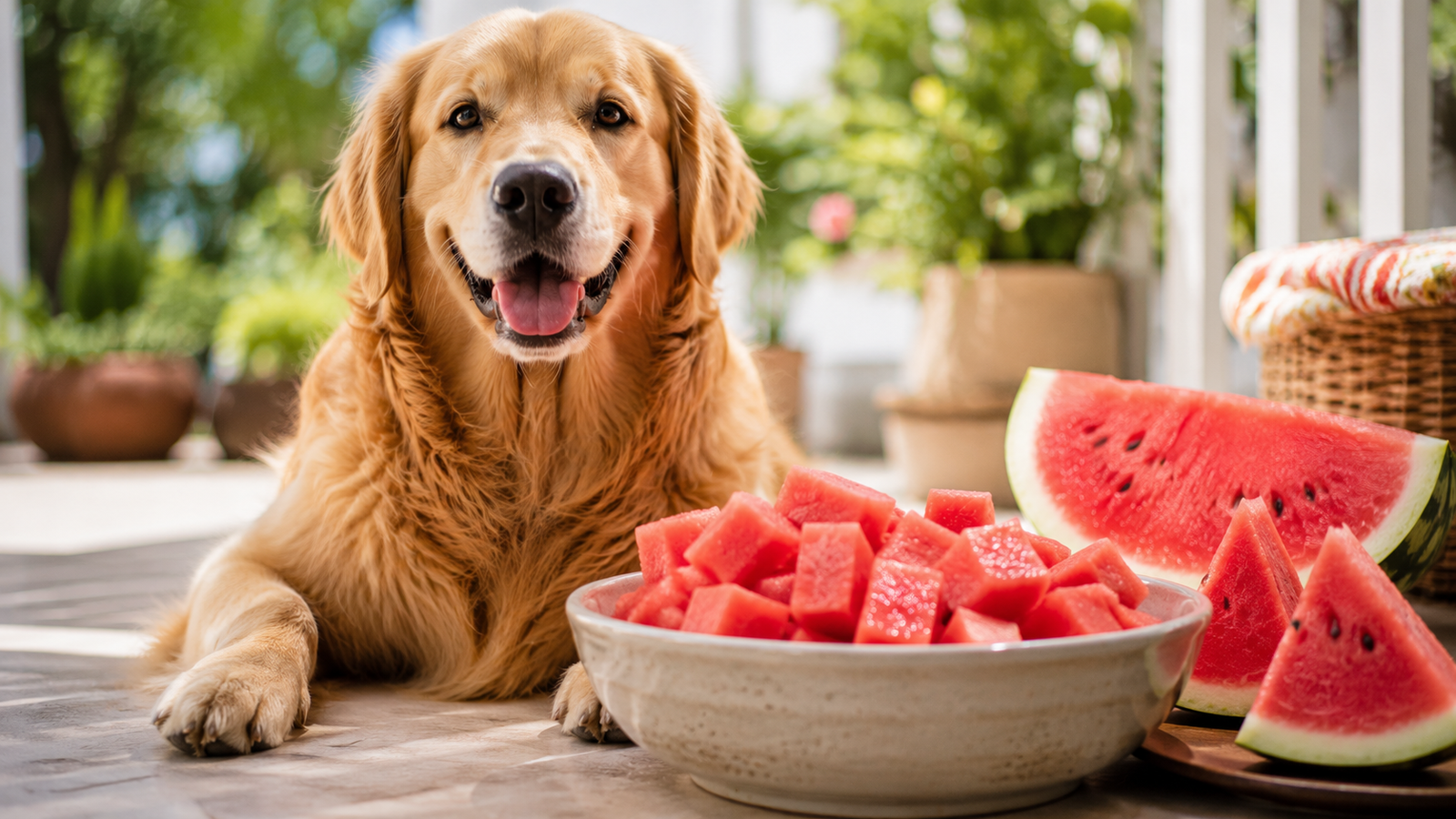
Can Dogs Eat Watermelon? Seeds, Rind & Safe Serving Guide
Quick Answer: Yes, dogs can eat watermelon as an occasional treat, but it should be prepared properly. Give your dog only the soft red or pink flesh, and remove the hard black seeds and the green and white rind first. Watermelon is mostly water and can be a refreshing, relatively low-calorie snack. However, eating too much may cause digestive upset, while seeds and rind can create choking or gastrointestinal obstruction concerns. For most healthy dogs, a few small pieces are enough. Watermelon should complement, not replace, a complete and balanced diet. Key Takeaways Is Watermelon Safe for Dogs? Plain watermelon flesh is generally safe for dogs when served correctly. Watermelon is about 92% water and contains nutrients including vitamins A, B6, and C. Its high water content also makes it a refreshing treat, particularly during warm weather. However, not every part of the fruit is appropriate for dogs. Before giving watermelon to your dog: Watermelon should remain a treat, not a replacement for your dog’s normal complete and balanced food. Which Parts of Watermelon Can Dogs Eat? The safest part for dogs is the soft red or pink flesh. Part of Watermelon Safe for Dogs? Why Red/pink flesh ✅ Yes Safe when plain and given in moderation Hard black seeds ❌ Avoid May create a choking or gastrointestinal obstruction risk Green outer rind ❌ Avoid Tough and difficult to digest White inner rind ❌ Avoid Can be difficult to digest and may contribute to gastrointestinal problems What If My Dog Eats a Few Seeds? Don’t automatically panic if your dog accidentally swallows one or two seeds. A small number may pass without causing a problem, particularly in a larger dog. However, risk depends on the amount swallowed and the dog’s size. Watch for: If your dog swallowed a large number of seeds, is very small, or develops concerning symptoms, contact your veterinarian. What About Watermelon Rind? Avoid intentionally feeding the rind. The green outer skin and firm white portion are much tougher than the flesh and can be difficult for dogs to digest. Large pieces may also present a choking or obstruction concern. If your dog eats a small piece accidentally, monitor them rather than assuming an emergency. Contact your veterinarian if vomiting, abdominal pain, loss of appetite, weakness, or other concerning symptoms develop. Watermelon Benefits and Nutritional Value for Dogs Watermelon can be a useful occasional treat because it is: Its high water content makes it a refreshing snack, especially on warm days. Is Watermelon a Necessary Part of a Dog’s Diet? No. A complete and balanced dog food should provide the nutrients your dog needs. Watermelon is simply an optional treat. The supplied draft gives approximately 46 calories per cup of watermelon, although actual calories can vary depending on serving size. So while watermelon can be a lighter treat than some calorie-dense snacks, portion size still matters. How Much Watermelon Can Dogs Eat? Start small, especially if your dog has never eaten watermelon before. A few small pieces are enough to see how your dog’s digestive system responds. The appropriate amount depends on: The original material suggests approximately 1–3 small cubes per 10 pounds of body weight and keeping treats within about 10% of daily calories. Rather than treating those numbers as a strict prescription for every dog, use them as a conservative starting point. Simple Starting Portions Dog Size Starting Portion Small dog 1–2 small cubes Medium dog A few small cubes Large dog A small handful of small cubes If your dog tolerates watermelon well, you can occasionally offer a little more, while still keeping treats reasonable within their overall diet. How Often Can Dogs Have Watermelon? There is no universal number of days per week that applies to every dog. For most healthy dogs, watermelon is best treated as an occasional snack rather than an everyday dietary staple. How to Safely Prepare and Serve Watermelon The safest preparation is simple: plain, seedless, rind-free watermelon flesh. Step-by-Step Fresh Watermelon Fresh watermelon can be served chilled or at room temperature. Avoid giving your dog watermelon that contains: Frozen Watermelon Plain watermelon flesh can also be frozen for a refreshing treat. Cut it into appropriately sized pieces before freezing, and consider your dog’s chewing and swallowing habits. For dogs that gulp food, avoid giving pieces that are too large or extremely hard. What About Watermelon Juice? Plain watermelon blended into a liquid is different from commercial watermelon drinks. Avoid store-bought juices or flavored drinks that may contain added sugar, sweeteners, or other ingredients that aren’t appropriate for dogs. For simplicity, plain watermelon pieces are the better choice. Risks of Feeding Watermelon to Dogs For most healthy dogs, the main concerns are portion size and preparation. Too Much Watermelon Eating a large amount can cause: If your dog develops digestive upset after eating watermelon, stop offering it and monitor them. Seeds Hard black seeds may create a choking or gastrointestinal obstruction concern, particularly when a dog eats a larger quantity. Rind Large pieces of rind are tough and can be difficult to digest. Added Ingredients Watermelon candy, desserts, sweetened drinks, and other flavored products can contain ingredients that are unsuitable for dogs. Plain watermelon is the safest option. If Your Dog Ate Rind or Seeds The appropriate response depends on: Situation What to Do Small amount of watermelon flesh Monitor A few accidentally swallowed seeds Monitor closely Large number of seeds Contact your veterinarian Large piece of rind Contact your veterinarian Repeated vomiting Contact your veterinarian promptly Abdominal pain or loss of appetite Contact your veterinarian Severe pain, bloating, weakness, or collapse Emergency veterinary care Do not try to make your dog vomit unless a veterinarian specifically tells you to. If your dog has swallowed a potentially obstructive piece of rind or a large quantity of seeds, contacting your veterinarian early is safer than waiting for symptoms to develop. Can Puppies and Dogs With Health Conditions Eat Watermelon? Most healthy puppies can have a small amount of watermelon
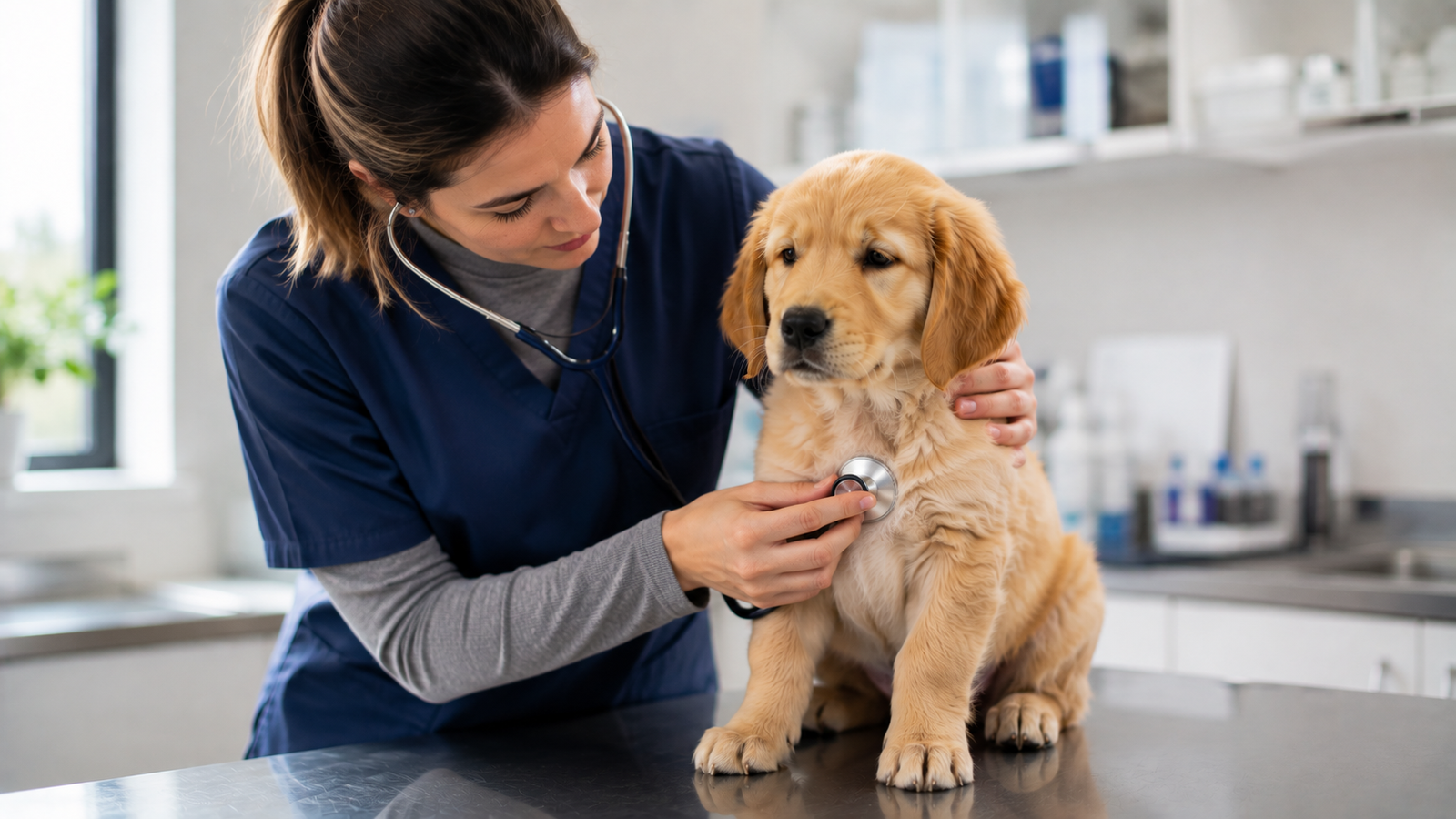
Signs and Symptoms of Parvo in Puppies: What to Watch For
Quick Answer: The signs and symptoms of parvo in puppies commonly begin 3–7 days after exposure and may include lethargy, loss of appetite, vomiting, and diarrhea that can become bloody. Canine parvovirus primarily attacks rapidly dividing cells, especially in the gastrointestinal tract, and severe illness can lead to dehydration and other life-threatening complications. Puppies between 6 weeks and 6 months old, especially those that are unvaccinated or incompletely vaccinated, are at particularly high risk. If a puppy develops vomiting, diarrhea, sudden lethargy, or refuses food—especially if they are not fully vaccinated—contact a veterinarian promptly rather than waiting for symptoms to become severe. Key Takeaways 🚨 Parvo Urgency Triage Symptom Level Signs What to Do Monitor Closely Mild lethargy or slightly reduced appetite without vomiting or diarrhea Monitor closely and contact your vet if symptoms progress Call Your Vet Today Refusing food, vomiting, soft stool, or increasing lethargy Contact your veterinarian the same day Emergency — Go Now Repeated vomiting, bloody diarrhea, collapse, severe weakness, or pale gums Seek emergency veterinary care immediately Important: This table is for general guidance, not diagnosis. Puppies can deteriorate quickly, so don’t rely on a wait-and-see approach if your puppy appears seriously ill. What Is Parvo in Puppies and How Does It Spread? Canine parvovirus (CPV) is a highly contagious viral infection that primarily attacks rapidly dividing cells. The intestinal lining and bone marrow are particularly affected, while very young puppies can also develop cardiac involvement. The virus spreads mainly through infected feces. A puppy can become infected by sniffing, licking, or walking through contaminated areas. The virus is also extremely resilient in the environment and can remain on contaminated surfaces, objects, soil, clothing, and other materials for long periods. This means a puppy doesn’t necessarily need direct contact with a visibly sick dog to become infected. Where Can Puppies Be Exposed? Potential exposure areas include: For puppies that have not completed their vaccination series, follow your veterinarian’s guidance about safe outdoor exposure and socialization. What Are the Early Signs of Parvo in Puppies? The earliest signs can be easy to overlook. A puppy may suddenly: As the illness progresses, vomiting and diarrhea can develop. Diarrhea may become severe and may contain blood. Why Early Changes Matter One of the biggest problems with parvo is that a puppy can go from appearing mildly unwell to seriously ill relatively quickly. Don’t assume that sudden lethargy and appetite loss are simply the result of something your puppy ate. If vomiting or diarrhea develops—particularly in a young or incompletely vaccinated puppy—contact your veterinarian. How Long After Exposure Do Parvo Symptoms Appear? The typical incubation period for canine parvovirus is around 3–7 days, although signs may take longer to appear in some cases. This can make it difficult to identify exactly where the infection came from. For example, a puppy could visit an area where exposure occurred, appear completely healthy for several days, and then suddenly develop symptoms. Why the Timeline Matters If your puppy has recently been exposed to areas where other dogs gather and then develops: Tell your veterinarian about the possible exposure. Which Puppies Are Most at Risk? Puppies between approximately 6 weeks and 6 months old are particularly vulnerable, especially if they are unvaccinated or have not completed their vaccination series. Very young puppies can also experience cardiac involvement, although this form of parvovirus has become less common with vaccination of breeding dogs. Puppies Under 8 Weeks Very young puppies can be especially vulnerable because parvovirus can affect the heart muscle in addition to the gastrointestinal tract. Sudden collapse, breathing difficulty, or severe weakness in a very young puppy requires immediate veterinary attention. Parvo vs. Other Common Puppy Illnesses Several puppy illnesses can cause vomiting, diarrhea, or poor appetite. Symptoms alone cannot reliably confirm parvo. Condition Vomiting Diarrhea Fever Possible Distinguishing Feature Parvovirus Common Can be severe and bloody May occur Rapid deterioration and high contagion Dietary indiscretion Possible Possible Less typical May resolve more quickly Intestinal parasites Possible Possible Less typical May cause ongoing digestive problems Giardia Possible Common Less typical Often causes prolonged digestive symptoms Coronavirus Possible Possible Variable Often milder than parvovirus These patterns are not enough to diagnose a puppy at home. A veterinarian may use a fecal test, along with the puppy’s history, examination, and other tests, to determine whether parvovirus is likely. If your puppy has vomiting and diarrhea together, particularly if they are young or incompletely vaccinated, contact your veterinarian. Can Puppies Survive Parvo? Yes. Puppies can survive parvo, especially when treatment begins promptly. The supplied sources report survival rates of approximately 85–90% with appropriate treatment, while untreated disease can have a very high fatality rate. Treatment generally focuses on supportive care because there is no simple medication that eliminates the virus itself. Veterinary treatment may include: The severity of the illness and the puppy’s response to treatment determine the recovery timeline. Why Early Treatment Matters Parvo can cause severe fluid loss through vomiting and diarrhea. The earlier dehydration and other complications are addressed, the better the puppy’s chances of recovering. How Much Does Parvo Treatment Cost? Treatment costs vary considerably depending on location, severity, hospitalization time, and the level of care required. The original source gives these approximate ranges: Treatment Level Approximate Cost What May Be Included Outpatient care $300–$600 Fluids, medications, monitoring Standard hospitalization $500–$1,500 IV fluids, medications, nursing care Intensive care $1,500–$3,000+ Intensive monitoring and additional supportive treatment These are general estimates from the supplied material, not guaranteed current prices. Ask your veterinarian for an estimate based on your puppy’s specific condition. Some clinics may offer outpatient protocols for selected cases, but whether outpatient care is appropriate should be decided by the veterinarian. What Should I Do If I Think My Puppy Has Parvo? If you suspect parvo, act promptly. 1. Call Your Veterinarian Explain your puppy’s symptoms, age, vaccination status, and any possible exposure. 2. Keep Your Puppy Away From Other Dogs Parvo is highly contagious. Separate a potentially infected puppy from other
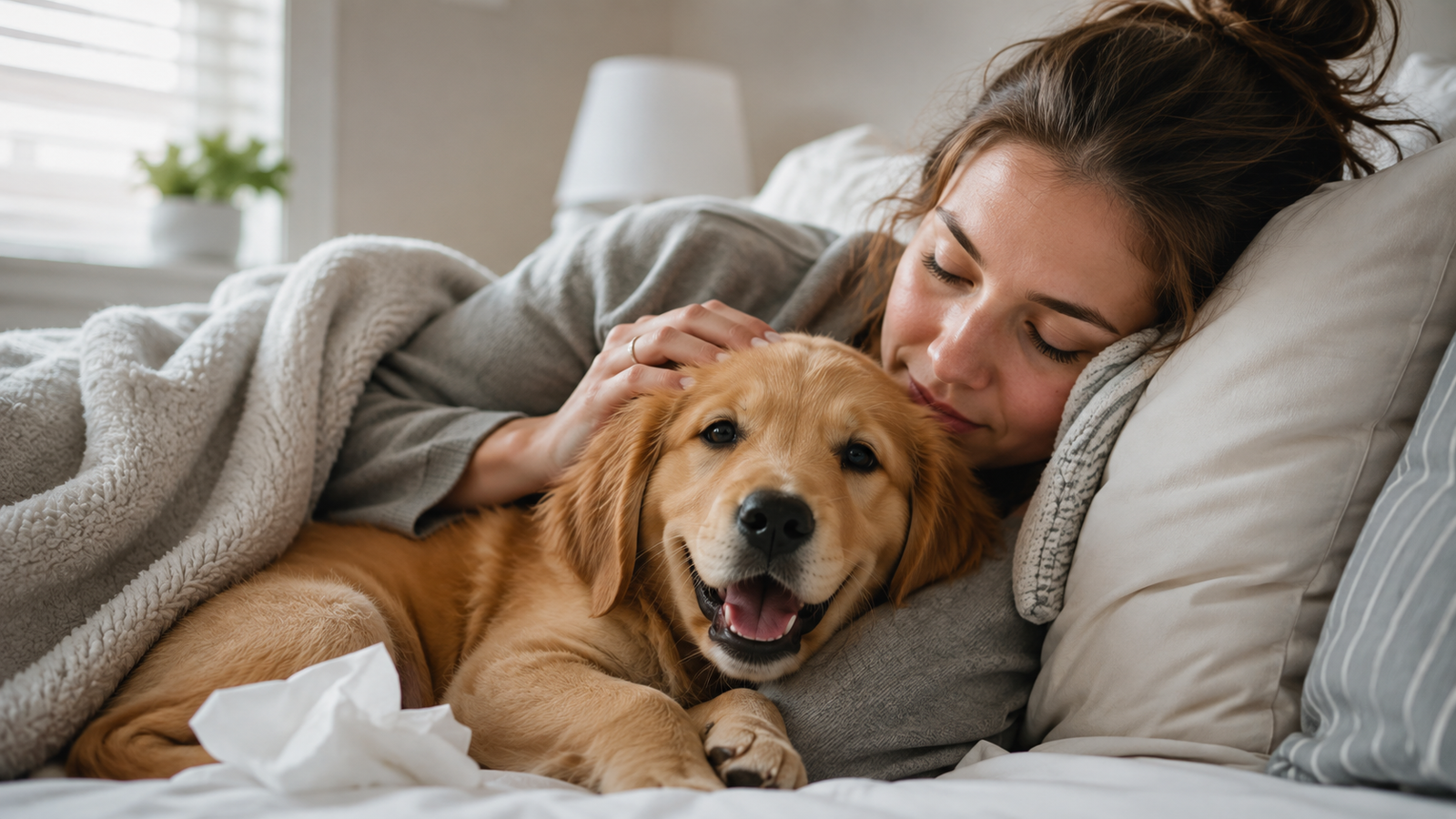
Can Puppies Catch Human Cold? What Science Says About Cross-Species Transmission
Quick Answer: No. Puppies generally cannot catch the ordinary common cold from humans. The viruses that commonly cause human colds are different from the pathogens that cause most canine respiratory infections. However, puppies can develop their own respiratory illnesses, including kennel cough and other canine infectious respiratory diseases. These can cause coughing, sneezing, nasal discharge, watery eyes, reduced appetite, and tiredness. Because puppies are still developing their immune systems and may not have completed their vaccinations, respiratory symptoms deserve closer attention than they might in a healthy adult dog. If your puppy has difficulty breathing, blue or very pale gums, collapse, or severe weakness, seek urgent veterinary care. Puppy Respiratory Triage Guide Monitor Closely Contact Your Vet Seek Emergency Care Occasional sneeze Persistent cough Difficulty breathing Clear, mild nasal discharge Worsening cough Blue, gray, or very pale gums Normal appetite Reduced appetite Collapse Normal energy Unusual lethargy Severe weakness Normal breathing Persistent discharge Gasping or obvious breathing distress This is a general guide, not a diagnosis. Puppies can become seriously ill, so contact your veterinarian if you’re unsure. Key Takeaways Can Puppies Catch Colds From Humans? The ordinary human common cold is not generally transmitted to dogs. Human colds are caused by viruses that normally infect people, while dogs have their own respiratory pathogens. So if you have a typical cold, you generally don’t need to isolate yourself from your puppy. You can continue normal interaction, including cuddling and spending time together. What About Human Flu? Influenza is more complicated than the ordinary common cold. Most respiratory infections affecting dogs are caused by canine-specific pathogens, but unusual cross-species influenza infections have been documented. For everyday puppy care, the bigger concern is exposure to other dogs with contagious respiratory disease. If you have a confirmed infectious illness and are concerned about your puppy, ask your doctor or veterinarian about the specific infection. What Are Signs a Puppy Has a Respiratory Infection? There isn’t one illness called a “puppy cold.” Owners often use the term to describe cold-like symptoms. Possible signs include: A mild sneeze in an otherwise playful puppy isn’t necessarily a reason to panic. What matters is the combination, severity, and duration of symptoms. How Long Can Symptoms Last? The timeline depends on the underlying infection. Some mild respiratory illnesses improve within a few weeks, while others can last longer or become more serious. If your puppy is not improving, develops additional symptoms, or becomes increasingly tired or unwilling to eat, contact your veterinarian. A short video of your puppy’s cough or unusual breathing can also be useful during a veterinary appointment. What’s the Difference Between a Puppy Cold and Kennel Cough? “Puppy cold” is an informal term rather than a specific diagnosis. Kennel cough refers to a group of contagious canine respiratory illnesses. It can involve several different viruses and bacteria. A typical kennel cough may sound: Some dogs may gag or retch after coughing. Feature General Respiratory Illness Kennel Cough Possible signs Sneezing, cough, discharge Often a hacking or honking cough Causes Several possible pathogens Multiple possible pathogens Contagious Depends on cause Highly contagious Common exposure Varies Daycare, boarding, grooming, dog parks Typical course Depends on cause Often around 1–3 weeks Prevention Depends on disease Vaccination may reduce risk/severity If your puppy develops a persistent cough after spending time around other dogs, contact your veterinarian. Why Are Puppies More Vulnerable to Respiratory Infections? Puppies are still developing their immune systems, and many have not yet completed their initial vaccination series. This doesn’t mean you need to keep a puppy isolated from the world. Safe socialization is important. But your veterinarian can help you decide which environments are appropriate based on your puppy’s age, vaccination status, and local disease risks. Higher-risk environments can include: Some Dogs Need Extra Attention Flat-faced breeds such as Pugs, French Bulldogs, and Boston Terriers can have underlying airway abnormalities. For these dogs, breathing changes deserve particular attention. How to Care for a Puppy With Mild Respiratory Symptoms If your veterinarian determines that your puppy has a mild illness that can be managed at home, supportive care may help keep them comfortable. Encourage Rest Give your puppy a quiet, comfortable place to sleep. Avoid strenuous activity if it triggers coughing. Keep Fresh Water Available Make sure your puppy has access to clean water. If your puppy is refusing water or cannot keep fluids down, contact your veterinarian. Keep the Air Comfortable Avoid smoke, strong fragrances, aerosol sprays, dust, and other respiratory irritants. A veterinarian may also recommend humidified air for some respiratory conditions. Make Food Appealing If your puppy’s appetite is slightly reduced, ask your veterinarian whether warming their usual food or offering an appropriate alternative is suitable. Never Give Human Cold Medicine Do not give your puppy human cold, cough, pain, or decongestant medication unless your veterinarian specifically instructs you to. Human medications can contain ingredients that are unsafe for dogs, and dosing is particularly important in puppies. Keep a Sick Puppy Away From Other Dogs If your puppy may have a contagious respiratory illness, keep them away from other dogs until your veterinarian says it is safe. How Can I Prevent Puppy Respiratory Infections? The biggest prevention focus should be reducing exposure to contagious canine respiratory illness. Helpful steps include: Vaccination does not prevent every respiratory infection, but it can reduce the risk or severity of certain important diseases. When Should I Take My Sick Puppy to the Vet? A mild sneeze in a happy, eating puppy is very different from a puppy that is struggling to breathe. Contact Your Veterinarian If Your Puppy Has: Seek Emergency Care If Your Puppy Has: Do not wait for a respiratory emergency to resolve on its own. 🐶 Puppy Respiratory Symptom Checker Use this as a general guide only. It does not diagnose illness and should never delay emergency veterinary care. <divstyle=”font-family:Arial,sans-serif;max-width:480px;margin:25pxauto;padding:20px;border:1pxsolid #ddd;border-radius:10px;background:#fafafa”><h3style=”text-align:center;color:#486B32;margin-top:0;”> Puppy Respiratory Symptom Checker</h3><pstyle=”font-size:13px;color:#666;line-height:1.5;”> Select any symptoms your puppy is currently showing.</p><labelstyle=”display:block;margin:10px0;”><inputtype=”checkbox”id=”puppyBreathing”> Difficulty or labored breathing</label><labelstyle=”display:block;margin:10px0;”><inputtype=”checkbox”id=”puppyGums”> Blue, gray, or very pale gums</label><labelstyle=”display:block;margin:10px0;”><inputtype=”checkbox”id=”puppyCollapse”>
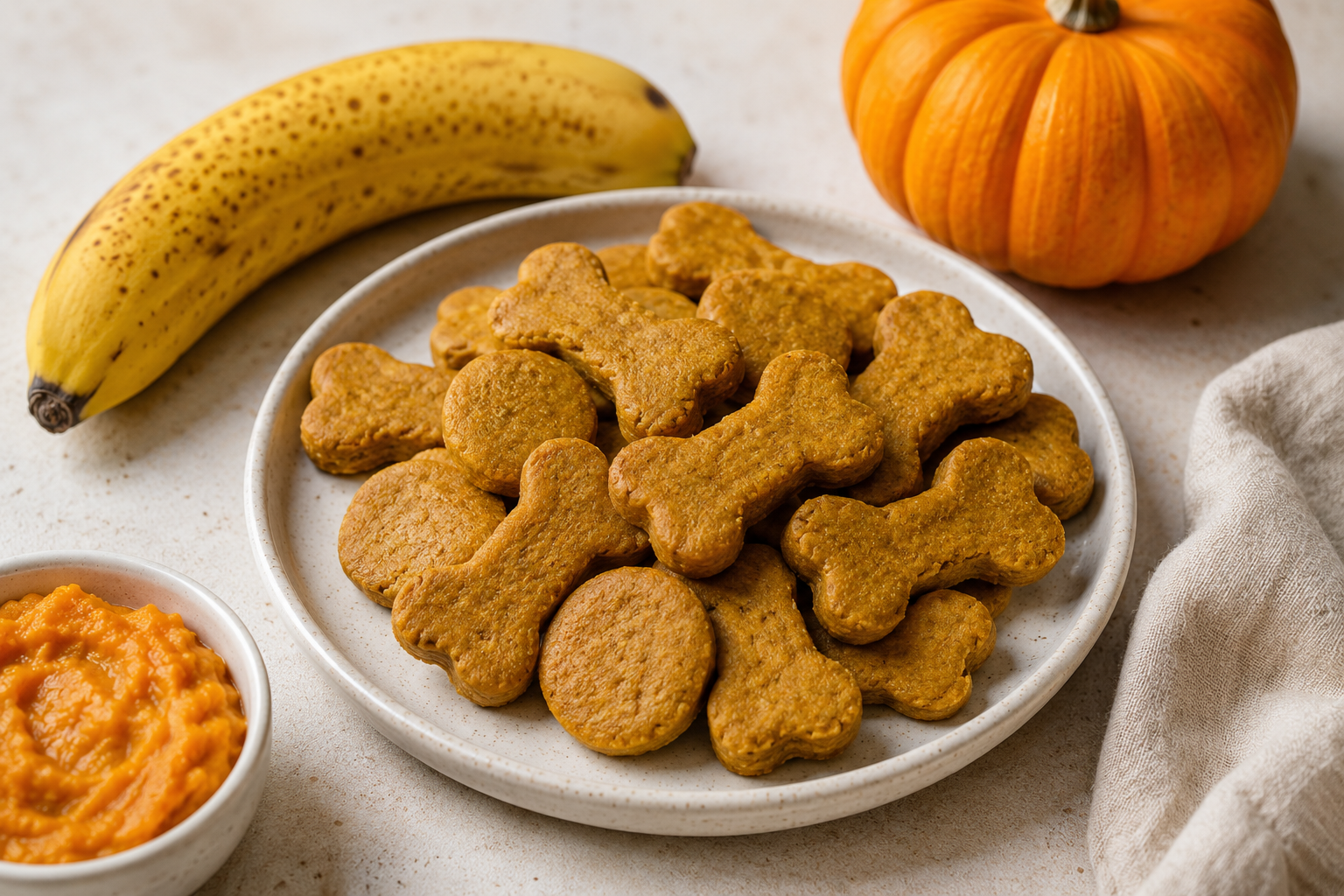
Pumpkin Banana Dog Treats
Quick Answer: Pumpkin banana dog treats are a simple homemade snack made with plain pumpkin, ripe banana, and a flour such as oat or whole-wheat flour. For most dogs, plain pumpkin and banana can be offered in moderation. Pumpkin provides fiber, while bananas provide nutrients such as potassium and vitamin B6. But these treats are still treats—not a replacement for your dog’s complete and balanced food. If you’re making them at home, use 100% plain pumpkin puree, not pumpkin pie filling, and check every added ingredient for unsafe sweeteners such as xylitol. Key Takeaways What Are Pumpkin Banana Dog Treats? Pumpkin banana dog treats combine pure pumpkin and ripe banana with a binding ingredient such as oat or whole-wheat flour to create small baked biscuits. Pumpkin is valued for its fiber content, while banana provides natural sweetness and nutrients. They’re especially useful when you want to make your dog’s treats yourself because you can control: For training, you can make the treats very small so your dog gets a reward without receiving a large amount of food at once. How to Make Pumpkin Banana Dog Treats Ingredients Ingredient US Standard Metric 100% pure pumpkin puree 1/2 cup 120 g Ripe banana, mashed 1 banana About 115–120 g Oat or whole-wheat flour About 1–1½ cups* About 120–180 g* Egg, lightly beaten 1 large 1 large Cinnamon, optional 1/2 tsp About 1–1.5 g *The amount of flour can vary depending on the moisture in the pumpkin and banana. Add it gradually until you have a soft dough. Important: The pumpkin should be plain pumpkin puree—not pumpkin pie filling. Instructions 1. Preheat the Oven Preheat the oven to 350°F (175°C). Line a baking sheet with parchment paper. 2. Mash the Banana Place the ripe banana in a mixing bowl and mash it until mostly smooth. 3. Add the Pumpkin and Egg Add the pumpkin puree and lightly beaten egg. Stir until everything is evenly combined. 4. Add the Flour Gradually add the flour, mixing as you go. The dough should be soft and slightly tacky but firm enough to roll. If it is too wet, add a little more flour at a time. 5. Roll Out the Dough Place the dough between sheets of parchment paper or on a lightly floured surface. Roll it to about 1/4 inch (6 mm) thick. 6. Cut the Treats Use a small cookie cutter or knife to make bite-sized pieces. For most dogs, keeping the treats around 1 inch (2.5 cm) wide makes portion control easier. 7. Bake Arrange the treats on the prepared baking sheet. Bake for approximately 20–25 minutes, or until the edges are lightly golden and the treats feel firm. 8. Cool Completely Turn off the oven and allow the treats to cool before storing. For a crunchier texture, the original recipe suggests leaving the treats in the turned-off oven for additional time. Tips for Better Homemade Treats Pumpkin Banana Dog Treat Variations The original draft includes several optional additions. I’d keep the table, but I would not describe them as having specific medical benefits unless those benefits are supported by evidence. Variation What to Add Why Use It Peanut Butter 2 tbsp unsweetened, xylitol-free peanut butter Adds flavor Cinnamon 1/2 tsp ground cinnamon Adds flavor Grated Carrot 1/4 cup finely grated carrot Adds another dog-safe ingredient Oats Rolled oats as appropriate Adds texture If you use peanut butter, check the label carefully for xylitol. Keep optional ingredients simple and introduce new ingredients gradually. How to Store Homemade Pumpkin Banana Dog Treats Because homemade treats don’t contain the preservatives found in many commercial products, storage matters. Storage Method Guidance Room temperature Keep in an airtight container in a cool, dry place Refrigerator Store in an airtight container for longer freshness Freezer Freeze in a single layer, then transfer to a freezer-safe bag or container Maximum freezer time Up to 3 months according to the original recipe source The original source recommends freezing baked treats for up to three months. Check the treats before serving. If you see mold or notice an unusual or sour smell, throw them away. Common Mistakes to Avoid Using Pumpkin Pie Filling Use plain pumpkin puree instead of pumpkin pie filling. Pie filling may contain added sugar and spices that aren’t appropriate for dogs. Making the Treats Too Large Large treats can make it harder to control daily calorie intake. Small pieces are especially useful for training. Adding Unsafe Sweeteners Never use ingredients containing xylitol. Always check labels on peanut butter and other packaged ingredients. Giving Too Many at Once Even nutritious ingredients can cause digestive upset when introduced in excessive amounts. Start small, especially if pumpkin or banana is new to your dog. Pumpkin Banana Dog Treats: Risks and Side Effects Many dogs may well tolerate these treats, but they aren’t appropriate in unlimited amounts. Possible problems include: Digestive Upset Too much pumpkin or a sudden increase in fiber can cause loose stool or diarrhea. Extra Calories Treats still contribute calories, even when the ingredients are nutritious. Food Sensitivities Some dogs may react to ingredients such as wheat, oats, egg, or another ingredient in the recipe. Medical Conditions Dogs with diabetes, kidney disease, obesity, or other conditions requiring dietary management may need individualized treat recommendations. The original article advises consulting a veterinarian before adding new treats when a dog has a chronic health condition. Frequently Asked Questions Can dogs eat pumpkin and banana together? Yes. Plain pumpkin and ripe banana can be combined in a homemade dog treat. Introduce the combination gradually and serve appropriate portions. Can puppies have pumpkin banana dog treats? Puppies that are fully weaned and eating solid food can have small amounts of appropriate treats. Keep treats limited so they don’t displace their complete puppy diet. How often can I give my dog pumpkin banana treats? Treats should remain a small part of your dog’s daily calories. A commonly used guideline is around 10% of daily calories, but your dog’s individual needs vary. Can